This month, we worked with Glidden Paint to bring color into three Apartment Therapy readers' rental homes, and now they want to help all our readers feel confident about taking the painting plunge! Read on to find some of their favorite painting tips and tricks, from how to talk to your landlord to how to choose your finish to how best to paint a wall. They've even built a tool to help you turn your favorite image into color inspiration. Let's get rolling!
Finding Color Inspiration
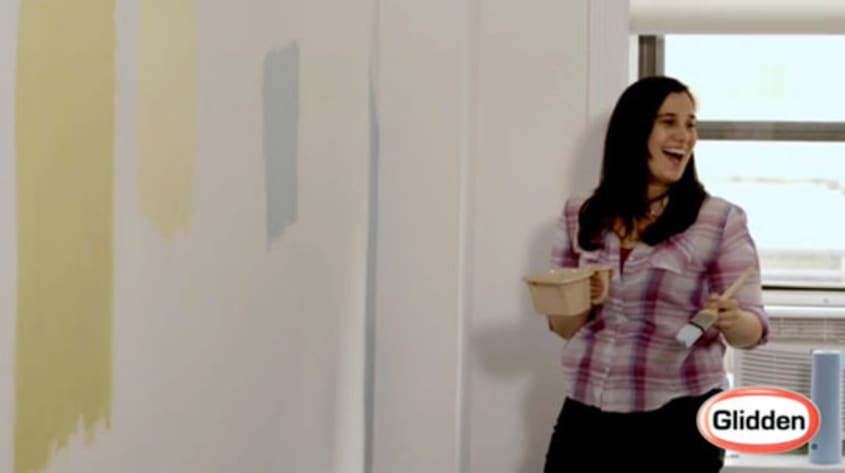
For a lot of us, the main obstacle to painting is choosing a color. We love the new My Image Inspiration tool on MyColortopia.com that allows you to upload an image of something you love — a pillow, a favorite shirt, a sunset — and generate paint recommendations. You'll get suggestions on a main color plus two complementary colors based on your inspiration upload, helping you feel confident about your color choices so you can get to the fun part! Check out the My Image Inspiration widget:
Landlords
Many renters are afraid to paint because they're not sure their landlord will let them. Landlords are usually concerned when renters paint with colors that make it harder to rent the next time. If your landlord is reluctant, try to strike a compromise. You can offer your landlord approval on the paint color, where you come up with several alternatives and the landlord picks one. Or you can offer to repaint with the landlord's choice of color when it's time for the apartment to go back on the market.
And getting approval may be easier than you think. Our Renters Get Rolling renters each asked their landlords for permission to paint, and they each got immediate permission, proving that sometimes, you just have to ask!
Prepping Walls
Before getting started, you'll want to dust the walls and maybe gently sponge them down with a solution of baking soda and vinegar diluted with warm water. If you have any cracking or peeling, you'll want to spackle and sand. To find out if you need to sand down your walls at all, experts recommend sticking tape on the wall and then yanking it off. If paint chips off onto your piece of tape, you'll know you need to do some sanding. Click here for Nicole's tips on prepping your walls.
Primer
So you got your landlord's approval, you picked your paint color, and it's finally time to make it happen. But wait! You may need to prime first. Primer is an important base coat that can help your paint roll on smoothly and color-true. When don't you need primer? If your walls are smooth, painted white or light grey, you should be fine. Nicole didn't use primer for Cassandra's apartment, and the color came out beautifully.
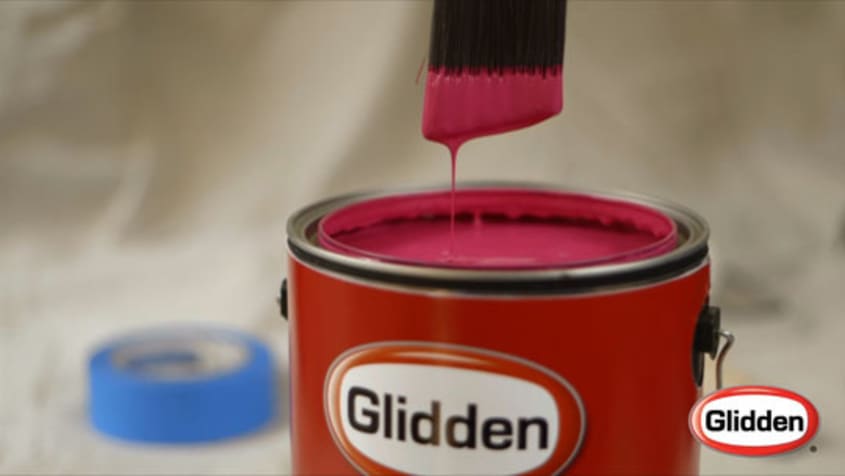
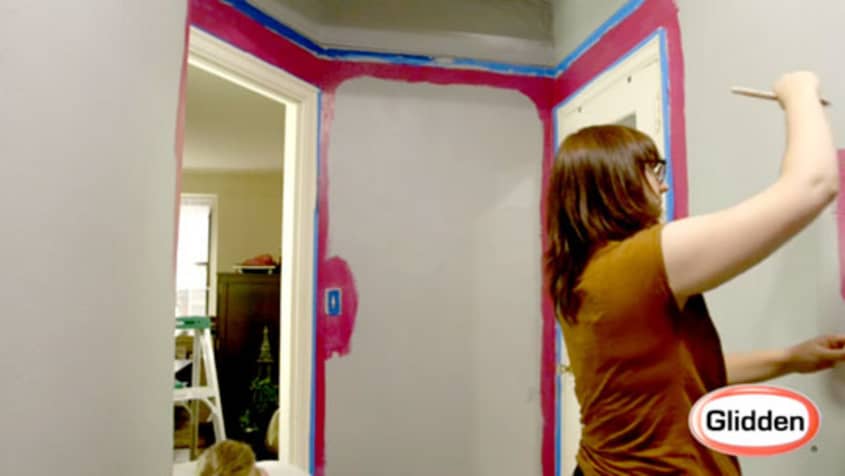
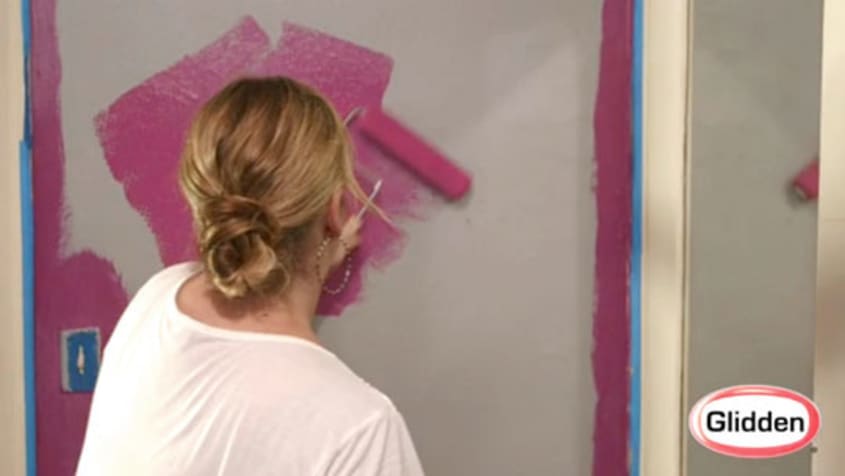
On the other hand, if the walls are uneven, patched a bunch, or already painted a color, you'll need primer. If you're painting a vivid color, particularly in the red family, you'll want to use a grey primer even if your walls are pristine, in order to ensure a that your color goes on evenly. Nicole used grey primer in Lisa's foyer as a base coat for the deep berry color, to avoid any white peeking through. It helped the color roll on smoothly and evenly, yielding a richly saturated finish. For Eliza, Nicole used a Glidden Paint and Primer in One, which offered powerful coverage and a wonderfully smooth finish.
Cutting In
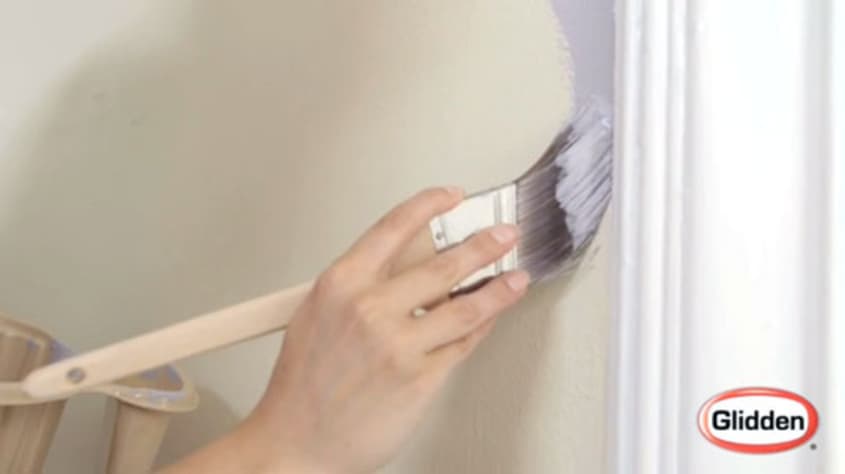
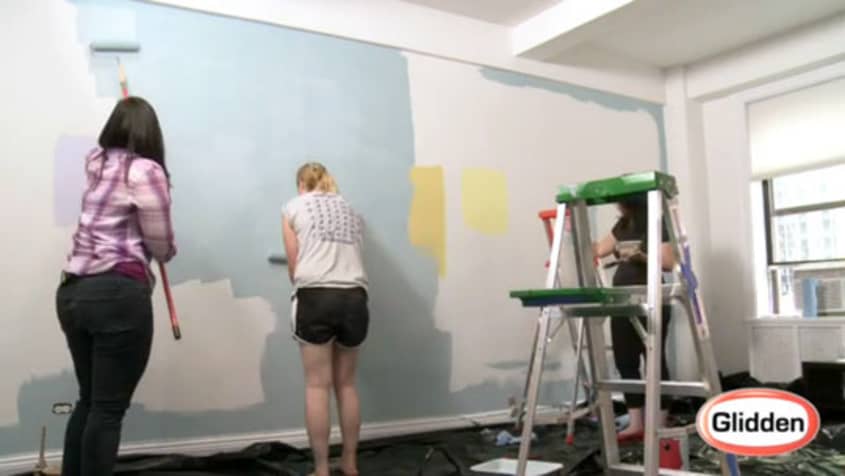
It's tempting to break out those rollers immediately, we know. But the first step to any good paint job is to "cut in," painting the corners and edges of the walls with a brush to ensure clean lines and to prevent gloppy bubbles or drips. First, dip no more than a third of your brush into your paint color. Next, angle the bristles about a half-inch away from the corner, pressing the bristles in so they just fill the space to the corner, and stroke the brush out. Watch Nicole give a demonstration on how to cut in for Eliza and her friends here.
Let's Get Rolling!
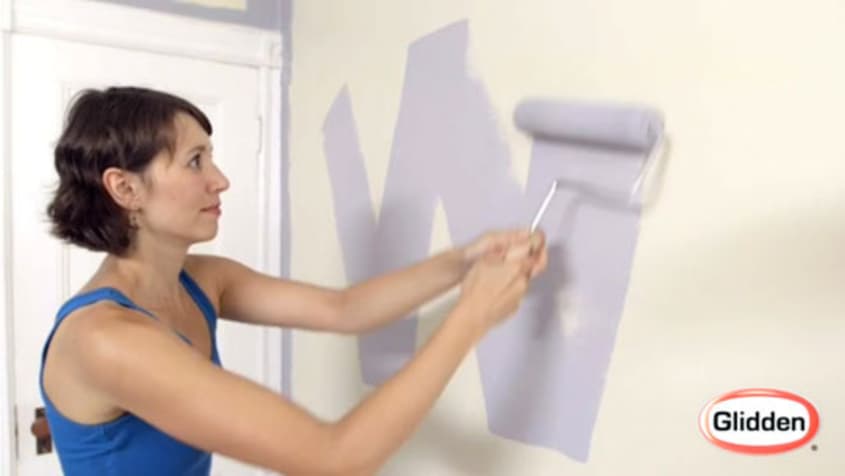
Finally we've gotten to the best part of painting: the rolling! Painting with a roller is not only fun and easy, but it's quick, so you can watch the transformation as it happens. Nicole and the experts at Glidden recommend rolling in a "W" pattern, so you spread out the paint more evenly than if you just roll up and down. You can see Cassandra paint a perfect "W" in her Before & After video here.
Painter's Tape
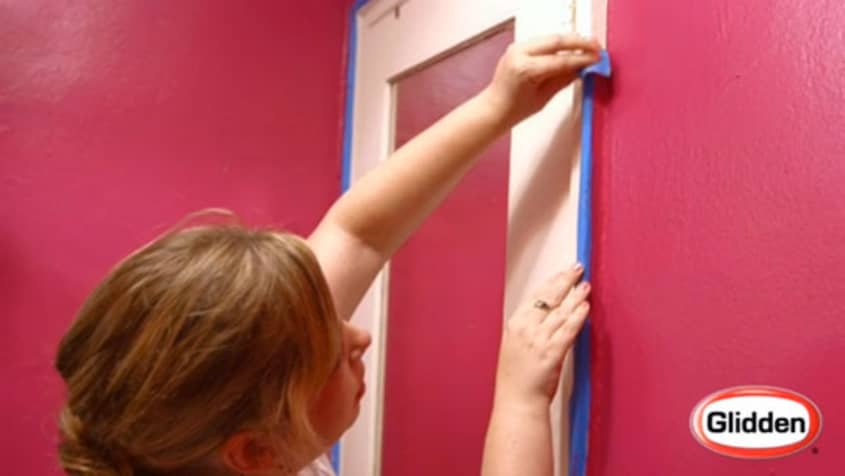
Unless you're an experienced painter with a steady hand, you might want to use painter's tape to keep your edges straight. This will make your prep time longer, but will help the painting part go much faster. If you do use painter's tape, it's best to remove it when the paint is still slightly wet, like Lisa did, to minimize the risk of peeling off more than you intend.

What tips and tricks would you like to share?
>>>Enter our Glidden Renters Get Rolling Giveaway to win $250 and a renter's kit to get your own paint project started!![]()


Commercial Flour Sa...
Good tips -- just don't go too wild with the color. Dark paint is really hard to cover, even with primers. If you try going from hot pink (for example) to white, it's going to take several coats and that's time consuming.
I painted the walls of my rental apartment last summer and it was the first time in my life that I'd ever done any painting. I find a lot of these 101 guides are written for people on the assumption that they already know the supposedly-obvious ... but for the true DIY neophytes, like myself, that can be a dangerous assumption. Here are some things I wish I'd known before I started my painting project -- and feel free to laugh:
1. Buy enough paint. Yeah, I miscalculated. Yeah, I had to run back to Canadian Tire with half a bathroom painted to pick up some more paint, and cross my fingers that it would match and blend into the already-dry portion without too much trouble. Luckily, it doesn't seem noticeable. But I have since realised that they ASSUME that people using those paint calculators will automatically tack on extra paint. Lesson learned.
2. Tape the ceilings. I taped every edge and surface I could find, but I couldn't quite reach to tape the ceilings properly. Instead of doing the sensible thing and going out and buying a taller ladder, I just got a brush with an extended handle and tried to freehand it. As a result, the lines between wall and ceiling are what some might refer to as "creative" (and what most would refer to as "a mess"). Oops.
3. Don't cover the toilet. If you're painting the bathroom and it's the only bathroom in your place, and you cover every surface with plastic, make sure you come up with a better way of covering the toilet so that you can still use it if necessary. Otherwise, you'll be frantically trying to move the plastic sheeting without messing up the paint job when you realise what you've done.
4. Leave at least a day between painting the bathroom and going out in public. The fresh paint in the bathroom needs to dry for at least 24 hours, preferably longer, before you can risk even a cold shower. Unfortunately, painting is an activity that tends to get you all sweaty and gross, and the only thing you really want to do when you're done is - you guessed it - take a shower. If you, like me, only have one bathroom at home, either find a friend or neighbour willing to let you use their shower, or leave a day in between the painting project and having to go back to work or show your face in public.
5. Tape the screws to the electrical socket covers. Otherwise, they have a bad habit of going missing.
6. Paint behind the refrigerator last. Moving the refrigerator away from the wall to paint behind it usually involves unplugging it and switching off the electrical circuit that powers it. Food in the fridge - and more importantly, the freezer - will spoil if you leave it unplugged for too long. Paint this spot last, and plug it back in first, to cut back on food waste.
7. Figure out which are the "lean-against" walls. If you're short like me, and climbing up and down stepladders and standing on countertops to reach the tricky spots, there will be some walls that you may instinctively reach for or use to steady yourself. It's usually helpful if those walls aren't the same ones that you've just covered in fresh paint.
8. Tape underneath the drop cloths. The first day, I made the mistake of taping the drop cloth to the wood trim edge. Unfortunately, when I stepped on the drop cloth the wrong way and pulled it away from the wall, the tape came with it, and the paint spilled onto the trim. The second day, I taped the trim first, and then secured the drop cloth to the wall by taping on top of it. It uses more tape but it's more error-proof.
9. Wear your glasses (if you have 'em). Not necessarily while painting, since that can be awkward, and getting paint spattered on the lenses isn't good. But if you're farsighted like me, make sure you put the glasses on after each coat and take a look to see if you missed any spots. The paint job that looks amazingly good without glasses can look pretty horrible once you can actually see it.
10. Ask for help. I'm stubborn, so apart from accepting a few donations of supplies, I took DIY literally and did it mySELF. In retrospect, having a second (taller) person around to help would have made a huge difference, if only because it would have allowed me to paint wall sections before the cut in edges dried, or to lift heavy things without hurting my back.
Most of you are reading this and probably saying, well, duh. But trust me, for me, this stuff is a revelation. I am now edumacated about all things paint-related, and maybe next time I paint, I'll even figure out how to make it look good.
Here's a tip the paint sponsor is sure to love: before you commit to paint, give it a little while and see if you can live with what you've got. If the existing paint color is just boring, rather than garish or offensive, you might be surprised at how much color you can bring into your home by painting furniture, hanging curtains, etc. I'm in a rental where my landlord said no to painting - mostly because he was really proud of the meticulous paint job he had just done, in boring greige. I don't like greige walls - I like colored walls, and in the past I have jumped right in with paint. I've been here a year and a half, and I'm thinking about asking to paint as part of renewing the lease next time. But part of me is thinking I'll just keep living with it. Having these boring walls has forced me to be creative in other ways. I've been painting furniture (which I didn't do before), dying curtains bright colors, and buying lots and lots of art (good thing the landlord didn't have a problem with nails in his pristine *plaster* walls (hint to the landlord: paint would have done less damage!)). I also bought a green sofa, where in the past I would have bought something neutral. This is all stuff I can TAKE WITH ME if and when I move again. Whereas, all the time, effort and money you put into painting a rental you are going to have to leave behind and maybe even paint over AGAIN when you leave. I am also mindful that, in my last place, I fell in love with a paint chip and then ended up painting the whole apartment a color that kind of gave me a headache for the rest of the time I lived there.