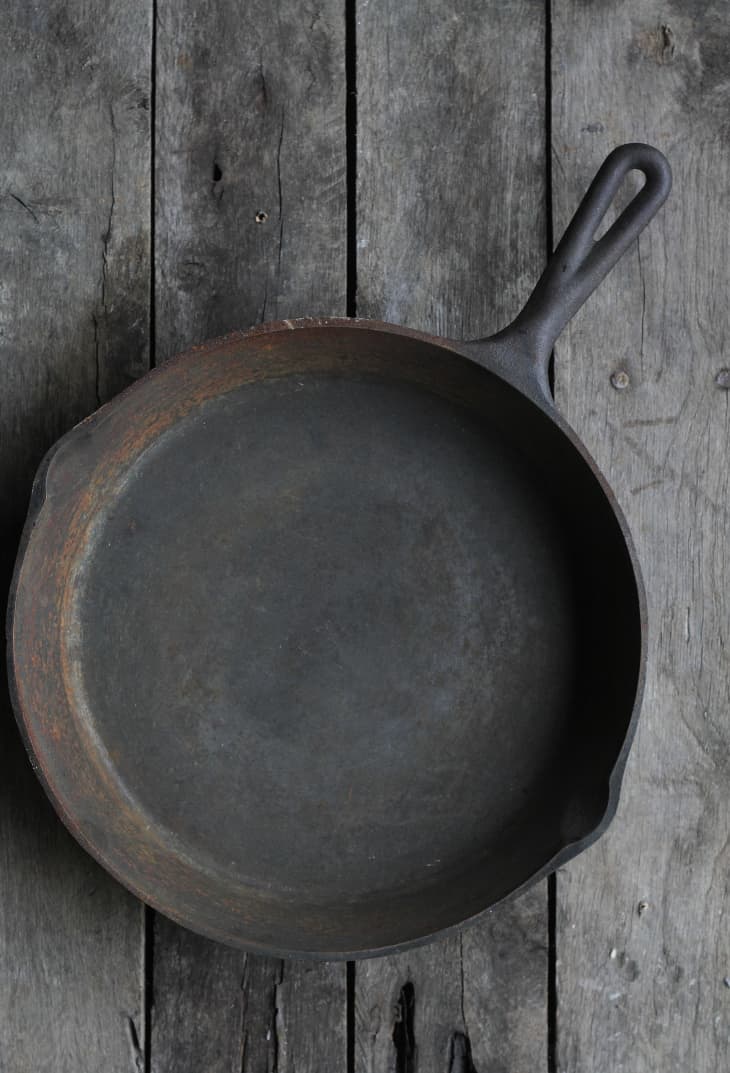
Instructions for cast iron skillet cleaning often include a lot of don'ts: don't use soap, don't use steel wool, don't put it in the dishwasher. It's almost enough to scare one off from cast iron completely! However, with a few simple techniques, you'll be able to keep your skillet clean, rust-free, and well-seasoned. (And, worst-case scenario, you can always re-season it.)
What You Need
Materials
Cast iron skillet
Sponge or stiff brush
Clean, dry cloth or paper towels
Vegetable oil or shortening
Kosher salt (optional)
Equipment
Stove (optional)
Instructions
1. Clean the skillet immediately after use, while it is still hot or warm. (Avoid soaking the pan or leaving it in the sink, or it may rust.)
2. Wash the skillet by hand using hot water and a sponge or stiff brush. (Avoid using the dishwasher, soap, or steel wool, as these may strip the pan's seasoning.)
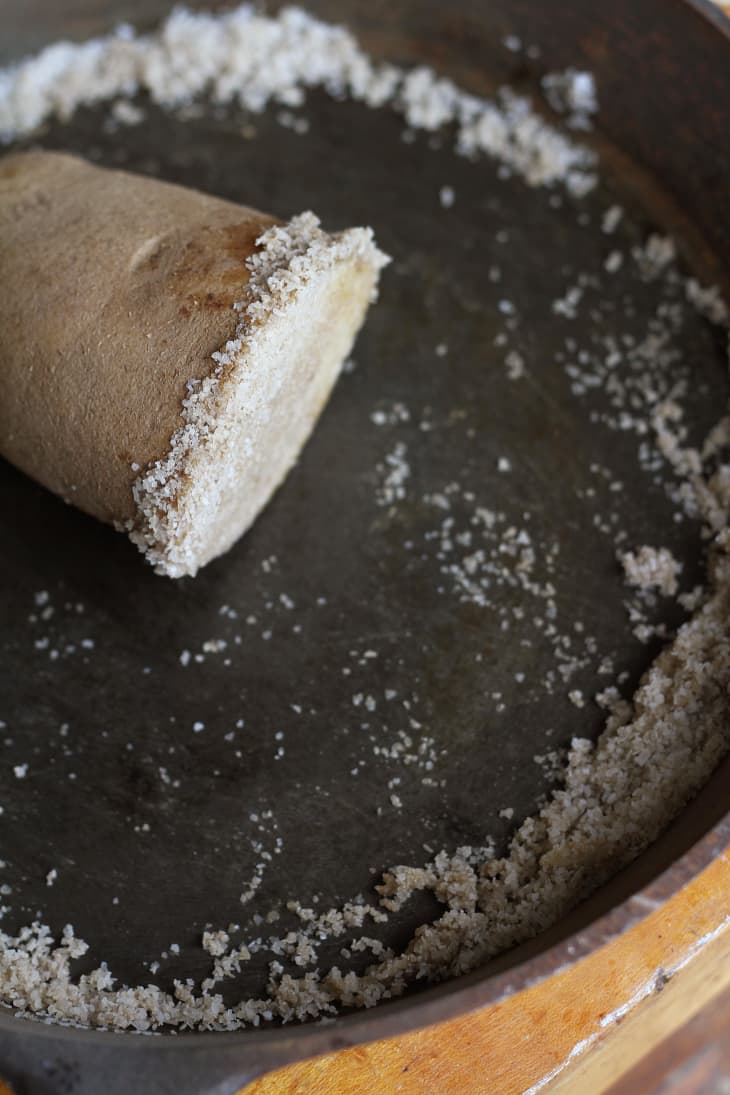
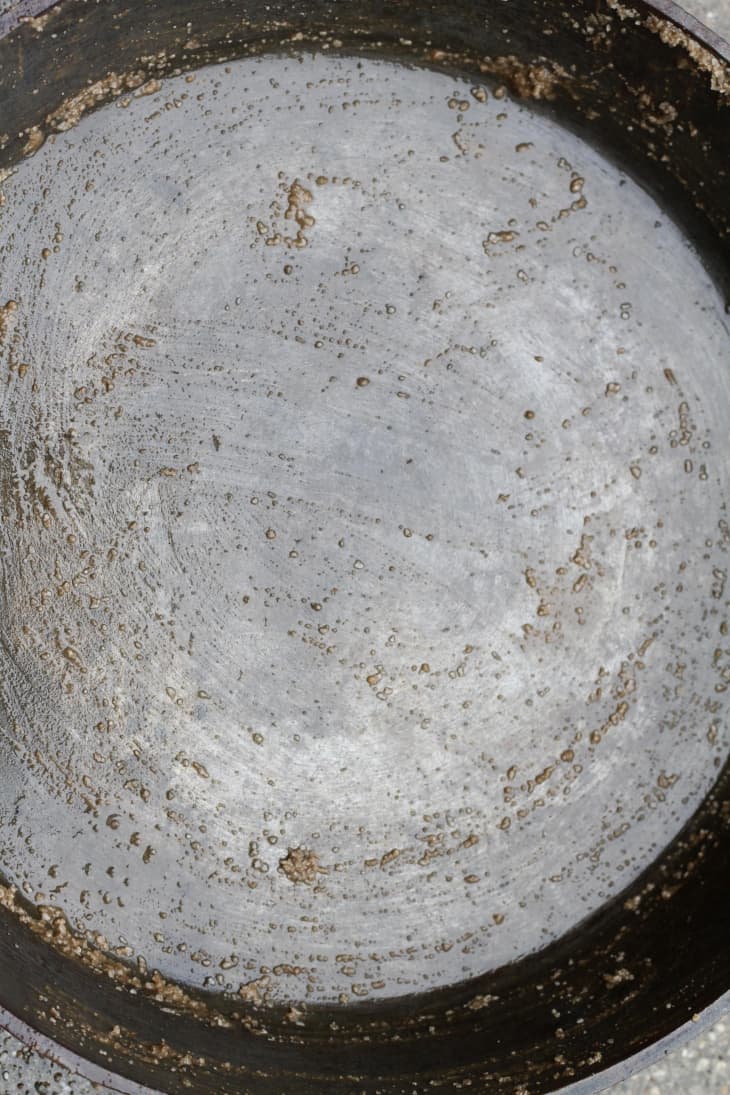
3. To remove stuck-on food, scrub the pan with a paste of Kosher salt and water. Stubborn food residue may also be loosened by boiling water in the pan.
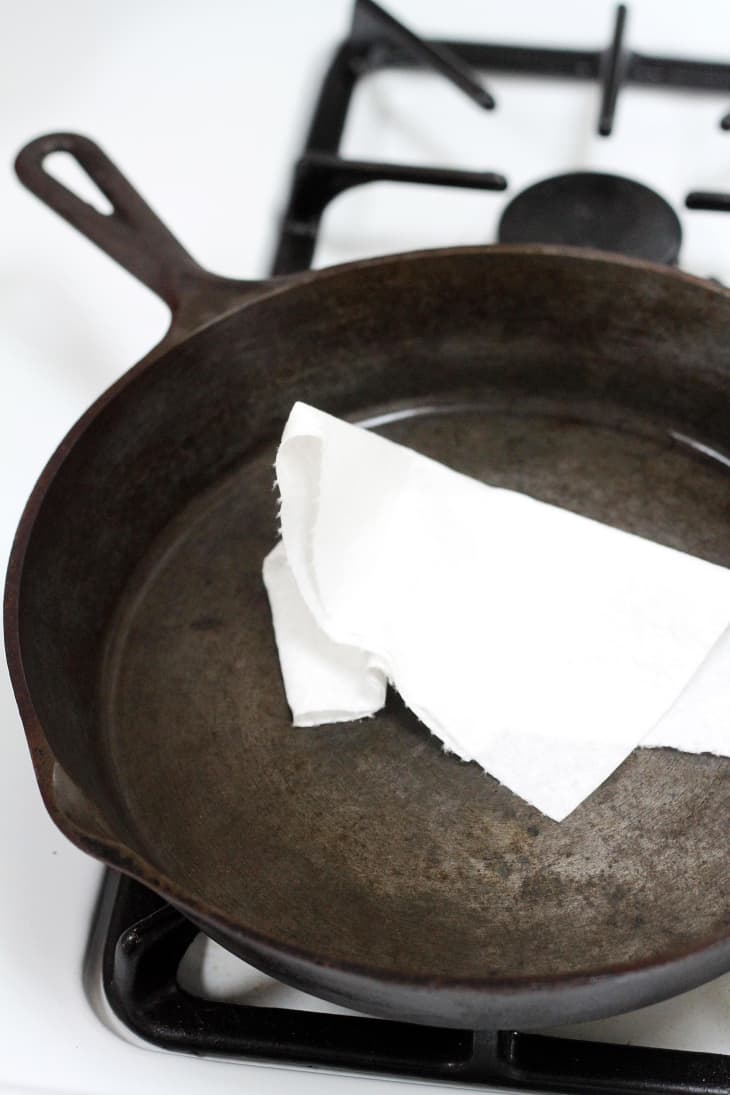
4. Thoroughly towel dry the skillet or dry it on the stove over low heat.
5. Using a cloth or paper towel, apply a light coat of vegetable oil or melted shortening to the inside of the skillet. Some people also like to coat the outside.
6. Store the skillet in a dry place.
Additional Notes:
• Using soap, steel wool, or other abrasives is not the end of the world, but you may need to re-season the skillet. If the skillet is well-seasoned from years of use, a small amount of mild soap may be used without doing much damage – just be sure to rinse it well and oil it after drying.
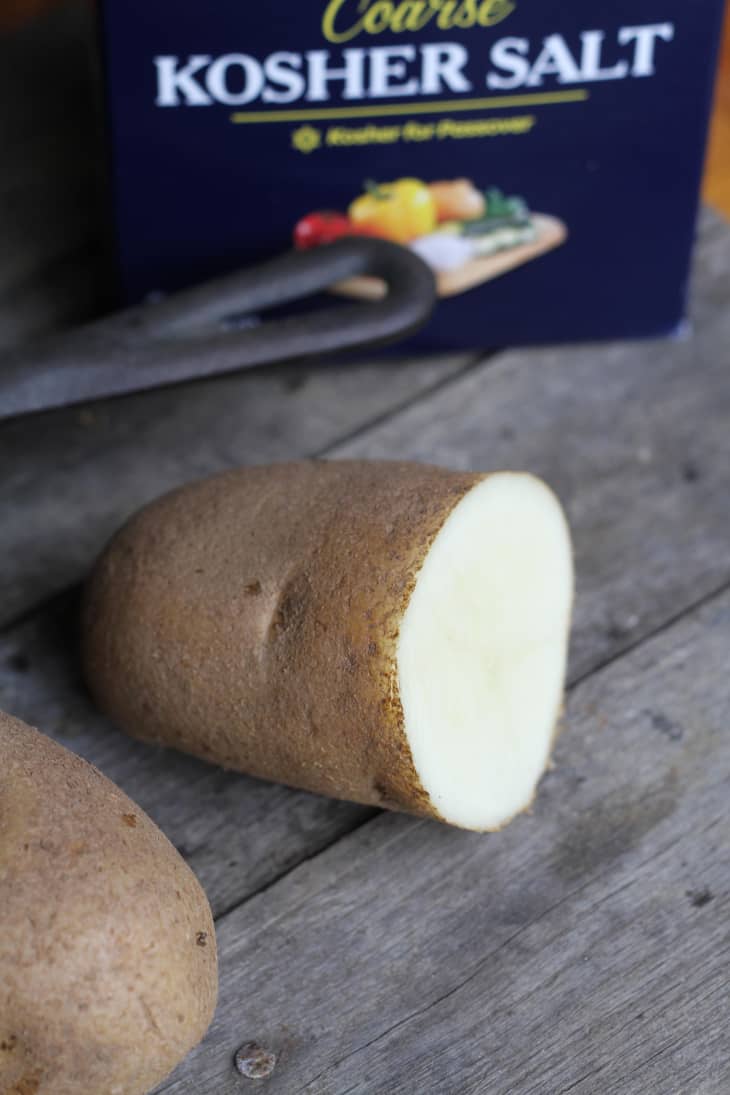
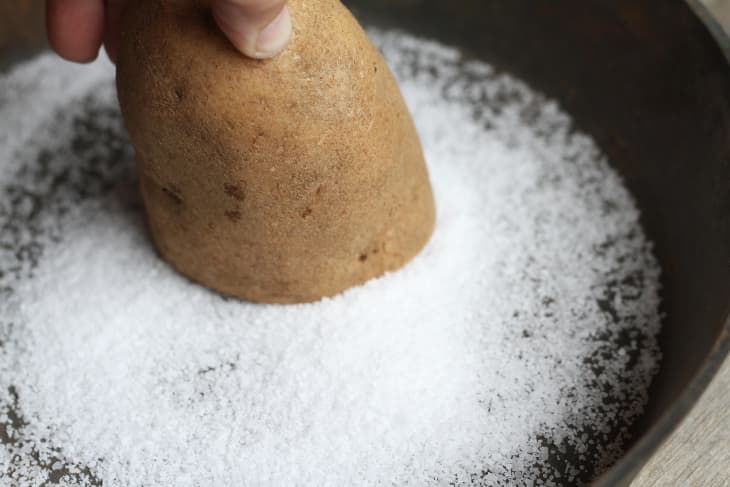
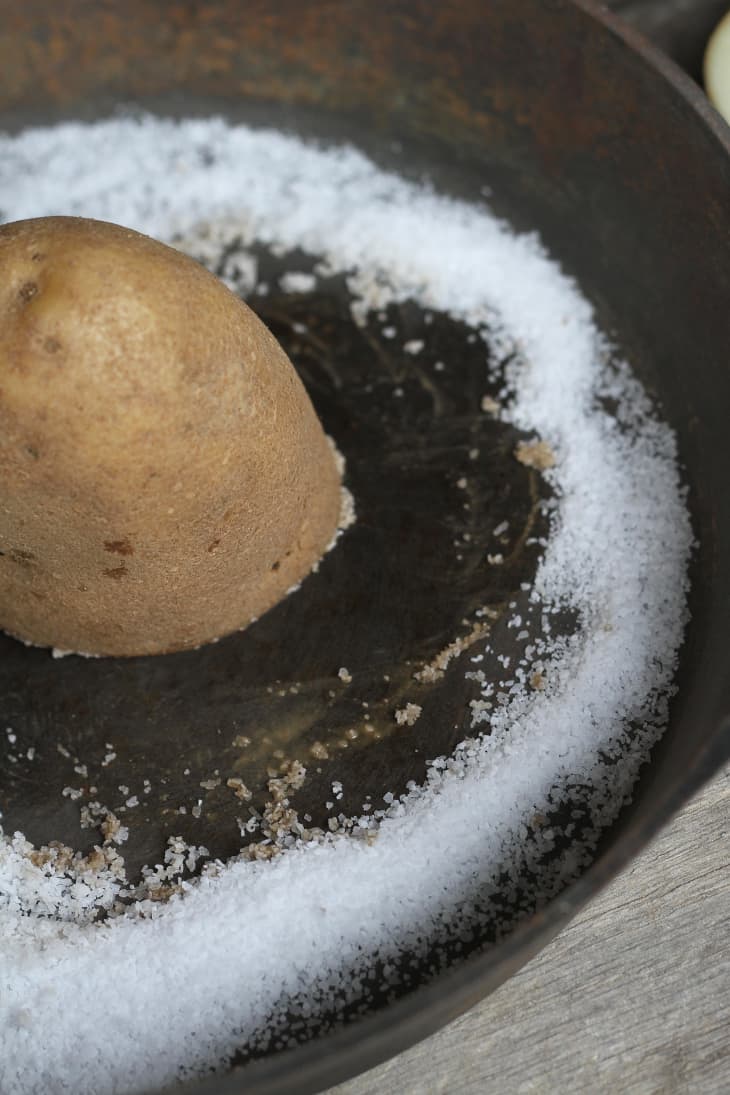
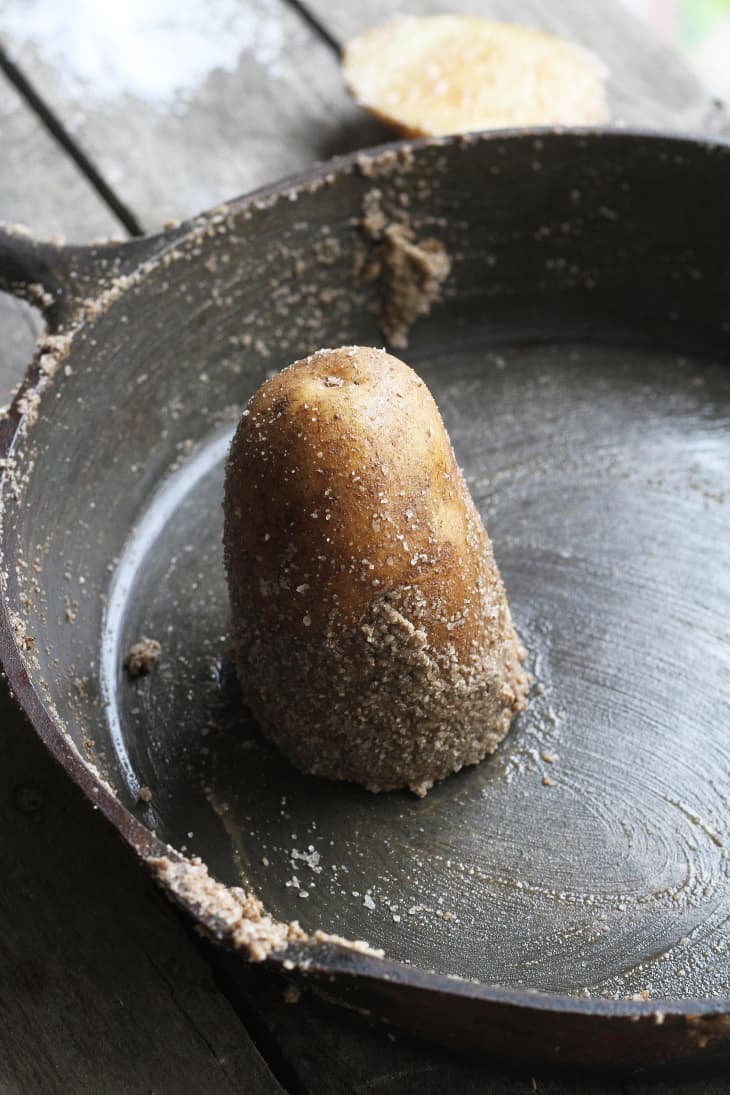
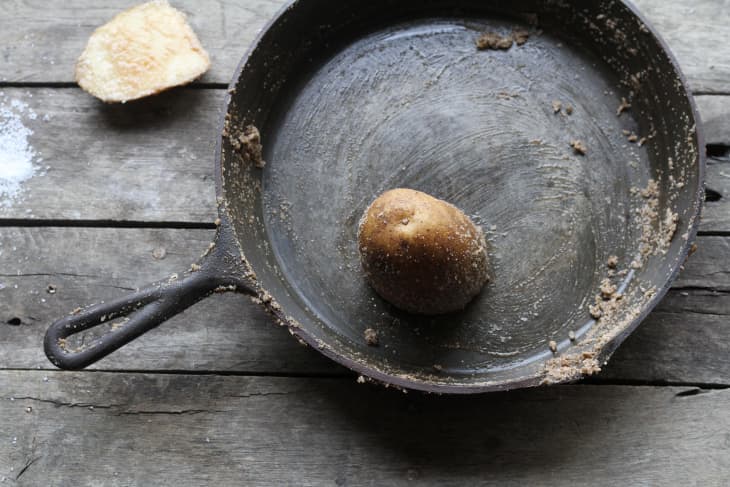
• Remove rust using steel wool or by rubbing it with half a raw potato and a sprinkle of baking soda (seriously, it works!). Again, it may be necessary to re-season the pan.
Is this how you clean cast iron skillets? Share your own tips and tricks in the comments.
Want more smart tutorials for getting things done around the home?
See all of our Home Hacks tutorials

We're looking for great examples of your own household intelligence too!
Submit your own Home Hacks tutorial or idea here!
(Images: Emily Ho)
Posted originally from: TheKitchn


White Enamel Four-P...
I'm a little leery of the salt method as it is an oxidizer, and could facilitate more rust, BUT that would only happen if you're lazy or forgetful.
I usually let mine cool on the stove... Often there's enough oil in it anyway that nothing will rust.
When I do clean it, it's primarily to get off the carbon-black bit of whatever that scorched and stuck.
I ONLY use one of those copper scrubby things. They're really coarse and don't actually remove any oil, just the crusty bits. (These are also amazing for getting the burned bits off of enameled cookware like Le Creuset et al.)
That with a dash of hot hot soapy water does it. A thorough rinse to remove any soap, and back on the stove to dry.
I probably kill my seasoning once every 2 or 3 weeks (but I use it nearly daily). Just heat it back up with enough oil to barely coat the inside, and get it hot hot hot. A lid helps control the smoke, but a fan and open window are usually needed too.
Allow to cool again, wipe out any remaining oil and you're back in business.
It is really really really worth it. Forget teflon, this is the way to go. I use mine to cook fish, heat up leftovers, bake cornbread, bake the last 4 cookies from a batch, bake scones, and on and on and on. 1001 uses!
(Note: The copper scrubbies are actually copper plated steel, and will eventually rust. Don't leave them to soak.)
I thought rinsing out your pan while it's still hot is a big no-no because the fast change in temperature can cause it to warp.
I'm not sure how true that is...but I think I read it on the label of my Lodge skillet.
When I was given my skillets I was given strict instructions...
Salt and aluminum foil all mushed up is the best way to get off the grit.
My husband uses soap to clean the cast-iron skillet we have. I generally use water and salt. Neither seems to affect the years of seasoning in any way.
Regardless, after the pan is dried by hand, I heat it up again on the stove. Any residual moisture is cooked off, and there's no risk of rust.
`Use the pan. (It must get dirty before we can clean it, or start with a dirty pan)
2# Put the skillet back on the heat and pour off all excess fat with the exception of about 2 tablespoons (30 ml). If no fat is left, add 2 tablespoons (30 ml) of oil. You need some fat/oil to help clean one way or another.
#
3
Let the skillet get pretty hot, so that drops of water will flash away when sprinkled on the surface, just watch to make sure the oil isn’t smoking (nothing bad will happen if the oil smokes, the pan is just too hot to handle at that point)
#
4
Add a couple tablespoons (30 ml) of salt and with a paper towel bunched up and held in some tongs (Caution: Hot Iron) use the paper towel and the salt to scour the bottom and sides of the pan, until the brown bits are gone (the salt will be dirty).
#
5
Rinse out with some hot water (Caution: Hot Steam) and return to the heat. Add about 1-2 tablespoons (15 ml - 30 ml) of vegetable oil and after about 30-45 seconds use a paper towel to spread the oil around and coat the bottom and sides of the skillet, and let cool. Now it’s ready for using again!
http://nonstickelectricskillet.com
I was in the Boy Scouts growing up and we used quite a bit of cast iron cooking gear (skillets, griddles, dutch ovens, and the like). After having to redo a few seasonings, we learned the proper cleaning and care for cast iron which is namely hot water and a stiff brush. I have yet to encounter something on my cast iron that hot water and a brush couldn't take off (although sometimes almost boiling water was necessary, just be careful).
The one thing we were taught never to do was use soap, and not just because it has the potential to strip the seasoning. The real problem with soap is that cast iron is a fairly porous metal, so the soap can actually get into the surface of the metal, and from there it can flavor your food the next time you use the cast iron. Not only does this not taste good, but depending on how much you ingest, it can make for an unpleasant intestinal experience.
I now swear by cast iron and advocate it to anyone looking for cookware. In my opinion, a well seasoned cast iron skillet has a better non-stick surface than many non-stick cookware out there, and it does so without the dangerous chemicals used in some of those non-stick surfaces.