
Weekend Assignment: How To Clean Your Cleaning Tools
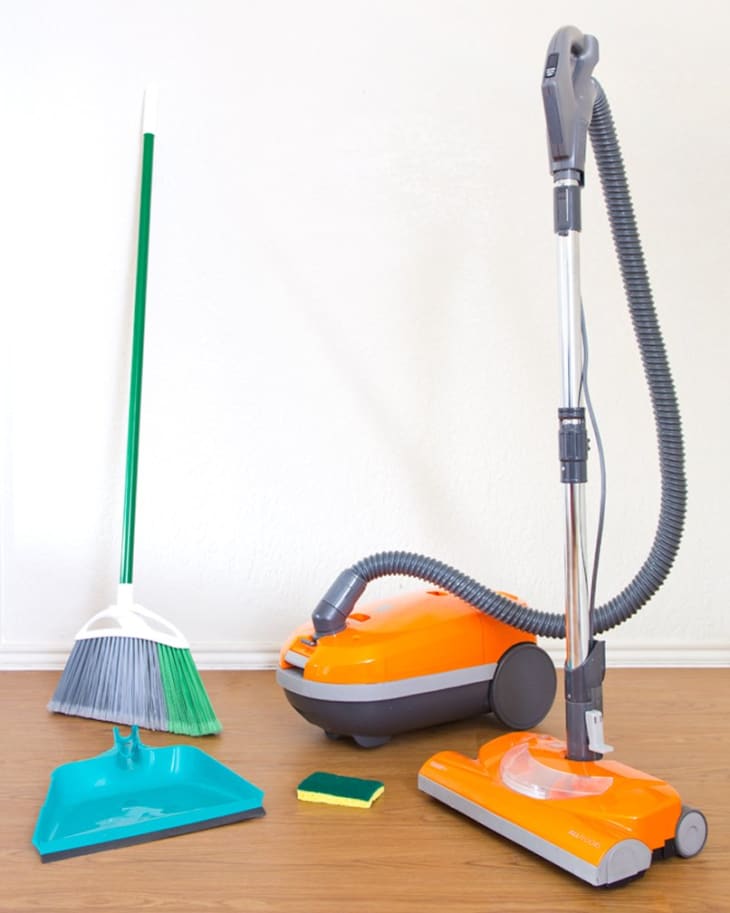
We’ve shared before our opinion of the top most common cleaning tools you should keep around. Though these handy items help you maintain a healthy home, are you doing the best job you can do to keep your tools clean and working efficiently? We’ve rounded up the best ways to clean the most common cleaning tools you have around the house. It could be the perfect task for any extra time you’ve got this weekend!
Here are a few of the tools we use on a daily basis. Some of them accumulate more dirt than others, but eventually, they all need a little time and attention to keep them running at top notch!
Vacuums:
We spent a great deal of time making sure we find the right vacuum before purchasing. We want one that sucks (literally) and can take on an entire household of dirt and pet hair without skipping a beat. But cleaning the guts of your vacuum is a must-do for those looking to make their unit last.
Start by unplugging all the hoses and connections you can find. If you still have your service manual, it can be helpful to show you exactly what you’re looking for. You can often run a clean, soft dish towel through each opening, often times coming out another. If your vacuum isn’t like that, simply try using canned air (do this process outside) to make sure there aren’t any blockages. Wash the outside with a mild soap and water solution and wipe dry. Rotate your filters (or hand wash them in warm soapy water if you can) and clean out the brush rollers on the bottom. You should be in tip top shape in no time!
Wool Dusters
Ever since we were little, we’ve had a wool duster in the home. But after picking up a bookcase worth of dust, it could use a little freshening. Try taking it outside and tapping it against a railing or stoop to shake dust free. You can also vacuum them to remove excess dust and debris or you can hand wash them in cold water with baby shampoo and then hang to dry.
Rags & Sponges
Both pick up a great deal of grime, but should be treated differently. Sponges should go in the microwave, or the dishwasher to rid them of bacteria (they can go in the washing machine, but only if the temperature goes above 120 degrees). Rags on the other hand should be first rinsed in the sink after using, eliminating as much chemical or cleaner residue as possible and then tossed into a load of hot laundry. If they still feel a bit icky, try soaking them in lemon juice and then leaving them in the sun until dry, re-launder and your stains should be gone and your towels brighter.
Microfiber cloths and rags
Regular rags and old t-shirts can be washed as normal. But you want to take a few additional steps to clean microfiber rags. Rinse. Place in a delicates bag. Wash alone or with towels. Add laundry detergent. Avoid fabric softener or dryer sheets. Try not to use them to clean overly oily or greasy things. Stick them in the dryer as normal (you want these to have static cling to help clean better!). Wash after every use.
Toilet Brushes
If your household uses bleach, simply combine 1 cup of it with a kettle of boiling water. Swish the brush in the mixture and let sit for an hour. If you’re bleach free, 1 cup peroxide and 1 kettle of boiling water should do the trick. After 30 minutes, dump and repeat to ensure things are doing the best job they can.
Scrub brushes
For your toilet scrub brushes, consider dunking in some warm water mixed with bleach after use. Scrub brushes for dishes and glasses can be throw in the dishwasher. Other brushes can be washed with water and baking soda or if they’ve scrubbed something greasy, warm water, dish detergent and a little white vinegar. When cleaning scrub brushes with wooden handles, don’t soak the wood. Clean once a month.
The Washing Machine
Although you don’t really use your washing machine to clean more than clothes, it still does its fair share of the work. Try running a load on warm water with 1 cup white vinegar. It will help freshen your machine and all it’s 2000 parts. Make sure to leave the door open when finished!
The Dishwasher
Your dishwasher is just like your washing machine in the sense that it has a rather focused cleaning job. Give it a break once in awhile and let it clear out it’s inside bits with a white vinegar rinse. You can pour it straight in the bottom of your machine or add it to the dispenser cups before starting. Make sure to open the door and let it air dry when finished.
Brooms & Mops
These two items do a great deal around the home and we’re willing to bet you’ve never really cleaned your broom before. Wipe down it’s handle with a mild cleansing solution and then fill your sink (or a bucket outdoors) half way with warm soapy water. Run your fingers through the bristles while keeping them submerged. Drain water and run hot water over the bristles until it runs clear. Take outside to dry in the sun if possible (even if you can only stick the bristles out the window to catch a few rays) angling downwards slightly to drain remaining water off.
Removable cotton mop heads can be thrown in the washing machine to be cleaned, while sponge versions can usually be washed in the top rack of your dishwasher. You can also soak them in lemon juice and allow to dry outside in full sun and then rinse with a vinegar and water solution.
Do you have a cleaning tool that didn’t make the list that needs a little freshening up? Let us know below and we’ll do our best to give you a dirt busting remedy!
Re-edited from an original post published 5.25.10 – AB