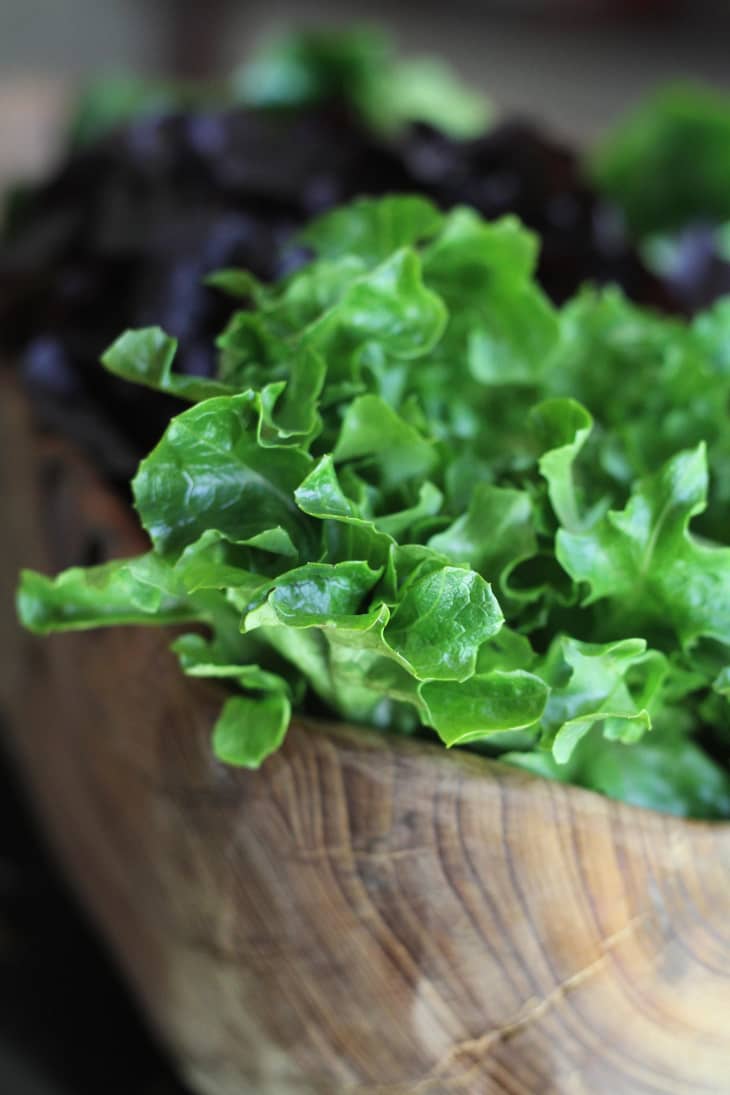
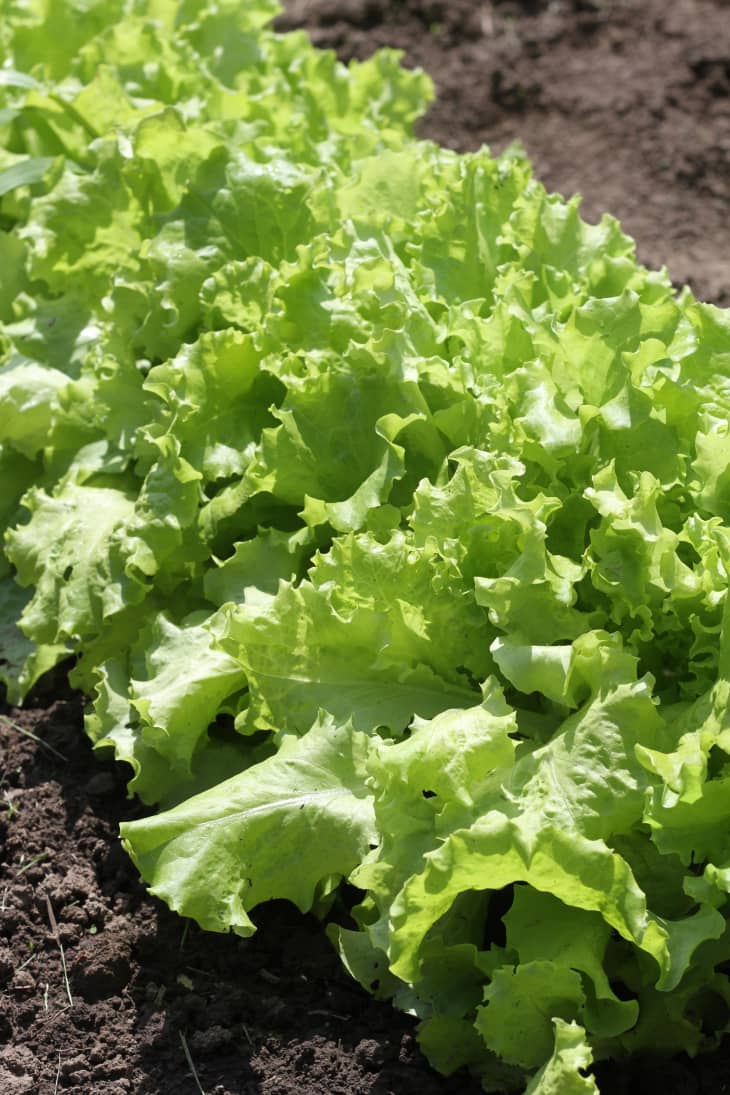
Most folks don't realize how easy (and cheap) it is to grow your own baby greens, even with a very limited amount of space. And think about all the plastic bags and clamshell containers used in packaged greens that you may buy at the store (not to mention how long they've been sitting in that plastic before they even get to market). Why not save the packaging and transit time, and harvest your own greens at home?
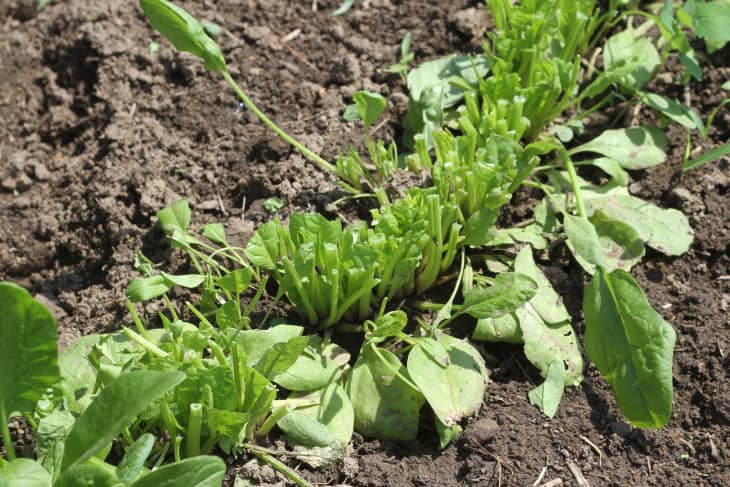
Baby greens (also called a "cut and come again" crop) are greens that, rather than remove the whole head, you remove up to 75% of the leaves and then allow it to regenerate for future harvesting. Because you never allow them to grow to full maturity, you can grow them a lot closer together than in traditional farming. You will also see your first harvest in a few short weeks. Growing this way will ensure that you get several good harvests out of each plant. You can stagger planting times for your greens so that you will always be flush with fresh leaves to harvest.
Tara from Silver Lake Farms gave a presentation on growing microgreens at The Huntington. I was amazed at how easy she insisted it is to grow greens at home. Though tempted to start with microgreens, which require new seed for each crop, I decided that baby greens would be better for me because it's a renewing crop and uses a lot less seed.
Like most plants, you need a good source of light (a sunny windowsill or supplemental lighting source will likely do just fine), good soil and adequate water and drainage.
What You Need
Materials
Planter with excellent drainage
Peat moss
Compost (if you have homemade compost, all the better)
Seed (leaf lettuce, spinach, mustard greens, arugula, cress, mesclun mixes, dandelion, mizuna, chervil, endive, mache, Chinese cabbage, tatsoi, escarole)
Tools
Watering can
Trowel (optional)
Gardening gloves (optional)
Drill (optional)
Instructions
1. After you've chosen the seed to start with, make sure you have an appropriate pot with great drainage (I picked mine up on clearance at Target for $3). If you need more drainage, you can use your power drill to drill additional drainage holes. It's critical that your greens don't sit in murky, overly damp soil.
2. Fill your planting pot with half peat moss and half compost. Mix it together well with your hands or trowel.
3. Use your watering can to pre-moisten the soil before you plant your seeds. This will make sure your soil is adequately moist and that the water doesn't push your seeds too far down into the soil. Watering with a hose or sprayer will be too powerful for your baby sprouts and greens. A watering can best replicates rainfall (unless you are lucky enough to have a drip irrigation system)
4. Time to plant your seeds! Tara recommends not mixing your seed when first sowing. She has had better luck sticking to one type of seed per small container. When your baby greens are more established, you can have then in tight rows and alternate varieties, but since different seed stocks will sprout at slightly different times, it's best to keep them separate in the beginning.
5. Cover the seeds with 1/4" of soil and keep in a sunny location. If you live in an area where the sunlight is particularly intense or you have a hot spell (like we had 2 weeks ago here in Los Angeles), you may want to move your containers to a location with a little protection for part of the day.
6. Label your newly planted crop (I used a cork and a bamboo skewer...excuse the poor penmanship), make sure the soil is kept moist (but not wet) and look for sprouts to emerge in 7-10 days!
(Re-edited from a post originally published on 9.29.2011 - CM)
(Images: Michelle Chin)


Ercol Bar Stool
I would warn against using a power drill to drill additional holes in plastic. The vibration usually shatters the plastic before the hole is complete and ruins the whole pot. If additional holes are absolutely required, I would rather try melting the plastic with a hot metal rod.
does anyone know if this would work on a patio or indoors perhaps in cooler climates?
@residentgeek - if you have a bright patio or windowsill that gets at least 4 hours of good sunlight per day, it should work just fine for lettuce and spinach.
Peat moss is a non-renewable resource, but coconut coir (the husk of used coconuts) IS completely renewable and serves the same purpose. If your garden store doesn't carry it, ask them to. It took a few years but my local place carries it now and has for some time.
You buy a brick of it, soak it and it expands to monumental proportions.
@residentgeek - I grow my lettuce under a 48" fluorescent shoplight - T8 or T12 fixtures - and they grow great all year round including in winter.
THANK YOU, Heathermichelle... I think AT should edit this posting and never instruct people to use peat again.
How are you supposed to harvest 75 percent of the little lettuces? Outer leaves? Inner ones? I should think this would be critical information if you don't want to kill the young plants. . . .
But what if you put some tape over the spot before you drill?
Thanks for this!! I have a lot to say here. I am a former black thumb and trust me, this is easy to do. I can't believe I ever bought that slimy packaged stuff. I do however wonder about keeping it in a plastic pot, can't that leech into the soil as well? we use a colander or ceramic pot, also keep them nice and watered. They tolerate cold really well from what we've seen, and @Auma I think as long as you leave some leaves around the middle /outside to photo synthesize, they should be fine. Someone correct me if I'm wrong. Also @Heather coconut coir is awesome however I think I read a study that the coir can harm the plant. Let me look that up. We only use compost soil, by the way, it works brilliantly.
**tsk stupid iPad inks photo synthesize is 2 words, sorry.
I tried this last year, and my lettuce all died due to the lack of sun. Although my windows face south, the glass still filters the ultraviolet light, and the greens don't get enough. if you have a patio if might work, but in my case putting the box outside would mean the lettuce will get all the street pollution, so I'll stick with plants that are not as sun-thirsty..
I would strongly recommend not using peat. I have used coir for years, and never had a problem with it. I would also recommend using organic seeds, they don't cost that much more and haven't been dipped in fertiliser.
As to harvesting, some green you can cut all the leaves back and it will re-grow, others you might choose to harvest some of the outer leaves. I take the outer leaves because they are still young, and then the inner leaves can grow.
I should take time to do this !