
We Asked, Activists Answered: 10 Ways to Stay Engaged In Your Community Right Now
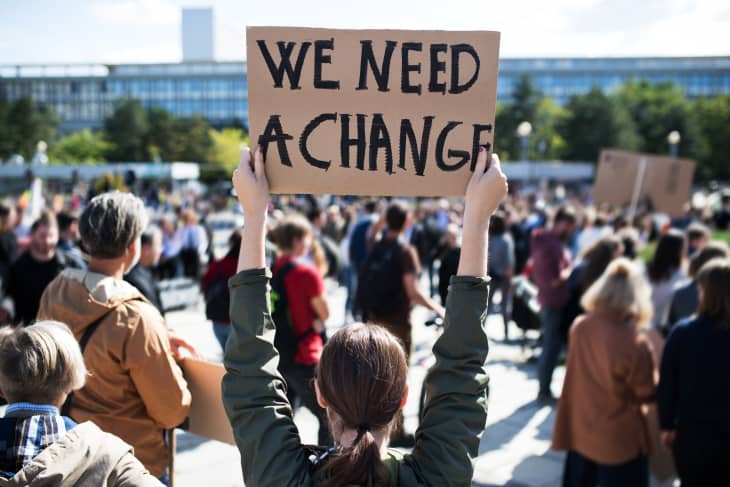
Election Day has come and gone, and if the past year has taught us anything about activism, community building, and privilege, it is that the work does not end once the presidential election—or any election, for that matter—is over. Resilient people can make change when they come together, and there is power in numbers. And activists across the country are ready to continue the fight.
2020 has set the groundwork for conversations and change to take place that was long overdue, and now is the perfect opportunity to keep the momentum going. I asked influential activists who have been devoting their time to uplifting their communities and helping to inspire change for their most crucial piece of advice, so you can replicate their efforts in your own communities.
Make sure you’re registered for your next local election
The presidential election is one election that happens every four years. There are many other important elections that take place locally—and one might be coming up soon in your area.
“It is not like Nov. 3 is this finish line of when people have to stop paying attention,” said Manasa Vedula, a co-founder of Voting School, a website that provides information about elections and state-by-state guides on how to vote in order to simplify the process. “The small votes matter just as much as the big ones, probably even more. Voting is cool, you should do it whenever you have the chance because it is not like everyone always had the option.”
Reyna Noriega, an author, educator, and visual artist based in Florida agreed. “It will be important for the activists, for the writers, the artists, people with platforms, people with talk shows… for everyone to continue the same momentum and the same conversations for the next local elections and everything else that is going on in communities,” she told Apartment Therapy. As Noreiga sees it, the decision made by the Nov. 3 election will impact the course of the ongoing conversations that will allow for change to happen in communities nationwide, and around the world.
Act with your community in mind
It can feel really difficult to keep going when things are overwhelming for you personally. That’s totally understandable, and working for the greater good of other people can help break you out of that funk. Plus, the more your work centers on community—whether local, national, or global—the more good it has the potential to do.
As community organizer Charitie Ropati explained, it’s vitally important to keep the greater good in your line of sight as you work. “I want people to think about and understand that collective liberation is possible when you value your community over a system that has a history of being violent,” the activist, whose work centers on education and providing resources for Black and Native students, told Apartment Therapy.
Gigi De Baere, the founder of the Chicks for Climate Instagram platform, stressed the importance of international communities standing together, especially given the ways in which the coronavirus and the ongoing climate crisis are affecting almost everyone in myriad ways. “It is up to us to change our lifestyles and policies to affect other people who don’t live in our countries,” she said. “The fight does not stop.”
Take care of yourself, so you can take care of others
It is really easy to feel bogged down by stress, and to settle in helplessness. It’s more likely than not that any number of hurdles you experienced this year have compounded on top of each other, leaving you feeling frayed, no matter the election’s results. It is as important as ever to take time for yourself so that you can effectively fight for your community going forward.
“I want people to drink water, prioritize their mental health and the health of their families,” Ropati said. “To rest, to sleep, because things can be so stressful.”
Practicing self-care can look different for each person, and might include not reading the news after a certain hour, having a lazy day, talking to friends, or spending time with family. For their parts, the organizers behind Voting School and ChicksForClimate prioritize communicating important information without fear-mongering. In doing so, they hope to give people the encouragement they need without making them feel unmotivated or further stressed out.
“The only thing that keeps me hopeful is reading the good news,” said De Baere. “I always make sure to post some sort of good news.”
Start by making change in your neighborhood
As Kelly Chambers, a Philadelphia field organizer for HeadCount, suggested, it can be both easy and motivating to meet people in your community who share similar goals and passions.
“Go to meetings, meet other people who care about making the community better,” she said. “Look to be a part of something bigger than yourself. Maybe this means working with a neighborhood association or with a local activism group.” She added that you can start by simply reaching out and seeing how you can be of service. “Community organizing organizations are always looking for more people power,” she said.
And Elizabeth Fernandez, a writer, communicator, and longtime activist who is the Communications Director at Movement Voter Project, said she hopes people sign up for grassroots organizations in their communities, many of whom will be happy to tell you what they need.
“This real dumpster fire of a year has shown us that we need each other more than ever and we only get by by supporting each other,” said Fernandez. “Get involved in your local community, become the leader you want to see.”
Make sure your work centers people who have bene marginalized and disenfranchised
The past year has been tough for almost everyone in a variety of ways, but issues like the pandemic have also impacted Black, Indigenous, and other people of color in outsized ways, and exacerbated issues that have existed for decades if not longer. Whether you spend time fighting systemic racism, homophobia, sexism, or a combination of one or more of these issues, focusing your work on the most marginalized will help everyone in the long run.
“My focus remains with the people whose lives these systems actually affect,” Melanin Mvskoke, a community organizer who aims to de-center the settler state, white supremacy, and racial capitalism, told Apartment Therapy. If you are unsure where to start, she suggested that you connect with community organizations or individuals doing work around issues you care about. “Our organizing has to be centered on people. It has to be about people and the end of their and our oppression,” she said.
Find ways to make use of what you have
“The first step is to realize privilege and then figure out how to use the skills, the means, the talent you have to help those who need it,” said Marci Iacobucci, a volunteer with the ACLU’s People Power initiative. “It may [mean] start your own thing or more likely, like me, find an organization whose values align with yours and who is doing the work you want to do.”
This can look like many things, from creating infographics that can help amplify important issues on social media to stocking your local community fridge. If you are a lawyer, you can help with legal-aid or bail funds; if you do marketing you can help organizations get their message across. There is work to do for everyone, it is just about morphing your skills into something that can be helpful for making change.
“We achieve goals as a community,” Noriega stressed. “Not everyone has the ability to go out and protest but other people have the means to donate, other people have the means and creativity to create signs, to educate the community. Everyone has an important role in the movement. It is just important for us to wake up to what our unique abilities are and how we can be useful.”
Keep your heart in the work by finding your passion
Trying to change the world for the better is difficult. It requires time and effort, and if done properly, is not a show that you take part in, just because.
“I think without the heart or without the connection to issues we can get lost in doing good for the sake of performance,” said Mvskoke, who also stressed the importance of dedicating your time to the causes that speak to you most, if you can. “Find out what’s really important to you. Find out what makes you wanna fight. Because it will require determination,” she said.
Iacobucci agrees. “The most important thing is to figure out which, of all the things you could get involved with, really resonates with you, stirs your passion, makes you want to fight for it,” she said, adding that your focus could be on the national or local level. What matters is that it motivates you like no other, and serves as a constant source of inspiration as you go.
Never stop educating yourself and others
In an era of abundance of information, it is important to note that knowledge does not just fall in your lap. It’s important to study history, read articles and books by writers and journalists you trust, and pay your education forward by speaking up when you hear a loved one who is in the wrong, if you feel safe to do so. It’s also important to share your knowledge with those who do not have access or incentive to look for it themselves—you might even inspire them to get involved, too.
Charlie Amáyá Scott, a community advocate to inspire joy and justice, grew up in Navajo Nation with people who looked and talked like them, and it was not until college that they began advocating for the issues they cared about. Learning the colonial history of their campus, living among people of different races and backgrounds, and having friends who taught them about solidarity and Black Lives Matter inspired them to use their voice. For them, education is an important way to set the seeds for the change that needs to take place.
“We are still fighting,” Scott said. “Education gives us a lens of what we are facing.”
Vedula and her co-founder, Tova Diamond, hope that their platform helps engage followers with accessible information and inspires them to take action. “The intention for us has always been the same,” said Diamond, who stressed the power of “educating, providing resources, and empowering people to vote.” As she pointed out, people will need to stay motivated to do the work, “regardless of the outcome [of] the election.”
Keep talking to the people in your life
Whether they disagree with you outright or are mis- or uninformed, you are bound to come across people in your life who oppose the causes you’re fighting for. If you feel safe doing so, try engaging them in a dialogue as to why you feel the way you do, and why you hope they join you. There are resources online for talking to people with opposing views; whether that is having a discussion about politics with friends and loved ones who hold different beliefs.
“The most important thing is to talk to other people about it,” De Baere said. “You are just one person, but as soon as you talk to someone else about it, there is a ripple effect. Education and awareness is the thing missing from this piece.”
Remember to take things one step at a time
The issues you are tackling have been years, and sometimes even centuries in the making. That can feel daunting to anyone, even activists who have been putting in the work for a long time. But by focusing on making small changes, your activist goals will both feel more achievable, and provide tangible results in real time .
“I’ve learned that making change requires patience,” Chambers said.
Noriega agreed, adding that people should aim to set attainable goals and not overwhelm themselves with ideals that seem insurmountable. As she pointed out, believing you can end world hunger if only you had the billions to do so can be idealistic, especially if you don’t take steps to achieve those goals. “Then you grow up and realize you can just do little things in your community and start to make smaller changes,” she said.
At the end of the day, Fernandez stressed this is not a one and done goal, and that the goals and challenges people are facing will always have shifting goalposts. That is why people need to keep on fighting, protesting and advocating for issues that they feel passionate about.
“This is a movement, not a moment,” she said. “And we are in this for the long run.”