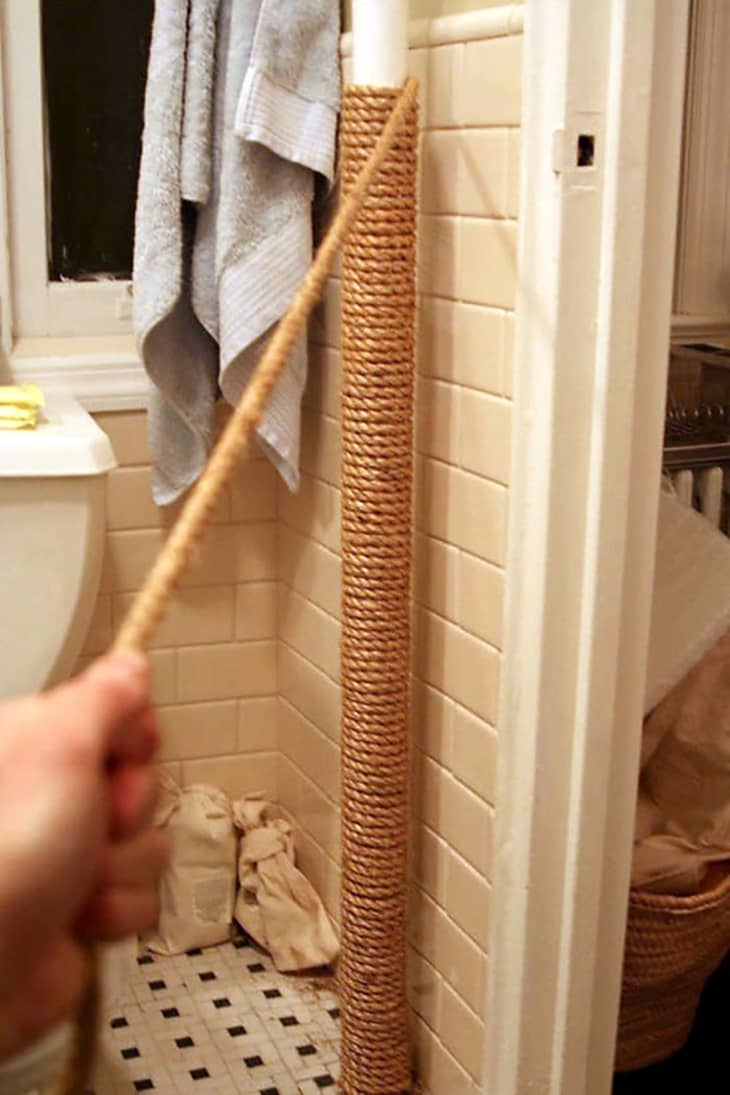
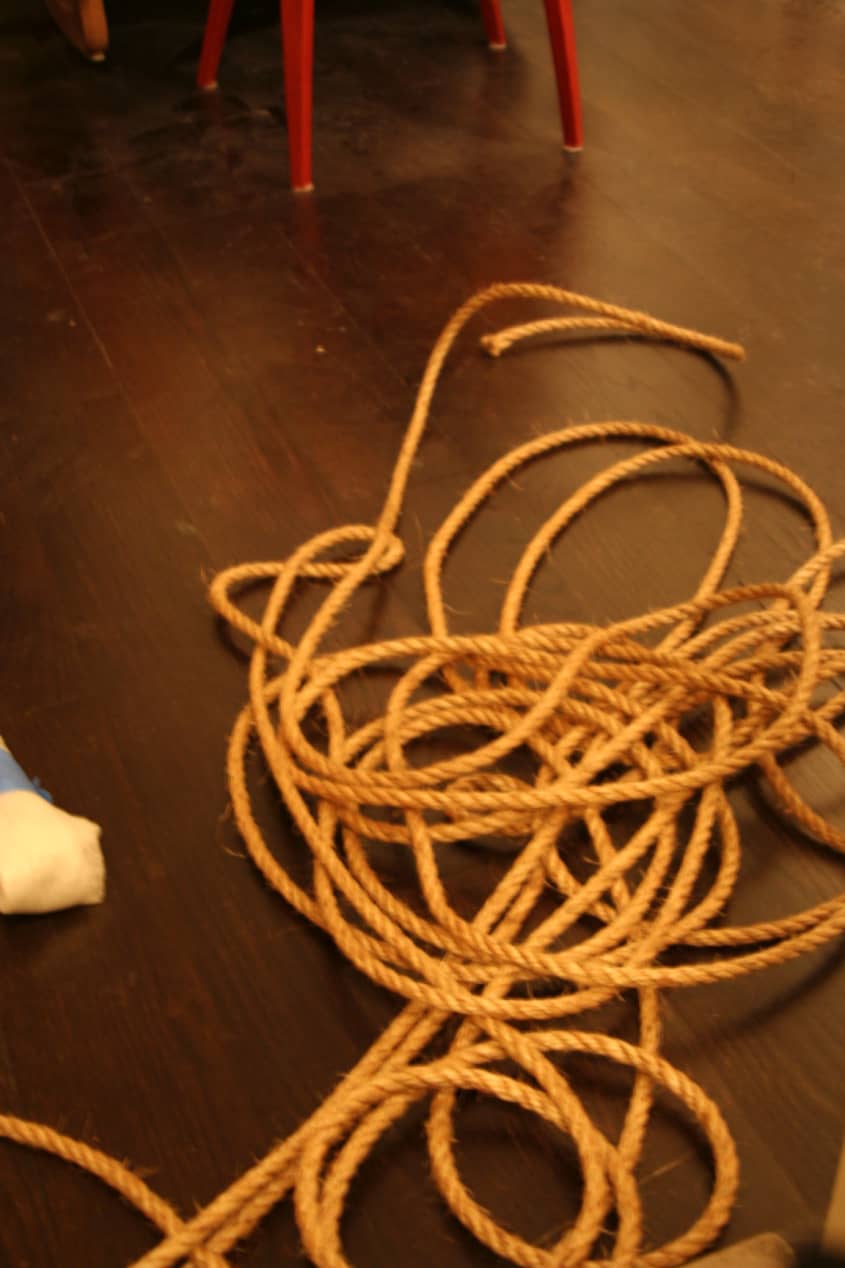
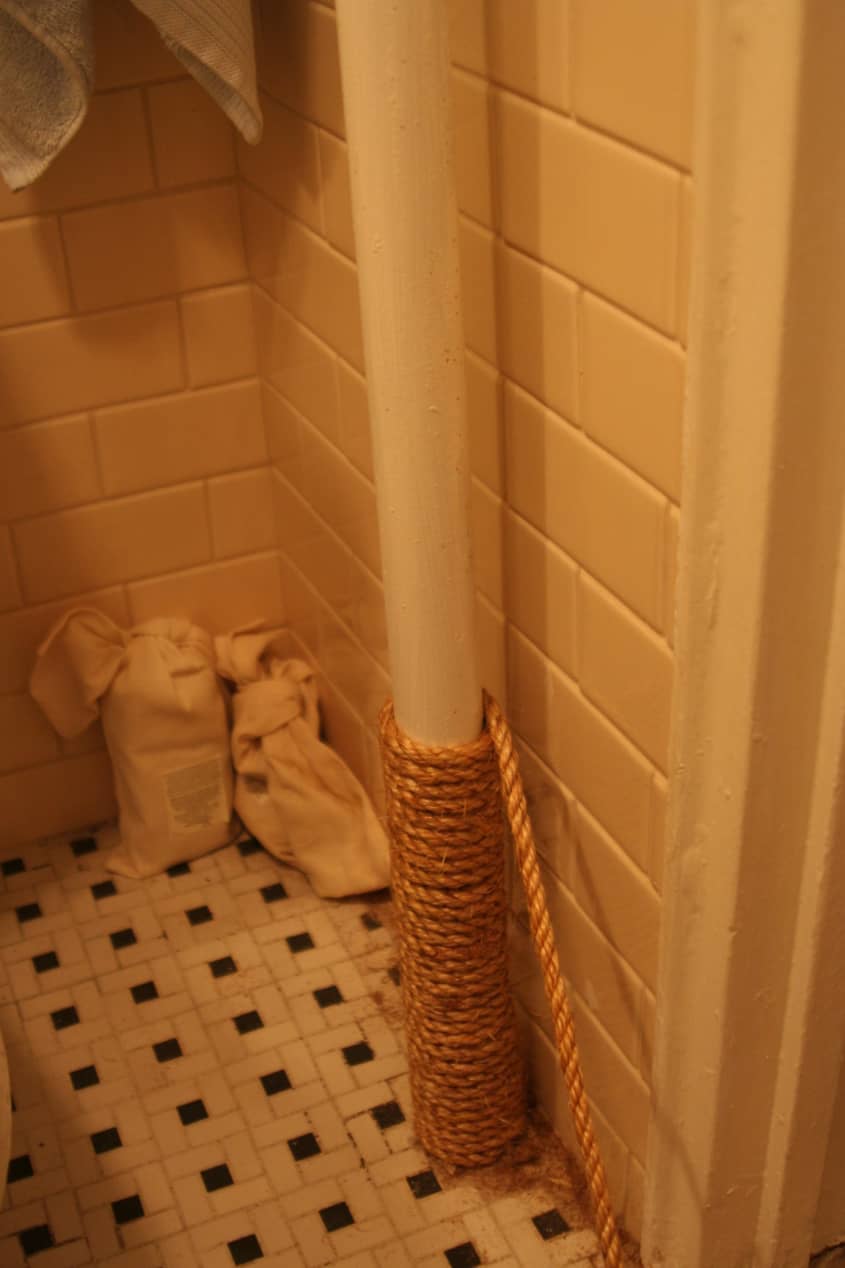
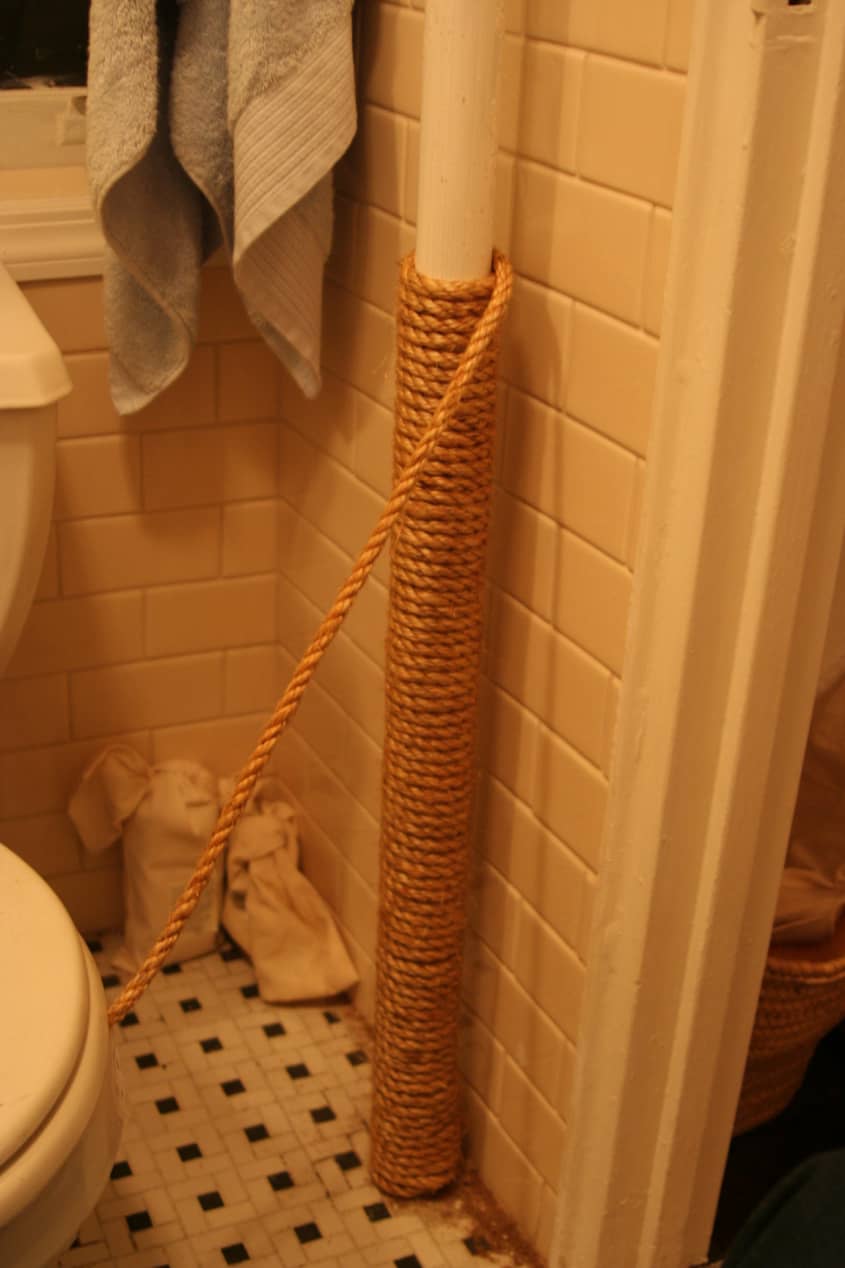
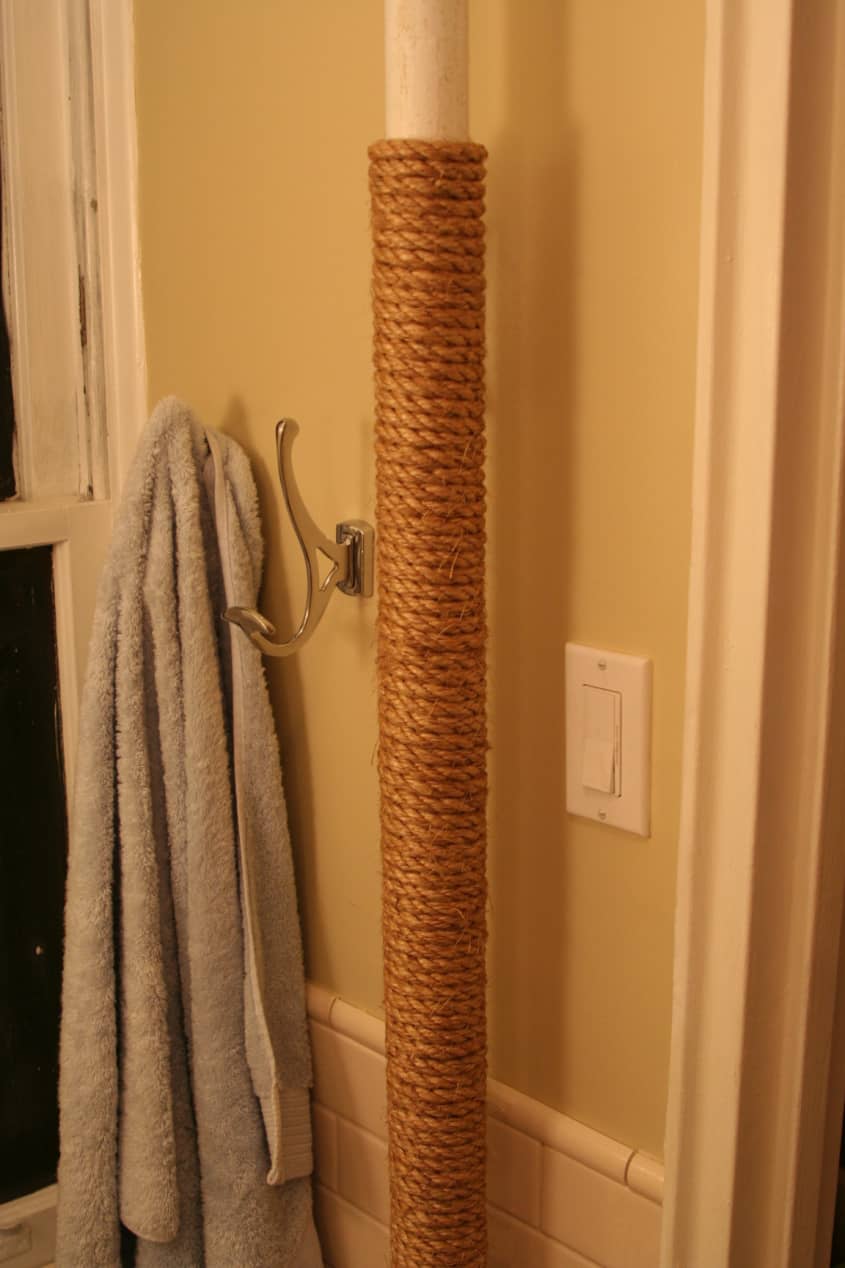
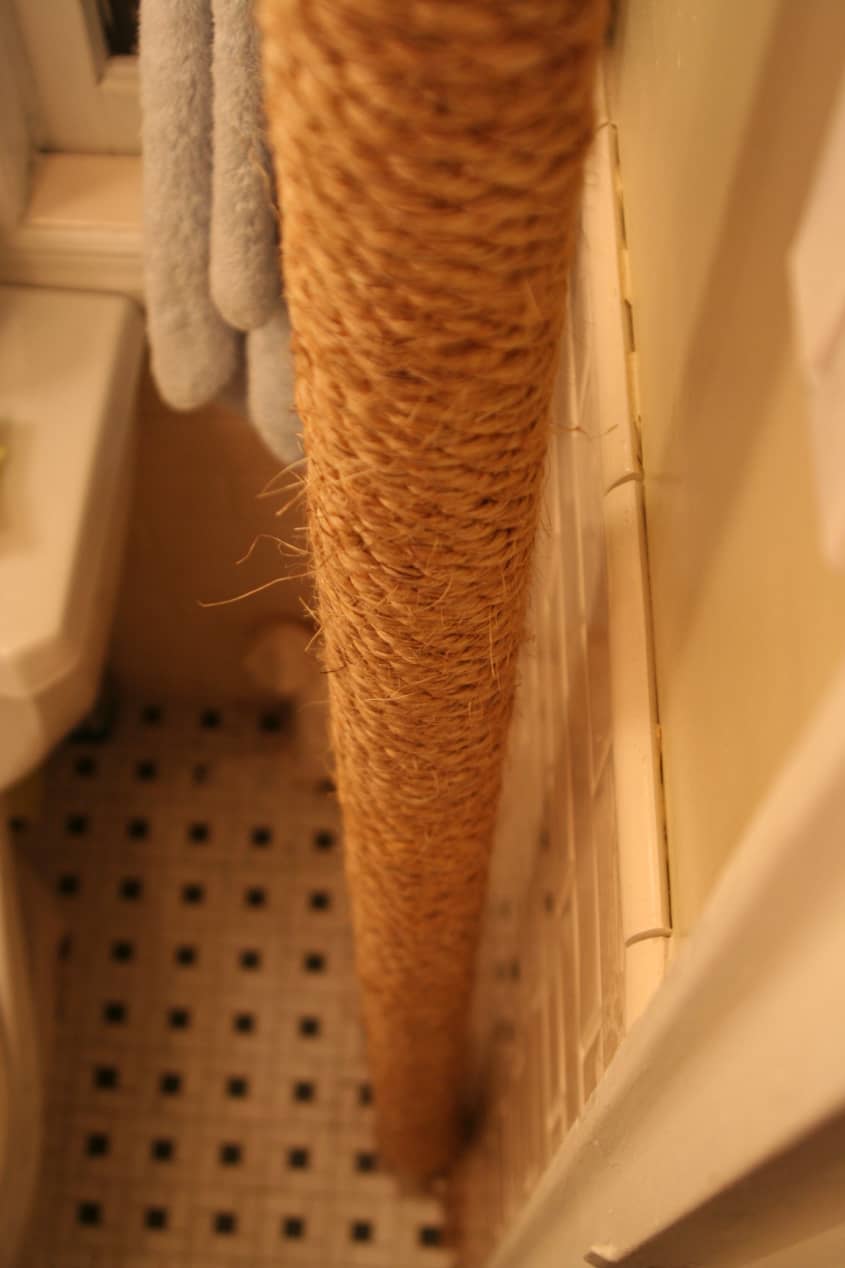
We thought that this would be hard. It wasn't. And yet it has totally changed the rusty, scalding pipe in our bathroom into a *decor moment* that we are very happy with.
If you ever want to cover up a pipe and provide some minimal insulation, this is a far nicer fix than insulation foam.
Ingredients:
1/4" manila rope for 20 cents a foot
How To:
For the 6 feet of pipe that we were going to cover we estimated that we needed about 50 feet of 1/4" manila rope, but we bought 100 feet of it because it was only 20 cents a foot. The total bill was $20. We needed every bit.
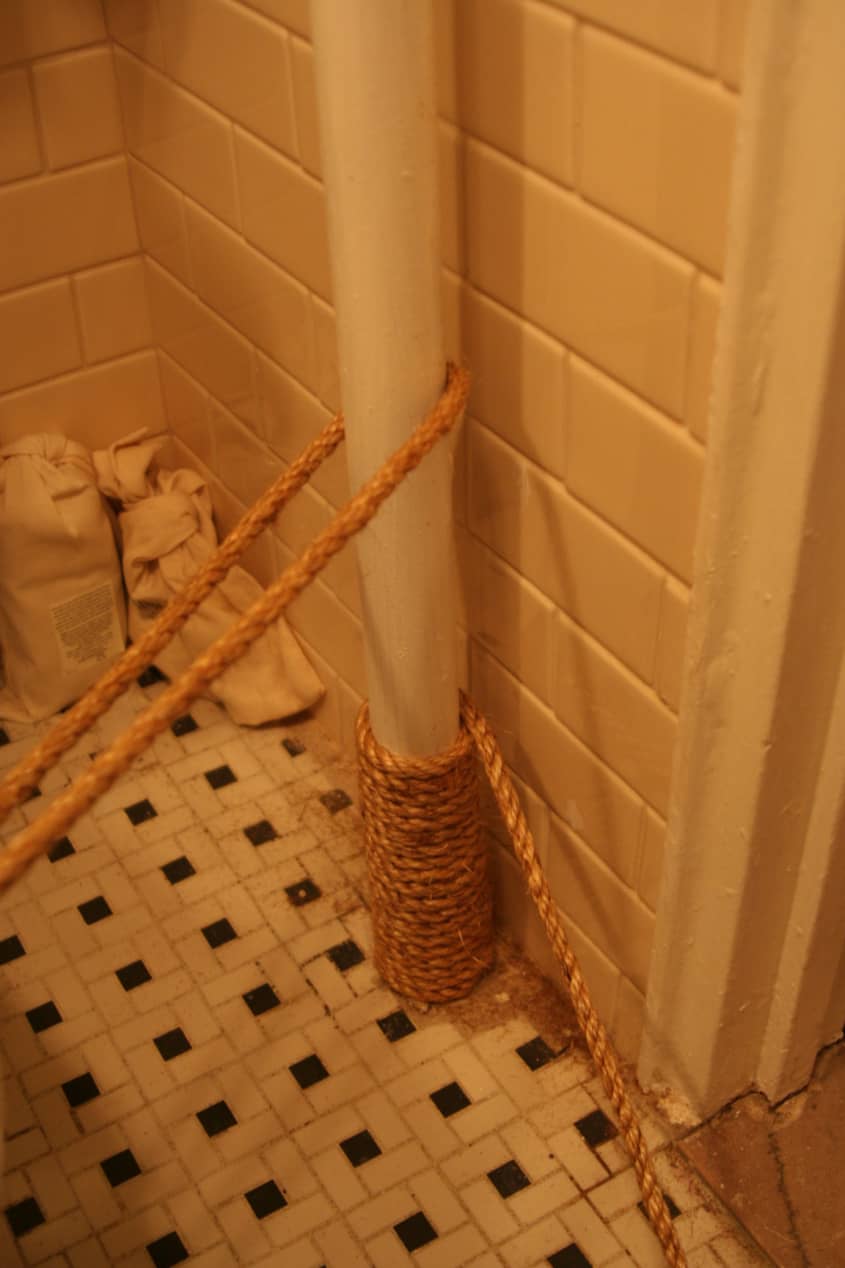
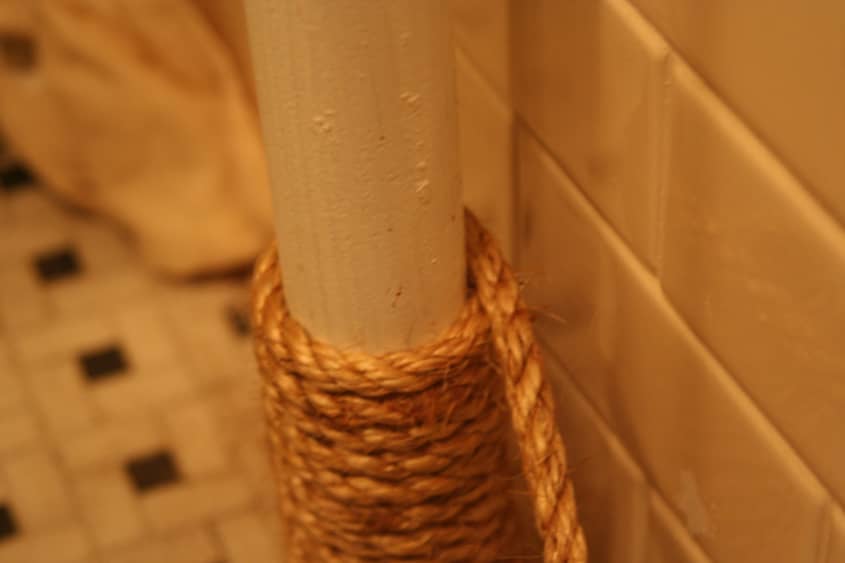
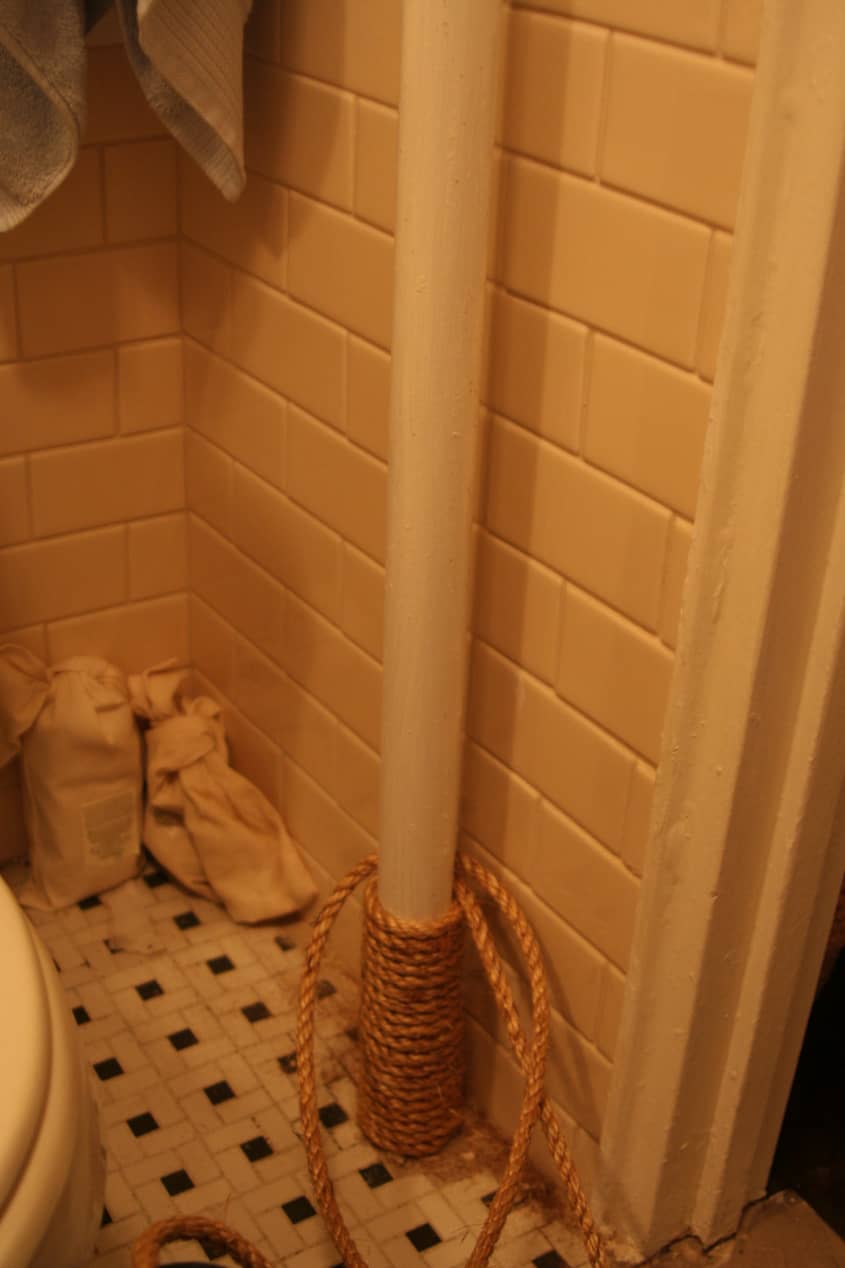
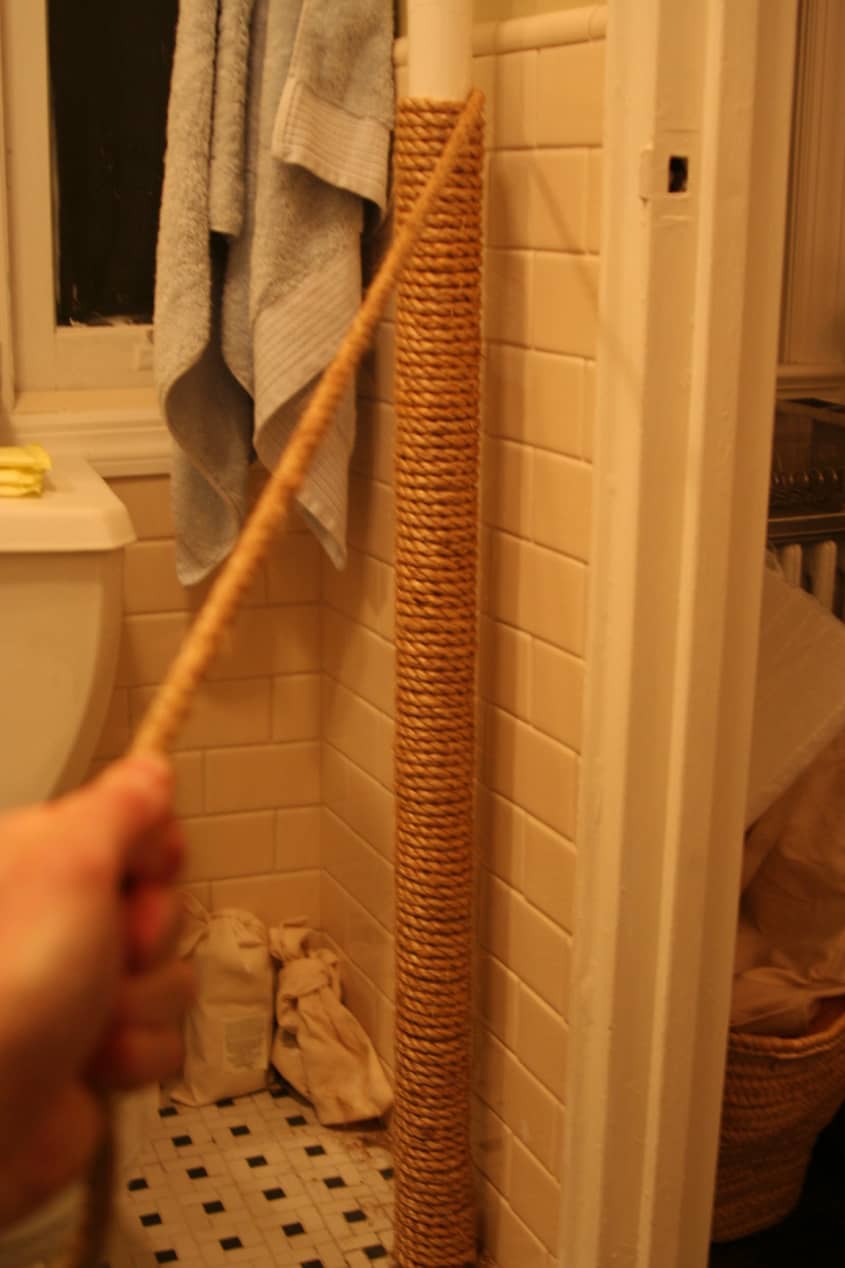
Starting at the bottom we held 5 inches of rope up the pipe while we wrapped it firmly in the first coils. In this way it locked on itself and gave us a firm staring point with the coils starting flush at the floor.
We then settled in for about 45 minutes of pipe wrapping. There is no secret to this except to be patient and keep the rope tight. Every now and then you can push down on the coils to keep them snug as well.
After each wrap you need to pull the rest of the rope through. We would pull the rope tight, place our foot on it to hold it tight and then quickly overhand the rope through, being careful not to let it snag or get knotted.
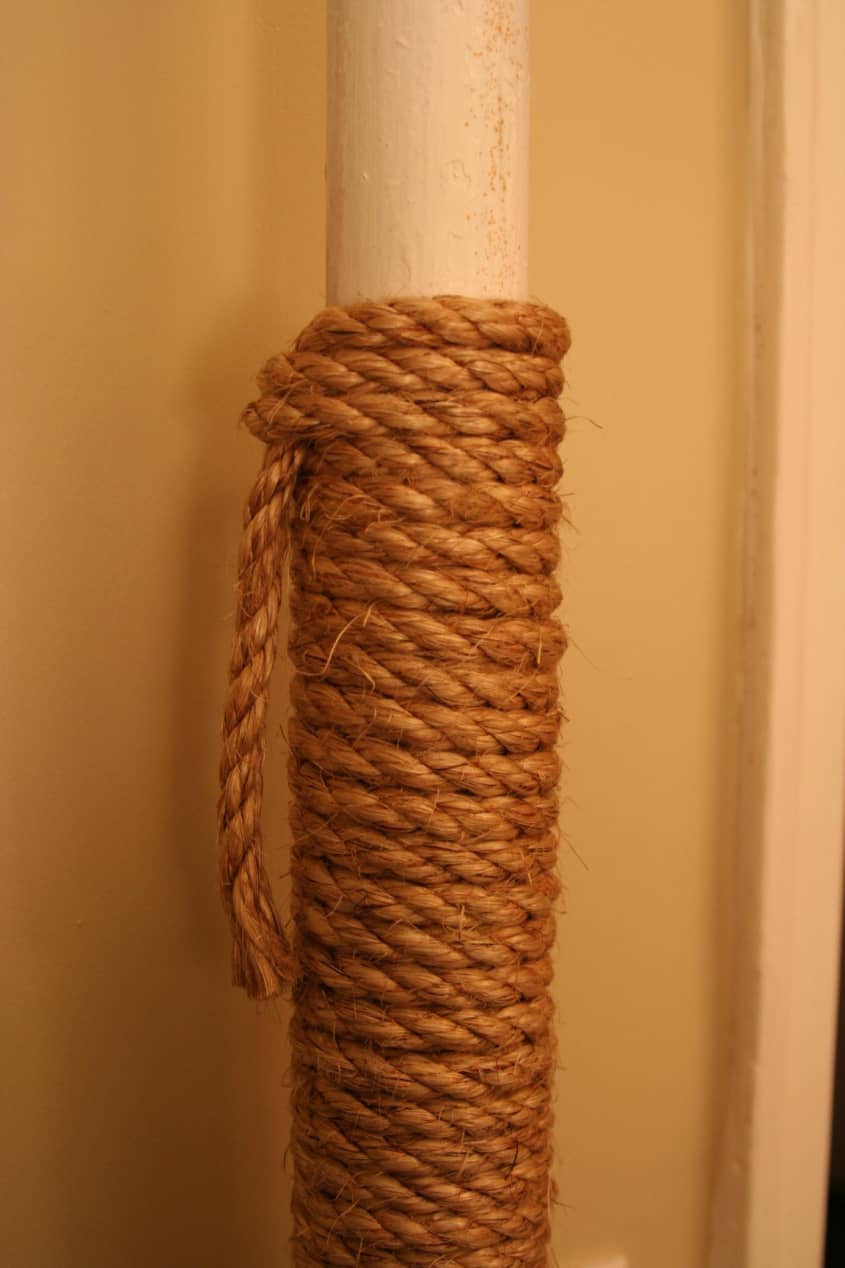
At the end you finish off the way you started: loosen up your top coils and snake your loose end through so that it pops through a gap in the coils about 5 inches from the top. Gently pulling it down and working the coils tight with your other hand the entire thing should lock up nicely.
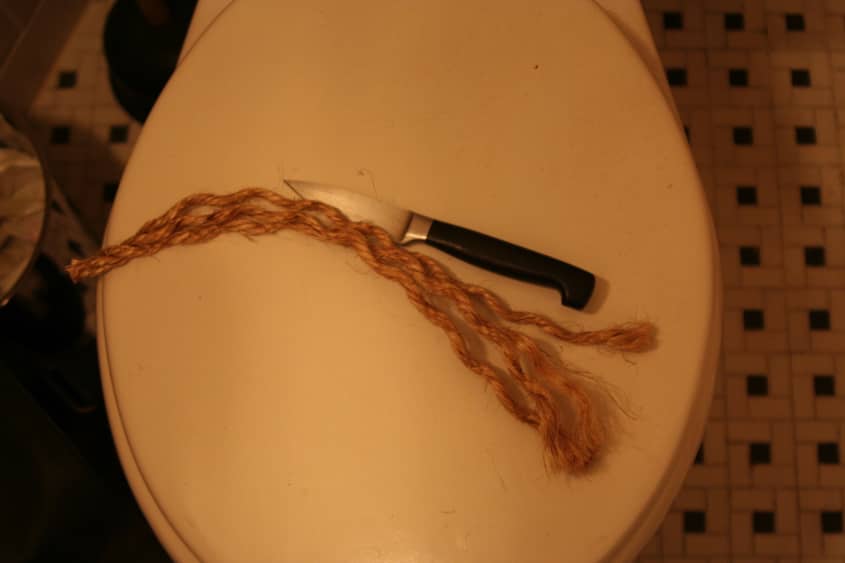
You can then cut off the excess if you like or leave it. We left the excess on the back of our pipe to allow us to tighten it up if we ever needed to.

Comments (7)
I'm amazed by your patience in pulling the whole length--beginning at 100 feet--through at each turn! A faster way is to make a flat spool with a piece of thin wood (or really heavy cardboard), wrap the rope around it at the start, and then pass the spindle through at each turn. MUCH faster, and if the spindle's flat, it will fit through the space behind the pipe. . . .
This is truly awesome - we tried it today. We had an 8'4" pipe and used 1/2 inch manila rope. To calculate how much rope you need, measure the diameter or width of the pipe (inches), multiply by 3.14, multiply the height of the pipe (feet x 12). Then divide that amount by the size of your rope (if it is 1/2 inch, divide by 0.5)
For example, if your pipe is 2.5 inches wide and 10 feet tall and your rope is 1/2 inch wide, then:
2.5 (pipe width or diameter) x 3.14 x 10 (height in feet) x 12 (to convert feet to inches) = 942 - that is the area you need to cover. 942 / 0.5 = 1,884 inches or 157 feet of rope.
We needed about 130 feet, since our pipe was about 8.3 feet. We bought 2 100-ft spools - at the end of one, you just employ the same technique as when you start, leaving a piece at the end to wrap the new spool over.
I will say that it is effort to wrap the rope around the pipe, since with every wrap the entire length of rope needs to also get passed through - this can be a challenge if there is not much space between the pipe and the wall. It is helpful at the beginning to gather end of the rope up in a spool to pass it around the pipe easily.
will the rope burn? Is it a fire hazard?
I love the M&Co clock.
P
We just did this over the weekend, following these instructions. But the manila rope we bought was very oily and smelled like a car garage. We thought the smell would fade, but when it heated up, it stank even worse! Since it's doubling as a cat scratcher, we've decided to take it down and starting over with biodegradable sisal.
Wondering how sisal worked? (Jennfo, if you're out there?) I love the look of the wrapped manila rope, but have a kid with some breathing issues in winter and don't want to add to her lung load with the off-gassed chem preservative they use on manila rope to keep it water resistant.
this is a very common solution here in new york. there is no fire hazard with steam pipes. that's one of the great things about them. the hottest the pipe will get is about 210 degrees F which isn't hot enough to start a fire. it can melt some things though.
if the riser is your primary means of heat (ie: no radiator in the room), it will reduce the amount of heat you get--which is often a good thing in some apartment buildings. if you want the heat, you might consider using a thinner rope or not going all the way to the ceiling.
if the heat comes on, there's little risk of mold being a problem. the heat will dry out the rope.
be careful of what the rope is treated with. it can off gas pretty badly as one poster experienced. some natural fibers are treated with petroleum products which smell similar to diesel fuel.
Thanks for this. I searched for instructions on wrapping a pole with rope and this was the most helpful result.
I have a pole in my loft that I'm going to try to wrap with sisal rope so I can turn the bottom section of it into a scratching post for my cat. I found some really brightly colored rope sold for making parrot toys that I'll be using, assuming that if it's good for parrots that it's non-toxic for cats.