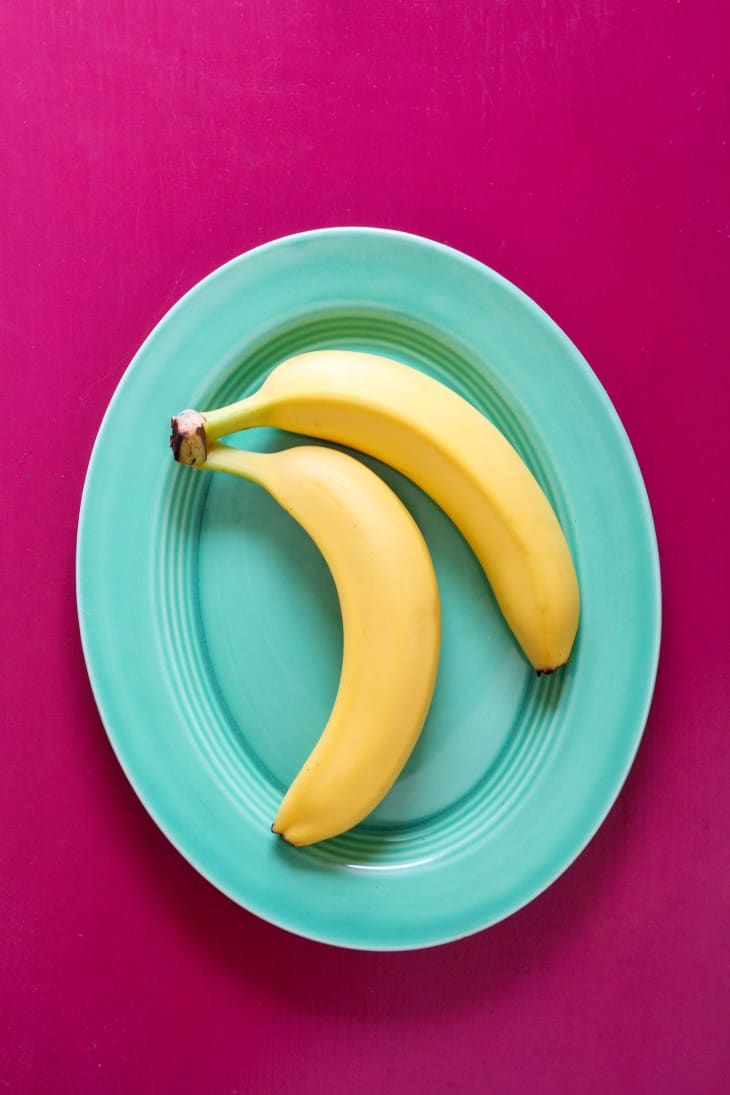
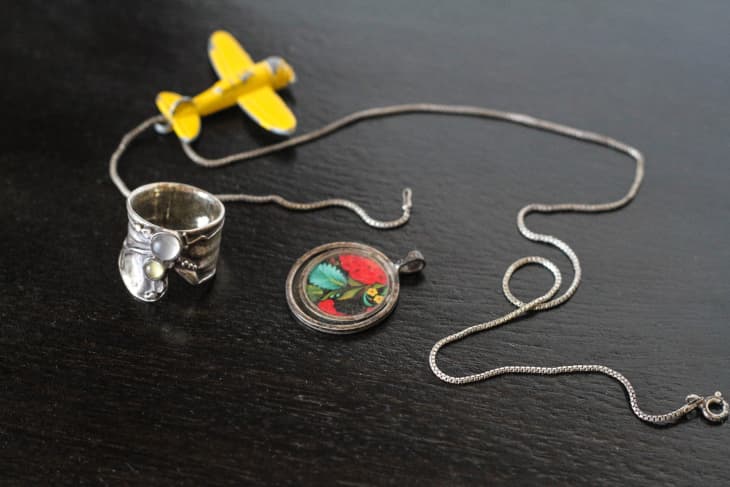
I’ve read before that bananas can polish silver, but I’d never actually tried it. That is, until this weekend, when my parents were cleaning out their basement and my mom stumbled across a creamer she thought I might like…
While the little creamer still had some shine, there was a bit of tarnish around the handle and the top. I knew the banana polish would be best for mildly tarnished pieces and this might be too much, but I still wanted to try it out. Plus, I have a banana-obsessed toddler around, and hence, many banana peels.
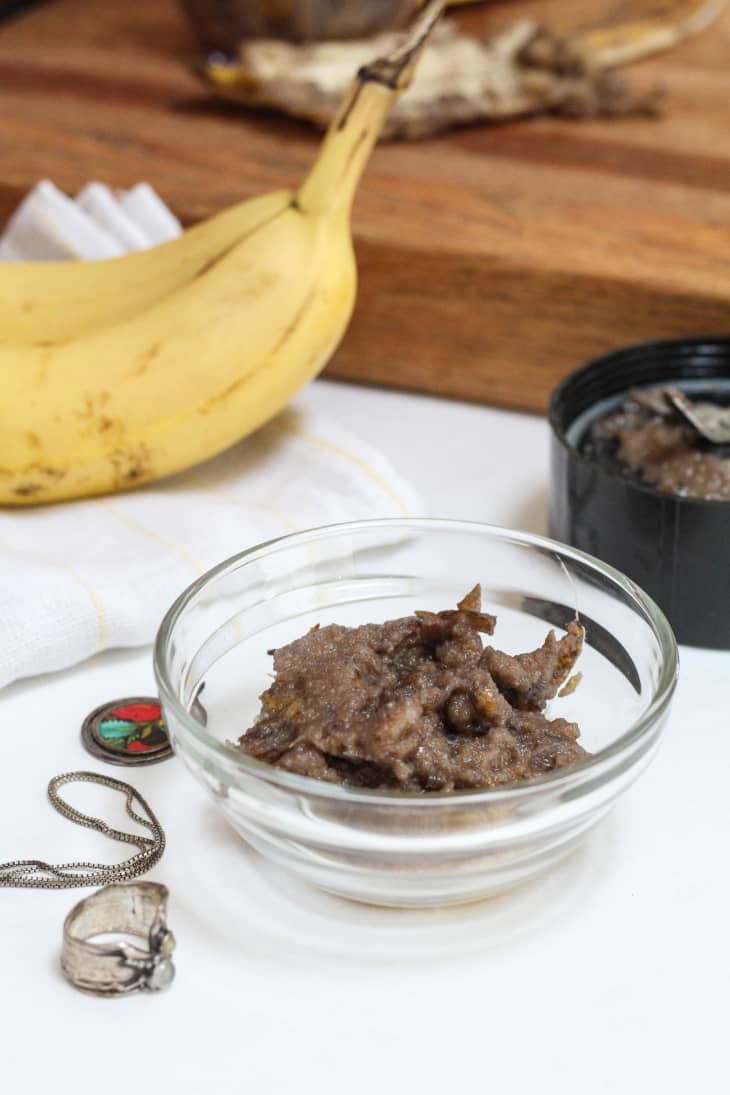
First, blend a few banana peels with some water to make a paste.
Then, rub the banana polish on the silver with a soft cloth. Finally wash off polish and dry with a clean cloth.
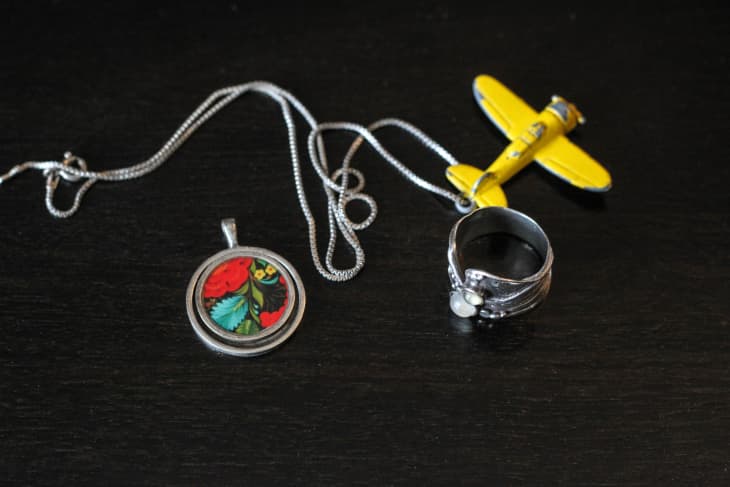
Shinier silver!
As I said, this trick really is best for mildly tarnished items. I may still have to stick the creamer in a bath of water, salt, baking soda, and aluminum foil like my mom has always done. Still, the banana polish did get off surprising amount of tarnish and this is a trick I'll likely try again.
Images: Kathleen Luttschyn

Commercial Flour Sa...
toothpaste and an old toothbrush work REALLY well no matter the amount of tarnish!
For me, ash from a burnt piece of paper is the best, because it is such a fine polish grit and doesn't polish to a full shine but a beautiful pewter type of look, leaving the dark in the recesses. But I'm going to try the banana for sure. Thanks for the hint!
Whoa, love the tip!!! We were raised with family silver and I was the chief polisher. I've spent a fair amount of time trying out other tricks, even though my mother was hooked on Wright's silver polish. I LOVE this one! I peel 4-6 bananas at a time to freeze for shakes so I get piles of peels every week or two. Never had such a great use for them before! Can't wait to try it.
I was just polishing up the passover silver and wondering about the nastiness of the cream polish in the water supply.
Too bad banana peels are my goat's favorite treat. Will try this.
These are great silver polishing tips; I hate the chemical ones too. What proportions of water, baking soda and salt do you use? I've always meant to try that...
I have never used the water etc. bath either and looked it up immediately - here is a link to one technique.
http://chemistry.about.com/cs/howtos/ht/silverdip.htm
Rose bushes love banana peels on their soil, blended or not.
I find that toothpaste can scratch the silver and get stuck in the engraving.
great tips
Toothpaste removes some of the silver. It's too abrasive.
The aluminum foil method is NOT recommended. See tips from: http://www.silversmithing.com/care.htm
I'd rather follow silversmith recommendations for polishing my silver. I love silver!
Baking soda + boiling water in an aluminum baking pan easily removes the tarnish.
Post above is absolutely right - using anything but aluminum (and it can be foil at the bottom of a sink) + baking soda is laughably a bad use of time. It's SO EASY - you'll never go back.
Hello Fidi,
Thanks for recommending my Silver Care page which now resides at http:/hermansilver.com/care.htm. And you're correct, I don't recommend the aluminuym foil method for the following reasons:
© Jeffrey Herman
This process, known as electrochemical (Galvanic) Reduction, uses aluminum foil or an aluminum/ aluminum alloy plate and a warm solution of sodium carbonate (washing soda). When the object comes into contact with the plate in the solution, it removes only light tarnish, not the thick, black tarnish produced by years of neglect. Pitting of the object can occur if the aluminum plate is not periodically cleaned. Another not-so-obvious problem is scratching of the object when in contact with the plate.
Objects cleaned by this method may tarnish more quickly than silver that has been polished, for the object's surface will act like a sponge and more readily absorb tarnish-producing gases and moisture. The solution can also seep into hollow areas such as coffeepot handles, unsoldered spun beads around the tops of lightweight holloware, weighted pieces with minute holes, and any porous attachments. For these reasons, this cleaning technique is not recommended.