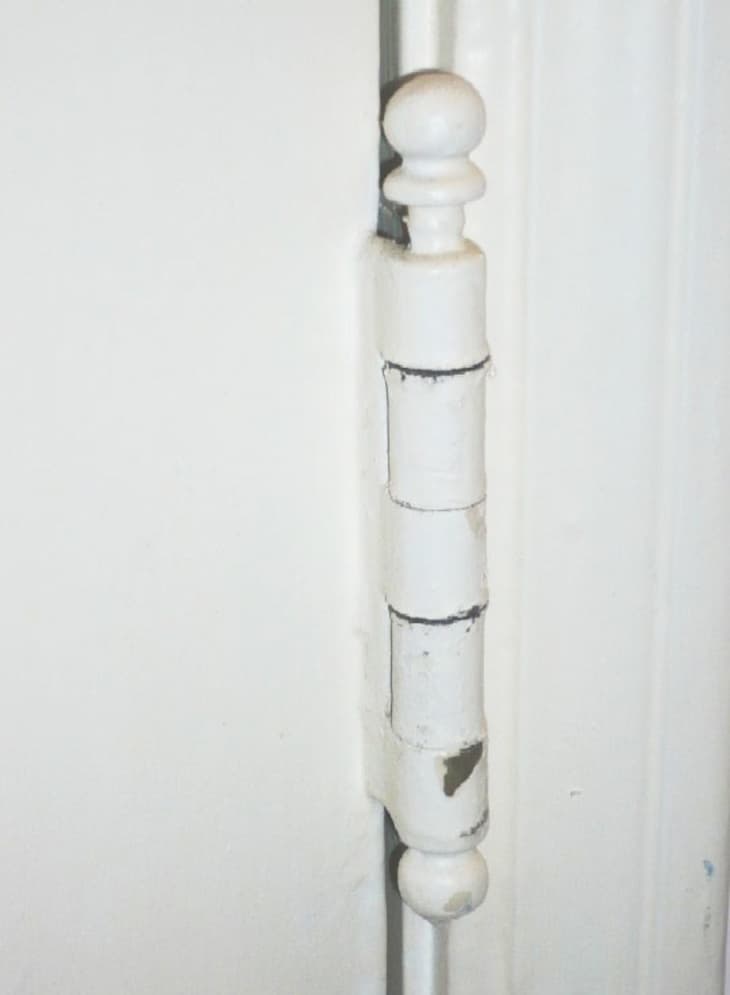
So the thing about living in a rental is that someone lived there before us. Someone lazy who did not tape off the hardware on the doors or remove it entirely before painting. We are a little frustrated by the fact that all the hardware is encrusted with paint and nothing works correctly. We go to the hardware store and we stare at the shelves and we wonder: which product will best remove the paint?
We share our frustration with our friend and she very calmly says, "Did you try soaking it in baking soda and boiling water?" We sort of shrug her off and mumble something about having run out of baking soda because truthfully, no, we did not. We immediately try it, boiling up a quart of water with about one-quarter cup baking soda. Now we have to find something else to get steamed about because this is the perfect solution; baking soda comes through for us again!
Best method: remove the hardware and boil it with the baking soda for 15-20 minutes. Second choice: soak it for a few hours in boiling hot water. Third method: soak a washcloth in the hot mixture and drape it over the hardware. Watch. The paint peels right off.
Related Links:
How To: Make A NonToxic Bathtub Cleaner - How To: Natural Carpet Powder Deodorizer
Comments (22)
Hm. Is it safe to do this in a pot that I use for cooking or should I go buy a throwaway?
Brilliant!
I will definitely be trying this. Thanks!
On a related note, we are needing to replace doorknobs on our doors. I am hoping to have a consistent finish with all of our door hardware. Can I create a rubbed oil bronze finish on the hinges once they are stripped if we decide to go that route with our knobs? I believe our hinges are steel rather than bronze. While the current knobs are a mish mash of hideousness, the hinges are original to our 1920's home, so I prefer to keep them.
This is an old trick - one that does not need baking soda.
Metal and paint absorb heat at different rates - metal heats up much faster and expands, breaking the bond with the paint - a good scrub and all that caked on paint comes right off.
Works for glass too!
i ditto mattster's question.
furthermore, it's common to clean glass pipes by boiling them in water, but that ruins my pot. erm. i wonder if this is the same scenario. does it stink up the joint, too?
mattster,
I'd suggest using a throwaway pot since you never know what kind of paint was used oh so many years ago.
wig3000,
we posted about west la plating company last week. they'd be a good bet to answer your questions and help you figure out how to get that finish you're looking for:
http://www.apartmenttherapy.com/la/painting-fixing-repairs/la-store-west-la-plating-company-043449
best regards,
abby
I would love to try this but worry about lead paint issues in my circa 1935 apartment.
The lead isn't much of an issue if there are no children around, and the paint isn't turned into dust via sanding. You cannot avoid lead paint in an old home, but that doesn't mean you can't do paint removal. Just follow a few basic rules.
Read up on it on Wikipedia: http://en.wikipedia.org/wiki/Lead_paint
This is good to know. We may have a need for it in the near future, god willing :)
That's awesome, I'll be trying that. The previous renters painted over much of the hardware here, including painting over an entire faceplate.
fantastic, thx!
and thx controlzed for the boiling w/out baking soda
I don't think a stainless pot would absorb lead from lead paint. Anybody have the science on this?
Yikes-If you don't want to go to all that trouble , there is an easier way. A product called Liquid Sandpaper, which is non toxic, will take the paint off with little or no work. Just a little dap on the paint covered hardware and the paint will lift it right off.
How hard is it people to go to the Goodwill or Salvation Army or any second hand place you frequent and buy a used pot for the expressed purpose of paint removal? Then throw it away when you're done. Always better safe then sorry.
well, better to not toss one more thing into the landfill if you don't have to!
Or seriously, live with the paint.
I hate to be a killjoy when there is enthusiasm to improve a space, but couldn't your energy be better spent elsewhere? I think most ppl understand that rentals unfortunately come with painted-over everything. Unless the functionality issues really bug you, I think you're better off focusing on more appreciated improvements...
But I do admit that I love learning yet another magical use for baking soda.
also, you can put hardware in a slow cooker, which does the same thing. however, i would not use it to prepare your pot roast.
Good idea for my home, but I would never put this kind of effort into someone else's investment. I'd rather read a book or ride my bike. To each there own, though.
This worked like a charm for me (in the house I own). One problem: I boiled the glass door knobs as well and now they've got water in them that won't come out. Anyone have an idea as to how I can get the water out?
Turn the oven on low (like 225 F) and put the glass knobs in the oven. I'm guessing the water will evaporate. I'm assuming if you boilded the glass knobs, a little oven time won't harm them?
The oven trick worked like a charm! Thanks for that.
The boiling hardware with baking soda is no trouble and it is working very well (I have a pot on the stove even as I write this).
However, my hardware is brass and it looks completely discolored straight out of the water. Never fear, a little brass polish brings it right back to life.
So much better than using stripper, easier and less messy!
firecracker & Jon_B - I love all the unsolicited advice, NOT. I don't remember anyone asking your opinion on whether or not this was worth this person's time. That's for he/she to decide. They went through the trouble to provide a helpful tip and you offer nothing but negativity. Perhaps you could be spending your time more wisely. Keep it on point.
I appreciated the article and today I used this method. It worked very well. I too was frustrated with layers of old paint on cabinet and door hardware.
THANK YOU!