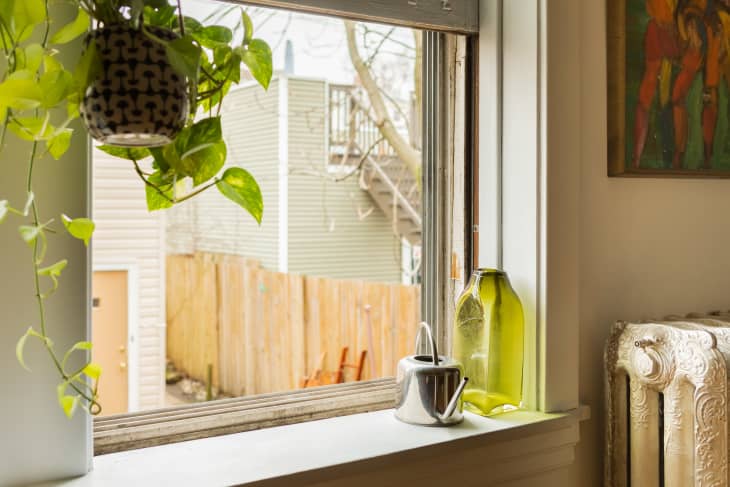
Repainting my windowsill made it onto my to–do list during the January Cure, and I decided to tackle it this past weekend. After a couple hours of scraping and painting, my windowsill looks good as new. Below is a step by step visual guide of what I did:
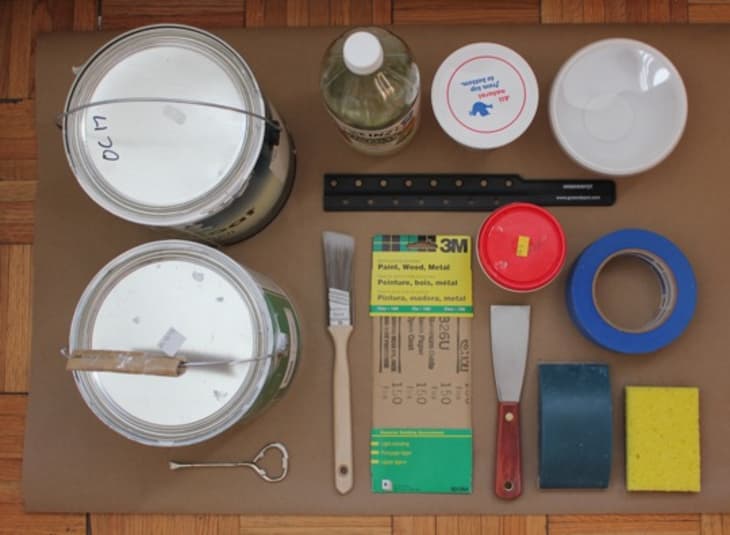
What You Need
Materials:
Drop Cloth
Spackle
Medium Grit Sand Paper
Sponge or Rag
White Vinegar
Painter's Tape
Primer (I used no VOC)
Semi–Gloss Paint (I used no VOC)
Paint Cup (I used old yogurt containers)
Tools:
5–in–1 Painter's Tool or Putty Knife (I used a 1.5" Stiff Putty Knife)
Sanding Block
Angle Paint Brush
Instructions
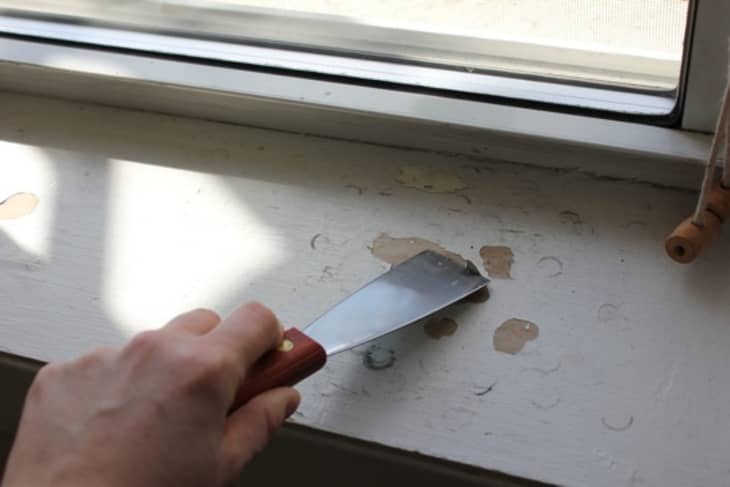
1. Lay down a drop cloth in front of the window, and remove as much of the old paint as you can with a scraper.
I used a putty knife, but a 5–in–1 painter's tool would work, too. My window frame was not peeling, so I only removed paint from the sill.
Note: Remove only the loose paint. Do not force the paint off.
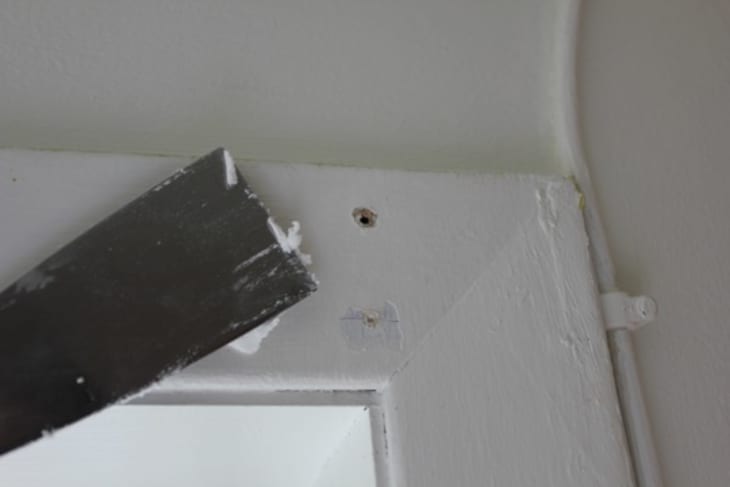
2. Fill in any holes with spackle, and allow it to dry completely.
Note: Less is more. Apply a small amount of spackle at a time; you can always apply more later.
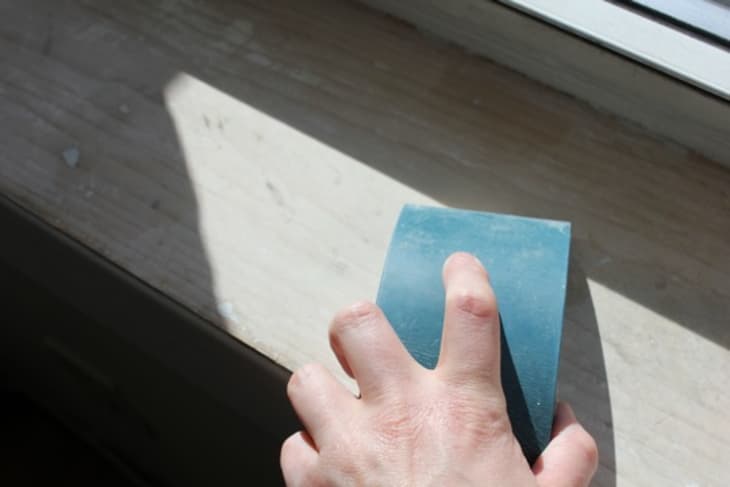
3. Sand the patched areas smooth so they are flush with the rest of the sill, and sand the windowsill and the window frame to prepare for painting.
Note: Because I did not need to scrape the window frames, I prepped the painted surfaces by lightly sanding them until the sheen was gone; this will help the new paint stick.
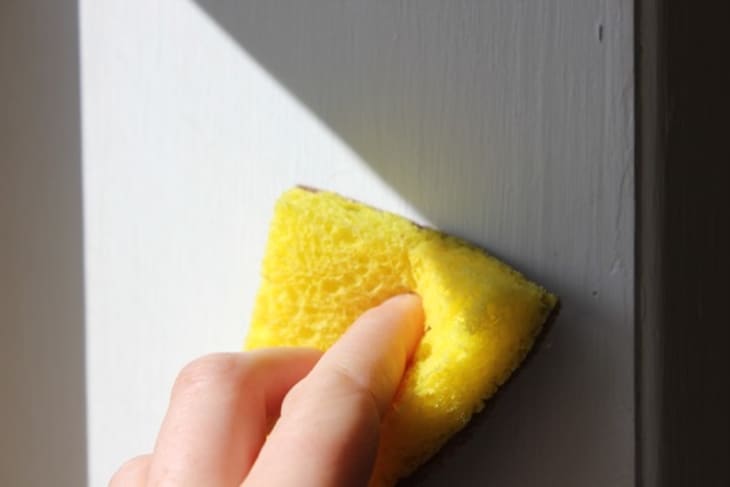
4. Clean the windowsills and frame.
I used vinegar and water to clean the surfaces and remove the dust.
Optional: if you have drafty windows, this would good a time to caulk.
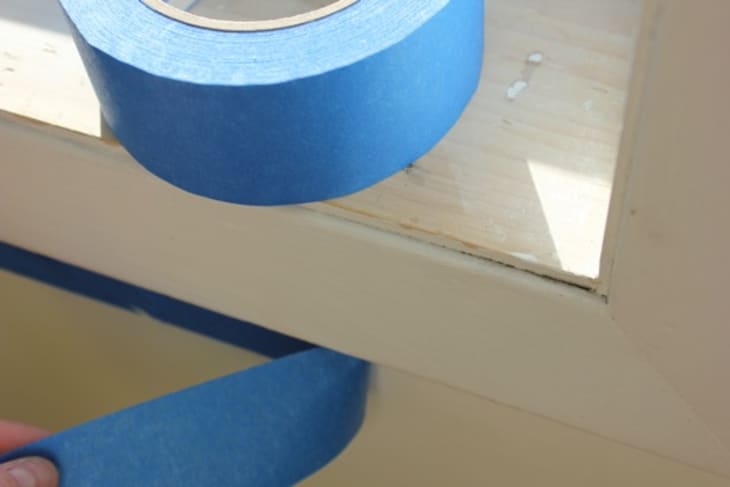
5. Tape around the area you are planning to paint.
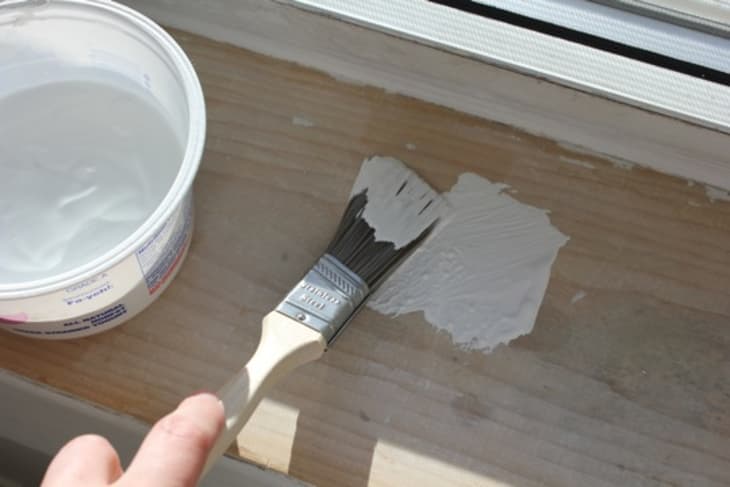
6. Using an angle brush, prime the raw wood and let it dry completely.
Because I only scraped the windowsill, I did not need to prime the window frame.
Note: an angle brush makes it easier to get into the nooks and crannies of the windowsill and trim.
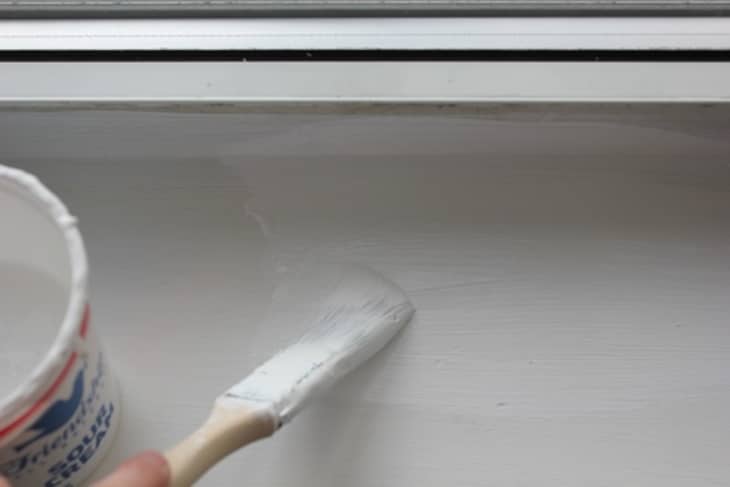
7. Next, paint the the windowsill and window frame.
Make sure to use a paint that is durable and easy to clean. I used left over semi–gloss paint from when I painted my bathroom.
Note: I like to pour the paint into old yogurt or sour cream containers to make the job more manageable. Because these containers have lids, you can save the paint for a quick touch up if you notice an area that needs attention later on in the day.
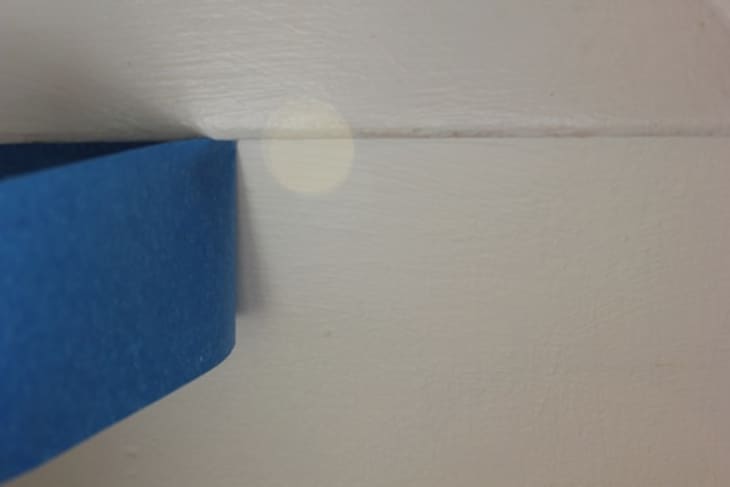
8. Remove the tape and let the paint dry.
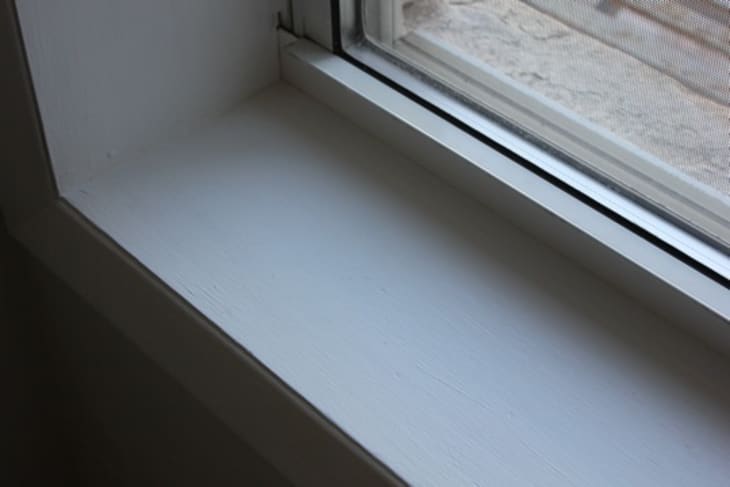
9. Voilà! Good as new.
MORE PAINTING ON APARTMENT THERAPY:
• 40 Tips, Tricks, and Projects About Paint
• 10 No–Mess Painting Tips
• Quick Cleanup Tips for Painting Projects
(Images: Kate Legere)

Sprout Side Table
Don't be tempted to use a roller! Always use a brush.
Totally bummer I know, but if your place was built before 1978, did you test for lead paint? If you're going to be scraping and sanding, it's really important to do that. Let's just say that the VOC in paint is a heck of a lot less threatening than a good case of lead poisoning.
Looks great!
Thanks for this --- this very project needs doing for all our windows!
Hah! this post is about two weeks too late.
Although, true confessions: I haven't finished painting yet...
Is there an easy way to test for lead?
This looks great! I must know...where is the tree trunk plant pot from? It's really cute!
My dog chewed up the window sill (yet again) and although it looks hideous, I am holding off with the painting until spring when I can paint with the windows open (at least for a while). I love to paint but I don't enjoy the smell.
My place has lead paint. After stripping two big windows with citristrip I gave up and am just painting over the rest. I don't have dogs that chew on wood and no kids. But @Gmigi is absolutely right, no scraping or sanding if there is lead.
@CanadianMango - try low VOC paint. I use a Aura by BM and will never go back. Also try clove oil to keep the dog off the wood. It worked for me where bitter apple and other things didn't.
Your local home/hardware store will have test kits, they are not very expensive.
You can also add a tiny but of Floetrol (paint additive) which helps the paint "level out" so you don't get any brush strokes. My Dad was a professional painter (for a bit) and this is what he does when painting.
i wouldnt sand with lbp, but you can scrape. instead of sanding, use spackle to fill. 'wet sand' spackle with a damp sponge to reduce general dust. note on LBP - danger of lead poisoning [for an adult] is extremely minimal for loose flake paint, look it up. people take this way too seriously. airborne dust particles are what to be scared of for general populace, toddlers eating chips are the culprit of the majority of lead poisoning cases.
The article shows only one paint brush being used (a cutting brush) that's maybe 1-1/2" wide. This is too small for the area being painted and will result in a uneven paint job, not to mention taking far more time than is needed. Larger surfaces need a wider brush to cover more area smoothly. For this job, I would have used a 3" brush for the large areas and the 1-1/2" cutting brush for the perimeter and edges.
The poor brush has paint up to it's ferrule (the metal band between brush hairs and handle). This really gunks up the brush, making it nearly impossible to completely clean. Dip only 2/3 the way and slap the brush against the side of the container to unload excess paint ( use large yogurt containers and coffee cans).
Flotrol is a must for a good paint job! It keeps the paint from curing too fast, letting the brush put down a smoother coat, and lets the paint level out (smooth itself) for a nice finish.
Not neccessarily. Case in point--a family I know had to move out of their (very cool) log cabin because a previous owner had used a lot of reclaimed, lead-painted wood, & sanded it on site. Their child developed lead poisoning (treated, he's fine). The risk to an adult may be minimal, but you're probably not the only person who will ever live there.
Thanks for the suggestion of clove oil - I would have never thought of that. Yeah, I can confirm that bitter apple is useless. I don't have the heart to put Tabasco or some such on the chewed part (besides, the window is 3 meters wide and the window sill is a foot off the floor - just the right height when the pooch is on her bed on the floor - she likes to pick different spots where to admister her attention).
Pi Why do you say that?