• Watch the short video above
• Read the full post & comment below
• Color Cure Home Page: Signup, Videos & Submission Forms
Welcome to week two of our August Color Cure. This week I'm going to introduce you to a second very important lesson about color - distinguishing between warm and cool colors. Doing this is a very big help when planning how to employ color around your home and it's easy to get a handle on if you hear it only once. So, watch the video above and then experiment with tips in this lesson for the rest of the week. Want to get this in an email as well? Sign up on the Color Cure Home Page.
This Week's Assignment
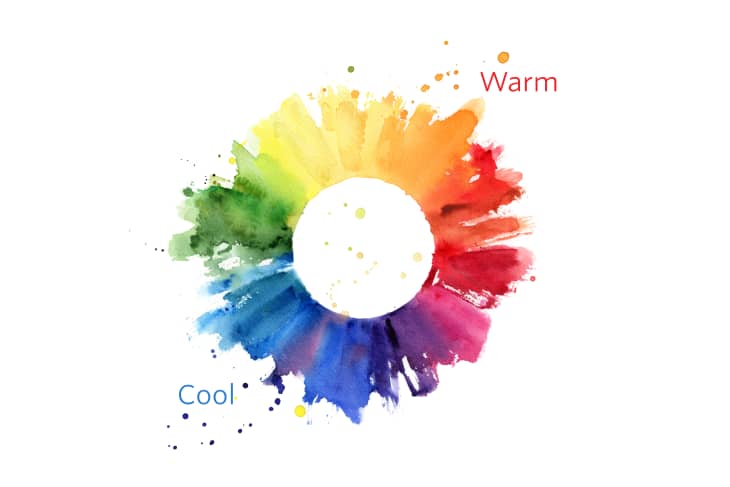
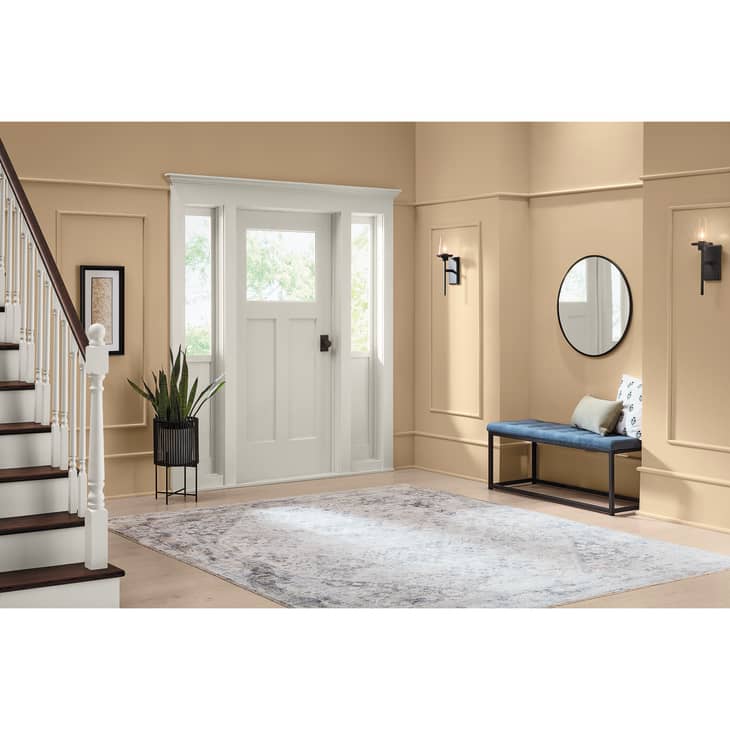
This week I want you to think about the difference between the two main types of colors: warm and cool. While in experienced hands they can be mixed to great effect, a very common beginners mistake is to pair warm and cool in a room and not know why things don't seem to work very well. When you know the difference between these two types and can skillfully work with them separately, you will have a powerful handle on using color in your own home.
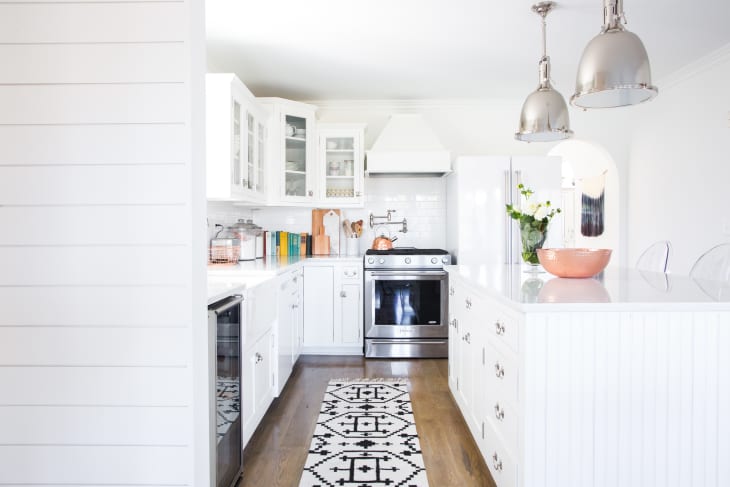
This week I'll be sharing and painting our kitchen and then ask you to try applying the tips in the video to your own kitchen or social area. However, if you want to work on another room, please go ahead. I'm going to work on four different rooms this month, so you will get a sense for how color can work it's way around your home.
Enjoy your color!
Previous Videos
Join Us!
• Color Cure Homepage for email sign-up, all posts & submission forms (share with us and we'll post it to help inspire others!)
Buy The Book
• Apartment Therapy: The Eight Step Home Cure
Related Posts
• Apartment Therapy on Warm & Cool People
• How To Work With Warm & Cool Colors
• Cool Bedrooms vs. Warm Bedrooms
• Roundup: Cool & Warm White Paints

Z2 iPod Dock and Wi...
I like the "warm" and tropical musical accompaniment to the painting segment, too! :)
An interior decorator once told me that body temperature also depends on room color, i.e. if you tend to be cold (like me) it's better to decorate in warm colors. Can anyone testify to that? I like cool greens but maybe I'll get too cold around them? ))
I hope that as the weeks follow the lessons will be something for people who already know such basics. Something of more complexity would be welcome. Sorry to be so negative, but this feels like kindergarten.
@muesli - I recommend Johannes Itten's "The elements of color" :)
I get an error message (Oops! There was a problem loading this video.).
Never mind. Reloading the page four times worked.
Well-intentioned, but it really brought me back to elementary school. If you'd have mentioned Roy G. Biv, at least you could've brought us through high school!
Definitely need something more advanced. Isn't there soemthing on hue cf. shade (or is it tone?)? SOmething about adding black to color (or is it brown?) to make it more subdued maybe?
@ mashamsk: your decorator was a quack. Body temp depends on your metabolic rate, blood pressure, the surrounding atmosphere, whether or not you have fever, strong emotion, clothing, and medications. But not paint color.
@kushkush, here's a great article on hue from Houzz: http://www.houzz.com/ideabooks/235431/list/Dare-to-Choose-a-More-Colorful-Neutral
Did he tape anything off while painting that backsplash? I feel like I should be impressed, but I haven't painted anything before; was that at all impressive? XD
I like your purple sample. What is it?
I feel like those white cabinets are pretty cool so balancing them out with a warm color makes sense - but if you have gross renter oak cabinetry in a kitchen that is also the living room of your 1-bedroom... as I do... do you HAVE to go with warm tones for this "social" space? Because warm colors against those warm, horrible oak cabinets just look atrocious. And I like blue. I know rules are made to be broken, but any thoughts on my conundrum would be so appreciated.
Best advice I got from a designer when I felt frustrated with my home was that I needed to cool down all the warm architectural details: maple floors, cherry cabinets, brown flecked granite counters, earthen-tone slate tile.
The previous owners painted all the walls shades of brown and red. Then the realtor painted the walls a color I call "bisquick batter" when it didn't sell after 18 months.
When I was given the advice to cool it down and tried some pale grey shades, it made all the magical difference!
Beautiful color. What is it please?
Very helpful video! I guess I should pay for attention to some things, and it was hard for me to tell which of the grays had more cool or warmth to it. Seemed so similar to my untrained eye!
Great looking sofa! Another request for the source of the cushions, or at least the fabric range....?
First I'm very impressed with the skill to paint that backsplash w/o cutting in or taping. Bravo. However, a blanket rule like never mix warm and cool colors is just wrong. Some of the most successful colors schemes are the triadic, complementary, and split complimentary, all of which take advantage of the temperature contrast between warm and cool colors. Even analogous schemes often span the temperature spectrum. Nature freely mixes color temperatures. Observe the cool blues of sea & sky contrasted against the warm tones of the sand, or a bush of beautiful red roses contrasted against glossy green leaves.
This is a very hard subject to parce into videos. I think it would have been better served with paint chips under direct (vs. diffused) lighting rather than starting with objects. A fan deck would also be useful in duscussing warm and cool variations within a given color. Good luck with future videos.
I just custom built some cabinets for my home. Light gray cabinets, dark gray island and pantry. Marble type granite and white subway tile. Any thoughts on how to warm up the area?
Loving these videos! It's nice to have stuff on the site that's more educational.
I have seen very vibrant warm blues and even a very cold yellow so I too was hoping for something beyond an intro to the color wheel. Fortunately, I have learned a lot of what I missed getting in college from some artist friends. Here is some of what I've had the good fortune to learn. It's still not the color boards (all those gradations of colors in small squares) I saw the interior design students working on in college, but it's a start.
Artists often use a sophisticated palette of warm and cool shades of each primary color. A few examples, using art store pigments, are Cadmium Medium Red (warm) vs. Alizarin Red (cool) and Ultramarine blue (cool) vs. Cerelean blue (warm). You also have to consider the light source. If you have a warm light source (tungsten light), use cool shadows. If you have a cool light source (noon day sun), use warm shadows. Another rule to remember is that no color really has a temperature until compared with another color. It's all about light and context. So how does this translate into great interior design? You mentioned not mixing warms (ROY) with cools (GBV), but that seems so simplistic. Is that true for a warm red and a cool red? Can they work together or should we avoid those combos too?
Pathetic, just get a color wheel, take some chances, learn what you like from your mistakes. You can always paint over it. And don't dress in your underwear to do part of a video. Just a thought.
is there such a thing as a paler grey that leans warm? My room is too warm, the main pieces and rug are reds, rusts, and yellows, which is nice but almost stifling. I want to cool it down but worry about just making things look off.
@geugca How about Benjamin Moore "Caliente" (red)?
Maxwell, please tell us that later on you pulled out the stove and painted behind it! ;-)
@sz, grey can be have a red to brown undertone to warm it up, or green to blue undertone to cool it down. Just stand back at the color chip display and you'll see the the warm greys with the warm colors, and the cool greys with the cool colors. Here's a great example:
http://www.colorbudz.com/Blog%20Images/Chip-Display.jpg<a/>
@Moxie, the advice I got from a designer (posted earlier today) is what I'd suggest for you. If your warm architectural details clash with warm colors, then cool it down. You've already got warmth in the wood tones -- there's no need to add more. Maxwell's kitchen, by contrast (pun intended), was all white -- no pre-existing warmth. My cabinets are cherry (warm!) and my counters are granite (warm!), so there's all the heat I need in the kitchen. The backsplash I've got planned will be shiny black tile too provide the right cool balance.
^brown^ granite (warm!)
Correct - Black is the absence of color. White is all colors.
Overall, nice video. I've been really struggling to select colors for my new home.
The thing about black and white and no color vs. all colors, is that light and paint work in completely different ways. In light, black is the absence of color and white is all colors. In paint (or pigment, or whatever), it's the opposite.
@joan a.
And furthermore, when you add different colors of light together, you don't get the colors you expect from paint (or whatever). So it is best that he was consistent.
@lepidoptery: Yes. I was responding to RachL, to explain that Maxwell is correct, since he's talking about paint.
Glad I'm not the only one who noticed the white/black thing...
I LOVE every single one of those neutrals. Love, Love, LOVE!
Urbancricket nailed it.
I'm loving these charming, instructional videos. I'm hoping, however, that Maxwell clarifies that sticking to "all warm" or "all cool" is only one option when it comes to decorating with color. Another option, obviously, is mixing warm and cool colors together! (As Maxwell did above, with the warm orange cushions on his sofa and the blue lamp which is clearly visible to the right of his head.) Who doesn't love such classic combinations as blue paired with yellow, pink with green, orange with blue, red with just about anything? Or am I getting to far ahead of myself and giving away next week's topic............
@joan a.
I was supporting you (figured you knew already), I guess I shouldn't have addressed it to you, though, whoops!
Also, this video is obviously geared towards hopeless beginners, given the "primary and secondary colors! :D" spiel, and I'm pretty sure he says something to the effect of "if you're not v. experienced with using colors then you should probably avoid mixing warm/cool", so there's no need to delve too deeply here. I kind of wonder why it's so low-level, though, I think most AT readers knew this much already. But I did appreciate the demonstration of maxwell's painting prowess, lol.
Currently i'm having trouble with my bedroom.I'm hoping to find a cool blue tone to match this crinkled icy blue satin curtain i bought. Hopefully the perfect color will show up.
I need help in a big way. I wonder if we can have another photo stream site where we upload our images and ask for help.
Wait. Is the photo submission page is only for finished before and after's? It's not meant for getting help, right?
@lepidoptery: Ah. I was slow on the uptake. Thanks.
I love the warm colors. I really can't stand the cool colors. Blue walls are torture for me. I guess my decorating style would be called overwhelming warm, (rose, red, cherry, mahogany), but I like it. I lived in a cool color rental house, and I couldn't wait to move. I think I felt more lonely, even though I was married, and depressed. I couldn't wait to get back to my warm colors. And all my warm colored furniture (particularly the red lacquer against a blue wall) looked awful.
To those that are criticising this instructional video for being too basic or low-level, just remember that some of us readers are not interior designers. I hadn't even thought about my colour palette prior to this. (Now I realise that I am definitely, unequivocally a cool colour person). And, yes, I too had learned about the colour wheel in primary school but had not applied it to anything beyond primary school art classes until now.
I hope that there will be more of these videos, delving further into the topic.
I knew the difference between warm and cool, but I haven't really thought about it in the context of my current apartment, so I think this video is just fine.
I do disagree about one thing, that bathrooms should use cool colors. Warm colors make you look better when you look in the mirror, which make you feel better in general. Perhaps bathrooms are an aspirational social place--you're hoping to go out and be social!
Would've been great if Maxwell had thought to mention his obviously cool lamp that was peeking into the shot of his very warm room. Using the opposite "temperature" on certain items can really make them pop, especially since you can definitely find warmer, cool colors out there if that makes sense. . .
In the first week video, Maxwell mentioned finding an inspirational piece that had been professionally designed, and use that as your inspiration. Our LR & DR rugs are Red Sarouk. Deep red with accents of yellow, green & blue. We have warm, yellower wood floor surrounding & yellowish almond on the walls, so I've been adding brighter spots of yellowish silk pillows. Now I'm thinking of adding some pops of cooler blue & green. The color wheel discussion is sending me to examine our rug accent colors and bring them out more around the room.
Love that song! who is it?
Thanks for the great vid!
For those of us with no formal training in design, every bit helps. :)
Though I can't imagine cooking in a warm toned kitchen- I think I would spontaneously combust if I wasn't surrounded by the whites and aquas in my kitchen.
I was a bit puzzled after watching the video, as I understood that a social place should have warm colours.. Well, I bought blue accessories for my kitchen, and it feels cozy still...
My kitchen has ivory walls, and part of the wall is tiled with rather dull and oldish tile: white background with pale green and pale pink flowers. As about the floor, it is a dark mosaique, mixing white, grey and warm browns. Just yesterday I went to Ikea and bought some items to bring some colour to it. Well... It felt so right to buy a set of dark blue carpets, dark blue chair pads and dark blue flower pots, and they look really nice with the white from the appliances and the green of the flowers I have.
It really looks better, and I think that no warm colour (yellow, red, orange) would have been better than the dark blue choice.
Then I read the comments, the shade is indeed the cerelean blue.. which PhyllisC mentioned to be a warm blue. My feeling honestly is that I want to dive into it. It's just a very nice intense colour and the texture (important) is the one making it feel cozy. So I hope in the future videos there will be a multi-dimensional approach to warm and cool.. texture, light and the colours around the one we choose being also taken into account. More like a 5D approach :)
Good start, would like to learn more :).
The decorator was starting with basics, but he obviously understands that warm and cool colors can be mixed to good effect, based on the shot of his warm living room and his cool lamp!
And consider how good black and white look together. . . !
An interesting take on warm and cool.
In my house the social and public division doesn't work, but I realised after watching this video that the only two rooms I've got with "cool" walls (white) are the ones that get the most sun during the day.
The rest of my (blissfully!) shady house has walls painted in warm colours with white trim.
I really like the pink carpet. Wow how do you paint without dripping every where. That must be your super power.