
Real Life Small Space Solutions From Studio House Tours
Inspiration comes in all shapes in sizes, but at Apartment Therapy we have a special place in our hearts for the smallest of spaces and an extra special place for the impressive small spaces where all the living happens in one room! This year our community offered no shortage of inspiration in the form of creative studio apartments.




Studios pose a number of logistical challenges: choosing furniture that can wear many hats, creating separate activity zones while maintaining cohesiveness, merging intimate and public areas seamlessly, not to mention attempting to actually find room for storage. However, our readers and contributors have embraced the challenges with abounding style and more than a little dose of genius. While there is no one size fits all solution for maximizing space and creating functional zones, there are some helpful tips— some old and some new— to be gleaned from our small space one room dwellers:
• Delineate with accent colors. While for some a sense of uniformity rules supreme, others wish to highlight specific areas and create a sense of separate zones within an open floor plan through the use of accent walls, where each zone bears its own distinct wall color. Look to Casey (picture 5), Rebecca (picture 10), and Janelle (picture 20) for inspiration.
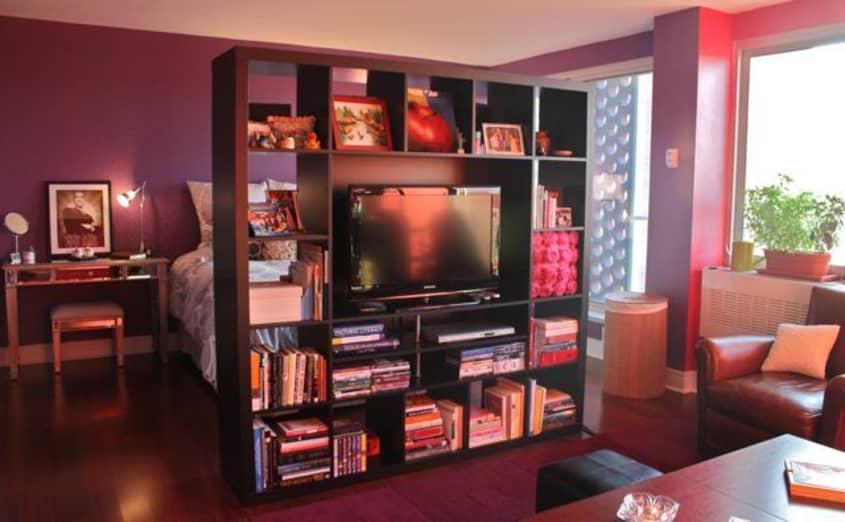
• Delineate and anchor zones with bookshelves. Nearly all of the studios featured employ the old bookshelf trick. In particular, Ikea’s expedit bookcase makes many appearances.
• Go high Mike (picture 8), Casey (picture 5), and Pong (picture 9) are shining examples of how to eek out extra storage and living space when blessed with tall ceilings. However even those without extra ceiling space can use height to their visual advantage. Using high, leggy furniture such as in Ashley’s kitchen (picture 11) can make small spaces appear less cramped.
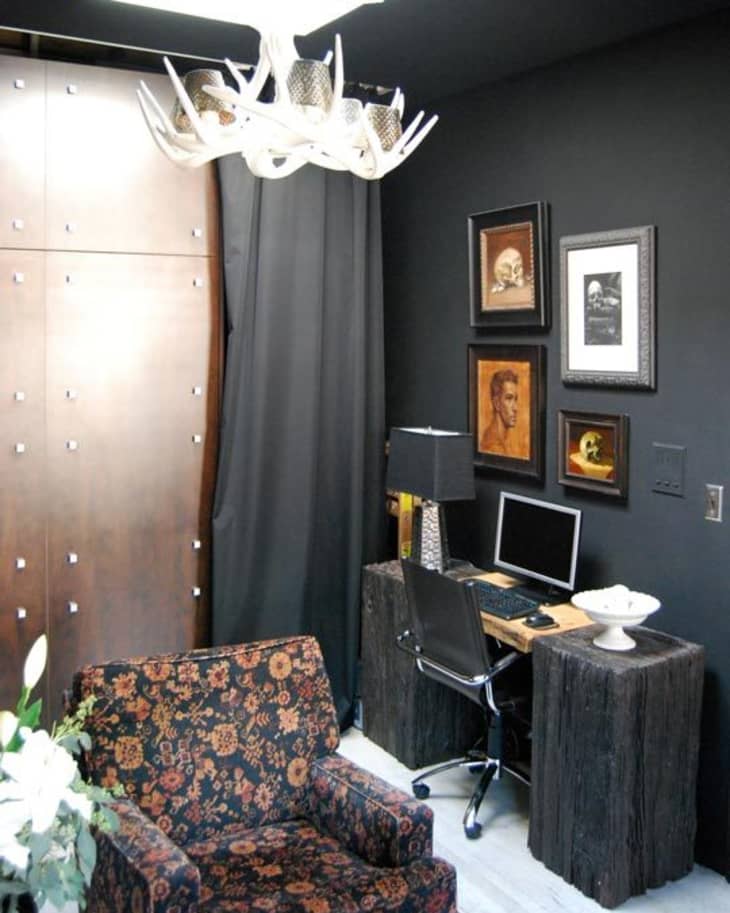
• Go bold with color. While light colors are often thought to expand a space visually, some small spaces benefit from a heavy dose of deep color and heavy ornamentation, especially those spaces with little natural light— the jewel box effect! Look to Adam (picture 15) for inspiration.
The studios and studio lofts featured this year offered a huge variety of ideas for creating a comfortable and healthy living environment in a teeny open plan foot print. In fact, each offered so many solutions and inspired so many “aha moments” that one post will hardly do them justice. So whet your appetite with these highlights, and then feast on the full tours and house calls! I would be hard pressed to pick a favorite, but what about you?
• 1. Bill Goes All Black
• 2. Revisiting Natalie’s Alcove Studio
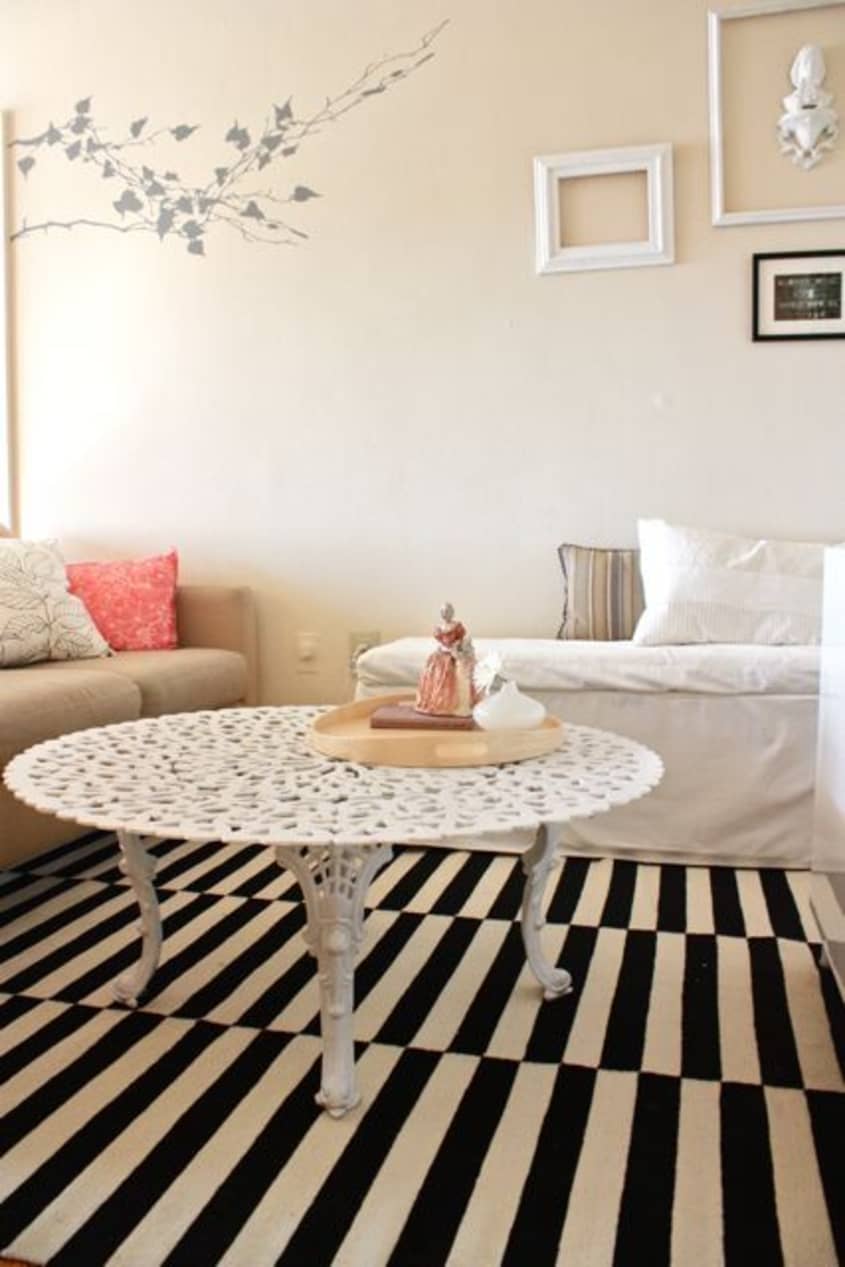
• 3. Caroline’s Retro Whimsy on a Budget
• 4. Matthew Mau’s Creative Loft in the Chapman Building
• 5. Casey’s Loft Life
• 6. Laura’s Inviting Live/Work Studio
• 7. 125 Square Feet! Kristen’s Minimalist Studio in Seattle
• 8. Mike’s Surprising Student Studio
• 9. Pong’s Punch of Color Pad
• 10. Rebecca Color’s the White Box
• 11. Ashley’s Lovely & Eclectic Studio
• 12. Chris’s DIY Studio Charmer
• 13. David’s Tiny Urban Austin Studio
• 14. Ida’s Sugar Hill Studio
• 15. Adam Hack’s in Fidi
• 16. Matt’s Spirited Studio
• 17. Sarika’s Studio
• 18. Wendy’s Shoebox Studio
• 19. Matty’s Grown Up Studio
• 20. Janelle’s High Impact Oasis