
36 Stunning Mirror Decor Ideas That Will Make Your Space Shine
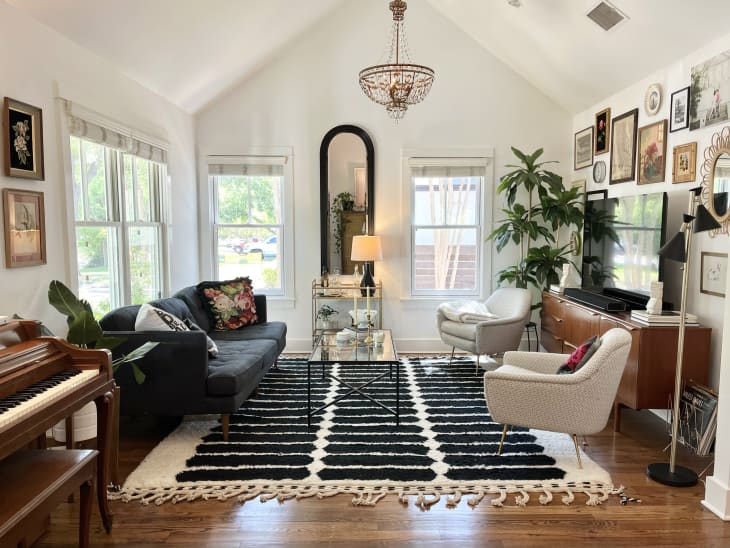
Mirrors are an essential decor item in any home, no matter your style, as their designs and functions run the gamut. Some mirrors are purely for checking your appearance while others are used strategically to manipulate light, serve as an organizational piece, or make a room look larger.
Of course, mirrors can also be used as decorative pieces, and many are made with unique materials (such as rattan), shapes, and finishes. Whether you opt for a floor mirror or mount it on a wall, mirrors can elevate a room’s decor in so many ways.. Needless to say, mirror decor ideas are endless, but we’ve rounded up 36 ways to utilize these looking glasses to your decorating advantage.
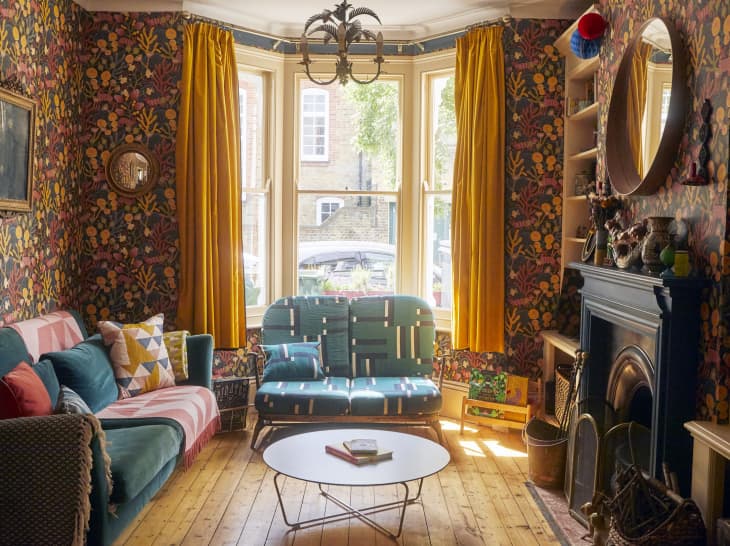
1. Hang multiple mirrors.
Whether you’re going for a whimsical vibe, like this London home, or something more traditional, consider hanging more than one mirror throughout the space. Go for mirrors that differ in sizes to add visual interest. Hang them on adjacent walls and watch them bounce light around the room all day long.
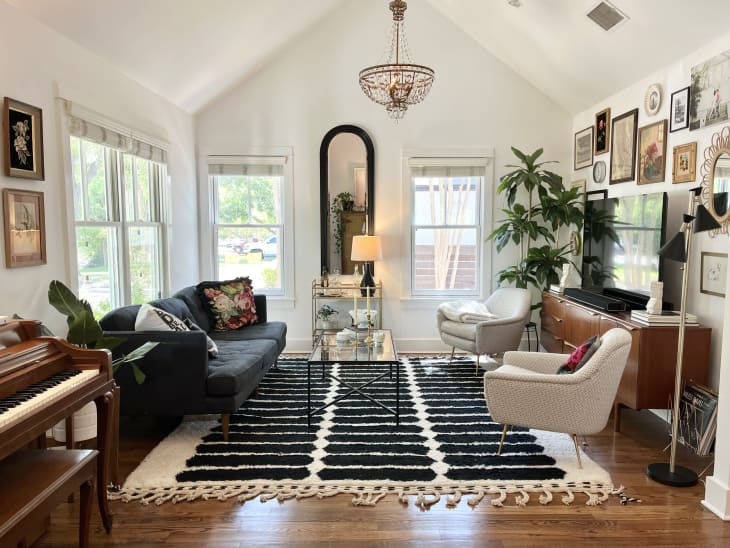
2. Fit a narrow mirror between windows.
Want to maximize the natural light in your space? The answer is mirrors. If your space needs more light (let’s face it — you can never have too much), try adding a mirror to bounce light around the room. In this Austin home, the owners fit an arched mirror between their small living room windows.
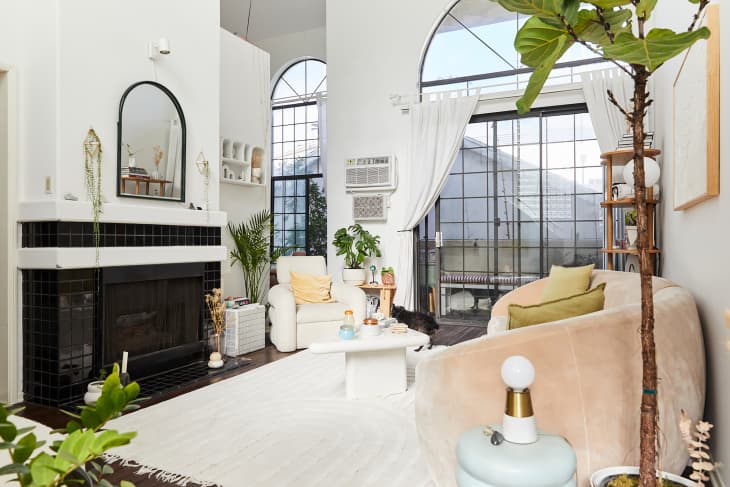
3. Try an arched mirror.
An arched mirror hangs above the fireplace in this gorgeous black-and-white Los Angeles loft. The shape of the mirror mimics the shape of the sweeping arched windows, which makes the room feel cohesive and even more airy.
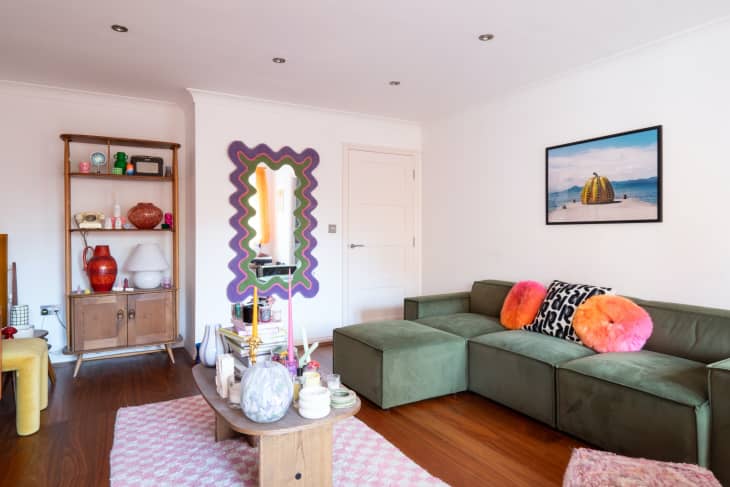
4. Add a funky frame.
A mirror with a fun frame, like the multicolor wavy framed mirror in this London flat, instantly gives a space personality. Adding an interesting mirror is a budget-friendly way to upgrade your space, keeping furniture and other decor pieces simple and letting the mirror do all the heavy lifting.
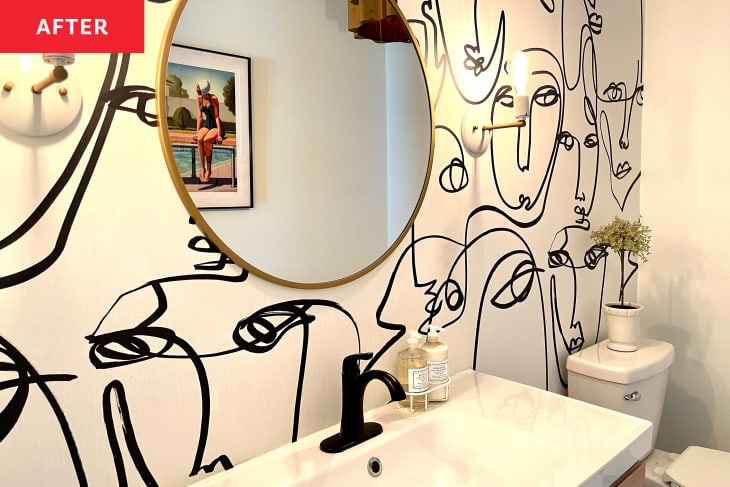
5. Choose a minimalist mirror.
When you opt for a heavily patterned wallpaper, like in this art deco powder room, it’s best to hang a mirror that doesn’t contribute to a cluttered look. This clean, minimalist gold circular mirror is perfect for this space — that’s a mirror wall decor idea we can get behind.
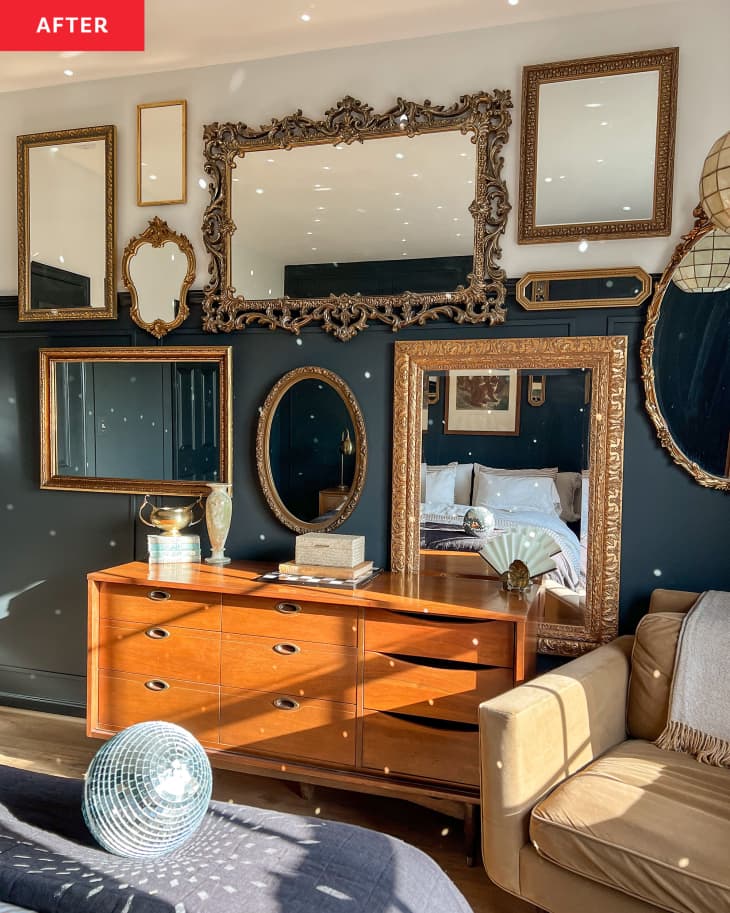
6. Experiment with large mirror decor with a gallery wall.
Why stick with just one mirror when you can include several in your space? This moody bedroom re-do features a wall full of refurbished mirrors for an elegant vibe. And the light reflecting off the collection of mirrors helps lighten up the darkly painted room.
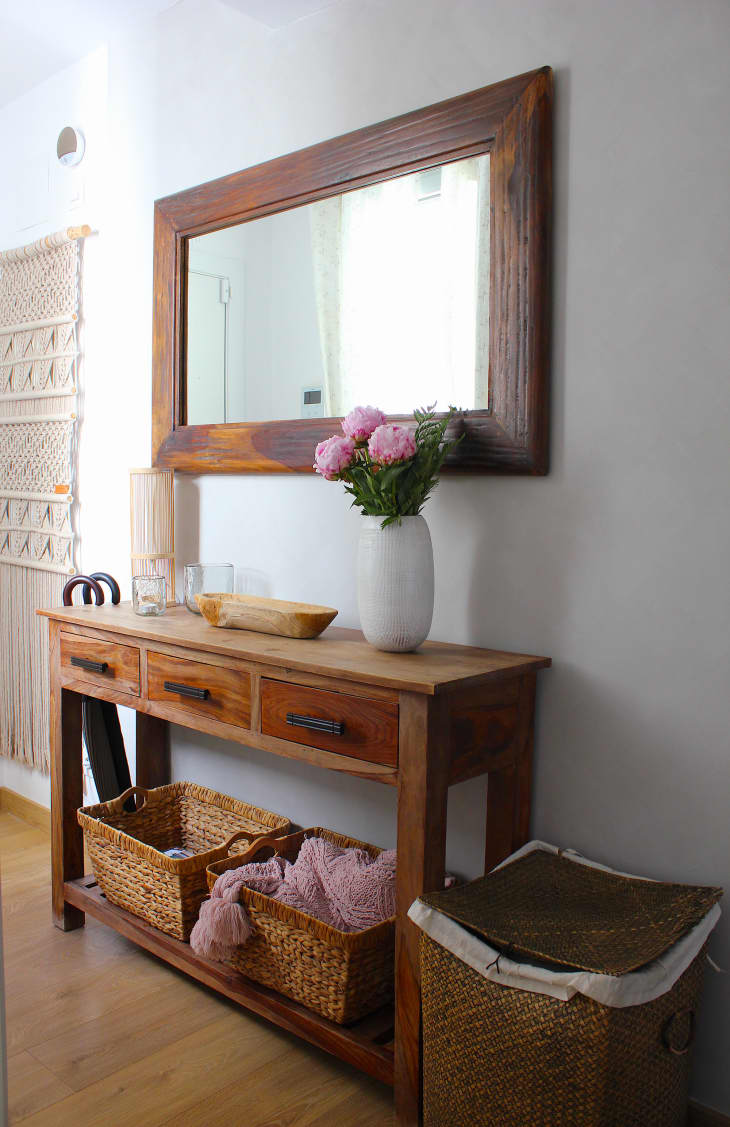
7. Make it match.
The wooden frame of this oversized hallway mirror in a Barcelona home is a perfect match for the console table, which adds to the clean look that isn’t overpowering in an otherwise small space. Rather, it lends a beautifully rustic vibe, making it one of our favorite ways of decorating with mirrors.
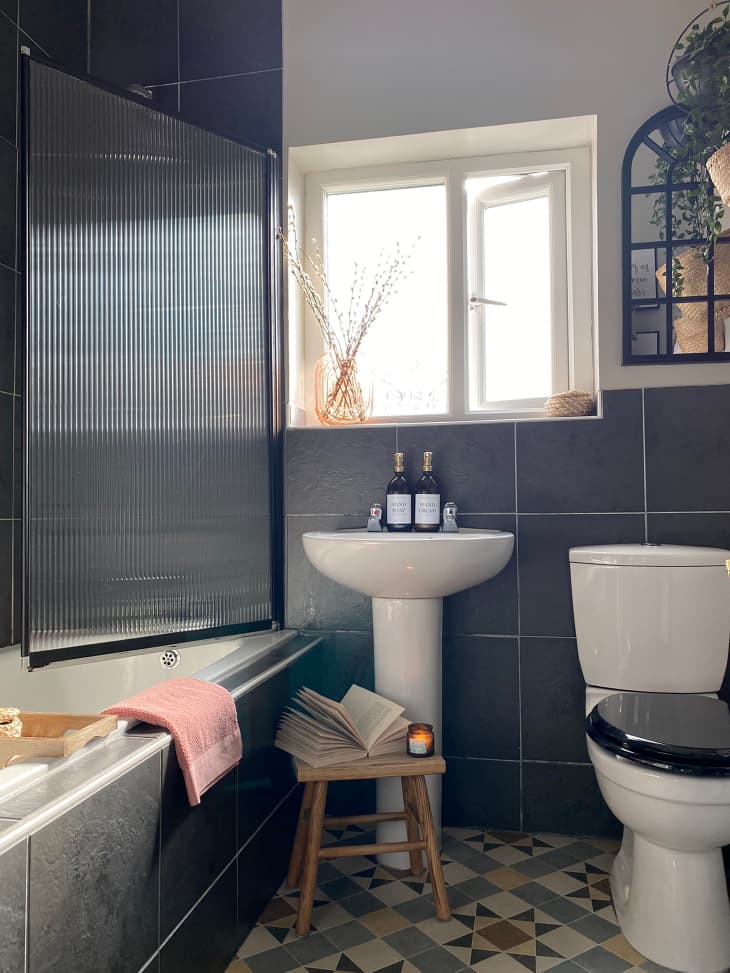
8. Make it look like a window.
The bathroom in this Sale, England home features an arched mirror with panes that make it look like a second window. It’s a beautiful way to add both light and functionality to a room.
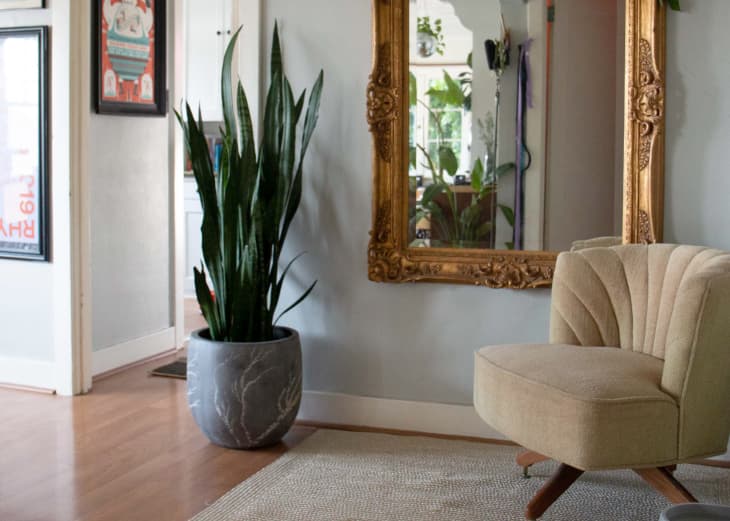
9. Install it low on the wall.
Most mirrors are hung at face-height, which makes sense. But when it comes to large mirror decor, thinking outside the box is key. That’s why we love the low-hung mirror seen in this LA apartment.
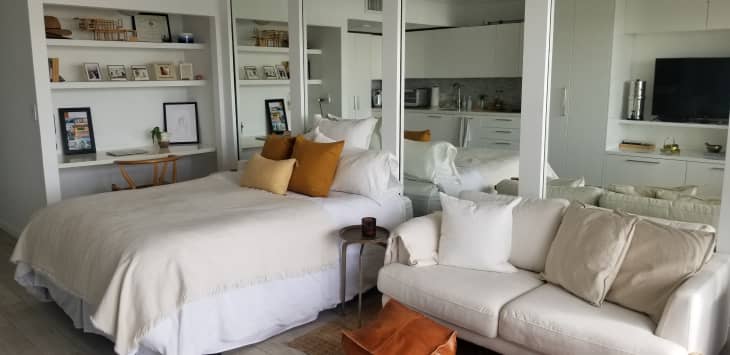
10. Use a mirror to make your space appear larger.
A mirror can be a small home’s best friend, especially when you’re only working with 370 square feet. Ashleii Rabelo’s Miami studio features mirrors in both the bedroom and living area, which can trick the brain into thinking a room is grander than it is — perfect for those of us with big taste on a small budget.
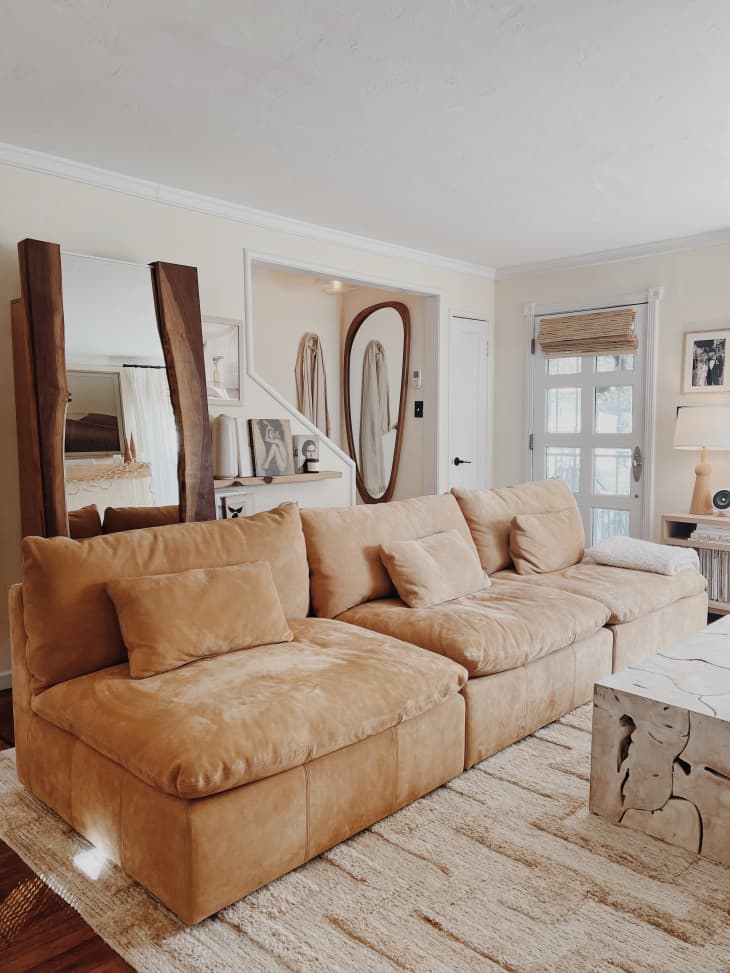
11. Use them in place of art.
We love a pop of art on the walls as much as the next person, but this Oakland house is proof that a mirror can have just as much visual impact. Artists and woodworkers Aleksandra Zee and Antrom Kury brought some texture and shape to the walls of their living room with two gorgeous mirrors that serve several purposes in the space and feel right at home with the neutral color palette.
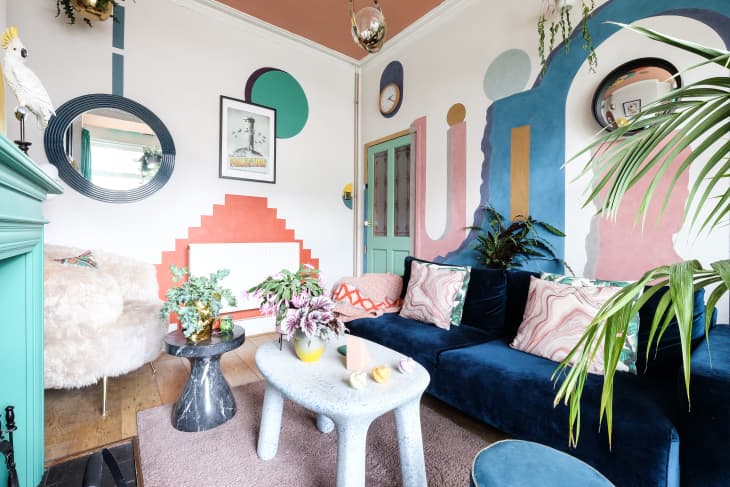
12. Incorporate them into a mural.
Rich O’Gorman took to the walls during the pandemic and transformed his Birmingham, U.K. home into a colorful work of art through murals and collected pops of color. We love how he incorporated multiple decorative mirrors into his mural design for a more layered scene that perfectly reflects the home’s natural light.
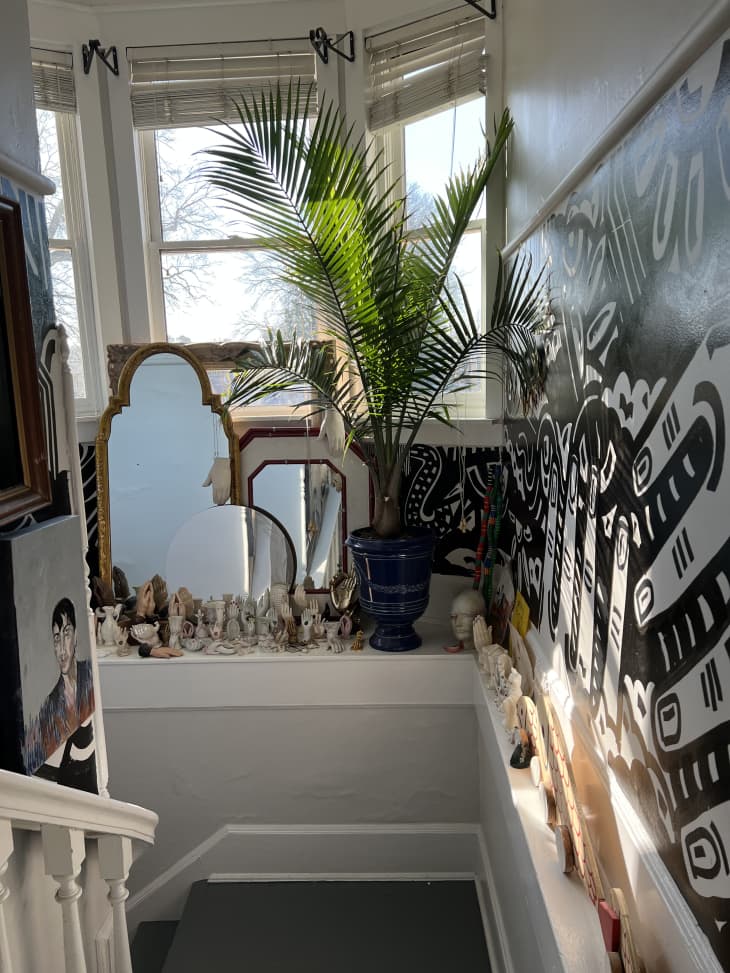
13. Curate a quirky collection.
This stylish Memphis rental is full of delightful design details around every corner, and artist Frances Berry Mereno really made the most of every square foot. Her stairwell is lined with collections of trinkets and mirrors that lend a quirky, well-collected sensibility to this often-neglected part of a home.
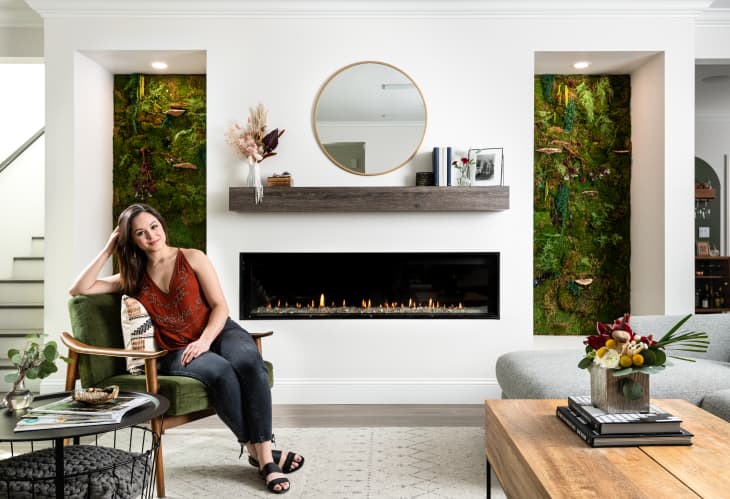
14. Replace the TV to shift the focal point.
A TV isn’t the only item to hang above the fireplace. Actress Hayley Orrantia’s Los Angeles living room features a mirror instead that allows the focus to turn to the stunning nature-inspired features on either side, along with some good old-fashioned conversation.
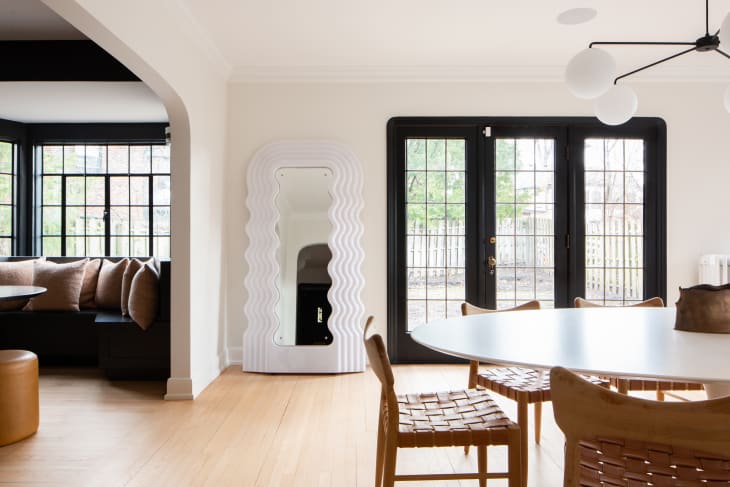
15. Use a mirror to make a statement.
A statement mirror is just the thing to make a room sing — especially when it’s a unique find. This Detroit dining room features a covet-worthy Ultrafragola mirror by Ettore Sottsass that the owners found on 1st Dibs which brings a mod touch to this retro-inspired space.
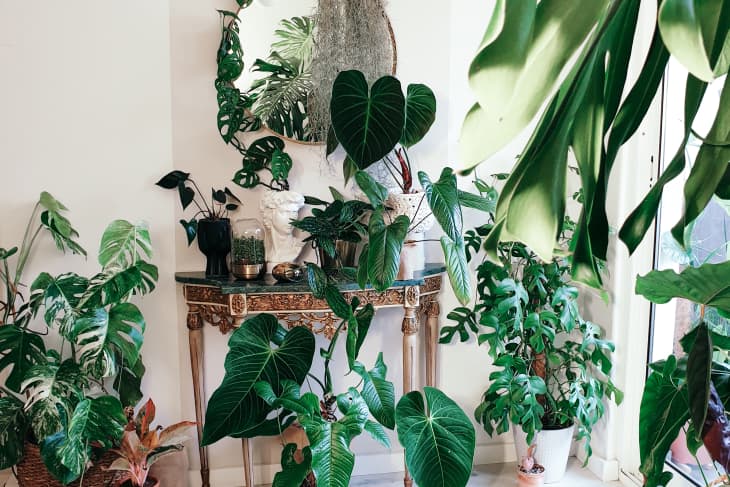
16. Surround a mirror with plants.
You may not assume that mirrors and plants go hand-in-hand, but this Portuguese apartment has proven otherwise. Embellishing a mirror with trailing vines or air plants and surrounding it with planters is a style choice worth trying.
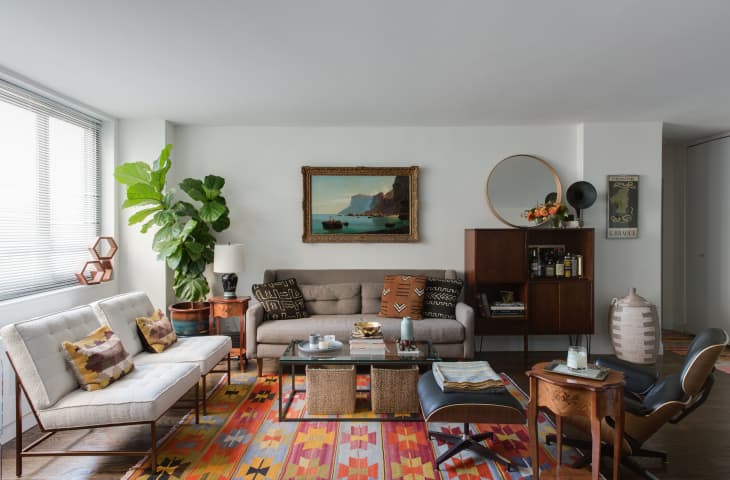
17. Embrace soft edges.
Round mirrors are definitely on the upswing. These circles are calming, eye-pleasing shapes, but they can also balance out a composition full of other geometric elements. Take this living room, for example. There’s a rectangular painting, square storage bins, and angular forms for days in the Southwestern-inspired textiles. The circular mirror brings softness to all that edge.
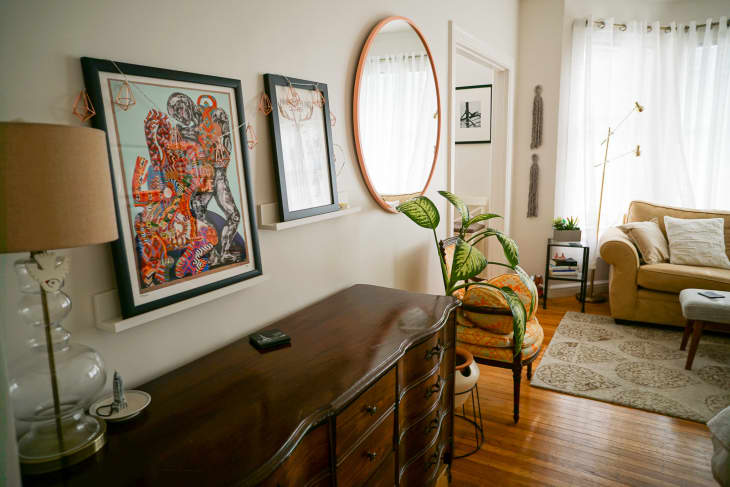
18. Find the light.
Mirror wall ideas don’t have to be complicated. Mount a round mirror in an advantageous spot on your wall, and it’ll throw natural light around a space unlike anything else.
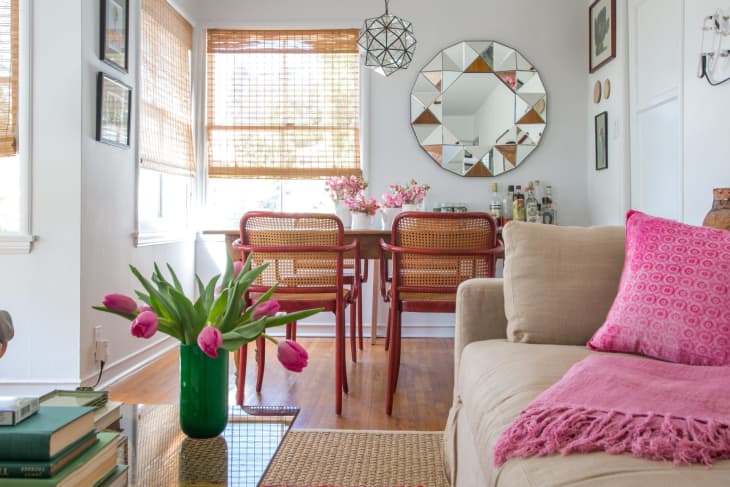
19. Use it to add a touch of glam.
Found a round style that has a mirrored frame? That’s about as glam as you can get. If it’s as ornate and large as this one, use it in lieu of art to fill a stretch of blank wall space.
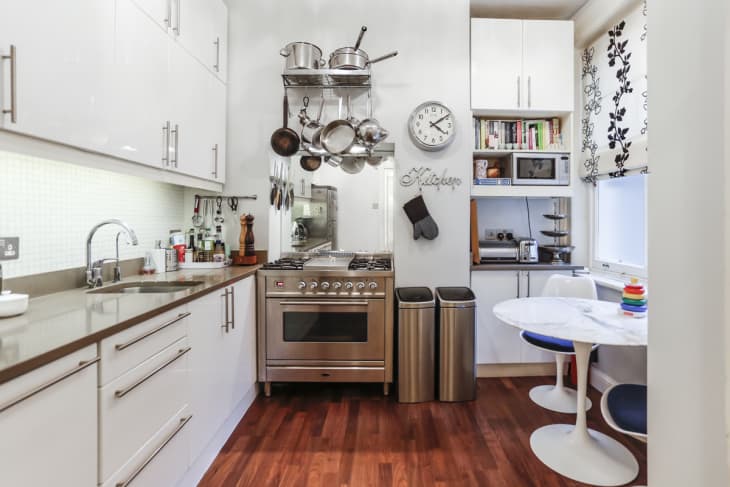
20. Create a bright backsplash.
Framed or frameless, rectangular and square mirrors are true design chameleons. Just look at how this unframed mirror makes this tiny apartment kitchen look a tad more expansive.
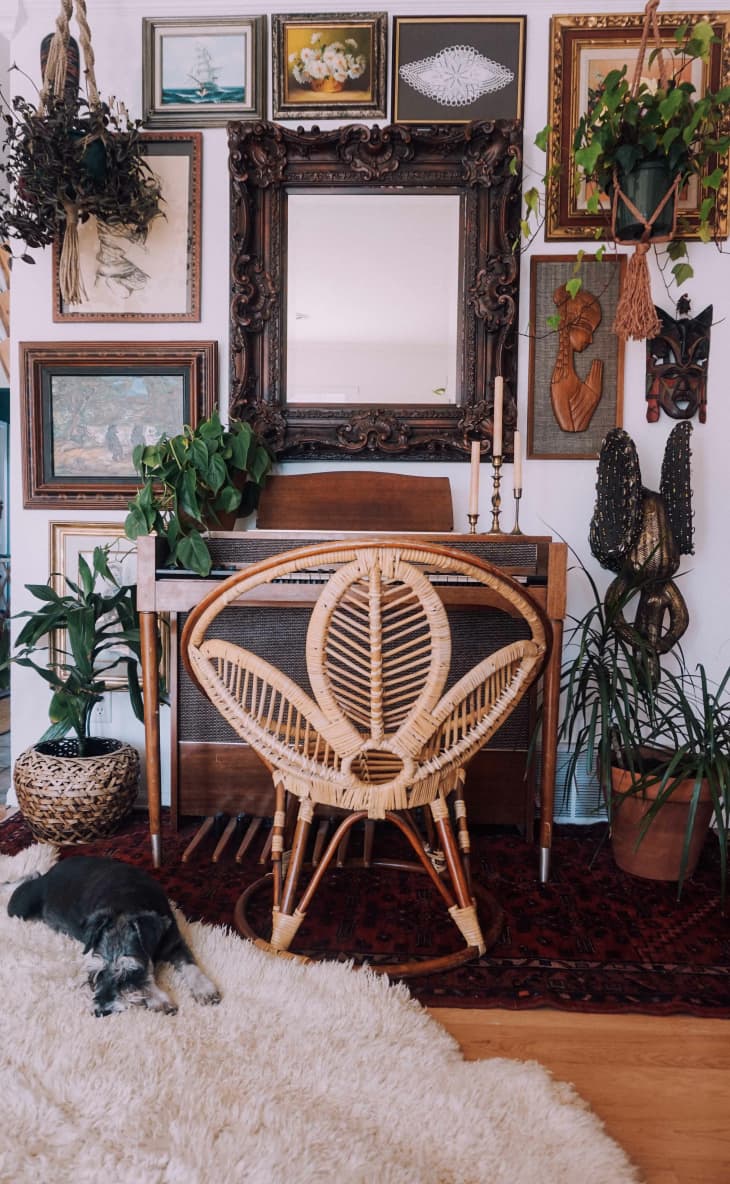
21. Add one to a gallery wall.
Artwork and photos aren’t the only items worthy of being placed in a gallery wall — mirrors can look pretty sleek in these arrangements, too. Find a mirror with a unique frame to serve as the focal point and decorate around it, as seen in this Colorado Springs home.
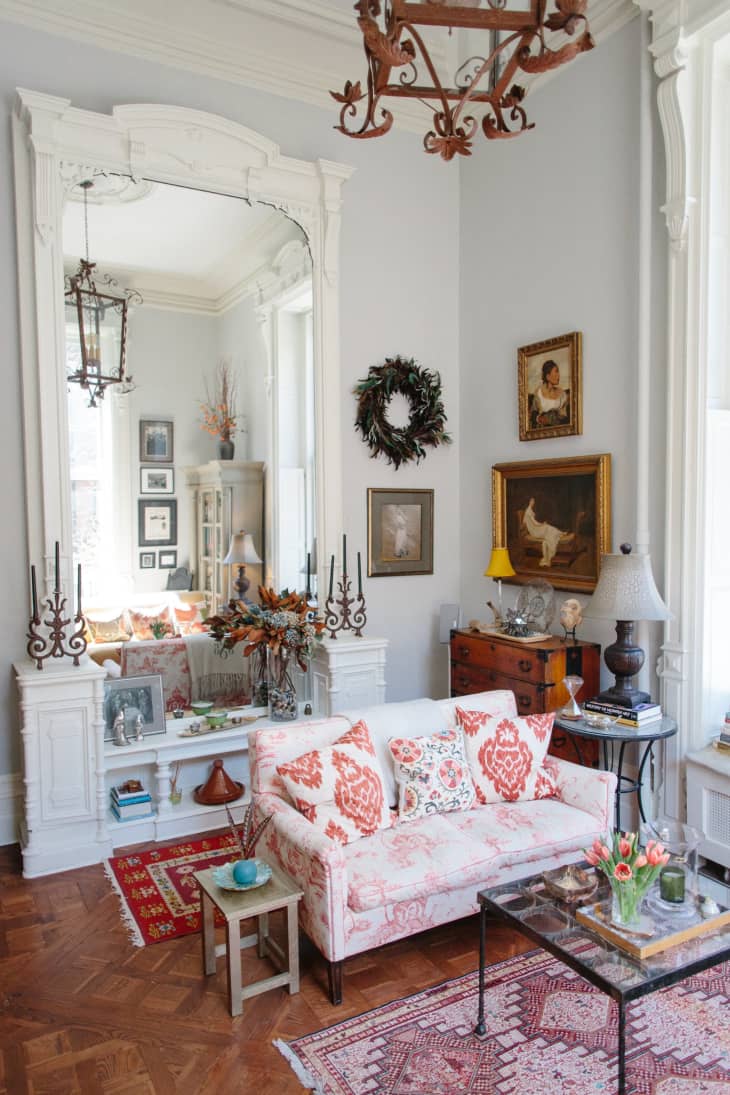
22. Go all out with your large mirror decor.
If you have high ceilings, try an old school rectangular pier mirror. Back in the Victorian era, these guys used to be stand-ins for windows to make rooms brighter. The proportions are generally large, and sometimes they even have built-in shelving or seats.
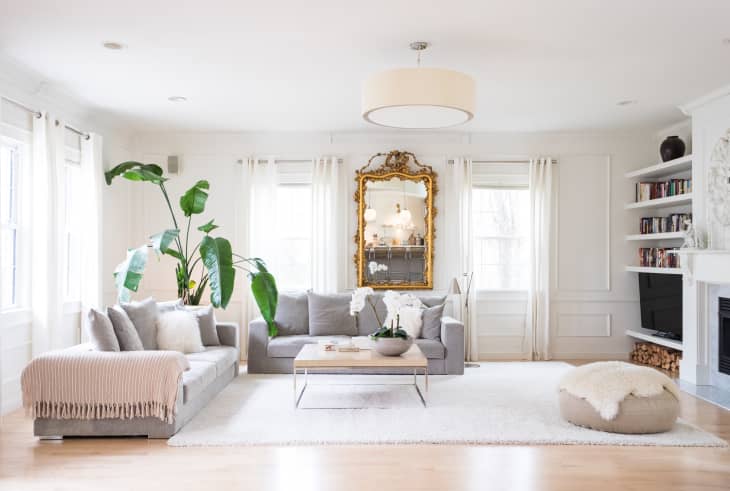
23. Look to the Gilded Age.
If your room needs a little touch of fancy, paint or spray paint any mirror gold. It will instantly elevate the design of your room and make it feel more sophisticated.
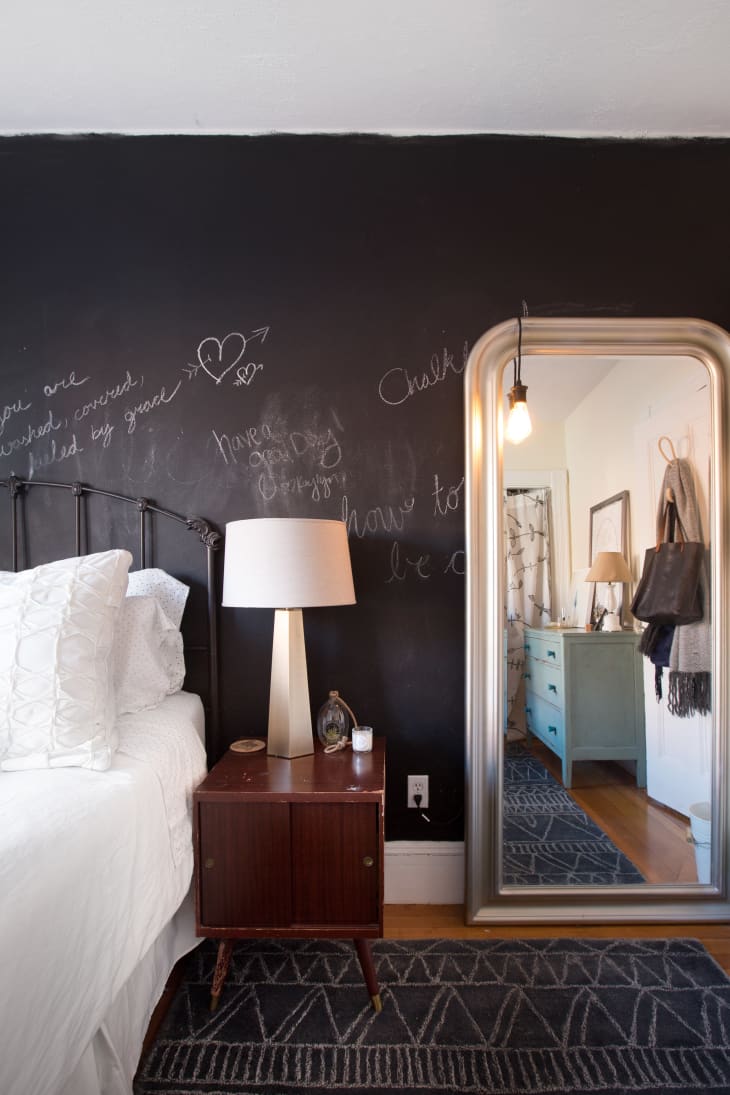
24. Instill a bedside attraction.
Larger rectangular mirrors aren’t just for living rooms. This bedside application is the perfect place to shoot your #OOTD — or just check out what you’re wearing.
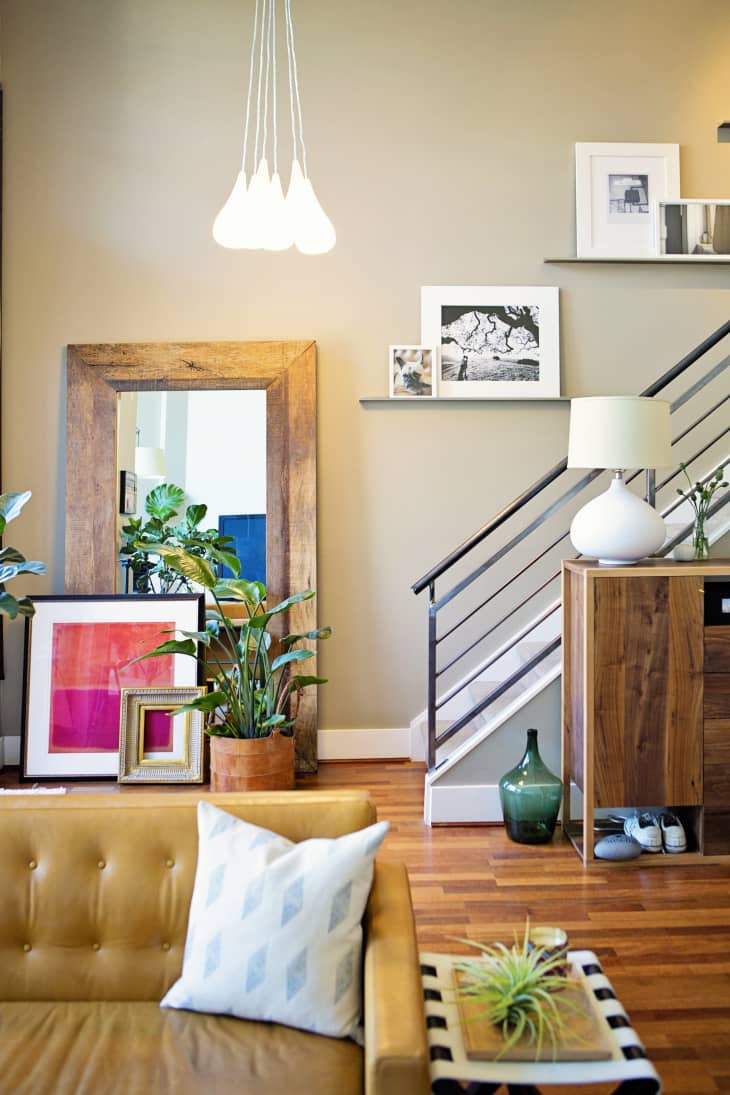
25. Lean with it.
Speaking of selfies, the oversized leaning mirror is also a great idea by a door, like in this San Francisco loft. Bonus points if you manage to work some kind of storage into the piece.
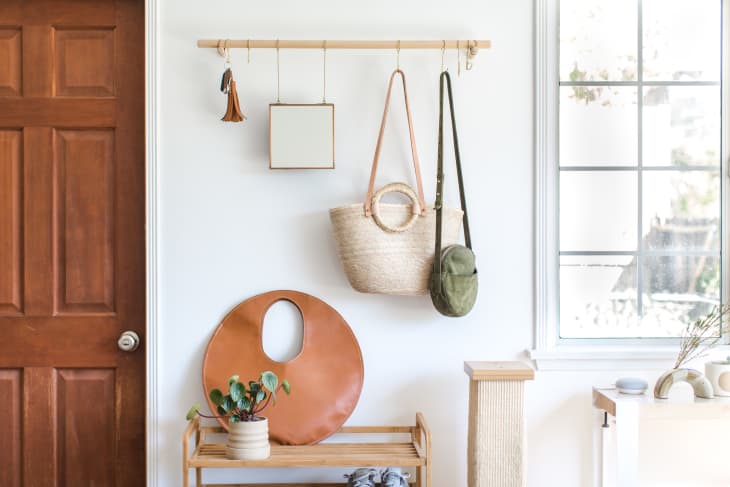
26. Treat a mirror as an accessory.
Sometimes, the best mirror wall ideas are simple. If you don’t have the room to go big, something smaller, like this tiny square in this LA apartment, also works. It’s just large enough for a last-minute lipstick check!
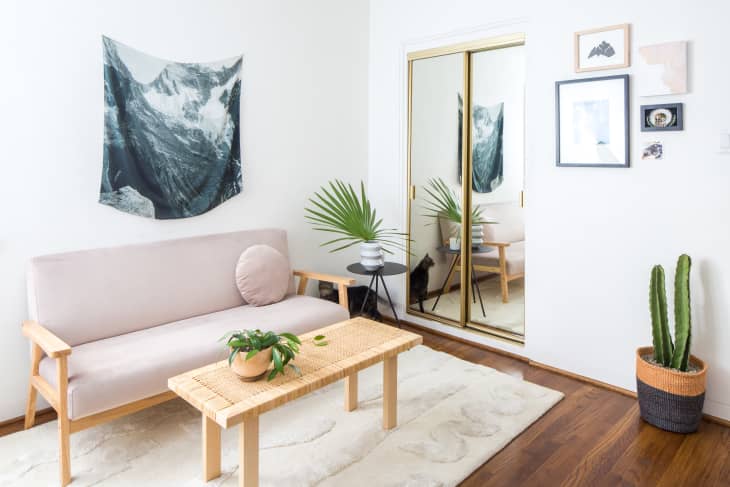
27. Turn your door into a statement.
Want a true space-saver? Instead of leaning your full-length mirror against a wall near the door, try putting it on a door. You can always hang it on the reverse side, or you can use it decoratively, as seen in another angle of this gorgeous LA home.
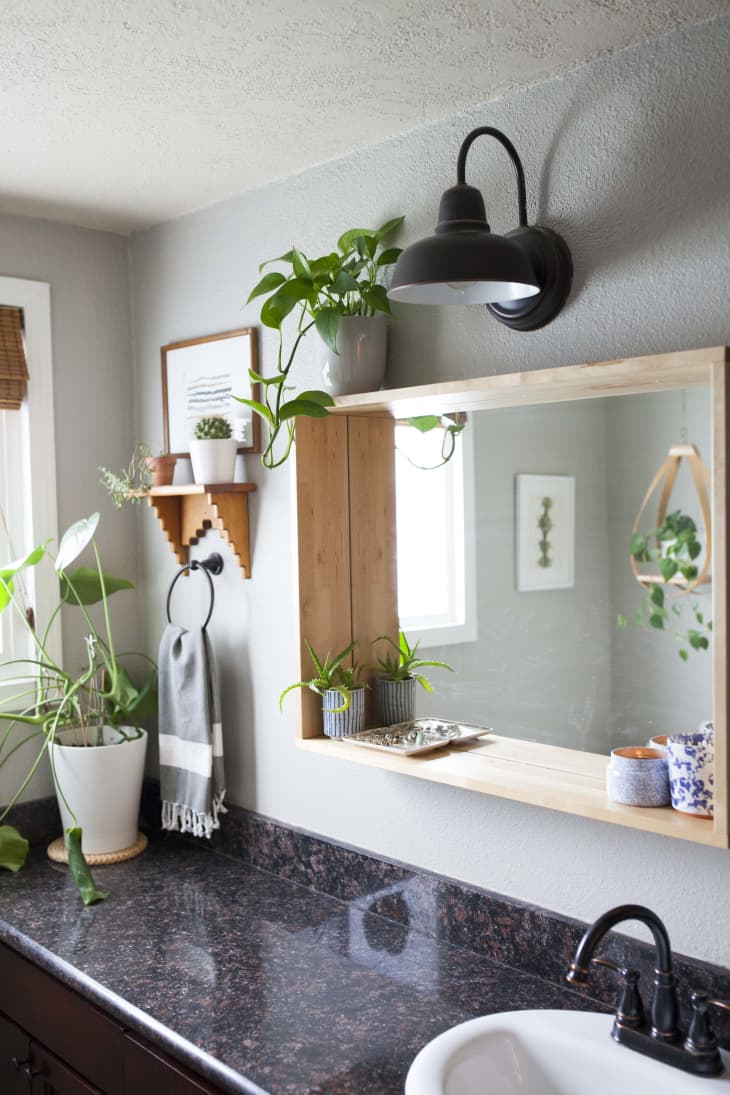
28. Let your mirror be multipurpose.
Find a deep enough rectangular frame for your mirror, and you can use it as a shelf or minimalist medicine cabinet, like in this Portland space. This kind of setup also works great near a door or in lieu of a makeup vanity in a bedroom.
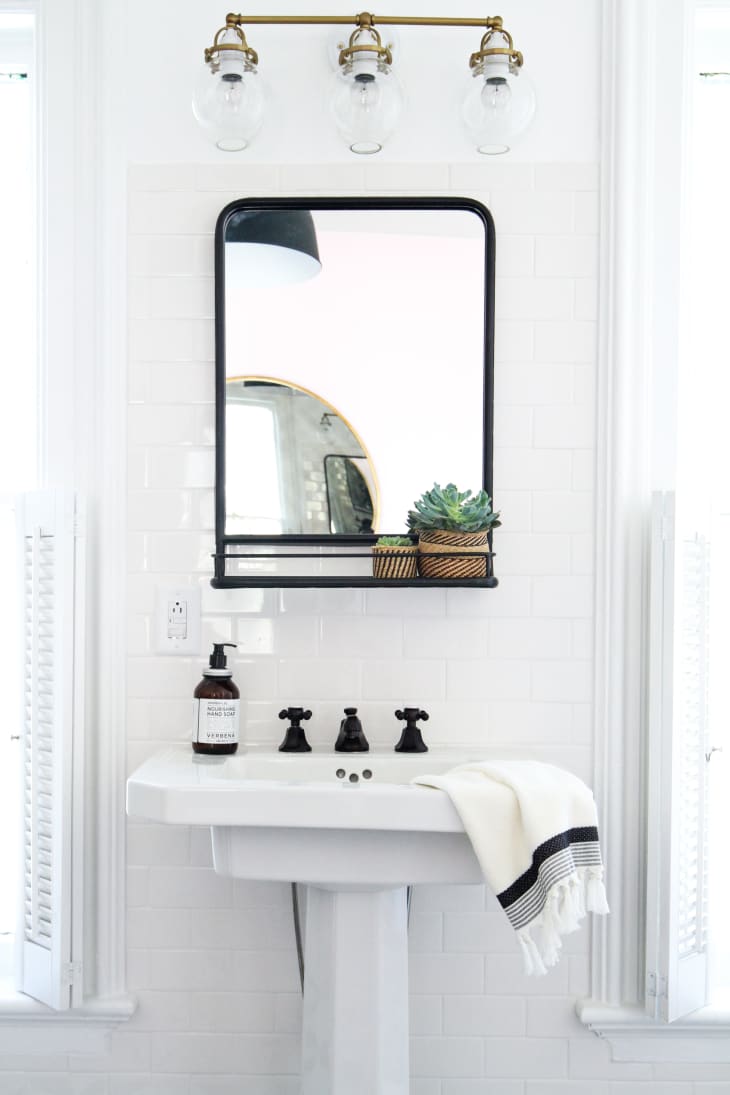
29. Bring a pop of the unexpected with matte metal.
This matte black rounded corner style is a real beauty. These kinds of metal framed mirrors are popping up more and more in bathrooms over traditional vanity mirrors and medicine cabinets, especially in small spaces. The overall look is more modern, even when installed over subway tile. Plus, it’s way lighter and more airy than something bulky and wooden. And again, that little shelf at the base of the piece is a nice little bonus feature.
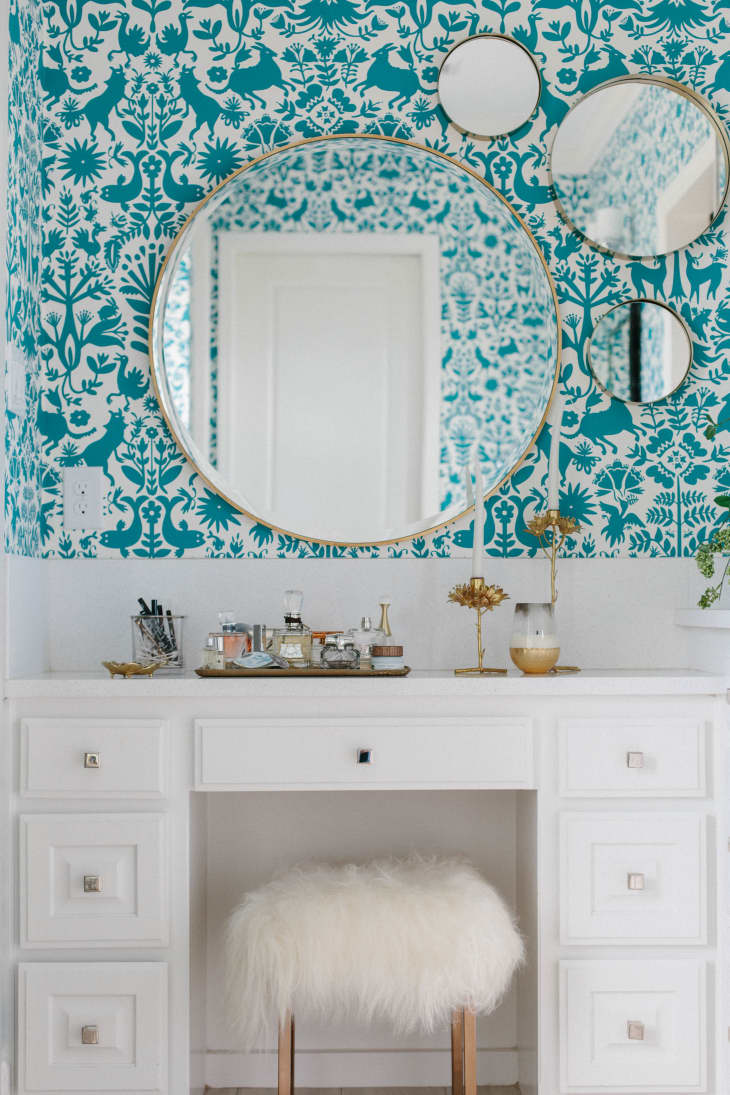
30. Make it pop atop wallpaper.
Whether you wallpaper an accent wall or an entire room, a mirror can make a perfect accent piece to further layer the space. We love how this brass mirror looks on this turquoise and white paper at a vanity space.
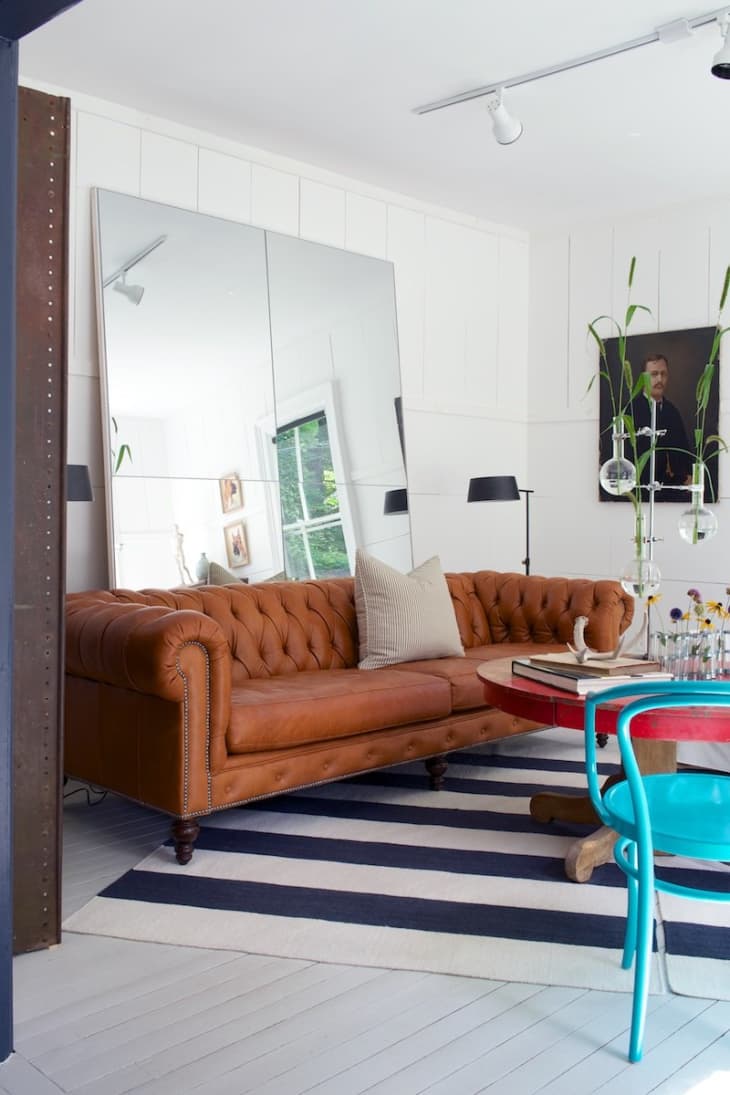
31. Go oversized.
You could also get a big (and I mean HUGE) old mirror, put it behind your sofa, and call it a day. It’s the kind of large mirror decor you’d see in a swanky hotel — a real one and done situation. Plus, it’s a great way to anchor the sofa with minimal effort, like in this Sharon Springs, New York, home.
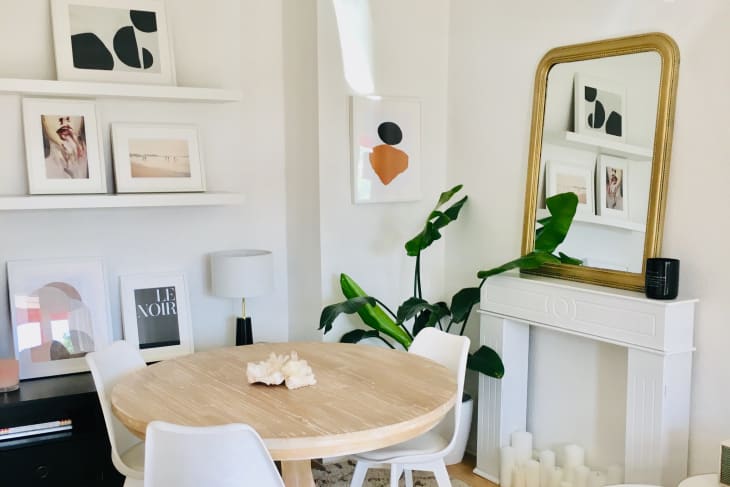
32. Turn it into mantel decor.
Sometimes a mirror is the missing puzzle piece to your styling setup. Picture this Berlin home without its mantel mirror, and it’s nothing more than a faux fireplace with a little too much white space. With the mirror though, this mix becomes a fresh juxtaposition of color, texture, and light.
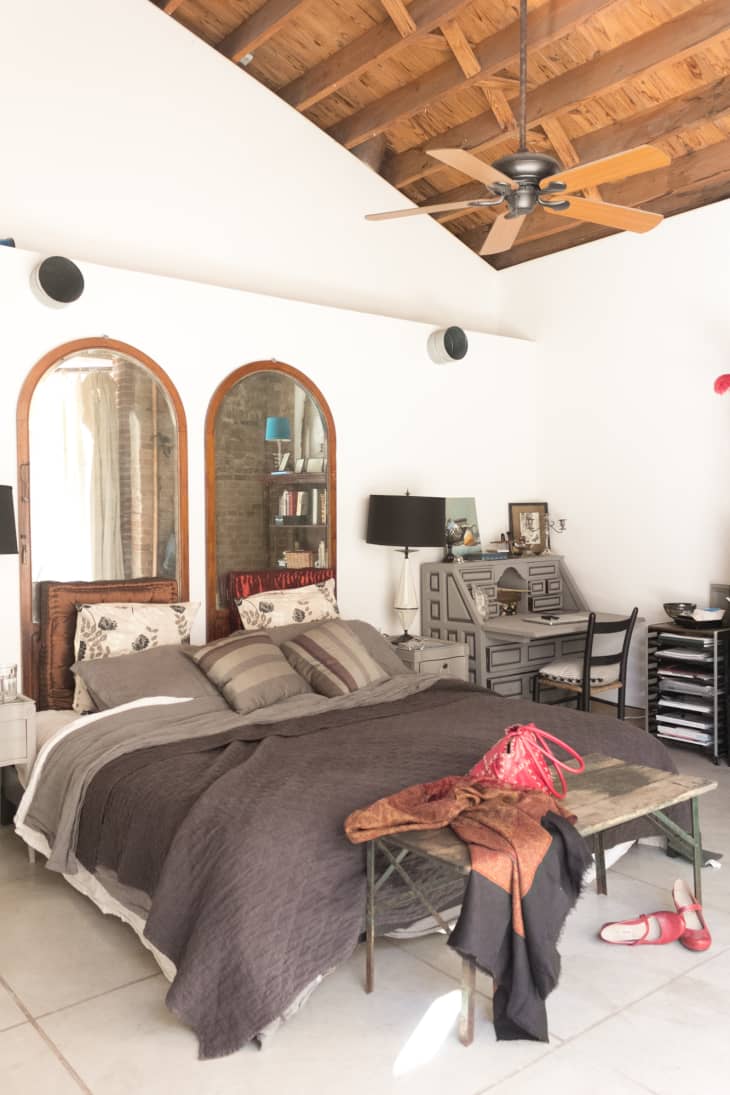
33. Opt for a one-of-a-kind headboard.
Find two arched mirrors, hang them side by side and — voila! — an artsy, one-of-a-kind headboard, as seen in this Chicago apartment. Pile on the pillows so you’re not totally sacrificing the comfort of an upholstered headboard. Thrifted pieces make this mirror wall decor idea budget-friendly.
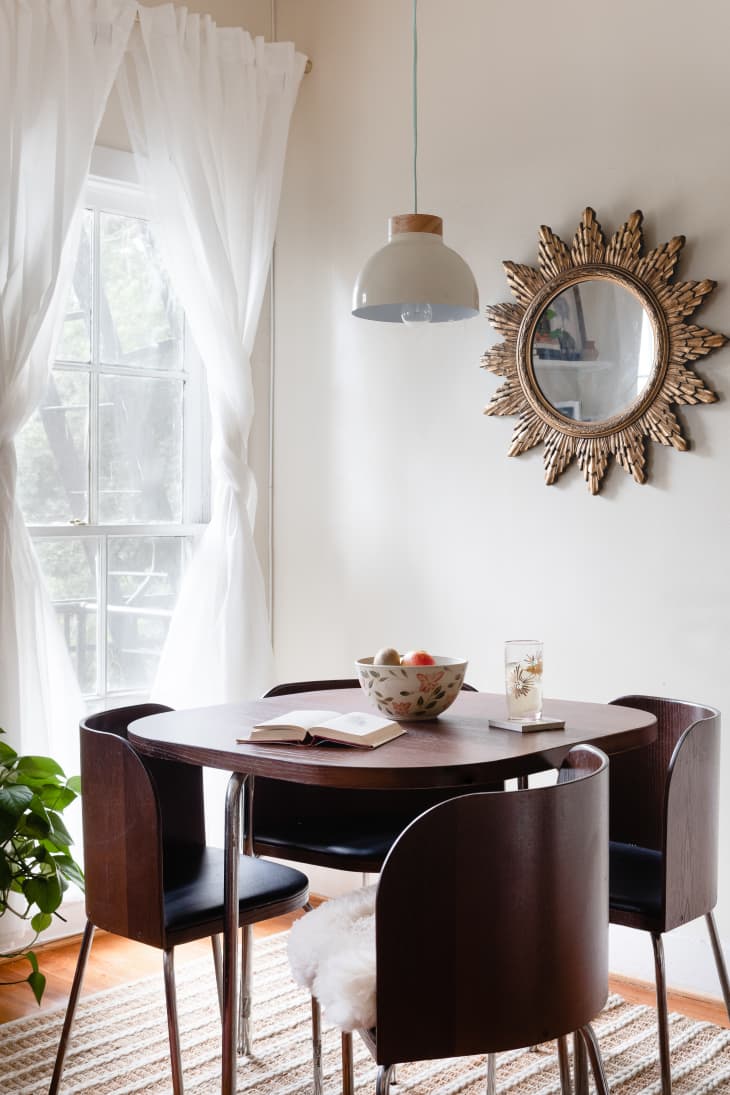
34. It’s all in the accents.
Don’t discount the whimsy the ever-popular sunburst mirror can bring to a room. Put one of these any place you might mount a clock — above a doorway, in a dining nook, wherever. Something this size works well in a gallery arrangement, too.
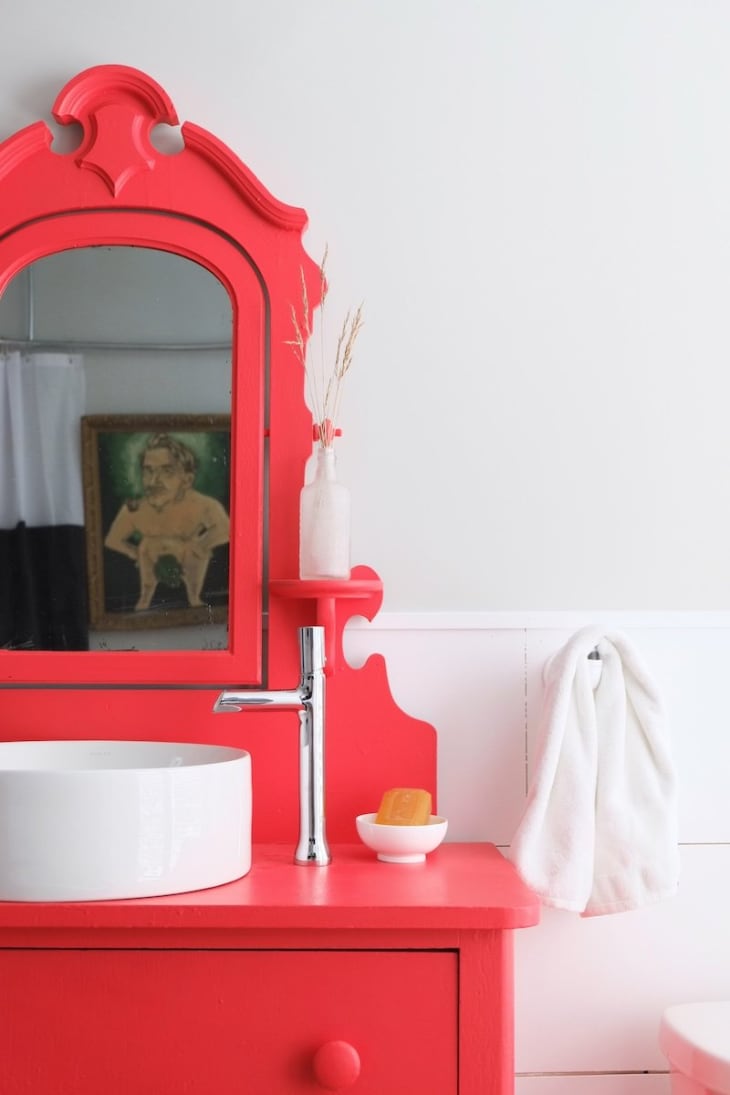
35. Go bold.
If you want to give an old mirror new punch, paint its frame a fun color like this fanciful red vanity. Look for something that can be spray painted, otherwise you’ll have a lot of cutting in to do.
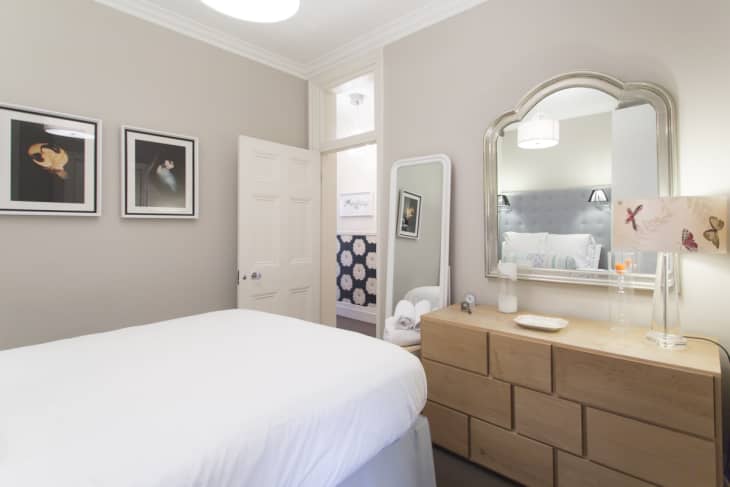
36. Layer up.
Don’t be afraid to double up on mirrors, like this London space does. This is a nice a way to fill up a bedroom wall with large mirror decor, particularly if you don’t have enough space in your bathroom for larger pieces.