
5 Trendy Tiles Designers Say Will Date Your Bathroom (See Why!)
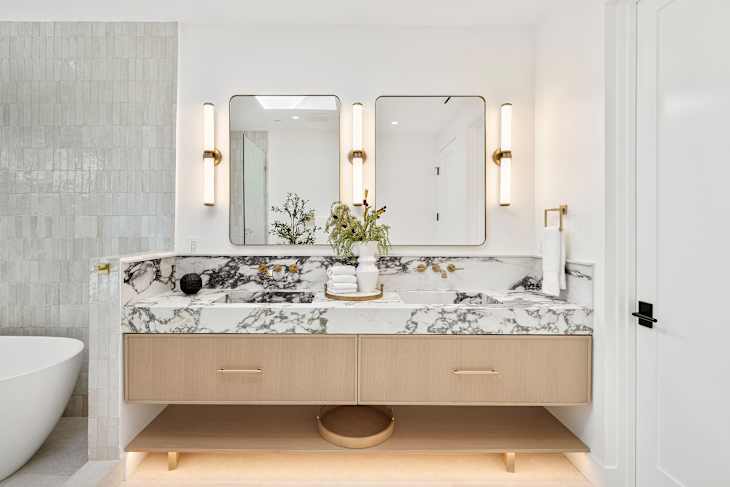
When it comes to decorating and renovating your home, rule number one is always to choose decor and details that make you happy. But if you’re someone who tends to obsess over design trends and buzzy details, balancing timeless details and timely ideas can be tough — but equally as important, especially during pricey makeovers. Bathroom tile is a great example of this: The tile you choose today should feel (and look!) just as good years from now — after all, nobody wants to renovate a bathroom again just because their tile suddenly looks dated. All that said, it’s surprisingly easy for current trends to sneak into mood boards and plans.
Maybe you’re convinced that your vintage-inspired mosaic tile will stand the test of time, or perhaps you’ve fallen hard for handmade zellige. But when certain finishes suddenly seem to be everywhere, their staying power can become a little less certain. The very tile styles that feel fresh and distinctive at the height of their popularity may eventually become visual shorthand for a particular era. If you’d rather avoid looking back at your bathroom five years from now and thinking, “That is so 2020s,” interior designers have some advice for you. A panel of pros say these five bathroom tile trends may be worth approaching with caution, and I’m personally filing them away as a reminder for my next renovation — maybe you’ll want to do the same.

12″ x 24″ Oversized Tile
“Whenever I’m asked about trends, I look at what’s available everywhere,” says designer Lisa Simopoulos, founder of Simopoulos Designs. “Right now for bathrooms, I immediately think of the 12×24 tile.” She explained that this large tile is reminiscent of the 12” square tiles that were everywhere in the late 1990s and early 2000s. “These are, without a doubt, today’s default field tile,” she adds. “I’d estimate 80% of my clients are asking for them.”
Does that mean they’re a bad choice? Not necessarily. As Simopoulos notes, these oversized styles are versatile and practical. But they’re also over-used, and that ultimately will affect their staying power. “Because they’re so pervasive, I think 12x24s will end up feeling like one of the most defining, and, eventually, most dated looks of the mid-2020s that people will be anxious to replace,” says Simopoulos.

Zellige Tile
While zellige is known for its unexpectedly imperfect, unique handmade look, it’s now become a go-to tile that can be found nearly anywhere. But Simopoulos isn’t so sure it should be so ubiquitous.
“While beautiful, zellige has a rustic, old-world look that doesn’t suit every home, and its porousness makes it higher-maintenance than most people want,” says Simopoulos. “For homeowners who prioritize low-maintenance living, I predict many will eventually opt to replace it.”

Certain Hex Tiles
Timeless hex tiles have their roots in ancient times, and they saw a resurgence in the 1920s. But they’re having another comeback in this decade, and a certain high-contrast hex and grout combo is perhaps making them seem too of-the-moment for some designers. “I’m all for a classic hex, but the tiny glossy white hex with dark grout is starting to show its age,” says Sonia Chauhan, founder and principal designer at Marble & Marigold. “It shows every grout line, it’s busy around outlets, and it can make the whole space feel louder than it needs to be.”
Luckily, she says, there’s an easy switch to make hex feel less trendy. Go for a lower-contrast grout, and the tile will feel as if it’s been there for years rather than straight out of 2025.

Patterned Floor Tiles
Patterned floor tiles have been growing in popularity for several years now, with farmhouse-inspired vintage patterns taking hold in modern farmhouse bathrooms and traditional homes alike. But these geometric patterns may finally be waning. A few years from now, the look could find itself stuck in the 2020s.
“Bold floors are eye-catching, but a busy, high-contrast pattern can fight with cabinetry and other elements,” says Chauhan. “It’s easy to get tired of, and printed patterns can show wear at traffic lanes and grout lines.”

Faux Material Tiles
If you’re renovating a bathroom, your top priorities are probably water resistance and durability. That can quickly lead you away from natural materials (think: stone, which can get slippery when wet, or hardwood, which is easily damaged by moisture). But don’t get any big ideas that putting in ceramic or porcelain tile that resembles these natural materials is a lasting substitute — particularly when it comes to style.
“If there’s one tile trend I’d steer you away from, it’s anything faux, like faux wood, faux stone, faux cement,” says Megan Mays, designer and founder of Ravenhouse Interior Design. “I totally get the appeal; these materials are often more durable and easier to maintain. But they rarely bring the depth, texture, or warmth of the real thing. And over time, that lack of authenticity starts to show.”