
I Discovered the British Way of Washing Dishes, and I’m Shocked
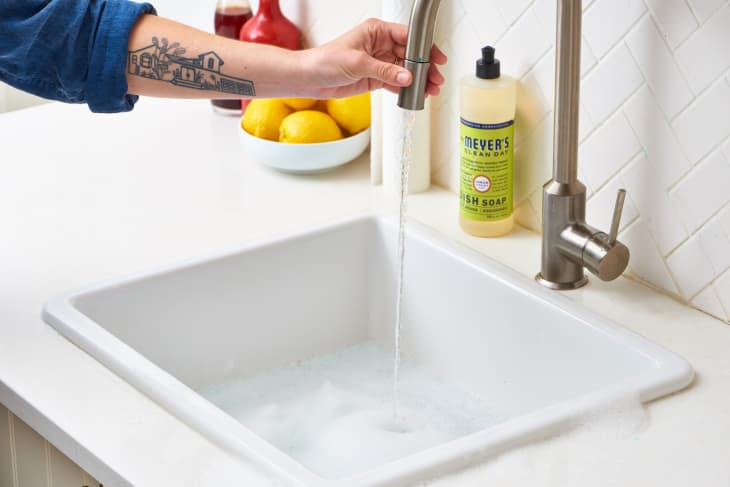
It goes without saying that Americans and Brits do plenty of things differently. But one major difference between the two countries has created major online discourse: the “British way” of dishwashing.
What is the British way of washing dishes?
The trend, now controversially known as “British dishwashing,” or “washing up,” started on TikTok after a handful of viral TikTokers realized that, rather than washing individual dishes one at a time with clean water for each, some British people like to fill the washing basin in their sink with soapy water and let all of their dirty dishes soak there together.
Once they’re “properly soaked,” followers of the British dishwashing method don’t rinse off the soap or any left-behind suds — they just stick them right in the drying rack. According to BuzzFeed, Paul Johnston-Naylor, @gooniedad on TikTok, was the first to share a TikTok of the British way to dishwash in August. It now has more than 4 million views.
Naturally, plenty of commenters expressed concern over whether this method actually cleans dishes properly — and whether or not the dishes themselves, once they’d dried in the drying rack, were actually safe to eat off of.
Does British dishwashing actually work?
TikToker @spiritual_af posted a TikTok asking Brits who follow her to share videos of how they wash their dishes, and she received plenty of conflicting responses.
“I will never ever understand the confusion about this,” one commenter wrote. “I have never rinsed dishes and my food has never toasted soapy, any remaining suds just drip off the dishes like the water does.”
However, another TikToker responded, “I’m British, and neither myself nor anyone else I know in the U.K. leaves soap suds on their dishes. Literally everyone rinses.”
If so-called British dishwashing is your method of choice, I have bad news: According to experts, this method ultimately isn’t sanitary.
As Carla Garcia Carreno, MD, an infectious disease specialist, told PopSugar: “In general, washing dishes in water that accumulates and not rinsing with running water carries the risk of spreading bacteria and other infectious agents.”
What should you do instead?
Lily Cameron, supervisor at Fantastic Services, previously told Apartment Therapy that the best way to hand wash and clean your dishes is to follow an order for cleaning and soaking (especially for dirtier dishes).
To avoid spreading germs and food particles, Cameron said, “Start the washing process with items that are less dirty like glasses and cups, then proceed to dirtier items like bowls and serving dishes, and finish with the dirtiest items like pots and pans.” And if you’re cleaning really dirty dishes, start by soaking them first while you clean the others.
You also need to remember that cleaning and sanitizing your dishes are one and the same. In our previous reporting, the public health organization Stop Foodborne Illness promotes one of two methods for sanitary dishes. You can suspend dishes in a really hot water bath (at least 170°F, for at least 30 seconds), or you can soak dishes in a sanitizing solution of bleach and water (one tablespoon of unscented chlorine bleach and one gallon of cool water, for at least one minute).
You should also be sanitizing your sponges regularly.
Leanne Stapf, vice president of operations for The Cleaning Authority, previously told Apartment Therapy that you can clean your sponges with vinegar or bleach — but never both together. Stapf even recommended her own personal soaking method: “Fill a cup with vinegar and soak the sponge for about five minutes, or you can fill a cup with diluted bleach — 1/2 cup of bleach for every gallon of water — and soak the sponge for five minutes.”