

Design Changemakers 2021: How Anastasia Casey Helps Interior Designers Rethink Branding and Web Design
The Apartment Therapy Design Changemakers Class of 2021 is made up of 24 of the most talented and dynamic people in the design world. We asked an assortment of last year’s Design Changemakers and Apartment Therapy staffers (and you!) to tell us who we needed to spotlight — see the rest of the list here.
Who: Anastasia Casey, a branding, web design, and Instagram manager for interior designers
Nominated by: Maegan Blau, owner and lead design of Blue Copper Design
Where to follow her: Instagram
Why Casey is part of the Class of 2021: “Anastasia is the founder and designer of IDCO Studio, which specializes in creating gorgeous websites and marketing plans for interior designers. She has been such a huge resource to me and my business, and I know she is considered a wealth of knowledge in the design community. Beyond her gorgeous web designs, her company has inspired my business to get focused in on niche and so much more. She is a designer for designers and has created a company to be reckoned with.” —Maegan Blau, owner and lead design of Blue Copper Design
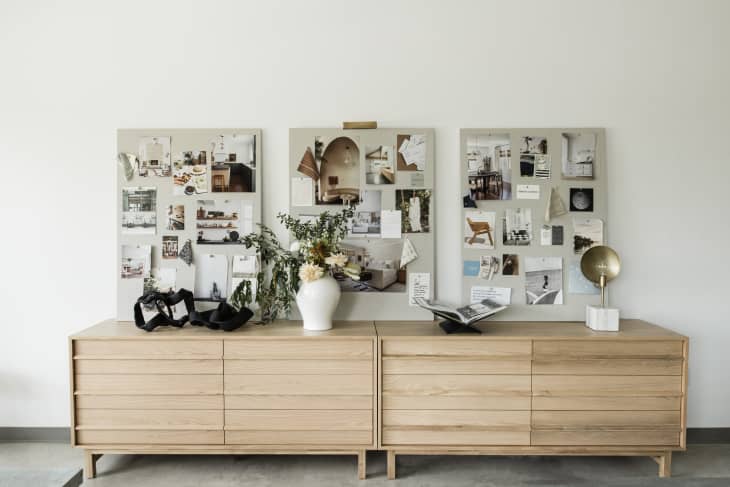
Scrolling through Anastasia Casey’s Instagram is like being transported to home decor heaven: A creamy color palette is combined with a range of textures for a soothing effect in which every single detail has been carefully considered. That approach is what Casey, who is based in Austin, Texas, brings to all of her clients at IDCO Studio. As the founder and creative director, Casey has been leading the team of 12 to guide branding, web design, and Instagram for interior designers since 2016.
“Since launching our limited edition (only 10 copies are sold of each design) website template for interior designers 18 months ago, we’ve helped over 100 designers launch their new websites,” Casey says. “In addition, we’ve released in-depth client communication documents, complete with copywriting, to help make interior designers’ jobs easier. Our goal is to provide templates as accessible, affordable, beautifully designed tools to elevate designers’ businesses, attract better clients, and leave designers more time to actually design.”
Casey studied advertising with a minor in graphic design at the Academy of Art University in San Francisco. Her first job was as a director of marketing for a luxury real estate firm in Texas. “That’s when I really started to hone my appreciation for beautiful spaces and the privilege of getting to tour some of Austin’s coolest houses,” she says. “From there, it started to become a passion of mine, and so as I created my own business designing websites, I realized I needed to focus more on a particular niche.”
At first, she served any type of creative entrepreneur. Then she went on a retreat to Mallorca with Fiona Humberstone, aka The Brand Stylist, and she encouraged Casey to focus on interior designers, Casey explains. “From there I realized, as a marketer, that the way to become relevant in the industry was to focus the content we create on the type of content that interior designers want to consume and less on always trying to showcase portfolio work,” she says. “I’ve taken a very unique approach to how we’ve grown the business by focusing on the blog and documenting my own home renovation, doing design roundups, and really having a lifestyle aspect to the brand because that’s where we’ve grown our audience, which then, of course, becomes a funnel to the actual products and services that we provide.”
Looking at the blog, The Identité Collective, it’s hard to believe Casey isn’t an interior designer herself. The Identité Collective launched hand in hand with IDCO Studio and now has a full-time editorial team producing content. “People enjoy when I share my own home, and so that’s really where I gained the following,” Casey says.

Apartment Therapy: Interior designers all have their own aesthetics, so how do you translate that onto a website?
Anastasia Casey: Not only do they all have their own aesthetics, they have a very strong opinion of what that aesthetic is. We have worked really hard to create digital spaces that feel as layered and textured as the spaces that they create in person. In order to do that, we’ve combined a lot of subtle animations that create movement in a digital space in a way that doesn’t feel showy. By keeping things very minimal, we’re able to focus on their work and on providing excellent copywriting to articulate their services and their bespoke processes in order to let their work shine in a way that goes beyond just looking at a single portfolio image. A lot of people think that interior designers just fluff things and decorate, and there’s so much more to the process. We make sure that that in-depth, extensive, grueling process is largely relayed on their website to help them convert those potential inquiries into booking clients.
AT: Do your clients’ websites have a signature touch?
AC: Over the years we’ve honed signature elements. We really like an expandable menu. We like for there to be a little bit more interaction in navigating the site while keeping it a clear call to action. Another signature is we like to use a white border that frames the entire website, which is unique to web design. Our sites are unique in the sense of the dynamics of the portfolio — we always like to include an in-depth portfolio description of each project, and each project is featured individually. A lot of website templates and other web designers like to put the entire portfolio together, and we’ve really worked to make each and every project feel as bespoke and individualized as the spaces truly are and that they don’t all get lumped together as one.

AT: What were your design inspirations growing up? What is your inspiration now?
AC: My mom and my grandma. My mom’s very talented and very creative. We have different aesthetics now, although as I get older, I feel like those aesthetics are merging together a little bit more. My grandmother was the coolest human. She lived in Paris after World War II and had coffee with Ernest Hemingway and collected an incredibly robust collection of mid-century modern art from artists in Paris while she was there. I was able to inherit all those. She was always so thirsty for knowledge and history and art. That was passed down to us as something that’s really important. Those are what started my interest in it, and my parents always remodeled their houses growing up themselves. It’s funny that as you grow up, you just become your parents.
AT: What three words would you use to describe your work or style?
AC: Minimal, editorial, and tonal.
AT: What makes you feel at home in your own space?
AC: Vintage pieces. When we bought our house three years ago, I built everything with Wayfair just because we needed furniture. We moved from 500 square feet; suddenly we had 2,500 square feet. Three years later, I still have one of those things. Everything else has been replaced. It didn’t feel like home until I had all of those pieces that have story and character and so much more charm and uniqueness.

AT: How do you think the past year will impact the design world moving forward?
AC: People have a new appreciation for what home can mean to them and how fulfilled they can feel in their home when everyone has been forced to live their entire lives out in their personal space. Interior design has become more important than ever. Moving forward, I think that there’s going to be a lot of investment in improving people’s quality of life that they have within their home. As people have had to work from home, teach their kids from home, have date night at home, people might be interested in going back to a more traditional floor plan — instead of an open floor plan — of slightly broken apart spaces, so that there’s a little more privacy and sound barriers.
AT: How has 2020 changed your perspective on or approach to your work?
AC: 2020 has really helped me realize how profoundly our work can affect a designer’s life. This year has taught me to enjoy the process a little bit more and take more time to really help business plan with our clients so that there’s a clear path forward for them. After they’ve launched their new site or received new copywriting from our team, or once we’ve taken over their social media, when they start getting those new clients at a higher price point than they ever had booked before, it really does change people’s lives and they’re able to hire more people. That’s the coolest part of the job — that I can grow my own team and employ amazing creatives, but also help other creatives grow and be more financially independent.
AT: Any big plans for 2021 or beyond you can share with us?
AC: On Jan. 1, we launched a new product that is going to change peoples’ lives. We launched a bundle of prewritten email sequences that will handle all of your client communication from initial inquiry to final off-boarding. All of these emails will be written for you, and you can have them saved in your email account and just send off these templates when someone asks about a progress status update, what to expect for a photo shoot, what to expect when the floors are being installed — all of those emails will be written out. That’s a big step for us, to be moving more toward product, which has been a big hit this past year. In 2021, I also hope to have more in-person events. That’s my big goal.
AT: What, in your mind, is the power of good design?
AC: I can’t remember who said this quote, but good design is design that you don’t think about. I think that’s really true. When you don’t notice little things, it means that it probably was designed really well. You shouldn’t be noticing how difficult it is to navigate around a website. You shouldn’t be noticing that you can’t find a great inquiry form. You shouldn’t be noticing that you inquired with a designer and filled out a text box to tell them about your project and then you also get a questionnaire where you have to repeat everything again. I think good design is about simplicity. And I think that there’s a way to balance simplicity with beauty that makes it seamless.
Interview has been edited and condensed.