

Design Changemakers 2022: Block Renovation Is Making Kitchen and Bathroom Renovation Easier
Apartment Therapy’s Changemakers Class of 2022 is made up of 15 of the most talented and dynamic people (or duos or trios) working in the design world. This year’s honorees are all about connecting, collaborating, and disrupting the industry to steer the collective design conversation towards innovation and a better future. See the rest of the list here.
Who: T. Luke Sherwin and Koda Wang, founders of Block Renovation
Where to follow them: Instagram at @blockrenovation

Block Renovation’s co-founders Koda Wang and T. Luke Sherwin were not the first to realize the nation’s home improvement industry was ready for a much-needed disruption, but their backgrounds uniquely positioned them to bring digital finesse to the often-chaotic industry. Wang was formerly the chief customer officer of Rent the Runway and COO of HuffPost, and Sherwin was a co-founder of the direct-to-consumer mattress company Casper. Sherwin says his experience with Casper in particular helped him to see the value in striving for simplicity in business.
By the time they were ready to test their idea for a digital home-renovation platform, one of their Brooklyn homes was fortuitously in need of a small-scale remodel. They approached Sherwin’s bathroom renovation in what Wang calls “now-typical Block fashion” — that is, “open it up, simplify the lines, and make a more modern space.” The experience proved “really eye-opening” (a series of unanticipated design issues bubbled up, of course), but it also confirmed that they were on the right track with their idea.
Today, Block Renovation offers what Wang calls an “all under one roof” approach to renovation that offers transparency and predictability to apprehensive remodelers. In addition to their user-friendly digital interface, they provide clients with a dedicated project manager who sees the renovation from planning to completion, overseeing the scope of work, timeline, and permitting for the project. Block also maintains a “design library” of high-quality materials and more importantly material combinations, to streamline and simplify the design process. And Block also has a network of vetted contractors, who do the actual renovations.
Block’s services are currently limited to residences in New York and Los Angeles, but the company’s latest venture-funding round raised $50 million to help widen its reach across the country. The list of investors includes interior designer Kelly Wearstler, tile magnate Ann Sacks, and Zillow cofounder Spencer Rascoff.
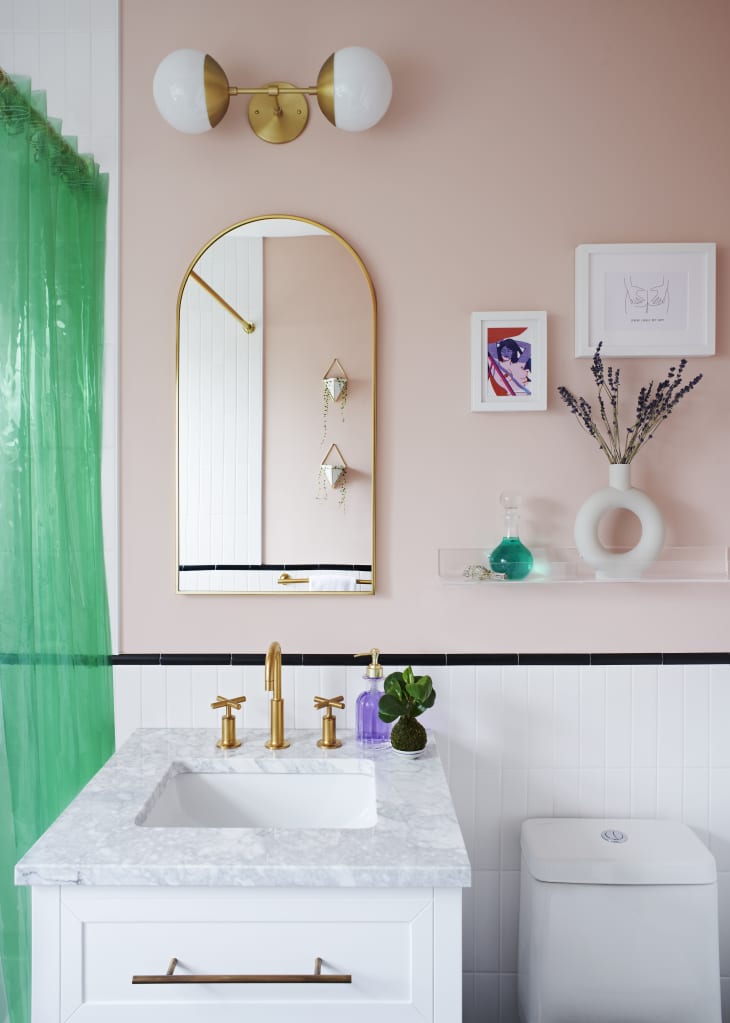
Block also began bringing design world names to its services: They partnered with Quiet Town’s founders Lisa and Michael Fine on a series of branded bathroom designs and have more designer partnerships on the horizon for 2022. “There’s such a gulf between aspirational design and the toil, sweat, and sometimes tears that come with making it a reality,” Wang says. “I think our success lies in making great designs achievable and real — hopefully with a little less heartburn along the way.” We talked to Wang and Sherwin about where they see renovation headed in the year ahead.
Apartment Therapy: What three words would you use to describe where you see the design world going in 2022?
Accessible, simple, data-driven.
AT: What would you say sets you apart from your peers?
Koda Wang: I had zero design experience before Block, but that ignorance may have ultimately been helpful. At Block, our design thinking is not only about the literal interiors but also about the design of the renovation experience itself. For example, what products or tools do homeowners and contractors need to be successful in the often abysmal experience of doing a home renovation? We’ve had to think about it in a more holistic sense — the larger story of home renovation and crafting a better system and product for it to work for all stakeholders. Design at Block interacts with software, data, the physical world, tools, processes, and people.
T. Luke Sherwin: Unlike ad networks that stop at a contractor “match,” Block’s renovation platform is truly an end-to-end operating system. We combine vetted contractors with support across design, procurement, scoping, and payments.
AT: What legacy do you hope to leave?
KW: Fast forward a few years, and hopefully we’ll have built something that will have helped thousands of homeowners create new spaces in their homes and thousands of contractors grow their businesses.
AT: Any big plans for 2022 or beyond you can share with us?
KW: We started 2021 as a Series A company, and ended it as a Series C company. We started the year in New York and are now in multiple markets. We started the year with bathrooms, and we are now doing kitchens, too. The big story next year will be national expansion, accompanied by investing in our product and user experiences. We’re setting up our community of homeowners and contractors for success by building tools and infrastructure for them.
AT: What about design partnerships? Can we expect to see more?
TS: As we grow nationally, we’re getting more interest in capsule collaborations with retail and lifestyle brands. For partners, Block is compelling because it offers them the chance to broaden their canvas beyond furnishings — with comparatively low execution risk. For Block, we can rapidly expand our customer base through partnership with established national brands.
AT: What’s your favorite project you worked on in 2021?
KW: My favorite project is neither a bathroom or a kitchen but rather our Contractor App, which encapsulates our approach to design. The app is designed intuitively and is a tool that helps our contractors bring bath and kitchen designs to life. But when we were developing the app, we had to think about the way contractors would use it — what would be useful for them in the real world, what are they annoyed by now, and how the app could make things better for them. In the background we’re thinking about the relationship between homeowner and contractor, what each party needs and feels at different stages of the journey. And, importantly, how would this product fit into all the other systems we have, from data, pricing, procurement, logistics, and construction? Believe it or not, all of that was an exercise in design.
Interview has been edited and condensed.