
This Pro Stager Knows How to Make Any Space Feel Like It Was Made for You

Get to know Apartment Therapy’s 2025 Design Changemakers, the talented risk-takers, disruptors, and doers leading by example and pushing their industries forward. This content is presented by Benjamin Moore; it was created independently by our editorial team.
As Jason Saft, founder of home staging service Staged To Sell Home, gazes around his 24,000-square-foot studio and storage space in Industry City, Brooklyn, he reminisces on how he’s grown from his first 8-by-10-foot space. Almost every inch of Saft’s studio is covered with some object he’s collected over the years, and every story makes up his winding history that’s led him to where he is now.
But if I had to guess, Saft wouldn’t linger too long with memories of the past; he’d be poring over the details of one of the 15 staging projects he has going on at the moment.
“This is essentially my third career that took me a really long time to organically grow into,” Saft says. He founded his staging business, which was awarded #1 Luxury Home Stager in the United States in 2024 from Real Estate Staging Association (RESA), in 2020, after 20 years in the real estate business (he was one of Compass’s founding agents in 2013) and working in PR and marketing before that.
But Saft’s love for good design goes back to when he was a kid in the 80s: He’d eagerly read his mom’s interior design magazines (and hide them under his bed for safekeeping). Cut to a few decades later, and Saft is living out his childhood dreams. ”For me, it’s this ability to design, to do the thing that at my core I’ve always wanted to do,” he says. “And it doesn’t feel like a job. It doesn’t even feel like, I mean, it is a career, but it’s just a part of me.”
Saft treats every staging project with an impressive level of devotion and thoughtfulness. “It’s not like there’s a template, and we just cut and paste everything into it,” he shares. “We’re often [considering] the cross-section of neighborhoods, property type, architecture, history — it’s so across the board,” he says. Saft explains how he and his team immerse themselves in each project: “I try [to] teach my team, it’s like you are getting into character; you are understanding that this dwelling is very different from this other one for this list of reasons.”
“Getting into character” stands out as one of the defining factors of Saft’s approach. “We are getting into the space [and] the stories that we’re creating,” he says. “It’s so thought out and detailed, and there are discussions on it.” Saft welcomes a “back-and-forth” about an approach to a home — he likes to dig into the nuances. He likens it to how your algorithm just knows what you want: “That’s my goal … creating something that someone thinks was created just for them.”
Before he started Staged To Sell Home, Saft staged homes as a hobby while working as a realtor. “That is sort of how I got my foot in the door with the business,” he explains. “I looked for projects that had not sold, couldn’t sell, and they were always rooted in issues with design.”
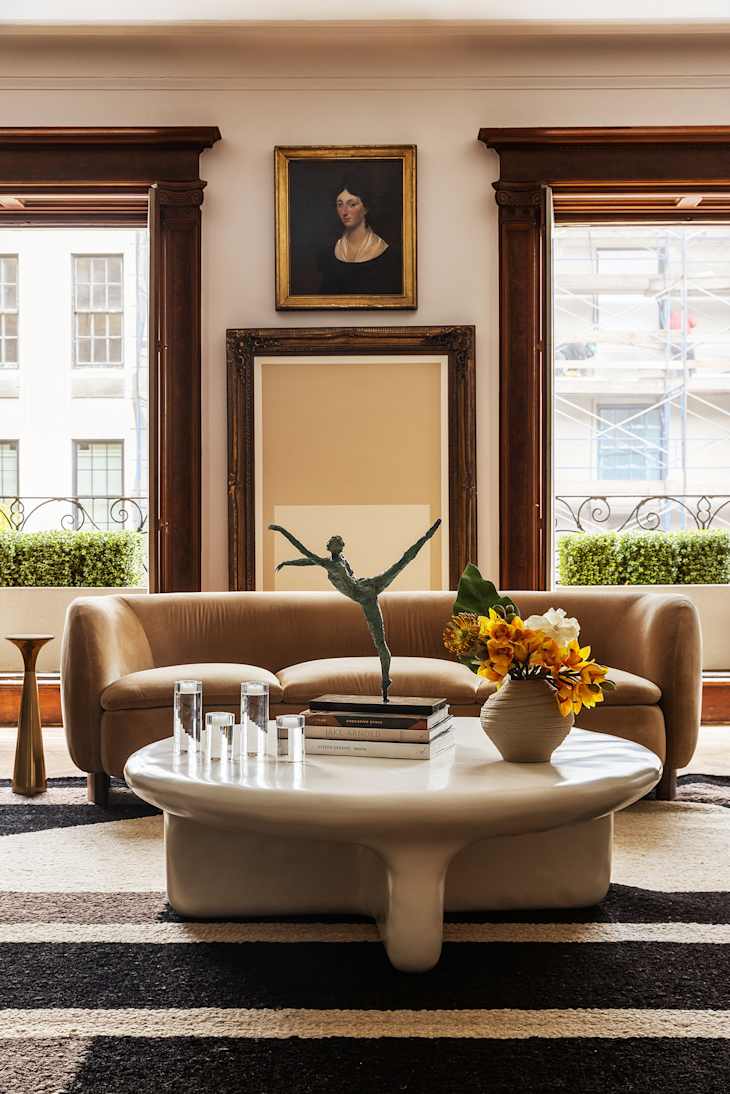
In 2005, when Saft was a year into his real estate career, he created a marketing deck that outlined a 30-point action plan for fixing up and selling a home, which is still the core of his approach today. One of the points is the “moment of entry,” which refers to helping potential buyers instantly feel good about a home when they open the door. This includes even the simplest things, like having a clean space and emptying the garbage cans.
Next, they tackle all of the visible issues in a home to capitalize on a space’s “magical moments,” as Saft refers to them. “Any time you don’t fix your [home’s] flaw, you’re just handing leverage to someone to use it against you,” he explains. When a home’s special features are on full display, Saft and his team will capture visuals of the space to give a full picture of what it feels like to live there. They’ll photograph it at different times of day and show the “nuances and subtleties” as opposed to an overall room shot.
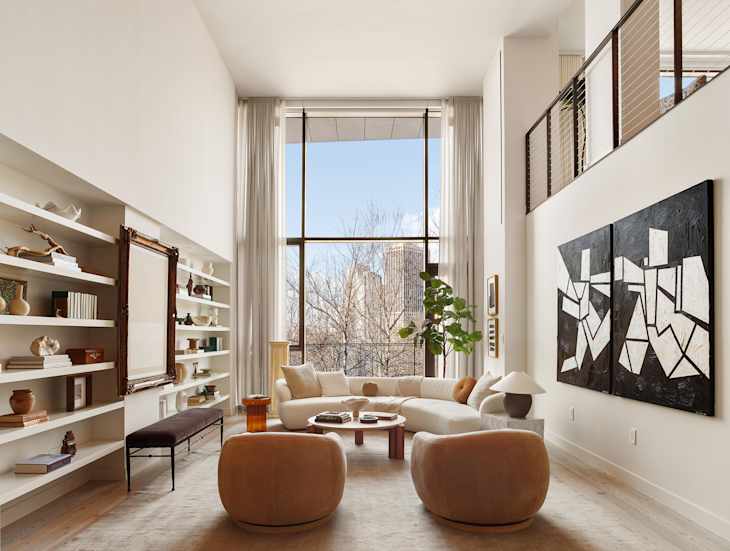
As Saft’s portfolio expanded beyond a side hobby in 2020, during the COVID-19 pandemic, he took on Staged To Sell Home full-time. “I’ve never had the time to think about what I wanted to do, what made me happy, what fulfilled me,” Saft says. “And I always kept going back to design.” He appreciates all parts of redesigning homes, whether decluttering, reorganizing furniture, or painting. Mostly, he enjoys the entire transformation process: taking a home from what it was to what it could be — and attracting buyers who could envision living in it.
Using his deep knowledge of the real estate industry, Saft can anticipate what a potential buyer will look for in a specific neighborhood, like Manhattan’s West Village, for example.
“That’s where the brokerage experience for me comes in handy. We sort of turned the house upside down, repainted it, and just approached it in a way that [reflects] a very specific buyer in the West Village,” he says. He gets very granular, considering buyers’ budgets, how people will use the home, where they hang out, where they go out to dinner, where they go on vacation.
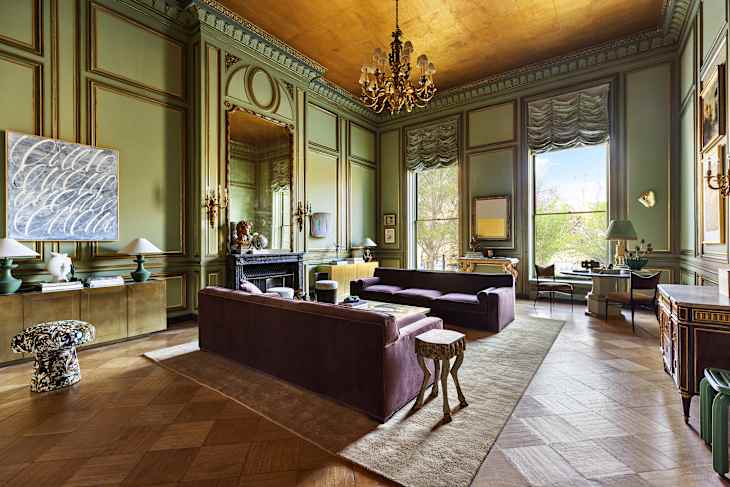
You won’t see “simple, minimalist, all-white or beige environments with very little variation” or “generic, big, white furniture” in Saft’s portfolio.
In breaking away from a one-size-fits-all approach, Saft had to take sourcing materials and finding inspiration seriously (as any pioneering Changemaker would). He visits museums, rummages through flea markets, and wanders into clothing stores to appreciate a design element. Of course, Saft’s friends also serve as creative fonts — offering him things like vintage shoeboxes. “I love combining different eras, time periods, and aesthetics into this one thing that feels fully thought out and realized,” Saft explains.
Saft’s attention to detail, keen understanding of the real estate industry, and ability to use his imagination have paid off. Since launching the brand full-time, Saft’s sold more than $3 billion in properties. If Saft and his team enter an apartment that’s been unable to sell, it’s highly likely that once they’ve reimagined the space, it’ll be sold — and sold quickly. Just take a project he completed in Manhattan’s Upper East Side neighborhood. After remaking the space, it was on the market for 32 days and sold for $1.7 million above the original listing price.
The success is great, but for Saft, it all comes back to design — he feels a responsibility as a professional interior decorator and stylist to show people how they can live in a space. “I am constantly investing in things that are a bit more expensive and sort of break out of the traditional mold because I love design,” Saft says. “I want to bring real design into the home from the very beginning.”