
How Jean Lin’s Colony Residency Supports the Future of Design
Get to know Apartment Therapy’s 2025 Design Changemakers, the talented risk-takers, disruptors, and doers leading by example and pushing their industries forward. This content is presented by Benjamin Moore; it was created independently by our editorial team.
Jean Lin came to New York City with a desire to take up space. When she arrived in 2003, the budding creative was caught up in her transition from studying psychology to fashion design. As she experienced a period of transformative growth through a revolving door of jobs, Lin began writing for Designer Pages, a digital search platform for interior designers and architects, which intersected with commercial interiors.
This would be the pivotal moment that caused her worldview to expand. “I got really pulled into the history of American design and realized that our environment is not by accident — that was something I just didn’t know,” she recalls.
Lin soon not only took up space in the city, but provided a nurturing space for fellow designers and creatives. She took the leap of faith to start a design business after constantly interacting with so many New York-based independent designers who were hungry for community, resources, and representation that didn’t feel predatory. After spending a year working toward the vision for a company that could cater to those needs, she signed a five-year lease for a gallery space and Colony was born in 2014.
“It felt like I was pushing a cart with no wheels up a mountain with no path,” she says, reflecting on the early stages. “I thought at the beginning that there was a magical way to be a good salesperson, but it really is, like, you have to be on your client’s side and you have to be there for them … It took years to really learn how to do that.” Lin wanted to foster the creative and business sides of these designers.
From the beginning, she led with a holistic approach, seeing herself as an extension of a designer’s studio and working closely with them to elevate their business rather than an outside sales representative taking huge commissions from sales. (Lin takes a commission, but it’s a much lower percentage than traditional representatives.)
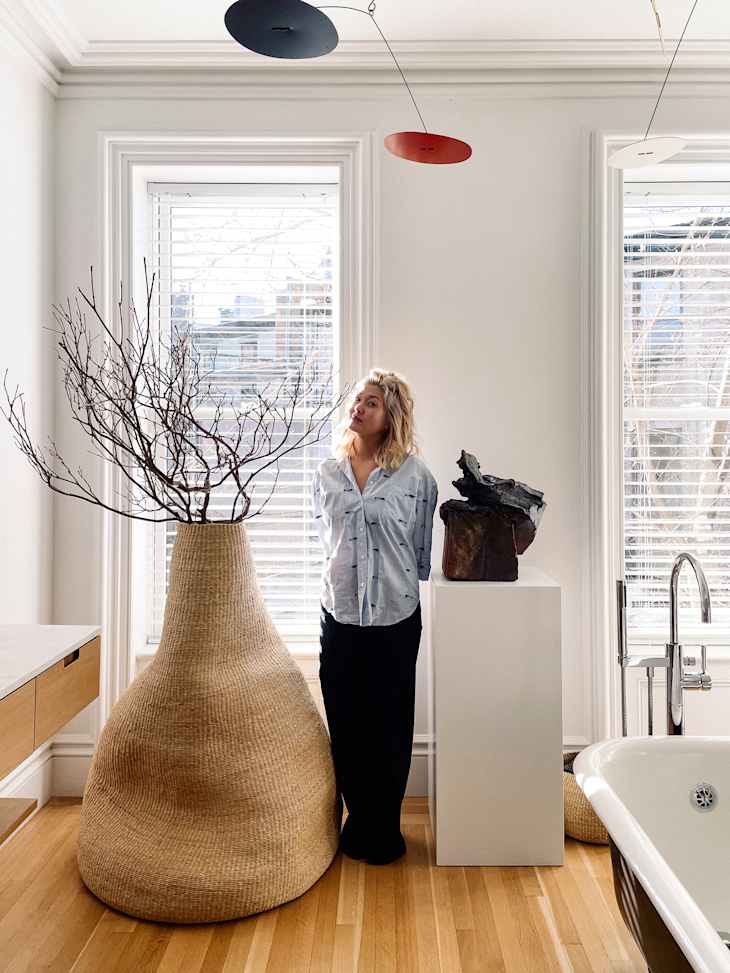
Lin’s commitment to cultivating talent deepened when the founder, creative director, and author decided to add professor to her resume in 2015 by teaching product design part-time at her alma mater, Parsons School of Design. Within three years of its 2014 founding, Colony broadened from a cooperative gallery to a collaborative design studio and strategy firm offering marketing, branding, and consultancy services. “We put a lot of investment into new talent, but for us to grow as a business, I needed to find more sources of revenue,” she adds. “It was a natural fit for us to start doing interiors because people would ask us for it.”
Even as she expanded Colony, Lin’s original mission remained: helping designers grow holistically. In 2021, Lin picked up a remote guest lecturer and critic role at Rhode Island School of Design and was blown away by the unbelievable talent she was seeing in the classroom. “[The students] were so passionate about their work, but they were not necessarily being taught or fostered to be independent in their practice,” Lin explains. “They were being taught to think independently in their creativity and their making, but the idea of starting their own studios was not a topic of conversation.”
Inspired by her teaching experience, Lin in 2024 established the Residency, an eight-month incubator program to foster America’s next generation of emerging designers. Lin’s ultimate goal is to help these protégés develop their own small businesses. She provides studio spaces — without co-op fees — and works closely with them on collections that are “both a reflection of their whole self, but also feel more commercial and able to live in the market.” In return, they work part-time at Colony to learn about the other side of the business.
It was her time teaching that helped her realize that designers who are starting out need more support than they’re currently getting — “not just on the education side, but in the professional world,” Lin explains. “It’s scary for a professor to take on the emotional weight of the responsibility of [thinking about] ‘This generation needs to work and where will they land?’” she says. “It’s not something people really want to do because there are no good answers.”

That’s why her 2024 Residency endeavor is so important to Lin. “It’s a really hard market, and it’s a really hard path — no matter who you are or what your practice is — so I get why it is the way it is, but that doesn’t mean that it should stay that way … The Residency is one of the biggest investments that I have put in without knowing what the return will be,” she adds.
A little over a decade after founding her business, Lin is fully stepping into her power as the face of Colony — all while keeping a spotlight on its members. “It still is about them, but it can be about both — and embracing my power actually gives them more opportunities that I didn’t realize before,” she says.
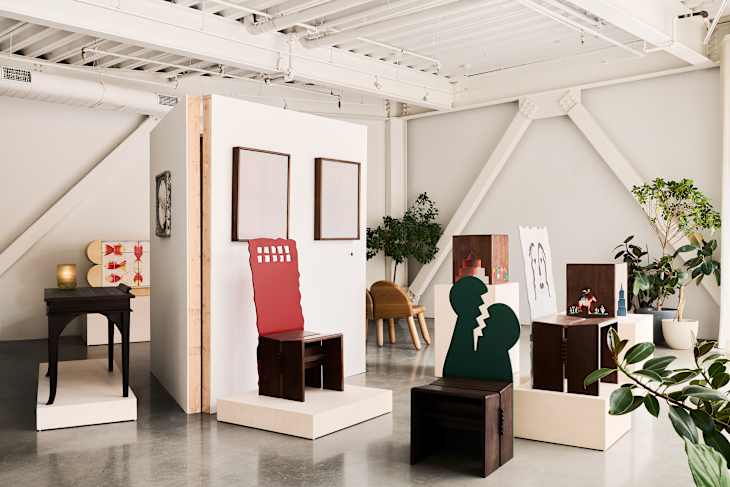
To celebrate the community she has cultivated, Lin recently presented The Independents, a group show featuring the work of 27 design studios from their past (Chen and Kai, Mark Grattan, Aaron Poritz), present (SSS Atelier, Kawabi, Vonnegut/Kraft), and future (Thomas Yang Studio, M.Pei Studio, Ember Studio), and curated a series of talks at Shelter, a three-day festival that ran during NYCxDESIGN.
“I’ve become much more comfortable and at home in the power that I’ve built for myself and that is super surprising,” Lin says. “If you talked to [the younger] version of me, I would be put off, but there have been so many amazing opportunities that have come to this community because I’ve opened up my mind to accept and embrace my own influence.”