
5 Dining Room “Rules” Designers Secretly Want You to Break
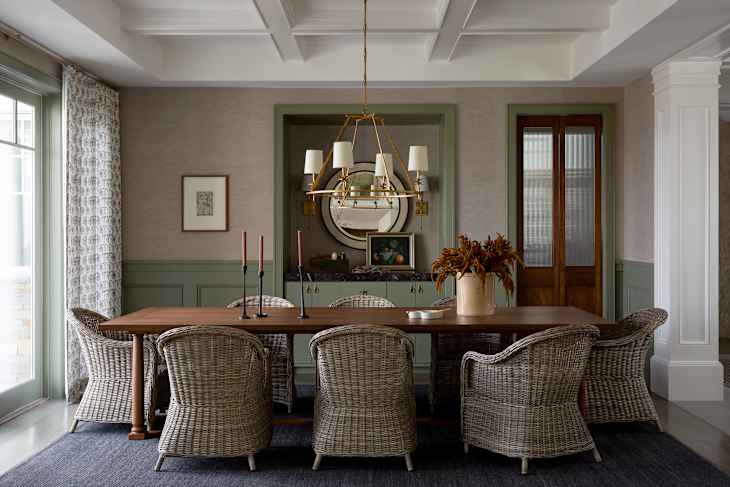
Design dos and don’ts can be helpful — until they’re not. Because when it comes to the dining room in particular, some of the most common design rules are either outdated or aesthetically limiting. So if you’re feeling stuck with your dining room, or you just moved into a space and don’t even know where to start with decorating this area, this one’s for you.
Designer Kate Lester routinely helps clients create spaces that are personal, functional, and far from traditional. And she’s been known to break a rule or two when it comes to dining rooms in addition to other areas of the home. Take a page from her design playbook — and the playbook of Allie Sutterer, another design pro— and let yourself be open to thinking beyond the norm when it comes to your dining space. Your meals will probably be more relaxed and fun as a result. Let’s get into the dining room decorating rules designers wish more people would break, and maybe you’ll be inspired to break a few yourself.
Design Rule to Break #1: A Dining “Room” Needs Four Walls (or Any Walls!)
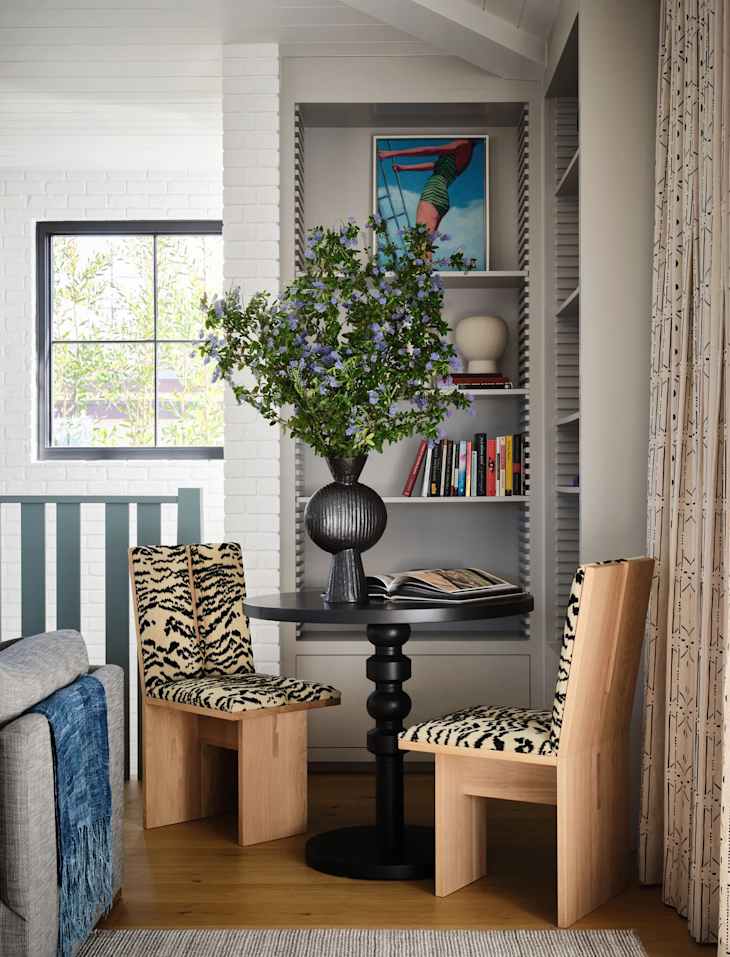
The notion that a dining room has to have four walls — or any spatial constraints at all — is something Lester challenges in her projects all of the time. She hates “that it has to be a ‘room’” to qualify as a dining room. “Why?” asks Lester. “Who said so? Some of our clients’ favorite spaces to gather to enjoy a meal are banquettes and nooks. It’s 2025 — the ‘dining room’ is whatever you make it!”
So if you don’t have a dedicated dining room to work with, you’re already breaking a conventional design rule. It’s not a problem at all for Lester, who once created this breakfast nook with a bistro table and a bookcase in the corner of a client’s living room. This move proves you can create a dining “room” anywhere.
“Thinking outside the box is critical when you want to create spaces that are interesting and also serve a purpose,” Lester says. Don’t be afraid to carve a dining moment out in any room you might like to, including a living area. The only places not to try it? A bathroom, for obvious reasons, and maybe bedrooms, where you wouldn’t want crumbs or food to draw bugs.
Design Rule to Break #2: Bar Carts Are a Dining Room Requirement
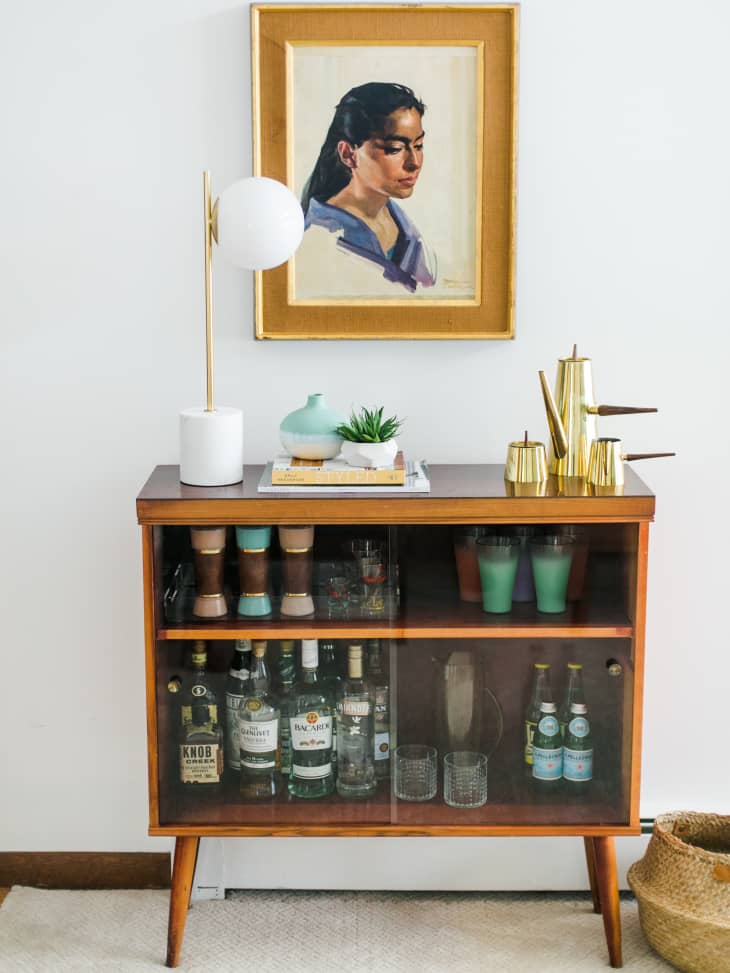
When it comes to decorating “rules,” you don’t need a bar cart in your dining room. In fact, Sutterer, a Denver-based interior decorator, believes bar carts often just look cluttered and visually distracting because they’re so open.
“If you have the space and desire a designated bar area, opt for storing alcohol in a closed cabinet, sideboard, or built-in bar,” she says. “You can display a few decanters with a small set of glassware in a tray on the surface of the cabinet instead, and keep the rest of the drink supplies hidden away.”
If you don’t have built-ins in your space that you can use for bottle and glassware storage, a sideboard is a perfect way to upgrade your room while creating a spot for a designated (concealed) bar, like Sutterer suggests.
Design Rule to Break #3: Symmetry Is the Only Way to Design a Dining Room
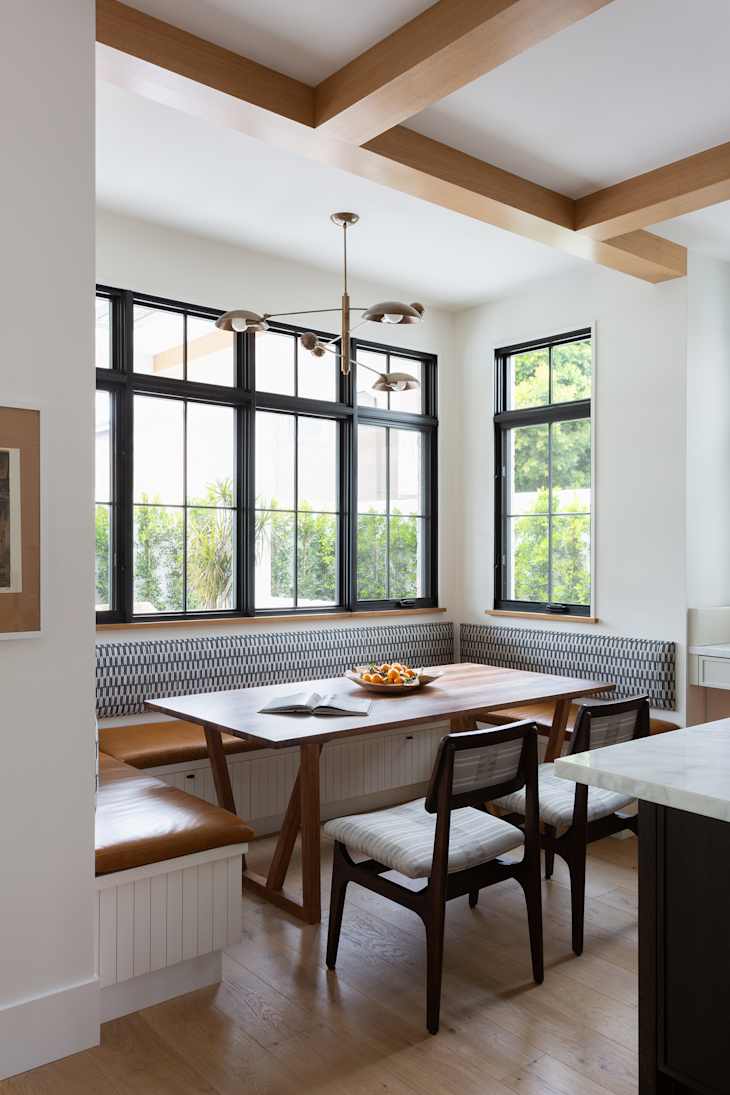
Symmetry can be a great tool for furnishing a room. But with dining room decor, sometimes balancing everything out perfectly can actually make the end product read as boring or too formal. “Your light fixture above your dining table doesn’t always need to be large and in the center of the table,” Sutterer says. “A smaller fixture or a statement fixture hung asymmetrically could be an unexpected and chic way to approach lighting in a dining room.”
She also recommends not being afraid of negative space, as it can be a good thing in some areas of your home, including the dining room. “A balance of symmetry and asymmetry is key,” says Sutterer. “It’s okay to have your dining table in the center of the space and a large piece of artwork hung asymmetrically on the wall.”
The same goes for what you put on your table. “When it comes to styling, I always try to break traditional styling rules,” Lester says. “I love the idea of multiple ‘centerpieces’ in a dining room as opposed to one large traditional floral arrangement.”
This kind of rule-breaking adds movement and visual appeal to a tableau. You can probably use many of the pieces you already own; just reconsider how you are grouping or placing them on the table.
Design Rule to Break #4: Furniture Must Match or Be a Set
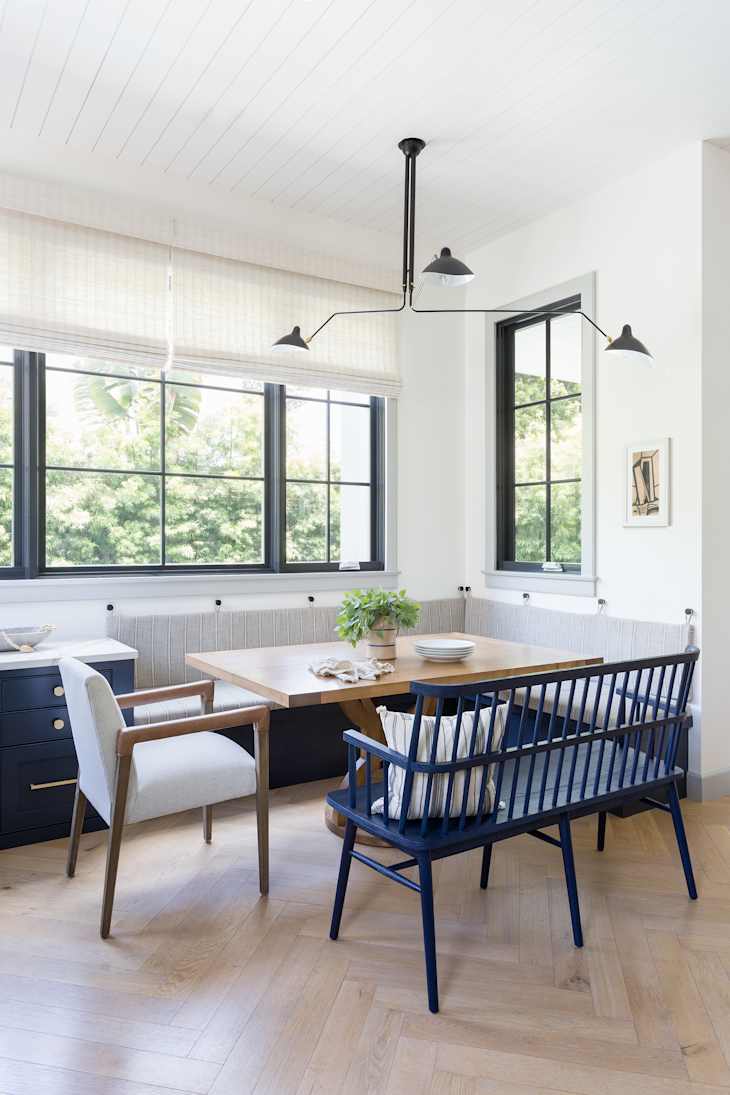
One of the most common dining room rules Lester is ready to toss? The idea that the dining room furniture has to match. “Matching dining sets can look flat,” she says. “Instead, try mixing textures, materials, or even chair styles to create a layered, more interesting look.”
Lester often takes the concept of mismatched seating a step further by introducing dining benches alongside chairs. They’re not only a way to add visual variety to a space, but they’re also extra practical when you’re hosting a big group. “Mix in a bench to keep it interesting and fun, and seat a few more without maxing out space,” she says.
Sutterer also likes mismatched seating in a dining room. Her only tip for pulling off this look? The chairs and benches you’re mixing should have similar heights. Otherwise, the room can appear off, and sitting at the table as a group can feel awkward.
Design Rule to Break #5: Dining Rooms Shouldn’t Have Personality
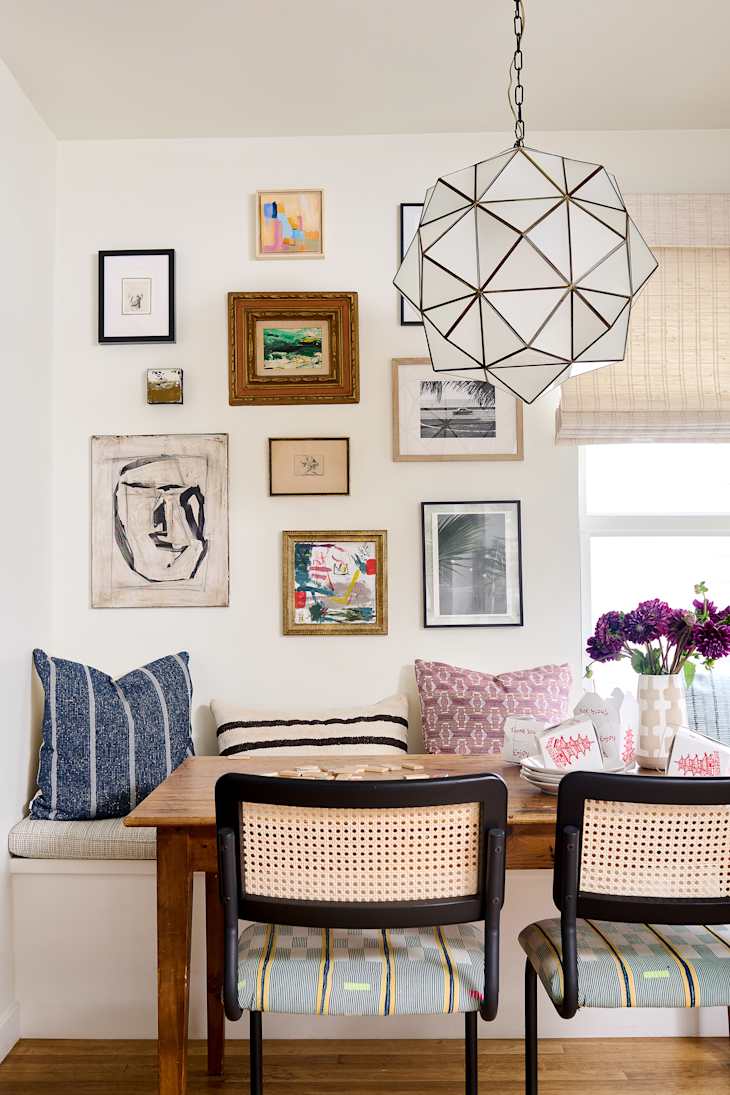
Dining rooms have a reputation of being a little stuffy, but to avoid this, it’s important to bring your vibe into the space. “When we design in our studio, we actually stop to make sure that every space we design has at least ‘one weird thing’ that will push our clients’ boundaries or is a little outside the box,” Lester says. “A little bit of funk is GOOD!”
This could mean a statement piece of art, a fun patterned accent chair, a bold paint color, or some unexpected table decor. The point is to choose a thing or two that feels like you — not a showroom.
The Bottom Line
Together, Lester and Sutterer drive home this point: The best dining rooms aren’t about following the rules. Your dining room doesn’t have to be conventional to look good. In fact, it’ll probably feel better — and more like you — when it doesn’t. Start small, experiment, and remember that “breaking the rules” can often be the first step to creating a space you actually love.
Design Defined
Never miss the style inspo and recommendations you crave with Design Defined. Follow along each week as our Home Director Danielle shares the best style advice, latest trends, and popular decor finds you just can't miss.