
I Tried the “Domino” Trick to Declutter My Kitchen, and I’d Use It Again
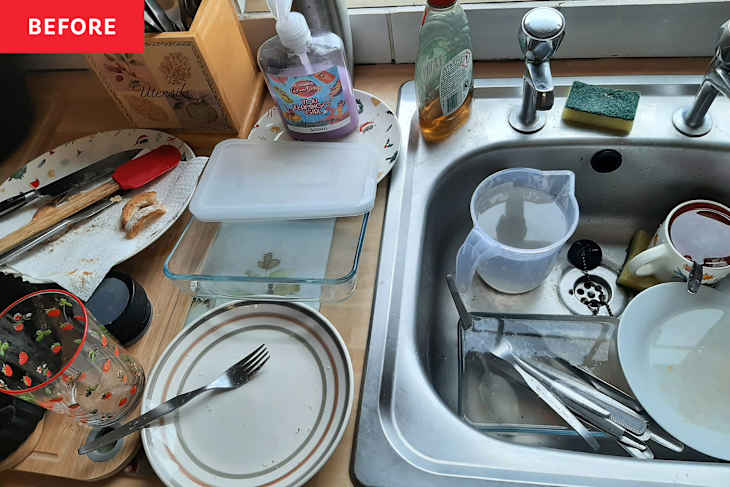
Clutter has a sneaky way of piling up faster than you expect. A couple of missed dishwashing sessions or a few days of forgetting to take out the trash is all it takes to start a cycle that suddenly feels overwhelming. For me, that cycle almost always shows up in my kitchen. It’s the space where I tend to set things down “for later” — and when life gets busy, later doesn’t always come quickly.
I try to stay on top of it, but once I fall behind, catching up can feel daunting. So when I learned about the “domino declutter effect,” I decided to give it a try and see if it would help me regain control.
What Is the Domino Decluttering Effect?
As seen in an Instagram Reel by Houston home organizer Beth Venable, the “decluttering domino effect” is a decluttering and tidying strategy built around the idea of momentum. You start with one small, easy task. Completing it gives you a quick win, which motivates you to tackle something slightly bigger. Like a row of dominoes falling, one action leads naturally to the next.
The concept is simple: Small accomplishments build confidence. As tasks gradually increase in difficulty, you get both the satisfaction of visible progress and the motivation boost that comes from checking things off your list. Instead of trying to overhaul an entire room at once, you let productivity build step by step.
How I Chose My Tasks
When I scanned my kitchen, I saw plenty of opportunities. Rather than diving in randomly, I divided tasks into three categories: easy, medium, and hard. I assigned myself three tasks per day — enough to feel productive, but not so many that I’d burn out. Here’s what that looked like:
- Easy tasks: These were quick, visible wins that took just a few minutes but made an immediate difference — like putting away clean dishes or taking out the trash.
- Medium tasks: These required more effort and time, but they were still manageable in one sitting, such as washing the sink full of dishes or putting away clean laundry.
- Hard tasks: These had multiple steps, felt more intimidating, and required more energy and focus. Think catching up on multiple loads of laundry or sorting through donation bags.

What Happened When I Tried This in My Kitchen
The easy tasks worked exactly as promised. Knocking them out gave me an instant sense of accomplishment. Because they were so quick, there was almost no mental resistance, and that early win made it easier to move onto a medium-level task.
Where I struggled was with the “hard” category. For instance, catching up on laundry was the biggest hurdle. I had a regular load waiting — manageable enough — but I also had two vintage blankets I’d been putting off washing because I was worried about damaging them. That added emotional friction made the task feel heavier than it probably was. What helped was breaking the hard task down even further. Instead of “catch up on all laundry,” I reframed it as “wash one blanket today.” The second blanket became its own task for another day. That adjustment made all the difference.
If there’s one thing I learned, it’s this: Even your “hard” tasks can (and sometimes should) be broken down into smaller dominoes. And what feels hard to you might not feel hard to someone else. The categories are personal, and that’s the point.

If you’re someone who thrives on crossing things off a list and building momentum, the “domino” method is incredibly motivating. It removes the pressure of doing everything at once and gives you permission to start small. Being ambitious is great but setting “clean my entire house” as your hard task may not be achievable. That said, it’s important to choose your tasks realistically.
I’ll definitely use this method again, though I might adjust the formula. Three tasks worked well for me, but if that feels like too much, two could be the sweet spot.