
My Free House Touring Trick Only Takes a Few Minutes, but Could Save You Thousands
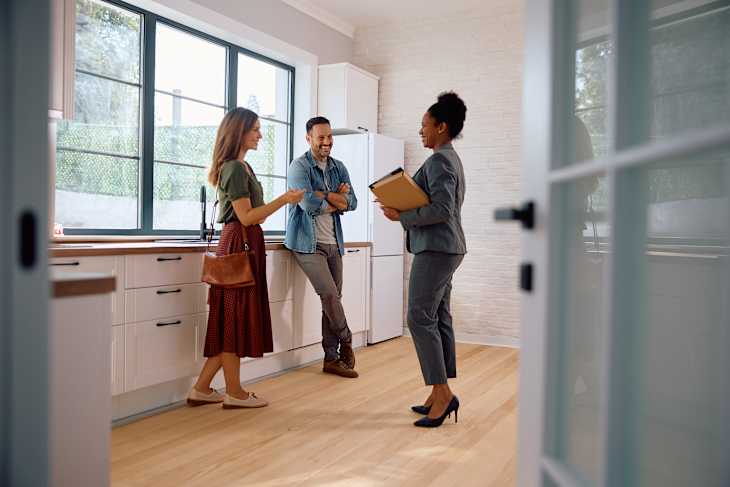
I was on apartment viewing number three, and frankly, my hopes were dwindling. The hallway felt stuffy, and the landlord I needed to look up on a review site was impatiently jiggling his keys as he waited for me. The first place I saw had shower pressure that barely went beyond a drizzle, and the second … well, let’s just say it didn’t smell fresh. As I stood on the threshold of the doorway of this new unit, I couldn’t help but wonder: Would this be another disappointment?
I was experiencing house-hunting fatigue, and after touring dozens of homes and making two very expensive home purchasing mistakes, I realized I needed a better system for touring houses. That’s why I developed what I call the “Doorway Pause” trick — a simple, three-step approach that helps me thoroughly evaluate any home.
What Is the ‘Doorway Pause’ Method?
The “doorway pause” method consists of three steps: taking it all in, focusing on key features, and visualizing your life in the home before making a decision on it. Here’s how it works, plus what real estate experts think about my house-hunting trick.
Step 1: Take it all in.
Stop at the threshold and give yourself 30 seconds to absorb everything. Notice how the room makes you feel — bright and welcoming or dark and cramped? Pay attention to natural light sources and the overall layout. What’s your gut reaction? Should you go back for a second viewing?
Real estate agents agree that a second showing can be extremely beneficial. “I always encourage second showings because emotions tend to drive many real estate decisions,” says Christopher Wands, a seasoned agent at Douglas Elliman. “It’s easy to get swept up in the excitement of a beautiful feature and miss potential red flags. Taking a step back and revisiting a property allows clients to process their initial reaction and see the space with fresh eyes.”
Lauren Cangiano, a licensed associate real estate broker at Brown Harris Stevens, echoes this sentiment. “The first visit is always emotional, but subsequent visits are more analytical. … Take your time, take it all in, try not to focus on the little details like the furnishings and decor, which can be distracting — and be practical,” she says.
Andrew Fortune, Realtor and brokerage owner at Great Colorado Homes, offers similar advice: “I advise my clients to sit in each room for a few minutes and listen for noise, identify smells, and pay attention to windows, lights, and outlets to help them focus on the things that matter.”
Step 2: Focus on key features.
Systematically examine structural elements that are expensive to change. Look for water stains, cracks, or discoloration that might indicate underlying problems. (Fortune suggests checking closets and behind furniture because sellers sometimes hide water stains or patched cracks in corners.) Check if the floors are level and in good condition. Test windows and doors — do they open and close easily? Are locks secure?
Pay special attention to storage and electrical outlets, open every cabinet and drawer, and feel the temperature and air circulation in every room. Bryson Taggart, a licensed Realtor and real estate trends expert at Opendoor, advises homebuyers to look beyond aesthetics and pay attention to things that’ll require a lot of work or additional costs, such as ceiling cracks or missing roof tiles.
Alexandra Gupta, an associate real estate broker from The Corcoran Group, agrees with that, stressing that “you’re not just buying a house; you’re investing in a location, a neighborhood, and a community, and those are the things you can’t renovate.”
Step 3: Visualize your life.
Mentally place your furniture in the room. Consider daily routines — where will you work, sleep, and get dressed? Think about your privacy needs and seasonal comfort. Can you paint walls or hang artwork?
Compass Realtor Adam Brawer advises buyers to “sit in the kitchen and deeply imagine what [your] life would feel like. Buying a home is equally an emotional and rational decision.”
Why I Wish I Came Up with This Home-Buying Trick Sooner
I still remember the first time I saw my Victorian-inspired, cottage-style home. It was love at first viewing! The original 1920-esque windows were quaint and striking, all that wavy, single-pane glass shimmering in the sunlight. I was so smitten that I completely ignored the fact that they were about as effective at insulating as a sheet of paper.
Fast-forward to my first summer in my cottage. My electricity bill was astronomical (way over the $150 a month average), and my house felt like a sauna. Winter wasn’t much better — I practically lived in a parka and unicorn onesie indoors. Turns out, those charming windows were energy vampires, draining my bank account and comfort out of my life.
Replacing them set me back a small fortune, even though the new windows would eventually save money on energy bills. Within the first year, I had to replace every window in the house. It cost me over $900 — and the surprise could have been avoided if I had taken a moment to consider the practical implications of those beautiful windows.
In my second home, I fell hard for the kitchen. It was all sleek lines, stainless steel appliances, and a gorgeous, oversized island. I pictured myself hosting decadent, Gram-worthy dinner parties and baking Pinterest-worthy desserts.
The reality? That beautiful island blocked the refrigerator door from fully opening, making it a constant obstacle course to grab a carton of almond milk. If I had felt myself in the space more, and opened and closed things, I might have noticed it before I bought it. I also had electrical issues, which could have been avoided if I inspected the outlets.
These experiences were the wake-up call I needed. I realized that my emotions clouded my judgment. I was prioritizing aesthetics over practicality. I had to find a way to balance the excitement of finding a potential home with a more analytical approach. That’s when the “Doorway Pause” method was born — a way to inject a dose of reality into the often-dreamy process of house hunting.
How the “Doorway Pause” Method Saved My Friend
Last month, my friend Mari was house hunting with her 3-year-old and two extremely finicky and sensitive cats. She was in a bit of a rush to find her next place. So, she was emotional and anxious about getting a home for her toddler and kitties. When I accompanied her on a second viewing, I insisted she use my method first.
During the bedroom evaluation, the 30-second doorway assessment revealed that morning light would flood the room, which is problematic since she often works nights. A closer look helped her notice that the kitchen counter space was well below functional levels. When she opened the cupboards, she found hidden rot behind new exteriors, too. She ditched this place and discovered a more suitable home two weeks later — allowing her to avoid an expensive mistake.