
The “5 Senses” Method Helped Me Transform My Outdoor Space from Barren to Breathtaking
You might have heard of the five-senses grounding technique to bring a sense of calm. My therapist introduced me to the concept when I was grieving the sudden loss of my cat, Oliver. It’s a check-in where you name five things you hear, four things you see, three things you smell, two things to touch, and one thing to taste, or however you prefer to engage (like you could listen to five things and smell four).
Recently, I decided to bring a similar five-senses approach to my outdoor space — which happened to be Oliver’s favorite place.
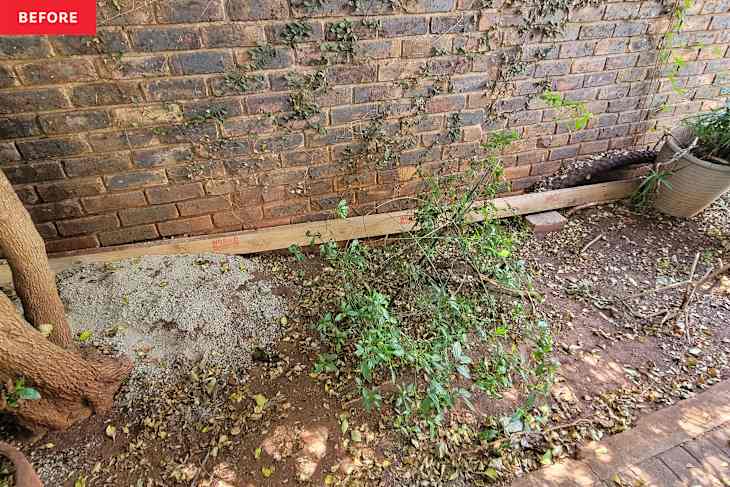
Before I began my process, my garden was a barren mud pit with a 10-foot-square concrete slab patio, no shade (other than a weather-beaten umbrella), and no furniture. Only weeds would grow. I transformed my barren backyard by intentionally incorporating elements I could hear, smell, and taste to create an outdoor oasis.

I started with sound.
The first thing I did was get memorial chimes for Ollie because of a beautiful card it came with: “Listen to the wind and think of me. In your heart, I’ll always be.” Because my sensory garden project started with Ollie’s memorial chimes, I wanted to give special attention to this feature, and I’ve since incorporated several hanging chimes into the green space.

But sensory gardens don’t need to be full of buys. Think about what sounds you can incorporate for free, like swaying grasses, the gentle rippling of fabric, or the hum of bees, all of which can ground you. I stand outside and listen for whatever sounds come rushing into my yard, like the peaceful clang of the metal tubes and clapper, birds chirping, and rustling leaves.

I used green and purple plants, two of my favorite colors to look at.
One of my favorite color combinations is green and purple, which served as the color palette for my garden. I decided to use shades of emerald, sage and olive-tone plants, plus dark and pastel purple hues, like with my purple heart plant.
To bring an extra smile or two, I also included a couple of cat statues, a metal bird decorative item, and other repurposed features for some quirky sight lines. These whimsical touches add a layer of personality and feel like a true reflection of me.

I incorporated an array of smells.
To enhance the aroma for my grounding technique, I chose some of my favorite herbs, like rosemary, mint, and basil. (Don’t worry too much about clashing scents here; I liked layering scents and incorporating plants that will bloom at different times throughout the year.)
My favorite flower is lavender, which thrives in the Mediterranean-like climate of Southern California. I even use the buds to steep a soothing tea and add the blooms to my bath to help me unwind. The air is always filled with a delightful mix of scents, creating a truly immersive and therapeutic experience.
Best yet, lavender can grow somewhat wildly, without much manicuring, making it a really low-effort addition to my garden.


I added texture with bricks, fountains, and a deck.
As I mentioned above, my yard was pretty barren before, and I chose to forgo a lawn here in California, but it needed something more than just mud. I turned my attention to hardscaping, which allowed me to work with some textures, such as a brick walking path with repurposed materials from another project. I also added a water fountain and a small wooden deck.
Balancing hardscaping (non-plant features that add texture) and softscaping (plants that add texture) is key, so I layered in succulents, herbs, and a few “delicious monsters” (Monstera deliciosa). The smooth stones of the pathway, the soft leaves of the succulents, and the rough bark of the trees make me feel like this garden is for more than just looking.

A lemon tree brings my garden indoors, too.
One of my favorite elements in my sensory garden is a potted lemon tree. This tree produces fresh lemons for cooking and diffuses citrusy flavor into my water. It thrives in the sunspot just outside my porch. Keeping it in a pot allows me to reposition it or bring it inside if necessary.
I also have all my scented herbs I can incorporate into my cooking. There’s nothing quite like the taste of homegrown herbs and the tangy zest of a freshly picked lemon, and now, one of the five senses I incorporated (taste) can follow me indoors, too.