
How to Choose Eco-Friendly Paint for Your Home

Color is usually the fun part of choosing paint. But it’s worth thinking about what’s in the formula, too, especially for rooms where your family spends the most time, like bedrooms. Not all paint formulations are created equal, and telling them apart can get confusing quickly. With labels like zero-VOC, low-VOC, and non-toxic, how do you know which paint is right for your needs?
The first step is breaking down the jargon so that you can make an informed decision. Get started with this expert advice from Greg Williams, Director of Sustainability at BEHR.
- What are VOCs, and why should someone care about reducing them in their home?
- What is low VOC paint?
- What is zero VOC paint?
- Does zero VOC paint perform as well as paint with higher levels of VOCs?
- If someone is using a low VOC or zero VOC topcoat, does the primer matter?
- Does opting for a Zero VOC or low VOC formula impact color vibrancy or coverage?
What are VOCs, and why should someone care about reducing them in their home?

VOCs, or volatile organic compounds, are compounds that can evaporate into the air while you paint and as the paint dries. These VOCs can contribute to indoor air pollution during application and drying, so VOC content is a useful consideration when choosing an interior paint. “The thing I most want people to know is that VOC content, chemical emissions, and odor are related, but they’re three different things,” Greg says. For instance, a zero VOC paint can still give off tiny amounts of chemicals as it dries, and a paint that doesn’t have a strong smell is not automatically low VOC.
“Look at the whole picture instead of one number,” he says. “For example, BEHR ECOMIX™ Interior Paint is zero VOC*, low odor, GREENGUARD® Gold certified for low chemical emissions, and Certified Asthma & Allergy Friendly®. Together, those tell you far more than a VOC number alone.”
What is low VOC paint?
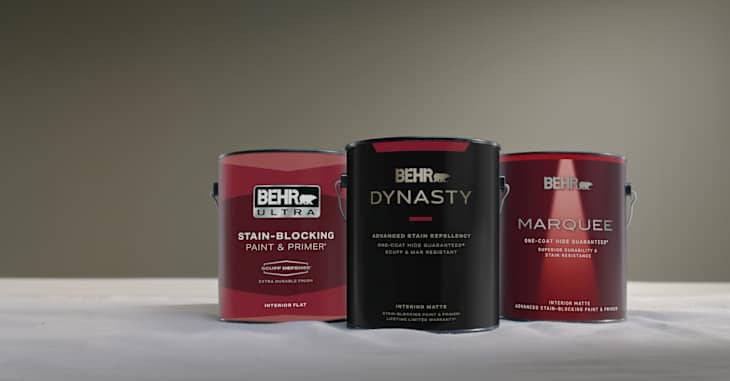
Low VOC paint is made with a reduced amount of volatile organic compounds — but that fact alone is not a stand-in for sustainability or quality. “The good news is you can find lower VOC paint at different performance levels,” Greg says.
The stain-blocking BEHR ULTRA®, stain-hiding BEHR MARQUEE®, and advanced formula BEHR DYNASTY® Interior Paints are all low VOC at less than 50 g/L. They’re also GREENGUARD® Gold certified, meaning they’ve been independently tested to meet stringent standards for low chemical emissions. BEHR PREMIUM PLUS® Interior goes a step further: It’s a zero VOC formula that’s also GREENGUARD® Gold certified.
What is zero VOC paint?
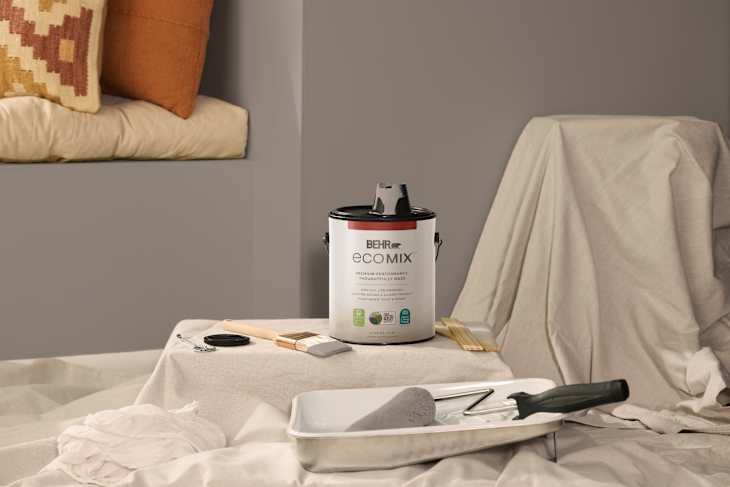
Zero VOC refers to VOC content, while emissions testing measures what the paint releases into the air. BEHR uses analytical testing to verify that finished paints meet its Zero VOC specifications. “What’s in the can, what gets into the air, and what you can smell are three separate questions,” Greg says.
BEHR PREMIUM PLUS is a zero VOC paint that also offers exceptional durability, with a mildew- and stain-resistant finish. BEHR® ECOMIX, in addition to being zero VOC, is also formulated to address chemical emissions, renewable ingredients, and ingredient transparency. It has a minimum of 20 percent plant-based ingredients and is a USDA-certified biobased product.
Does zero VOC paint perform as well as paint with higher levels of VOCs?
Yes! “I’d never use VOC level to judge performance. Performance is non-negotiable,” Greg says. Whether you’re using zero VOC PREMIUM PLUS or a low VOC option like ULTRA, MARQUEE, or DYNASTY, the paint is still designed for the specific performance level you’re looking for. Likewise, the new ECOMIX formulation offers enhanced sustainability without compromising performance: It’s designed for excellent hide and coverage and a stain- and scrub-resistant finish, all while being zero VOC, low emission, and made with a minimum of 20 percent plant-based ingredients.
If someone is using a low VOC or zero VOC topcoat, does the primer matter?
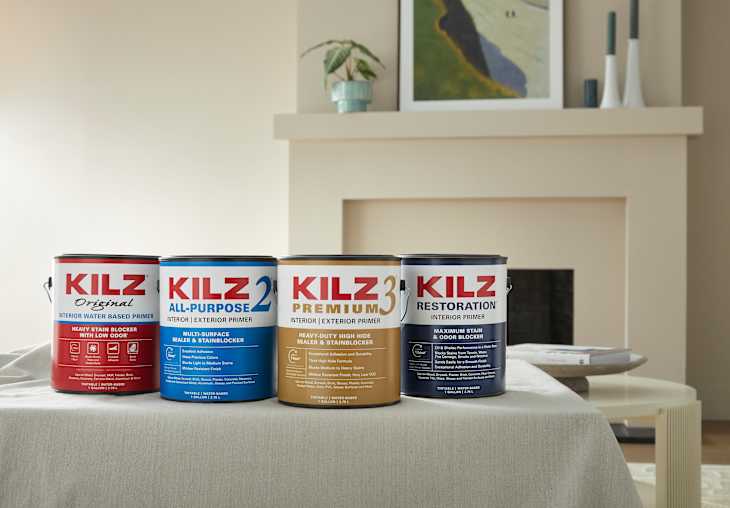
If VOCs, emissions, or odor drove your paint choice, the primer is part of that decision too. Greg says: “Start with what the wall needs, then narrow by the attributes you care about.” For general-purpose projects, KILZ 2® ALL-PURPOSE Interior/Exterior Primer is low VOC and GREENGUARD® Gold certified. If you need heavier stain-blocking and adhesion, KILZ 3® PREMIUM Interior/Exterior Primer is also low VOC — less than 5 g/L — and GREENGUARD® Gold certified. For tough interior problems, KILZ® ORIGINAL Interior Water-Based Primer blocks heavy stains with much less odor than traditional oil-based primer, while KILZ RESTORATION® Interior Primer is a water-based option for severe stains and odor. Both are also GREENGUARD® Gold certified.
Does opting for a Zero VOC or low VOC formula impact color vibrancy or coverage?

Not inherently. “Color and coverage come from pigments, resins, the paint base, the condition of your wall, how you apply it, and how big a color change you’re making,” Greg says. “VOC level isn’t what determines those things.” Regardless of the paint’s VOC level, the right primer can make a big difference when the surface or color change calls for one.
How should I think about terms like eco-friendly, environmentally friendly, and non-toxic when it comes to paint?

“I think of ‘eco-friendly’ as a starting point, not a technical definition,” Greg says. “The more useful question is: What specific environmental attributes does this product have, and how are they verified?” Look for specific attributes about the product that can be measured or verified independently, such as low or zero VOC, low chemical emissions, low odor, or verified biobased content. Make sure the ingredients have been disclosed and checked against a defined list of substances of concern. “Those questions get you real answers. ‘Is it green?’ doesn’t.”
How do I identify a more eco-conscious paint? What should I look for on the product label?
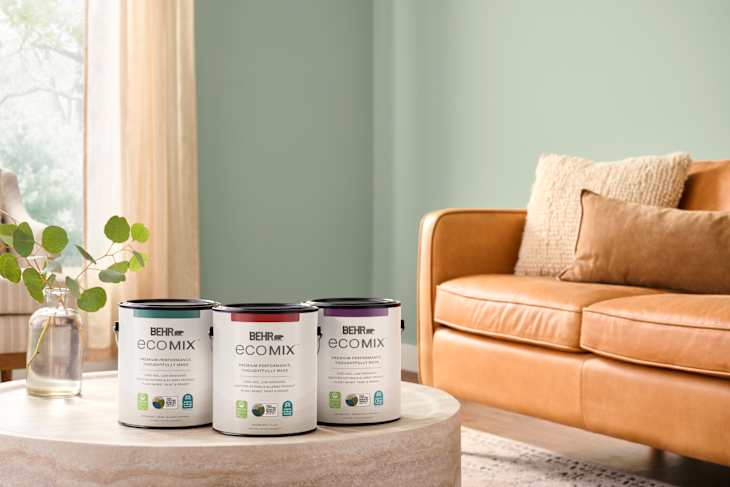
“Start by deciding what matters most to you, because sustainability isn’t one thing,” Greg says. Some people are most concerned about VOCs, while others prioritize renewable ingredients, emissions, or more transparency about what’s in their paint can.
If VOC content is your priority, ULTRA, MARQUEE, and DYNASTY are all low VOC options, while PREMIUM PLUS is zero VOC. ECOMIX combines several broader concerns: It’s USDA Certified Biobased, zero VOC, low odor, GREENGUARD® Gold certified, and Certified Asthma & Allergy Friendly®. Plus, it has a minimum of 20 percent plant-based ingredients, verified through third-party testing.
“The application experience matters, too. If you’re painting a room in a home people are living in, odor matters. Just don’t treat odor, VOC content, and emissions as the same thing.”
Greg Williams, Director of Sustainability at BEHR
Who should consider using BEHR® ECOMIX™ Interior Paint?

With a minimum of 20 percent plant-based ingredients (verified through third-party testing), ECOMIX is a great option for anyone who wants to prioritize sustainability and their indoor environment without giving up performance. It’s a USDA-certified Biobased formula that’s zero VOC, low odor, GREENGUARD® Gold certified, and Certified Asthma & Allergy Friendly®. Even with all those sustainability attributes, it still offers a durable, stain- and scrub-resistant finish with excellent coverage.
“Sustainability matters, but at the end of the day, you’re painting a room you live in. You notice the smell, how it goes on, whether it covers, and how it holds up. That’s the test I care about most.”
Greg Williams, Director of Sustainability at BEHR
Are VOCs the only thing to worry about, or are there other elements to look for?
VOCs are just one piece, and no single number or certification tells the whole story. “When I evaluate a coating, I look at what’s in it, what it emits, where the ingredients come from, how transparent the ingredient information is, its life-cycle environmental impacts, how long it lasts, and what it’s like to use,” Greg says.
Several third-party certifications and product transparency disclosures can help you evaluate these attributes. For emissions, look for certifications like GREENGUARD® Gold. Health Product Declarations, or HPDs, present standardized ingredient information. Declare is a nutrition label for building products, ensuring ingredient transparency and flagging substances of concern. Environmental Product Declarations, or EPDs, report a product’s environmental impacts based on a life-cycle assessment. If a paint is USDA-Certified Biobased, it includes renewable biological content.
You will often see multiple designations and disclosures on the same can of paint. For instance, BEHR PREMIUM PLUS and ULTRA have EPDs, HPDs, GREENGUARD® Gold, and Declare LBC Red List Free documentation. (The Red List is reserved for ‘worst-in-class’ chemicals or substances, such as asbestos, formaldehyde, and PFAS.) BEHR MARQUEE has EPD, HPD, and GREENGUARD® Gold documentation.
Why are certifications important, and what do they mean?

“A logo on the can doesn’t tell you everything by itself,” Greg says. “Ask what’s being certified, what standard is behind it, and whether someone independently verified it.”
Here’s a cheat sheet:
- GREENGUARD® Gold evaluates chemical emissions into indoor air.
- USDA Certified Biobased verifies biobased content, like biological or renewable ingredients.
- Certified Asthma & Allergy Friendly® independently evaluates a product against defined criteria intended to help reduce exposure to asthma and allergy triggers.
- Declare and the Living Building Challenge Red List report ingredient transparency and flag concerning substances.
- Health Product Declarations present standardized ingredient information.
- Environmental Product Declarations provide life-cycle environmental information.
BEHR PREMIUM PLUS, ULTRA, MARQUEE, DYNASTY, KILZ 2, and KILZ 3 are all GREENGUARD® Gold Certified. BEHR ECOMIX is USDA Certified Biobased, with a minimum of 20 percent plant-based ingredients, as well as Certified Asthma & Allergy Friendly®. “When you see any of these, ask one thing: What exactly does this tell me about the product?” Greg says.
*This product, like most Zero VOC paints, emits very low amounts of VOCs. Most emissions occur during painting and for 48 hours after. Some continue for two weeks or longer.
**Formulated to help reduce exposure to asthma and allergy triggers. Individual results may vary. Not a guarantee against reaction.
The Asthma & Allergy Friendly® Certification Mark is a Registered Certification Mark of the Asthma and Allergy Foundation of America and Allergy Standards Ltd.