
7 Clues Thrifted Decor Is Actually Valuable, According to Appraisers
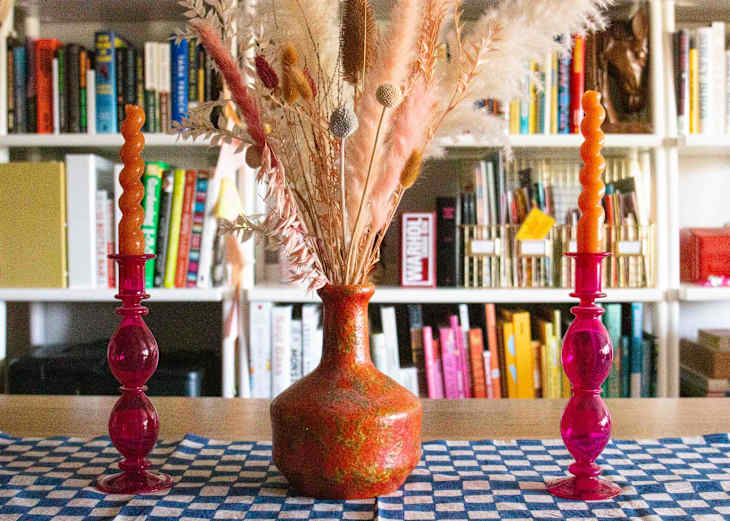
There’s no better feeling than scoring a thrifted decor find you love and can’t find anywhere else — unless, of course, it’s worth much more than you’ve paid for it. Interior design fanatics know that this is always a possibility when they walk into antique stores and flea markets. Dozens of vendors selling one-of-a-kind pieces? Say less.
With so little time (and so much to browse!) it’s always a good idea to arrive with a shopping plan. For some, that might be deciding on decor styles ahead of time. Then, of course, there are those who are simply looking for the best value: items made with high-quality materials and excellent craftsmanship that are built to last.
You know who makes these calls on a regular basis? Appraisers! They’re tasked with finding diamonds in the rough nearly every day. Since sussing out quality and value in a single glance is tough, I polled a selection of professionals to get them to spill their secrets. Below, seven pro-approved clues that are dead giveaways that you’ve landed on a goldmine. Happy hunting!
Knock on Wood
According to Pennsylvania-based antiques appraiser Lori Verderame, Ph.D., furniture made with solid hardwood tends to hold its value. While Verderame says wooden rocking chairs can be particularly valuable, she recommends keeping an eye out for decorative touches.
“Look for dovetails, peg wood construction, solid hardwoods, burl wood or feathered wood decoration,” she explains.
These details can speak to quality craftsmanship; they can also give you some insight into their era of origin. Ornamentation, like scrolls and ribbon garlands, hint at Victorian styles, while some cutouts may have stemmed from the Arts & Crafts era.
Prioritize Mid-Century Modern
Speaking of eras, Verderame says some design periods hold their value better than others. Per the appraiser, look for mid-century modern wares as well as Hollywood Regency decor from the late 1940s through the 1960s — as well as Brutalist pieces from the 1970s.
Unless you’re a bona fide design historian, identifying these time periods in the wild might be easier said than done. To help, chat with your seller, especially at flea markets. Vendors should have a robust understanding of their merchandise. If they don’t? Well, maybe that’s a red flag and a sign to move on.
Fill Up on Flatware
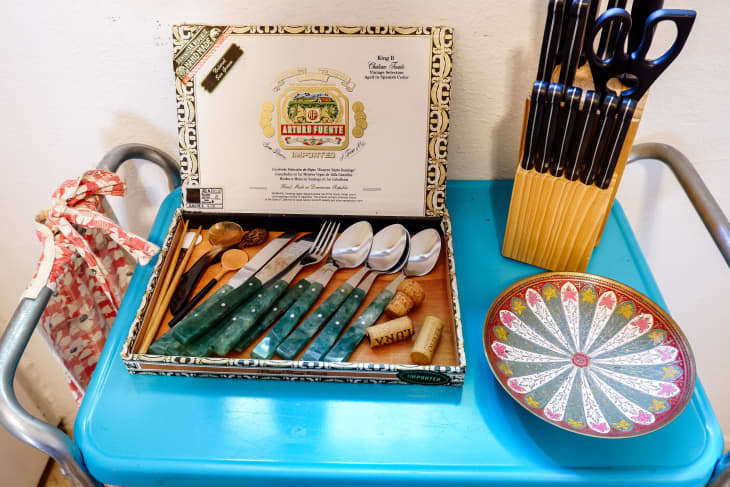
If you happen to see flatware at a flea market or in an antique store, you should give it a second look — it may be the most valuable item in the whole place!
“Sterling silver, including sterling flatware, holds value better than many other object categories because of the inherent precious metal value independent of the maker and object,” explains Sarah Reeder, AAA, ISA CAPP, founder and CEO of Artifactual History Appraisal. “Sterling silver items have more value than silver-plated items because of their precious metal content.”
Certain patterns like Reed & Barton’s “Francis I” and Wallace’s “Grande Baroque” (as well as brands like Georg Jensen) are high-value finds. But Reeder recommends looking for visual confirmation that a flatware set is actually made with sterling silver.
“Look for a ‘Sterling’ mark if it is American, as other countries have different marking conventions,” she adds. “If it is a silver item made in America after 1906 and is unmarked, marked EP, EPNC, plate, or plated, you have a silver-plated item which has only decorative value.”
Check for Durability Markers
Believe it or not, practicality plays a big role in the value of a flea market find.
“There are items that don’t hold much value across every object category, for a variety of reasons, such as changing trends over time and a lack of practical use in contemporary life,” says Patrick McIntyre, lead appraiser and head of Artifactual History Appraisal’s New York and Philadelphia offices. “For example, one reason why hand-painted china hasn’t [sold] recently is that people are reluctant to acquire dishes that can’t go into their dishwashers.”
While a porcelain plate might be a beautiful addition to your bookshelf, McIntyre reveals the more valuable find is plates you’ll use regularly — and, yes, that can be put in the dishwasher. Always err on the side of caution by reviewing a piece’s care tips with the vendor.
Look for a Signature
While visible signatures aren’t always a sign you found something spectacular, Reeder says a signed piece of furniture or art is more likely to be valuable. The biggest question: Who signed it? Fortunately, a quick web search can offer some big insight.
“If you see an artist or maker’s name while shopping, it’s a great idea to quickly look them up on your phone to see how strong their market is,” she advises. Who knows? You may have stumbled on a hidden gem — or, at the very least, it’s a cool piece with an interesting story.
Snag Art with Bespoke Serial Numbers
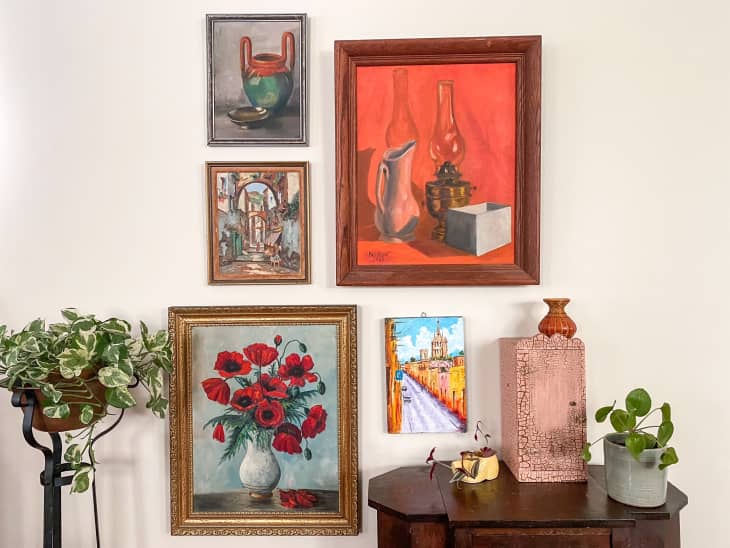
Shopping for artwork at a flea market is literally a numbers game. McIntyre encourages you to check whether a print is numbered in a limited edition or instead published in an open, unnumbered manner.
“The numbered limited edition prints are likely to be more valuable than the open edition prints due to their rarity and smaller total number printed,” he advises. “Silkscreens, lithographs, and etchings are more likely to have value than mass-produced reproductive prints.”
When it comes to art, beauty lies in the eye of the beholder. Ultimately, it’s important to find a piece that not only speaks to you, but will also look great in your space. But if you found something that ticks all the boxes and happens to be part of a numbered edition? It’s a no-brainer.
Give It a Whiff
You shouldn’t discount sensory cues like touch and smell, especially as they may clue you in on the quality of materials at hand. Never overlook an item’s condition; just because a piece is old doesn’t mean it’s inherently a high-quality (or valuable) find, and the same is true for the flipside on newer items. “If an item is damaged or in poor condition, that usually has a negative impact on value,” Reeder adds.
While rusty or chipped areas are often visual signs that a piece is past its prime, don’t forget to enlist your other senses. Reeder also says to watch out for items that smell “musty or moldy.”
However, if you happen to find a time-honored piece that looks (and smells!) good, you might have landed on something truly special.