
One Year Ago, Hurricane Helene Devastated My Community — and Taught Me What It Means to Be a Good Neighbor
In 2022, after parenting a toddler in the isolation of early COVID-19 lockdowns, my spouse and I felt like it was time for a change. Our Midwest home was old, drafty, and on a postage-stamp-size lot, but more importantly, we wanted to be closer to family and friends living in the South. So, we decided to uproot our lives after more than a decade of living near Cincinnati to move to Asheville, North Carolina.
When we chose our new home, we knew we wanted to build a bit of a climate haven, which was very in-line with what the whole area was known for. Asheville was considered a “climate refuge” after all — tornadoes were infrequent, we would be far from the coast with its hurricanes, and the temperate climate would mean that winters weren’t overloaded with snow and ice, and summers wouldn’t be unbearably hot.
Still, we invested heavily in storm preparedness. But even after all we did, Hurricane Helene upended our sense of climate safety two years later.
How We Climate-Proofed Our 100-Year-Old Home
Our new home was a humble 100-year-old single-family house (all one floor with a partially unfinished basement) situated on a gently sloped lot surrounded by much steeper terrain. Unlike our prior home, there was enough flat yard for a serious vegetable garden. There was a water cistern rigged up to receive water running off the roof, and tons of natural light inside the home itself. We began noticing ways that we could modify and improve the place to be more resilient.
My husband noticed the grade of how water would flow down the mountain toward our home, and he created a strong impermeable barrier using plastic sheeting and river rock that prevented water intrusion into our basement. We also put in a sturdy new roof and a set of solar panels that ended up covering about 75% of our electricity usage.
We turned our unfinished basement into a basic one-bedroom, one-bathroom accessory dwelling unit that could be a home for a family member, friend, or renter if needed. We screened in the front porch and installed sturdy lines outside to hang dry our clothes. The last step was going to be a battery backup to our solar panel system. But before my husband could put that in, we learned from a family friend that we were going to get a lot of rain that week — which was then followed by Hurricane Helene.
What Happened When Hurricane Helene Arrived
The morning before the storm arrived on September 26, 2024, I stopped by the grocery store to get the basics. I was anticipating two or even three days of the power being out, since our finicky local mountain electric system tended to shut off over very little. Our water system had always been vulnerable due to where we were located on the hill, so I grabbed 6 gallons of water, though I felt pretty silly doing it. Six incredibly important gallons, it turned out.
That Thursday night, the storm came in full force. We watched the branches of our massive, old beech tree sway like it was a sapling. By 3 a.m. on Friday, our power was out, and as expected, the faucets were dry when we tried them as morning came. It was hard to see further down the mountain around us, but we stayed safely indoors while the winds raged outside.
We finally left the house Friday afternoon to inspect the damage around our house and neighborhood. Our cell phones stopped working, which was worrying, but not excessively so. The basement stayed dry, thanks to the foundation protection barrier routing the many inches of water around the home, and we only saw a few downed branches before we got a little further down the street.
Then, we saw the true toll of the damage. Just in our fairly spared neighborhood alone, we found houses smashed in by fallen trees, multiple paths blocked by trees downed on power lines. At the bottom of our hill, the main road through our part of town had become a river, at least 4 feet deep, and a 100 feet across, rushing with water. It raged for a day until the water receded.
And, of course, in lower-lying areas and more heavily wooded areas, whole buildings were washed away, though we did not, and could not, know that yet. We started to get bits of information from neighbors who were listening to radios, but we had no cell service for another three days, and it stayed spotty for two more weeks. It was three weeks before I saw any of the coverage the rest of the country saw.
Many young families in our area who had the gas to get out of town worked on leaving immediately by the only available, unblocked highway. We were able to make do with what we had for four days, until one of the many highways blocked by landslides opened back up and we could travel three hours to my parents’ house, which hadn’t been affected by electric outage, water outage, or gas and grocery shortages. We stocked back up on water and supplies, and headed back for the remainder of the weeks without water and power.
Still, we’d been spared, lucky in the extreme. Hundreds in our area lost absolutely everything, and almost a hundred lost their lives — it was simply so unprecedented. The local river, the French Broad, regularly runs around 2 feet of depth. A flood is considered a 9.5 feet depth. Later, we’d learn that it ran 24.8 feet deep that day, and all told, Helene destroyed 340 homes and damaged more than 12,000 in Buncombe County, where we live, as well as many businesses and other structures.
Our preparations hadn’t been for nothing. We didn’t have to muck out our basement, for instance. But our experience had been mostly luck: We’d just bought an electric car that was fully charged when the power went out, allowing us a very big battery to charge from when we needed to charge our phones and other devices. We were lucky we were up on a hill and not down in a valley. The things that mattered, in the end, weren’t because we’d done anything right personally.
Less than six months later, we got lucky again, and our neighbors, again, less so. Thousands of acres were consumed in wildfires within 100 miles of our home. Wildfires, I came to understand, pose a risk that is hard to mitigate. We cannot move our homes physically, just as we cannot make it rain, or only rain just as much as we need. We can only support the infrastructure that keeps firefighters safe and sustainable policies in forestry and building. In both cases, being spared had nothing to do with our climate prep. It was pure luck.
How Community Saved Us and Changed My Mind About Survival
Both events rearranged our mentality about preparation, and we still wanted to learn from the experience. After Hurricane Helene and the wildfires that followed, we learned that we’d need different emergency preparation items — a gas stove and fuel canisters; lots of potable, well-packaged water; and a deep pantry of easy-to-cook/fast-to-eat essentials that we rotate before expiration dates.
More than anything, we realized that climate resilience is really about skills. We have to learn everything from knowing how to repair common items with what you have on hand, to how to make food and keep it safe to eat without refrigeration. It was also being nimble, not too wed to any of your particular creature comforts. Most importantly, it was about having your people, your community, in your corner.
Our built environment was always helpful to our community, but we learned so much more about it in the aftermath of these events. In the middle of the cell phone outage, the mostly residential neighborhood’s few nonresidential buildings became integral to our daily lives: A tiny church gave us access to their gymnasium to gather and exchange mutual aid requests and information. A small diner near us made a big pot of chili and gathered a bunch of grills and told folks to bring what they had in their fridges, so that folks could eat what they had before it spoiled.
Our neighbors were able to flush their toilets using water from our rainwater cistern, which we all lugged around the neighborhood for those early weeks till the water came back on. I had never felt community like it — everyone together, needing the basics, relying on each other to fulfill their needs. Even my son started calling going on a tricycle ride “going to check on the neighborhood,” which he kept doing for weeks after we all went back to “normal.”
Eventually, some five weeks later, we all returned to our more insular lives. But the neighborhood was forever changed. Friends still shared bread and soup and information about dogs that had gotten out of their fences. Our next-door neighbors brought in a fire protection and awareness specialist to give a talk, and 30 of us neighbors showed up to learn about keeping our mountain a little less risky while sharing tea and conversation as well.
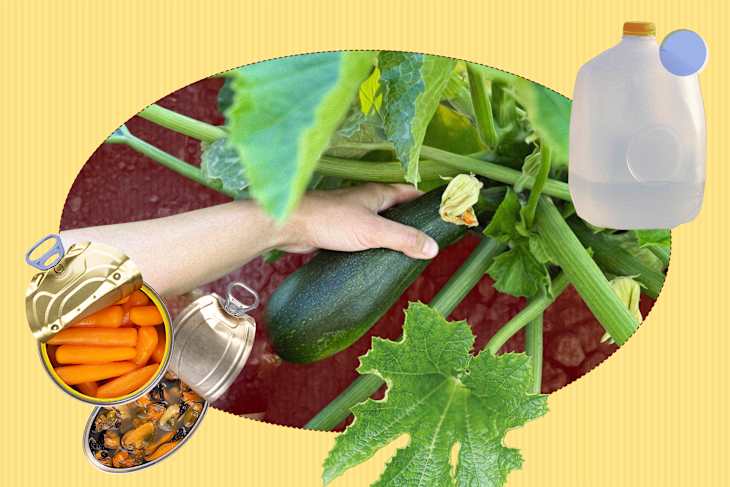
People talk to me while they walk the neighborhood, as I pick beans and squash and tomatoes and yank the ever-present weeds in the garden. They keep me company, and I bug them to take zucchini, which grows boundlessly in my yard, in the earth that had nearly given way under Hurricane Helene. It’s a small extension of a bond, but the bonds end up mattering a lot when none of us have everything we need for our basic essentials, and instead, have to come together.
What Happens Next
What comes next — another hurricane, weeks of rain, wildfires, feet of packed snow — could be totally different, something that we can’t resist at all, or something that we can weather easily.
Regardless, I bring a newfound awareness of the world to my work now. I look at my home and think, How would we handle no HVAC, broken windows, or damaged soil? I don’t live in fear but simply process each new possibility by thinking, What could we do to the home itself that would make it easier to live through something new? What can I stock up that isn’t a waste of money if we never use it for a disaster? What challenges can I bless and release, knowing that I couldn’t possibly stop them? And more importantly, What would we have to share with those around us, those who helped us through the last challenge?
It’s a mental pastime in the end, one that I have to combine with a lot of other behavior that involves building community resilience for next time. Anyone who reduces prepper tendencies to panic or overbuying of random items isn’t looking at the world very clearly. Greater resilience ought to be a part of our functional DNA at this point, and that resilience is only truly in context with the community that we’ve built around us.