
A 42-Day Meteor Shower Starts This Month—Here’s When You Should Look Up
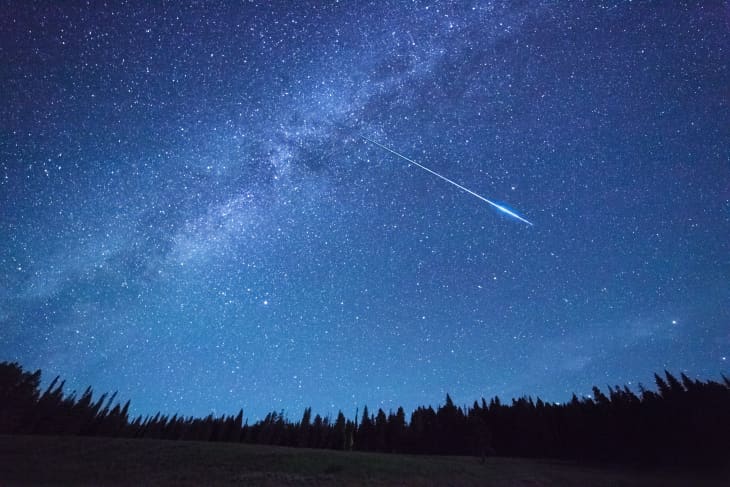
If you missed last weekend’s Buck Moon, don’t worry—July has another astronomical sight in store. Starting on July 12, the Delta Aquariids meteor shower will begin across the night sky, and it’ll last for 42 days straight.
Every year, this meteor shower is officially active from July 12 until August 23, a fairly long period of time to catch a glimpse of these space rocks entering earth’s atmosphere. Although there’s a chance to see the meteor shower any night, your best chance is on the night of July 28 going into July 29, which is the peak of the shower.
The Delta Aquariids meteor shower gets its name from being in the constellation Aquarius and after its third brightest star Delta. Meteor showers happen when meteors—or broken pieces of asteroids and leftover comet particles—enter the earth’s atmosphere. The suspected comet responsible for this shower is called 96P Machholz, according to NASA.
Delta Aquariids is best viewed in the Southern Hemisphere southern latitudes of the Northern Hemisphere. However, regardless of where you’re based, you can enhance your chances of spotting the glowing rocks by laying in a dark place away from city or street lights. It’s also good to know that the showers tend to happen more after midnight and is best viewed during predawn hours.
While sources report that the night of July 28—the day after the first quarter moon—is when the meteor shower is at its peak, that shouldn’t deter you from looking other evenings. And with its lifespan of 42 nights, you have plenty of chances to lay out, get cozy, and spot some astronomical happenings.