
The Old Stone Rules Designers Are Breaking in 2026 (And What They’re Doing Instead)
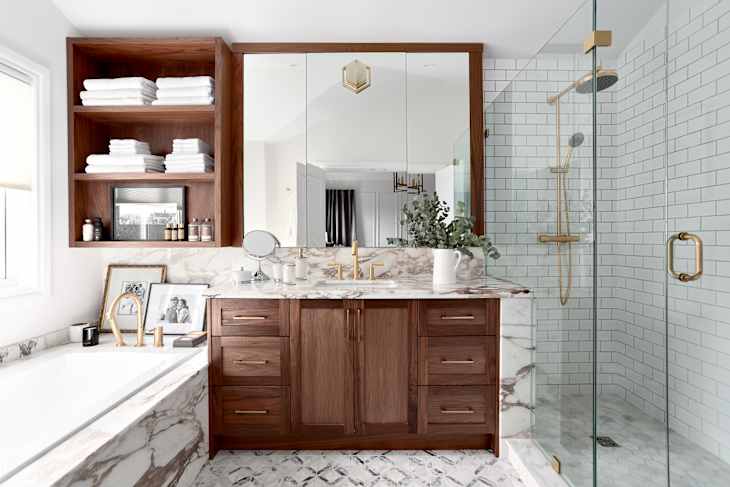
Not that long ago, designing with stone came with one very clear instruction: Pick your slab and stay loyal to it. If you chose marble, you chose that everywhere — countertops, backsplash, waterfall island. In the bathroom, the vanity matched the shower walls, which matched the floors. It was seamless, shiny, and very expected. But those stone decorating “rules” are getting a rewrite, and I’m here for it.
In 2026, designers are still deeply in love with marble, travertine, soapstone, and quartzite. They’re just not treating them like a matching set anymore. Instead of going all in on one category of surface, the pros are mixing stones with intention, choosing finishes that feel good to the touch, experimenting with edge profiles in more sculptural ways, and even welcoming a little wear and tear. The goal is no longer to make everything match perfectly. Surfaces are meant to feel layered, confident, and alive.
So I asked interior designers to share the stone “rules” they’re actually following in 2026. And let’s just say, perfection is no longer the point.

Choose Natural Stone and Embrace Patina
Designers are prioritizing real stone over synthetic lookalikes, even in high-function kitchens and bathrooms. Designer Sarah Hart says she always begins with natural materials. “If you want durable, I’d start with soapstone or quartzite,” she explains, noting that quartzite is often confused with manmade quartz. Soapstone and quartzite offer strength, but they also bring the movement and mineral variation that make a space feel layered rather than flat.
That choice comes with a mindset shift. Designer Stephanie Brown of Saint Louise Design believes homeowners need to stop fearing subtle sign of wear on their counters, floors, and walls. “The biggest mistake people make is fearing the first lemon squeeze or red wine ring on a marble counter,” she says. “Natural stone is meant to record the history of your family gatherings.”
Over time, slight etching becomes a soft patina. Instead of chasing a worry-free surface, designers are embracing materials that evolve. The rule is simple: Use the real thing, and let it change.
Honed > Polished
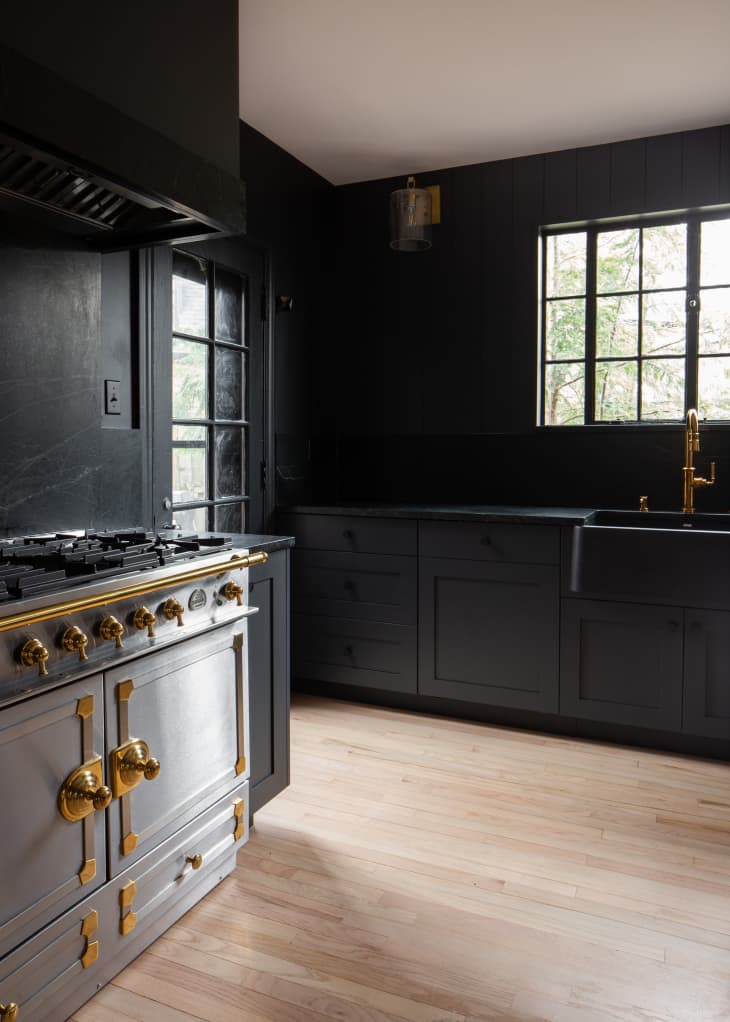
High-gloss stone used to be shorthand for luxury. The shinier the surface, the more high-end it felt. That instinct has shifted. Designers are increasingly favoring honed or leathered finishes because they feel softer, warmer, and more architectural.
Brown puts it plainly: “To make natural stone feel inviting rather than cold, we always rule in favor of a honed or leathered finish over a high-gloss polish.” Flatter finishes aren’t just about their good looks, either. Matte surfaces hide water spots and scratches far better than reflective ones, and they allow the depth of the stone to stand out without glare.
Hart often lands in the same place with her finish selections, treating honed as the default rather than the alternative. The old rule that every finish in a room must match is also being retired. Mixing honed with polished can create subtle dimension in a space. The guiding principle now, though, is an inclination towards texture over shine.

Establish Your Hero Stone Before Mixing Surfaces
Thanks to its often dramatic veining and potential color variations, stone is visually powerful. That means layering it requires intention. Designers are not mixing materials randomly; they’re starting with a clear focal point and building from there.
Creative director BenBrougham believes most people naturally gravitate toward one of two directions when selecting stone. “I think everyone falls into one of two camps: Either you’re mad for marble or you’re totally travertine,” he says. Marble brings drama and a sense of classical history and permanence. Travertine offers warmth and a softer, more relaxed mood. Deciding which direction you are drawn to can help anchor an entire space.
From there, clarity is key. Brown follows what she calls a “one room, one hero” approach, letting a dramatic slab or carved stone element carry the story. Designer Karin Bohn of House of Bohn agrees that intention is everything. “If materials are too similar in tone or movement, the result can feel accidental or unfinished,” she says. “High-contrast creates intention.” Whether you choose one hero stone to shine a little brighter than its counterparts — or you lean into two contrasting surfaces — the rule is the same: Decide what leads, then layer with purpose.

Focus on the Edge — Not Just the Slab
Once you have chosen your stone(s) and finish(es) for a space, the decisions don’t stop there. The edge, thickness, and silhouette are just as important as the material itself. “Five or ten years ago, stone was mostly used with square edges and sharp, minimal lines — clean, safe, predictable,” says Bohn. “In 2026, we’re sculpting with it.” This evolution shows up in curved backsplash returns, fluted panels, softened corners, and stone that wraps into millwork instead of ending in straight lines. Those subtle moves instantly make a kitchen or bath feel more architectural.
Hart also urges homeowners to think about the thickness and profile of their stone applications. A thinner slab can create a more restrained, European look, while a mitered edge can build a thicker, more elevated profile without adding visual bulk. Even tightening a stone’s overhang to half an inch can make cabinetry feel sharper and more tailored.
Design Defined
Never miss the style inspo and recommendations you crave with Design Defined. Follow along each week as our Home Director Danielle shares the best style advice, latest trends, and popular decor finds you just can't miss.