
I Wish I Had This Advice Before I “Played the Floor Lottery” in My Reno
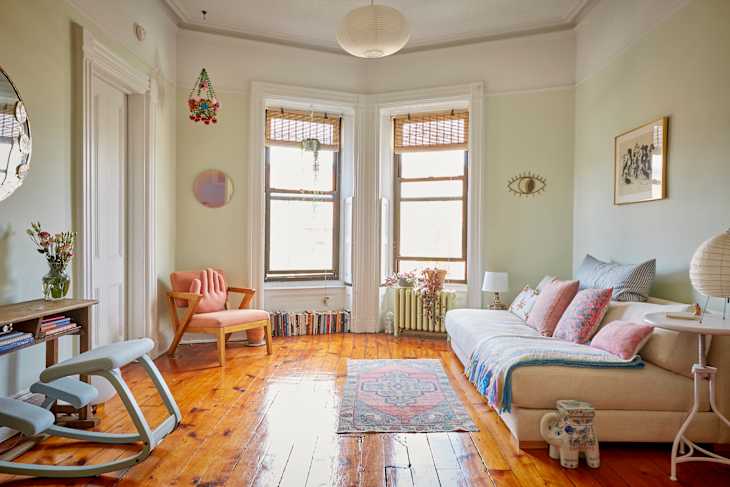
Original floors are often held up on a pedestal in old, pre-war homes. I grew up on TV shows where you’d watch a homeowner excitedly rip back carpet or tile to reveal, drumroll please, the original floors! I’ve lusted over 19th-century wide-plank ancient hardwood and even had an appreciation for gleaming parquet.
And when I moved into my 1895 rowhome, the idea of doing anything to change the original wood floors was completely blasphemous.
At move-in time, my house had original heart pine floors almost all the way throughout. Only the kitchen hardwood had been drastically altered (and it survived for over a century before someone ruined it with a litany of nails and peel-and-stick tile!). Old home lovers who pull up their carpeting to reveal what’s underneath — whether good, bad, or ugly — call it “playing the floor lottery.” You don’t know what you’re going to get, and the stakes can feel high!
In my own home, I was completely determined that the heart pine flooring wasn’t going anywhere. I was committed to it, warts and all. Unfortunately, the warts were many. After ripping out a section of ceiling on the first floor to fix ductwork, my husband and I could see straight through the gaps in the second floor hardwood to the living room. Boards moved precariously when we stepped in them. Rotted holes were strategically hid under rugs. I kept telling myself, “Once the rest of the renovation looks pristine, we’ll chalk this up to patina!”
Nearly a year in, however, the renovation isn’t as far along as I’d like (isn’t that always the case?). Meanwhile, the imperfections of the original hardwood floors are wearing on me. I’m wondering if they’re too far gone to save — something that’s been brought up again and again as I’ve talked to real estate agents and other homeowners in my historic neighborhood.
If these floors aren’t going to make it, replacing them is one thing I wish I’d done before we moved in. Trust me: Once your dining room table has made it up a narrow set of Victorian stairs to the second floor, there’s little chance of it making it back down.
But is it ever really possible that original hardwood floors are too far gone? I went straight to two of the foremost old house experts to find out. This is what Ethan Finkelstein of Cheap Old Houses and Scott Reed of Saving Old Houses had to say.
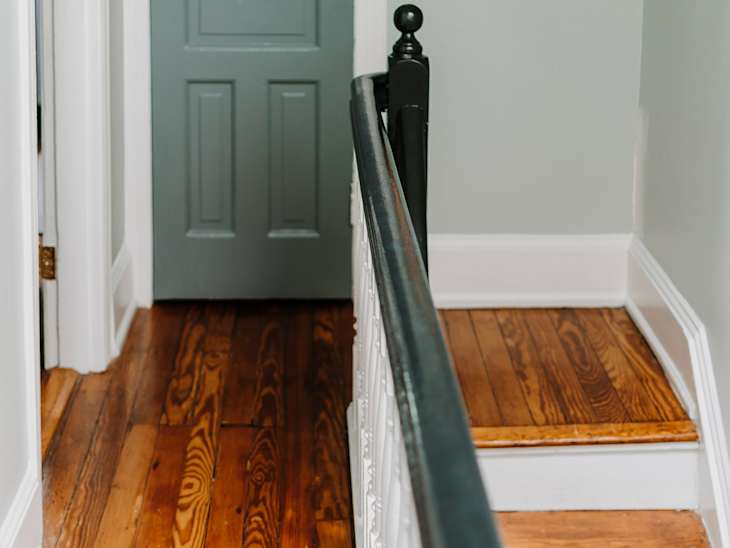
There’s a lot you can do to save old hardwood.
“I’ve walked into an old house with a massive hole in the floor and even then I knew not to give up on original wood floors! Ninety-five percent of the time we reuse the floorboards if they are intact,” says Finkelstein. He explains that old-growth floor joists can almost always bounce back with the right care.
“I always exhaust my options of stripping, sanding, re-planing, and conferring with my build contractors about the structural integrity of floor joists, before holding up the white flag,” says Finkelstein, who validates my belief that those telling me to get rid of the floors were wrong. “If you are dead set on restoring vs. replacing your floors, don’t let anyone tell you otherwise.”
For those who do decide to replace, he recommends keeping the old floor boards as a subfloor (many, including mine, do not have a subfloor!).
In some cases, though, you’ll have to concede.
Reed adds that there are few situations in which a floor truly is too far gone, and those don’t have to do with wear patterns, staining, gaps, minor decay, or even poor patch jobs. Instead, it’s usually moisture damage or insect damage that contribute to floorboards that can’t be saved.
“With insect damage, the core of the board may have been reduced to powder. Irreversible moisture damage that requires replacement almost exclusively comes in the form of rot. Severe rot. Rot you can’t miss,” he says. “The floor will crush under pressure or may already have a gaping hole from years of water disintegrating the material.”
Reed explains that too often people will break out a drum sander with ultra-coarse 40-grit sandpaper. “They don’t realize what they’re working with, and this is not a process to be taken lightly or done quickly,” says Reed. He notes that, instead, original floors should be hand-sanded, beginning with 60-grit and working to a finer 120-grit.
“Less is more!” Reed says. “Aggressively sanding historic wood floors is not a recommended practice, as it shortens the lifespan of the wood by reducing its mass and weakening the floor, and can ultimately cause major problems over time. Doing as little as possible is the ideal approach.”
If there are floorboards that are severely damaged, that doesn’t mean the entire floor is a total loss. Reed recommends looking at how a floorboard can be carefully removed and replaced — often with a board from a less visible place, like a closet or under a staircase.
Reed notes that not all “flaws” in original floors are actually flaws. “Old houses have character; character created by the craftsmen who built it and character created by the passage of time. ‘Defects’ such as cut marks are not defects, but a great part of that distinctive old house character and should be retained to tell that story for years to come.”
And that’s exactly what I’ll tell myself as I gingerly fix the loose floorboards, fill in the gaps, and appreciate the stains, nail holes, and cut marks that tell a story. I didn’t make a major renovation mistake at all — instead, I’ve preserved the character. But take it from me: Playing the “floor lottery” is certainly easier to do in an empty house. Next time, I’ll deal with the floors before moving all my stuff in.