
The “Sandwich Method” Is the Easiest Design Rule You’re Not Using Yet
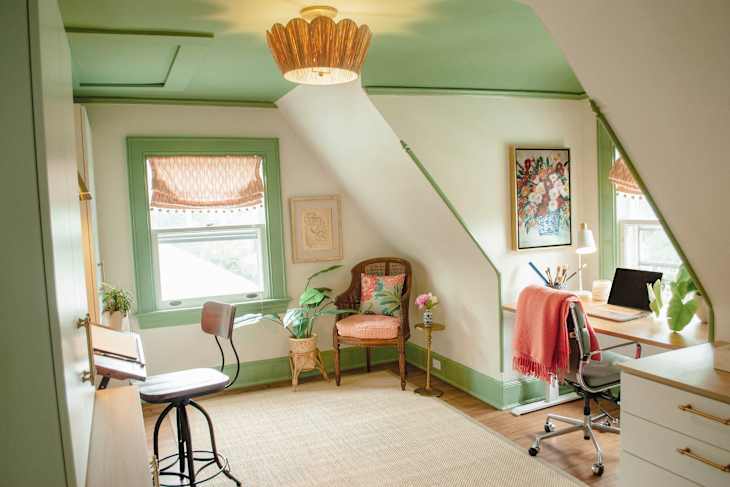
You know the feeling: The paint is dry, the furniture looks good, but somehow the whole thing still feels unfinished. Designers have a trick for that, and it’s surprisingly easy. Called the “Sandwich Method,” it helps to create a sense of balance in a room through echoing a color at the top and base of the room — and letting the center section fall into place.

What Is the “Sandwich Method” of Decorating?
The idea is borrowed from fashion, where repeating a color at the top and bottom of an outfit creates cohesion. In interiors, the same logic applies: When the eye sees a hue repeated above and below, the whole room feels more intentional and grounded. It’s an easy trick for anyone who wants to experiment with color without committing to fully saturated walls.
Designers often think of this approach as a conversation between surfaces rather than a strict color match. “We love ‘sandwiching’ a room, playing with color and pattern on the fifth wall and the floor,” says designer Jess Milburn of North & Madison. “Often, we pull hues that sit just outside the main palette in the center of the space, creating layered depth that feels intentional yet unexpected.”
The goal isn’t perfect symmetry, but a semblance of balance. “Colors should converse — not compete,” she adds, noting that contrasting the top and bottom allows the middle of the room to shine while the ceiling and floors quietly (or not so quietly) add intrigue and edge.

How to Use the “Sandwich Method”
One of the most popular applications of this method is pairing a painted ceiling with coordinating baseboards, then choosing a softer, or contrasting, wall color in between. The result is a room that feels framed and finished, even if the palette is minimal.
The “Sandwich Method” also works with furniture and decor. Matching a rug to the upholstery of your sofa, or coordinating window treatments with a standout accent chair, instantly creates a sense of rhythm.
The “Sandwich Method” also particularly shines in small spaces, where even subtle repetition can make a room feel cohesive rather than cluttered. It’s also a great way to introduce bold color in digestible doses. You might not be ready for emerald walls, but emerald trim paired with a painted ceiling beam suddenly feels doable and chic.
Ultimately, the “Sandwich Method” proves color doesn’t have to be complicated. With one thoughtful repetition, a space feels pulled together, layered, and visually confident. Consider it a low-lift, high-impact design shortcut hiding in plain sight.
Design Defined
Never miss the style inspo and recommendations you crave with Design Defined. Follow along each week as our Home Director Danielle shares the best style advice, latest trends, and popular decor finds you just can't miss.