
Get Ready for a Post-Pandemic Weddings Boom, According to This Survey
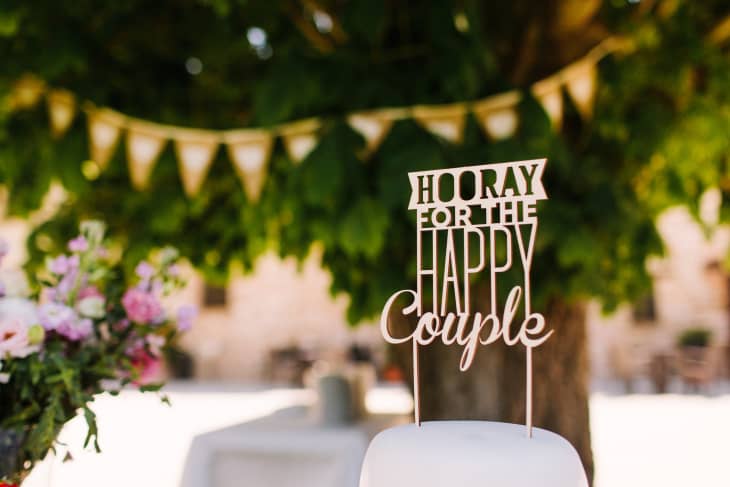
In a difficult year where everyone’s in-person plans were uprooted, the wedding industry was hit hard by the pandemic. But couples have gotten creative.
When it’s safe to return to IRL celebrations, The Knot’s annual wedding study predicts that this year and beyond will be some of the busiest years for nuptials. Nearly half the couples (47 percent) who planned to tie the knot in 2020 and postponed their big day, have rescheduled for 2021 and later dates.
According to the study, along with those who have rescheduled, a majority of couples who got engaged during the pandemic (73 percent) also set their wedding date for 2021. And a third of couples who tied the knot in 2020 are planning on big celebrations, once the CDC okays larger gatherings.
“Out of a year that posed unforeseen challenges for all — especially for those who planned to wed in 2020 and the vendors who planned to help bring these celebrations to life — comes a time where individuals are yearning to celebrate the milestone of marriage once again surrounded by all of their loved ones when it’s safe to do so,” The Knot’s editor in chief Kristen Maxwell Cooper says. “As a result, we anticipate seeing more weddings scheduled to take place in the months and years to come than ever before.”
Most couples (96 percent) who planned to tie the knot in 2020 have changed their original wedding plans to incorporate face masks, social distancing, and hand sanitizer, according to the COVID-focused wedding study, which surveyed 7,600 U.S. couples. And some couples are requiring guests to be tested (36 percent) or vaccinated (19 percent) before attending their big celebration.
However, it’s important to note that medical experts say that no negative test result is 100 percent guaranteed and testing before social events can create a false sense of security. The CDC says that only fully virtual events have the lowest risk, and the level of community transmission is an important factor to consider when having any in-person gathering, no matter how small.
The CDC’s current guidelines for gatherings and events list strategies to keep guests safe with cleaning and disinfection, ventilation, physical spacing, food service and staffing. These guidelines are supplementary to the rules and regulations that state and local health officials have set in place, so it’s important to read up on both to prevent the spread of COVID and adjust your plans accordingly.
In 2020, several new intimate formats were introduced for tying the knot, ranging from minimonies (mini ceremonies), elopements, and future anniversary receptions, which will likely continue to be popular ways for couples to tie the knot throughout 2021, as there still is uncertainty as to a timeline for getting the spread of COVID under control.
“Couples in 2020 refocused their energy on their love for each other and for those closest to them, while reflecting on the values and components of their relationships that matter most,” Maxwell Cooper says. “With that, we’ll see more variety with event formats and wedding day details at future weddings, as couples embrace their unique priorities and purposes.”
Other trends that became popular during 2020, like adding a virtual component to include more guests and keeping in-person guest lists small, will remain popular throughout the coming years.