
The Surprisingly Budget-Friendly History of Drippy Candles
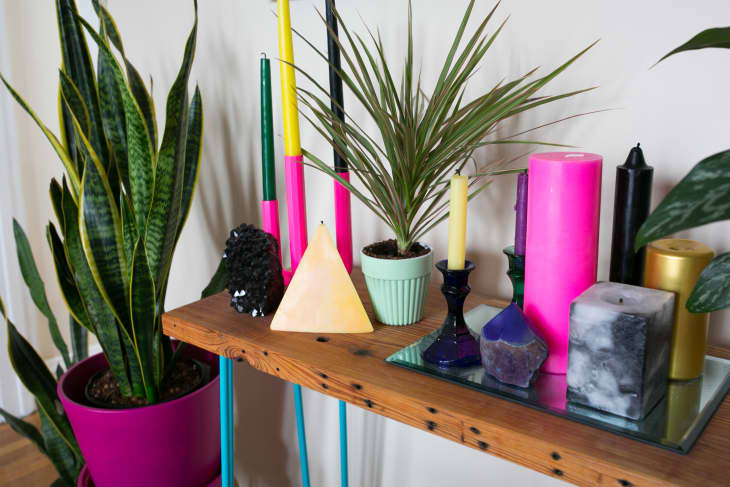
There’s just something about drip candles. Maybe it’s the way the wax spills over the holder, making you feel like you’re in an old Parisian cafe before the time of electricity. Maybe it’s the way those drops bead and pool messily, when you’re blissfully unaware of how the hours have flown, reconnecting over a meal with a friend. Maybe it’s the way warm candlelight makes you drop your voice and speak in hushed tones, like you’re in a revered place or have a secret to tell that you don’t want anyone else to hear. Plain and simple, drip taper candles create a vibe; at their core, they’re really a series of visual paradoxes: at once eclectic yet super-traditional, predictable yet spontaneous, and sculptural yet pliant. For these reasons — and just the preoccupation with anything but basic candles these days — they’re coming back in a big way once again. But they actually have somewhat surprising and humble beginnings.
Drip candles never “went out of style” per se; maybe you ‘90s kids out there remember them from the dELiA*s catalogue or Spencer’s like-novelty stores at the mall, and the groovy twists and turns of colorful, dripping tapers in wine bottles were 1970s tabletop fixtures, too. Purposefully drippy tapers are just becoming mainstream and marketable again, and they’re moving off the dining table in some cases and onto mantels and smaller side tables. Urban Outfitters sells a rainbow set (as seen below), Candle Stock has a 25-pack to help you start a “candle mountain,” and you can even snatch up a pair at your local Hobby Lobby. On the luxe end of the market, Diptyque sells a very limited-edition, drip-inspired candleholder collection, with pieces crafted out of solid bronze by artist Osanna Visconti.
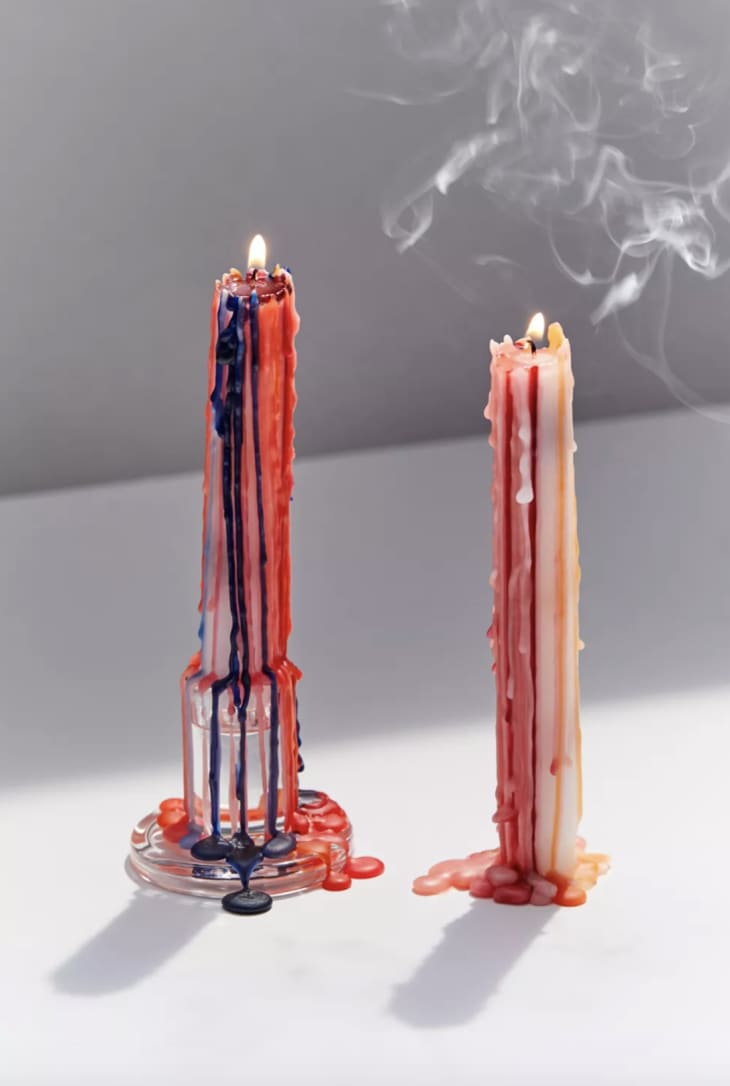
Obviously, candles have dripped for centuries, whether in old stone cathedrals, historic temples, or early Victorian houses. The “drip” of the past though wasn’t so much an aesthetic choice but a function of a given candle’s wax and wick composition, and all taper candles, to some extent, do drip. These days though, “the drip” can be a very conscious choice and usually means the wax used has a lower melting point so it burns faster, resulting in drips that hardens into “waxicles” that will collect in a holder or bottle.
So when, exactly, did drippy candles become a style? Apparently, it all started with Italian restaurants, Chianti wine, and something of a happy accident. “The trend of using the bottle as a candle holder first came about during WWII, when Italy was struggling as a war-torn country, and its people turned hardship into functionality,” says Lorena Betanzo, who works for Santa Margherita wines in the United States. “It was more economical to repurpose a wine bottle as a candle holder not to mention there was an extreme scarcity of resources.” Like other nations in the late 1930s and 1940s, Italy was on strict rations to funnel all its resources into the war effort, and since most civilians didn’t have access to common products anymore, they became creative with their limited materials. Italian restaurant owners took a look at the empty Chianti bottles in their kitchens and had an idea. They could easily repurpose them into candle holders, and thanks to the bottle’s broad base and straw basket, the wax wouldn’t pool on the table.
The unique design of Chianti bottles dates as far back as the 14th century. “The design was cultivated through a manufacturing mishap that took place during ancient glass blowing crafting, where a misshaped bottle was accidentally formed, creating a vessel that could not stand upright,” says Betanzo. “In efforts to correct this, glassmakers created a straw basket to keep the bottles upright during transportation.” The Chianti bottle was then cheekily named “fare fiasco,” which roughly translates to “screw up.” Leave it to the Italians, often heralded for their innovation in the arts, to turn a “fiasco” into a design moment.
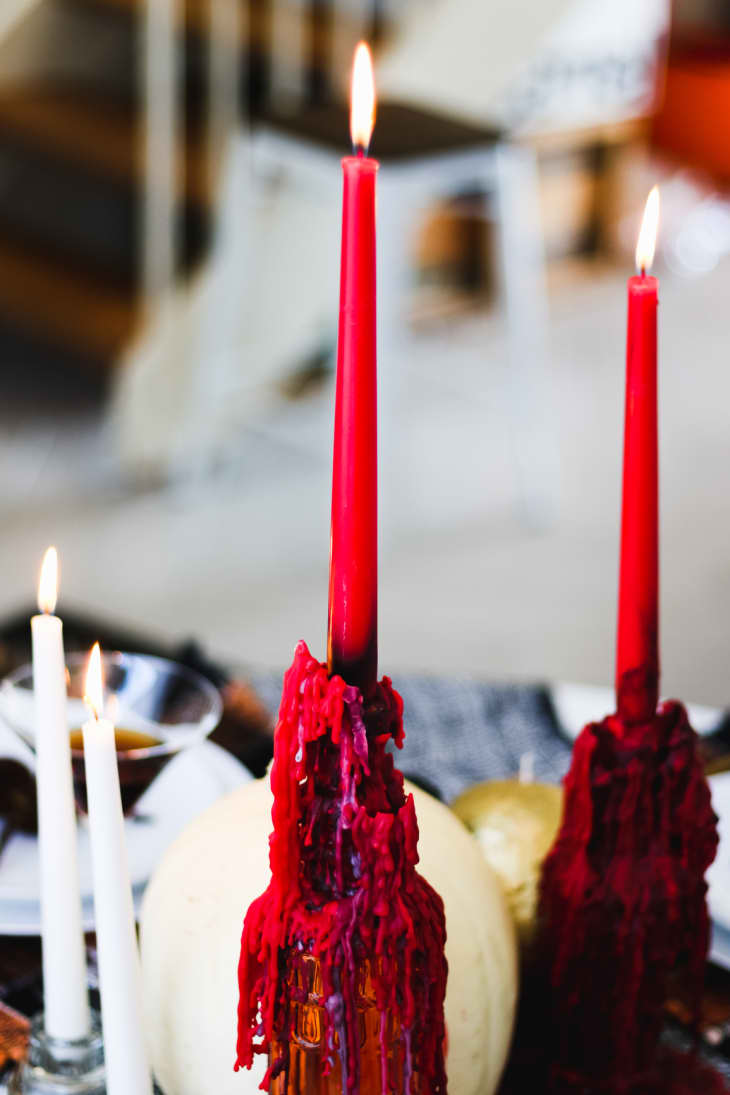
But how exactly did drippy candles become the candle of choice in Italian restaurant Chianti bottles? Some think it might have been a bottom-dollar choice. “Drip candles are also economical because they are designed to burn completely down,” says Betanzo. Others believe it also could have been something of an aesthetic decision already deeply rooted in Italian culture. “Some might also argue that drip candles are inspired by Italian monasteries, and keeping their faith is a core piece of their culture,” Betanzo shares.
Whatever the reason for their use, deliberately drippy candles likely then made their way stateside upon the return of the G.I.s posted in Southern Italy during the war. In between fighting Mussolini, these American soldiers ate pasta, marveled at the taste of herbs native to Sicily, and maybe even drank Chianti. When they came home to the ticker tape parades celebrating the end of the war, they brought cultural learnings back from their time abroad. Many Italian American soldiers brought recipes back home to their family restaurants and helped make Italian food popular across the U.S. Before the war, if one didn’t live near an Italian American hub like Boston or New York City, one didn’t eat Italian food. The war changed that, and with the boom of oregano and pizza, drip candles in Chianti bottles followed. “For many GI’s, Chianti was the first introduction to European wine, and after the war, many of the servicemen craved the meals they experienced abroad,” Betanzo says.“These traditions were also brought over to the U.S. from the influx of Italians who emigrated post-war and settled in the country. They opened restaurants and bistros that highlighted the romanticized Italian culture — implementing the Chianti candle holder as a staple when it came to decor and lighting.”
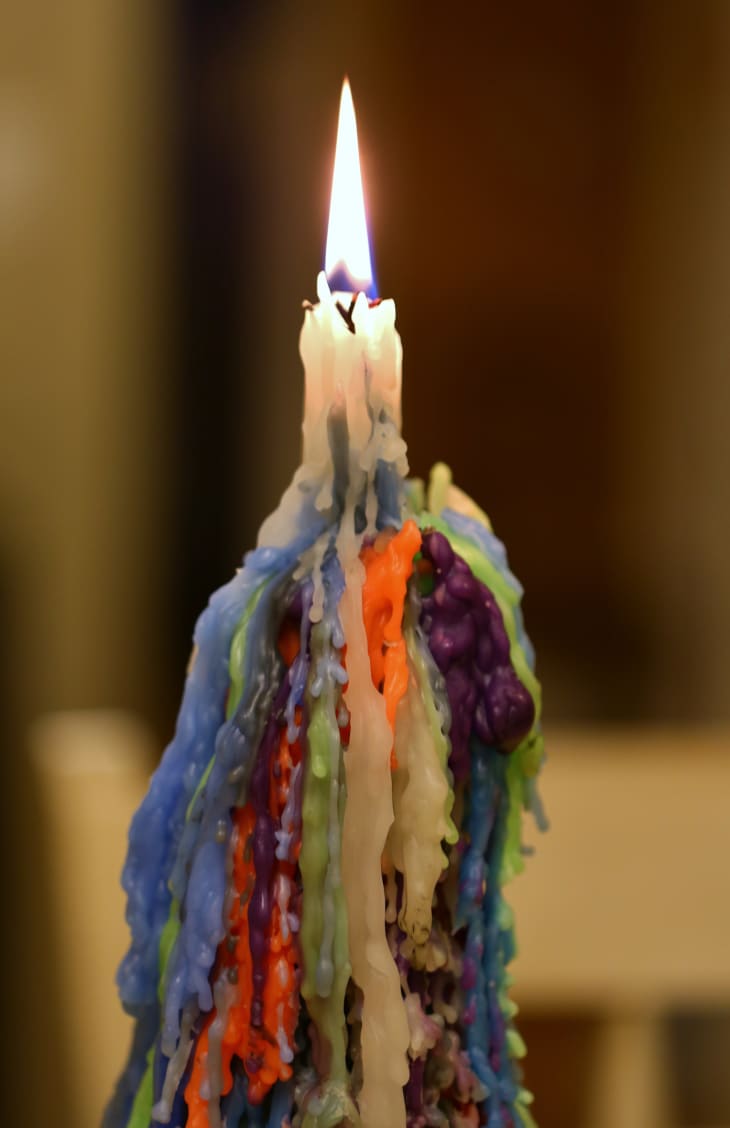
If you want the same melted look of an old school Italian restaurant tableau, then it’s best to buy tapers described as “drip candles” specifically (if you want the more psychedelic, late 1960s or early 1970s look shown just above, shop for drip candles with a “rainbow” or “color” label on them). “Otherwise, standard candles are produced to stay neater with minimal drips,” says Darcy Miller, author, entertaining expert, and owner of Darcy Miller Designs. “Drip candles will melt into drips on their own. Over time, as the candle melts, the drips get more layered.” You can also DIY a drippy look from regular tapers, though the process can be a bit messy. “As the candle is melting, carefully lift the candle or candle holder it’s in, and angle it to about 45 degrees so that the wax drips down the side,” Miller explains. “Then do the same around the entire candle, creating drips all around so that the wax melts down the sides rather than just settling on top.” Regardless of how you achieve your drip, remember to always be safe when dealing with an open flame (particularly one that’s designed to burn quickly and pretty much all the way down to the wick).
Miller thinks drip candles might be having a moment again because of the pandemic. “People are spending more time at home, and candlelight makes a familiar space feel more special, making dinner feel like an event,” she says. “Opening a nice bottle of red wine and lighting a candle signals that you’re not just eating a meal — you’re enjoying an occasion.” On top of that, with their “waxicles,” drip candles have a unique look and are relatively inexpensive. “People are always looking for new decor ideas that are easy, affordable, and can be made with things you have around the house,” she explains. Plus, whether you put these tapers into candle holders that can accommodate the drips or opt to set them in a finished bottle of Chianti or otherwise, seeing your drippy table centerpiece just might make you smile. “The wax-covered bottle is like a memory candle, a souvenir of the fun evenings you spent in its glow,” says Miller.
Ultimately, drip candles can help set a romantic mood, make any moment just a little more special, and provide a little bit of mesmerizing “entertainment” as you watch the drama of dripping wax unfold to become a statement-making piece of decor in a simple bottle or candle holder. Find me a person that doesn’t want those three things and on the cheap to boot!