
I Used AI to Declutter My Closet and Got Rid of 23 Items
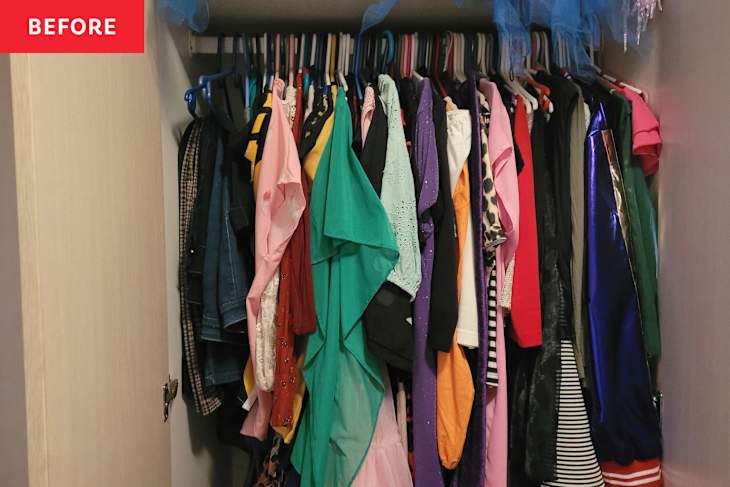
My closet was an overflowing mess, and out of frustration with how hard it was to make simple keep-or-donate decisions, I decided that there had to be a simpler way to power through a decluttering session. I decided to use ChatGPT as a second opinion, and it took the stress out of sorting through all of my clothes.
Here’s what happened when I asked AI to help me declutter my closet. In the end, I got rid of more than 20 items and felt really good about the process.

Why You Should Use AI to Help Declutter Your Closet
The real issue wasn’t that I didn’t know my closet was full, because trust me, I knew. It was that every item came with a story that made it hard to be objective. Clothes were a part of past versions of me, future hopes, money I’d spent, and vague “someday” scenarios. That kind of thinking makes decluttering slow, because you’re constantly arguing with yourself instead of making a decision. But when you ask a (seemingly) unbiased third party for its thoughts on a specific item and whether or not you need it, you’re forced to focus on rationality.
I wanted to use AI as a neutral voice to help me make hard decluttering decisions. I wasn’t looking for ChatGPT to tell me what to do, but I wanted something that didn’t carry the same emotional weight I did. I would describe an item and ask a direct question, and then use the response to challenge my assumptions rather than justify them. It was like having a calm, logical voice that wasn’t attached to my stuff — and that wouldn’t easily offend me.

How I Used AI to Declutter My Wardrobe
To use AI to declutter my wardrobe, I’d pick up one item at a time, describe it as honestly as I could in writing, and ask ChatGPT questions like whether or not I should keep it. These questions didn’t magically make decisions for me, but they stopped me from defaulting to “just in case” thinking. That alone made a big difference.
Over time, this process turned into a surprisingly effective way to cut through the emotional noise, and I ended up letting go of 23 items I had been stuck on for months. Below are the specific AI prompts I used.
AI Prompts That Helped Me Declutter Clothes:
- “If I haven’t worn this in 18 months, is there a realistic reason I would wear it again?”
- “If I didn’t already own this, would I buy it today?”
- “Am I keeping this for practical use or emotional attachment?”
- “How easy would it be to replace this if I needed it again?”
- “Does this fit my current lifestyle, or a previous version of my life?”

What Happened When I Used AI to Declutter My Closet
One of the clearest examples of how this process worked was with a black blazer I’d been holding on to for years. I kept telling myself it was a good networking or businesswear option, even though I hadn’t worn it in well over a year. When I talked it through using ChatGPT, what stood out was that I was treating it like insurance for a situation I could easily prepare for again if needed. Once I saw it that way, keeping it didn’t make much sense anymore, so I donated it.
Another moment was an expensive dress I’d only worn once. I liked it, but I never reached for it. AI helped me separate the purchase from the reality of use, which is something I tend to struggle with. The fact that it was expensive didn’t change the fact that it wasn’t part of my actual wardrobe anymore. What I started noticing after going through my clothes one-by-one was that AI was forcing clarity in situations where I was overcomplicating things.
My Final Thoughts
In the end, I didn’t overhaul my wardrobe or create a perfect capsule closet, but I did get rid of the items I had been mentally circling for too long. The surprising part wasn’t that I got rid of 23 items — but how easy the final decisions became once I stopped treating every item like a special case.