
Cape Cod-Style Homes Are the Best Kind of Houses and You Can’t Tell Me Otherwise
As someone who looks at houses all day for a living, I’ve come to appreciate the myriad different shapes and sizes dwellings come in. Glass-walled masterpieces can take my breath away, centuries-old Victorians can fuel my dreams of one day having a wraparound porch, and stucco-clad homes can make me wish for warmer climes.
There is one type of home, however, that rises above all the rest. Its sheer simplicity and intuitive layout are unmatched. This type of home is very special. This type of home is a Cape. I will not be taking questions at this time.
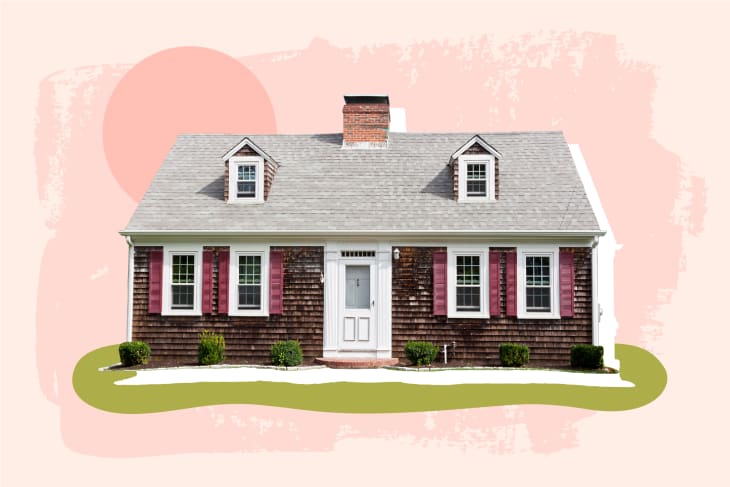
Named for the hook-shaped arm of Massachusetts where they originated, Cape Cod-style homes, better known as Capes, are a humble Yankee invention. Puritan settlers modeled them after their timber cottages in England, keeping the design details to a minimum. Typically, they’re clad in shingles, have a central door with two windows on each side of it, and are topped with a chimney. These homes revel in modesty, and that is what makes them so perfect.
Unlike Tudors with their superfluous half-timbering, or McMansions with their over-the-top—and wholly unnecessary—flourishes, Capes are austere in several beautiful ways. They have no more ornamentation than what’s needed—they’re the original minimalist home, if you will. They’re also the ideal size, averaging between 1,000 and 2,000 square feet.
A Cape’s absence of excess is attractive these days. While the tiny home movement continues to resonate, Capes don’t go to that kind of extreme. Instead of challenging its inhabitants to pare down all of their belongings, Capes offer the optimum amount of area to live within. Capes ask people to live without too much or too little, inside rooms that aren’t too big or too small.
Their layouts, too, are something to be marveled. Now that we all seem to be getting away from praising open-concept floor plans (“Maybe I’ll start a business called ‘Walls,’ and my specialty will be putting walls in, because in 10 years we’re all going to want them again because we’ve made our houses into studio apartments,” actress Melissa McCarthy joked in a New York Times Magazine interview) the neatly divided rooms inside a Cape are treasures in themselves.
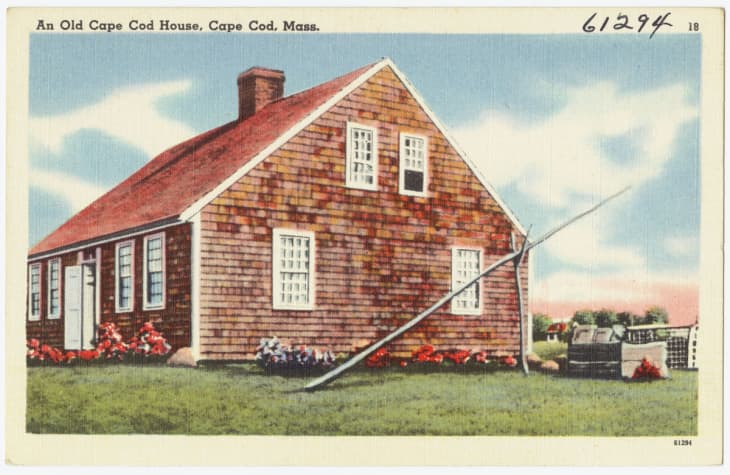
Of course, from the outside, Capes are a sight to behold. They possess tidy curb appeal thanks to a symmetrical facade and a small, charming front yard. Most Capes have a chimney in the center or on the side of its roof. No matter where it’s positioned, though, there’s still a fireplace—an enviable amenity for a generation that embraces hygge.
I should note I am not alone in my love for Cape houses. An architect named Royal Barry Wills is credited with a resurgence of Cape Cod-style abodes in the mid-20th century. The Massachusetts native “wanted only to design the indigenous New England house supremely well, and succeeded beyond any other architect,” reads More Houses for Good Living, a book originally published in 1968 by his firm.
Wills built hundreds of Capes across the country. According to Historic New England, he custom-built houses in 34 states, including this Cape-style cottage in Newport Beach, Calif., created for a client who “wanted a traditional New England home only one block from the Pacific Ocean.”
I happen to think Cape Cod is one of the loveliest places on earth. A Cape house is in its purest form near the New England coast, with blooming blue hydrangea bushes out front. To pepper them throughout the U.S. as Wills did is a noble deed. In my opinion, it’s a deed that should be replicated—and soon. We could all use some more simple beauty in our lives, and Capes offer it by the neatly packaged bundle.