
This Garage Find Will Help Beat the Summer Heat *Inside* Your House
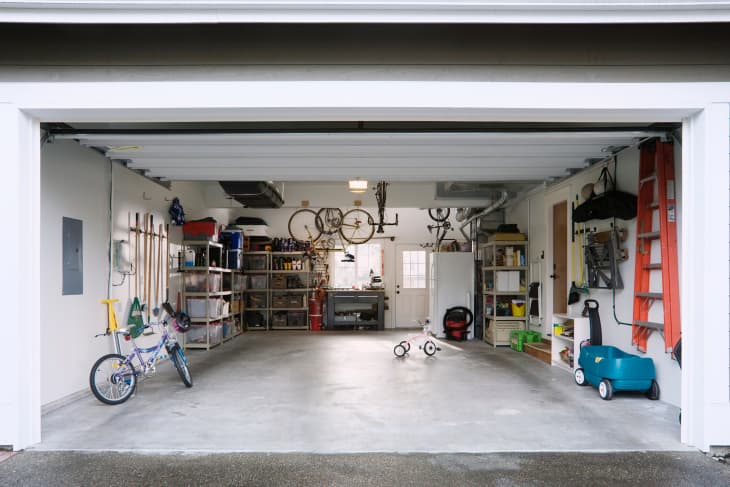
There are lots of ways to cool down your house on the hottest days of summer with household finds, like this sheet method, this DIY ice fan trick, and even with a find that typically belongs in your car: A car sunshade can work in a pinch in your house window to beat the summer heat.
It’s a little lower lift (read: less sticky and air bubbly) than installing something like a UV-blocking film, and a little more efficient (read: fewer steps and sheets of foil) than using actual aluminum foil, but it’s the same UV-blocking principle at play. Windows can create hot zones at home by letting in lots of sunlight, and the best way to deal with them is to block that sunlight out. According to HVAC expert Ray Brosnan, who spoke to Apartment Therapy previously, light-colored window coverings with reflective backings are the most effective for cooling off these areas.
Why Using a Car Shade in Your House Window Works in a Pinch
Car shades are proven to lower temps in peak sunlight. In July 2024, Alabama-based news station FOX10NEWS conducted a test with an infrared thermal imager and found that a vehicle sitting in a parking lot in the peak sun with a windshield shade was about 20 degrees cooler than one without. And in July 2023, CBS Texas conducted a similar study and found a similar result, about a 20-degree difference in the “protected car.” Although it’s not the prettiest solution, you could do the same in your home on a hot summer day.
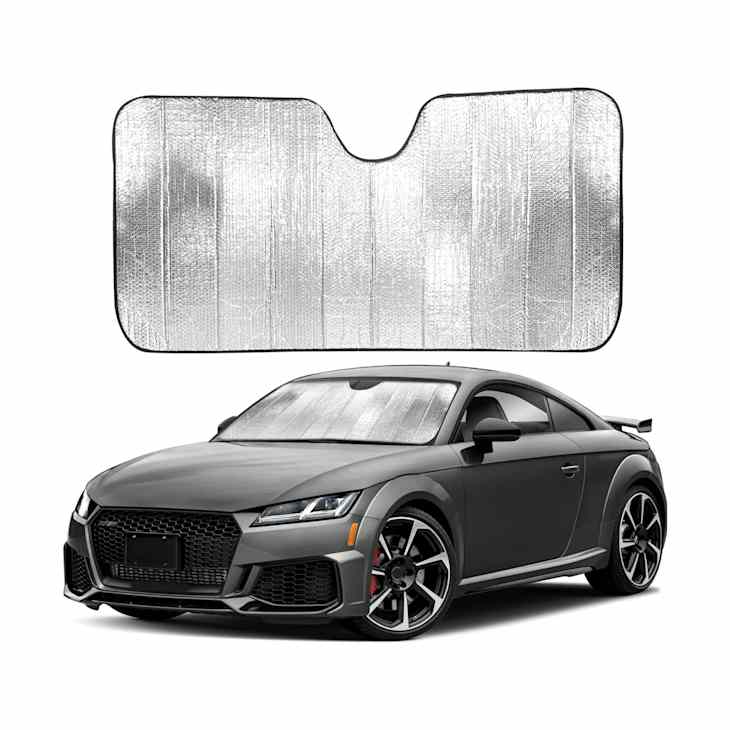
Cutouts in car shades can accommodate portable air conditioner hoses. As Redditor u/sonnokido shows, the cutout for the rearview mirror is a pretty perfect fit around a portable air conditioner hose that comes through the window. The user notes on Reddit that their landlord won’t let them switch to a window air conditioning unit, so they’re stuck with the hose, but the car shade fits in their window without disturbing it. They note in their post that both sides of their shade are reflective, but if yours only has one reflective side, then you’ll want that side to face outward to reflect heat.