I Spent $3,000 to Get Rid of Clothing Moths So You Don’t Have To
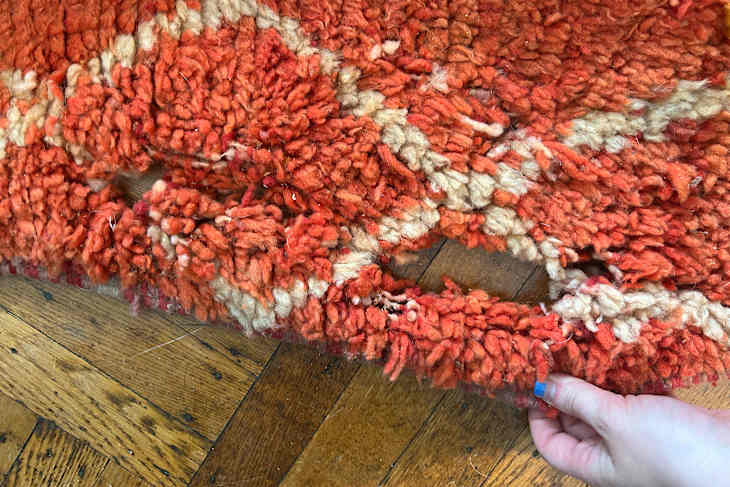
A few months ago, I discovered that I had a really bad case of clothing moths in my NYC apartment. Somehow, they got into my home and laid waste to a gorgeous orange shag Moroccan wool rug for months before I learned what they were and, a few weeks later, how to get rid of them. Traps revealed that my ignorance had led to a massive infestation. There were moths under my sofa, on the rug, and in nearly every closet of our home.
After hours of online research, plus calls with an entomologist, Terminix, and The Container Store, I finally accepted the truth: My husband and I were in for a weeks-long, expensive extermination process that would leave us living out of bags. Once the dust settled and a free weekend opened up, we got to work. Here’s everything we did.
How I Got Rid Of Clothing Moths

Step 1: Prepare
The first step was washing and drying every single piece of clothing we owned — even synthetic fabrics or nonkeratinized fabrics — and sealing everything in plastic bags until treatment was done. Though the bugs only eat wool, because our clothing was all mixed together in storage, we opted to wash it all because bugs can lay eggs anywhere. Experts like Isabel Novick, an entomologist at Boston University, say that clothing moths can chew through plastic bags, and it’s true, but unfortunately we had no other alternative for clothing storage — we couldn’t afford to have huge plastic bins that we’d only use once for every single piece of clothing we owned, and instead decided we’d take the risk of sealing the bags short-term and then buying long-term clothing storage after we cleaned everything. We emptied every closet and dropped off all wool and silk rugs, and dry-clean-only items at the cleaners. And after eight hours at the laundromat, we ended up paying for wash-and-fold service for the rest of our laundry.
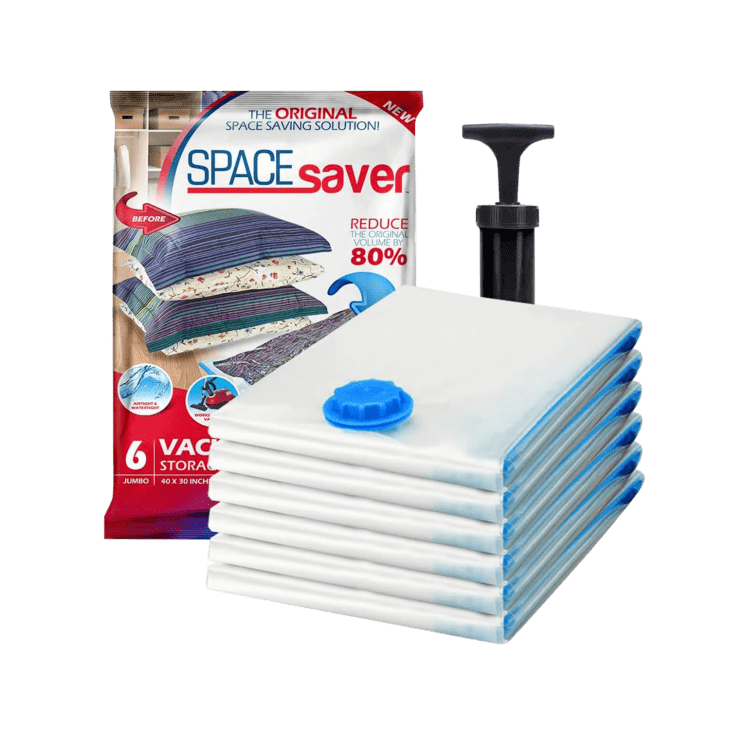
For pieces that couldn’t be hot washed and dried or dry-cleaned, I hand-washed them, sealed them in vacuum bags, and froze them for 72 hours — a method recommended by Novick. Then we vacuumed our entire apartment. Prepping cost us about $450 in laundry, $1,200 in rug cleaning, and ongoing dry cleaning bills (around $300 every pay period).

Step 2: Exterminate
With the rugs out and everything washed and sealed, the exterminators came in to spray every closet, drawer, and area under and behind furniture. We (including our dog) had to vacate until the spray dried, then aired out the apartment by opening the windows for 20 minutes.
Clothing moth extermination isn’t a one-and-done job. Exterminators return 7 to 10 days later to spray again (the key window for killing newly hatched larvae). That meant we had to live out of bags for another 10 days and wait an additional 72 hours after the second treatment before putting anything back. We spent about 14 days living in chaos and over $1,000 on extermination. The service included free check-ins and one additional treatment if the moths return within 90 days.

Step 3: Future-Proof the Space
Once we could finally move back in, I went all in on prevention. We invested in garment bags, weathertight plastic bins, cedar planks and balls, pheromone traps, and a byMATTER “Closet Guardian.” All wool, silk, leather, and down coats now live in cotton garment bags with cedar balls inside and tape sealing the hanger holes. (Experts are mixed on whether cedar works, but I am honestly down to try anything). Sweaters and scarves went into zip-up garment bags from Hayden Hill. Regularly used pieces, like everyday sweaters and leather bags, are stored in plastic bins.
We still have three bags of dry-clean-only clothing to process, but everything that re-enters our closets now gets sealed immediately. I check pheromone traps daily and vacuum several times a week to catch any new eggs or dust as soon as they come into our apartment. It’s been a long, exhausting, and expensive process — but so far, we’re moth-free, and I plan to keep it that way.
Here’s everything I bought to treat — and future proof — my home: