
My Mother-in-Law’s Trick for Finding an Always Cool Home Is Clever
I moved from temperate Northern California to muggy Atlanta when I got married. It’s safe to say I had no idea how different Atlanta was weather-wise. I arrived in the beginning of June. Insects serenaded my spouse and I every night. Trying to beat the sweltering, sticky hot days that gave me daily headaches for a month.
My mother-in-law helped me settle into our apartment, offering me tips to help keep cool, such as choosing cool colors like white or blue for shelf liners. “Red makes you feel hot,” she said. My mother-in-law also said we should cook outside whenever possible and look for places to live that are surrounded by trees, which blocks sunlight in the summer.
My Mother-in-Law’s Most Important Tip for Keeping Cool at Home
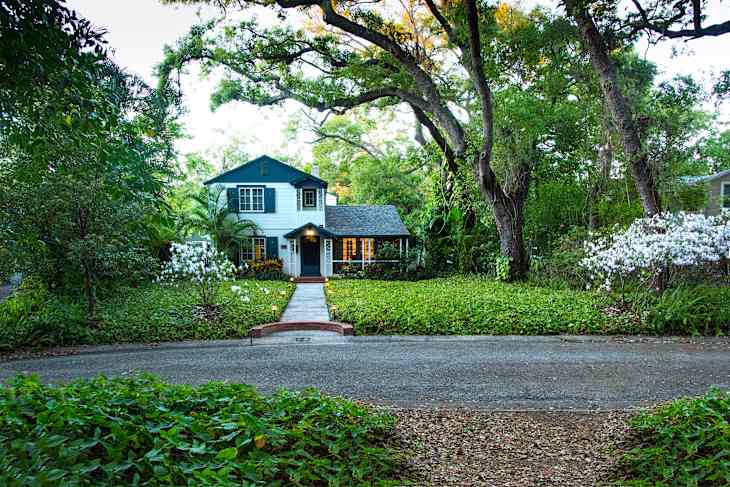
But her most important tip? When looking for a home that is surrounded by trees, look for one with deciduous trees. That’s because deciduous trees are best, she told me, as they lose their leaves in the winter, allowing sunlight and some warmth during cooler temperatures. This last tip is something that I really kept in mind when we looked for a house to purchase the next year — and something I’ve kept in mind with every home we’ve lived in since.
To find out what the experts thought about deciduous trees as a cooling hack, and to mine them for extra recommendations along the same lines, I reached out to a few real estate pros for their best tips on home features that fight the heat.
Deciduous Trees Are a Pretty Way to Keep Your Home Cool
According to Liz Nason, a sales associate at Premier Sotheby’s International Realty, “Finding a home with deciduous trees (that drop their leaves in winter and fluff out in summer) is always a great way to keep your home cool and create privacy when you’re out on your porch!”
Nason says she would use a west-facing office that got super hot in the summer, and none other than deciduous trees helped her home stay cool. “I used to BAKE, despite me hiking up the air conditioning,” she says. “Two years ago I planted 10 small pitch apple plants on sale for $8 each from a local nursery at the end of the patio and today, I have a sexy and easy-to-trim 12-foot hedge that prevents direct sunlight and my neighbors’ prying eyes.”
Fred Loguidice of Sell My House Fast Wisconsin adds that other plants can also make a difference when it comes to keeping homes cool. “While deciduous trees are fantastic, other landscaping elements can help, too,” he says. “Shrubs and vines planted close to the house can provide shade for walls, further reducing heat gain. Even the type of ground cover around the house can make a small difference.”
What’s Beneath and Above Your Living Space Impacts Temperature, Too
Basements and attics make a big difference in the overall temperature of your living space. A home with a basement is automatically cooler. As Brett Johnson, owner and licensed real estate agent at New Era Home Buyers, puts it, “Even unfinished, a basement gives you a cool retreat and helps regulate the temperature of the house.”
Homes built on slabs of concrete also keep houses cooler. In fact, they can feel “shockingly colder, like walking outside and having to turn around and change your clothing!” Nason says. In addition, homes with crawl spaces allow for airflow. However, Nason cautions, “make sure you have insulation in good shape down there.”
Insulation in the attic is also important. Wesley Kang, founder of realty firm 1099 Cafe, warns, “Insulation quality and attic ventilation prevent heat buildup that forces AC systems to work harder. Look for ridge vents, soffit vents and adequate attic insulation during inspections as poor ventilation turns attics into ovens that heat the entire house.”
Orientation Affects Sunlight and Heat
The direction your home and its windows face also has a huge impact on how hot or cool your home is. Shaun Osher, CEO of CORE Real Estate says, “First and foremost, pay attention to the orientation of the home. If the home faces south, for example, it might be bathed in beautiful light all day, but that can also translate to intense heat.”
Naig concurs. “Which way your home faces is actually more important than many people think,” he says. “A house with its primary windows in the north or northeast direction will receive less direct sunlight during the hottest portion of the day,” he adds, noting that west-facing windows can make a space feel a lot warmer.
This translates directly to how you live in your home. “In the real world, when I tour a house in July and experience blinding light in the face of west-facing bedrooms at 5 p.m,” Naig says, “I know the HVAC is going to run like crazy. Houses with shaded northern exposures, however, regularly feel 5 to 10 degrees cooler without the need for adjusting a thermostat.”

Features That Keep Homes Cool
Features that are part of the home itself also affect how cool it stays during summer heat spells.
For instance, lighter-colored roofs “reflect more sun, and metal roofs have reflective coatings,” Nason says. “Lighter siding and roofing shades bounce more heat away than darker ones,” agrees Naig. “Stucco, stone, and brick absorb heat and slowly release it, which can be good in the winter but punishing in July unless paired with excellent insulation,” he cautions.
“Metal roofs with reflective coatings (similar to cool roofs) also perform better than one might think. I once retrofitted a 1960s ranch house with a white standing seam roof, and the interior cooling results were measurable without any other changes.”
Indeed, older homes may often be built of materials that keep them cooler. As Osher says, “Older homes, especially apartments in prewar buildings, tend to stay cooler because of their thick masonry walls which were literally built to insulate before HVAC was common.”
High ceilings also keep living spaces cool. “High ceilings also help; heat rises, so the taller the ceilings, the more comfortable the lower part of the room remains,” Osher says. Kang confirms: “Ceiling height makes a huge difference as hot air rises and tall ceilings create natural convection that moves air without mechanical systems.”
Verandas, porches, and overhangs also help block sunlight from entering windows and heating up interiors. “Passive design features like overhangs, pergolas, and deep porches do wonders,” says Naig, describing how “these architectural elements disperse sunlight before it hits the building.” Furthermore, “Low-pitched roofs with extended overhangs … really do block direct sun from heating up walls and windows!” Nason says.
Window Orientation (and Quality) Matters, Too
Nason emphasizes the importance of windows when searching for a home that will stay cool during hot summer days. “Newer replacement windows, even on an older home, will give you immediate relief and savings!” she says.
Naig adds, “Dual-pane Low-E windows keep a lot of heat out. Bonus points if they are functional and provide cross-breeze opportunities. He underlines the benefit of a good cross-breeze. “If you can open a couple of windows on opposite sides of a room and feel a breeze, congratulations,” he says. Transom windows, too, can add a cross-breeze when needed.
Kang agrees. “Cross ventilation through strategically placed windows is a game-changer as it creates natural airflow that cools homes without electricity. Houses with windows on opposite walls allow breezes to flow through rather than trapping hot air inside,” he says.