
This Small Space Emergency Kit Fits in a Shoebox and Only Costs $108
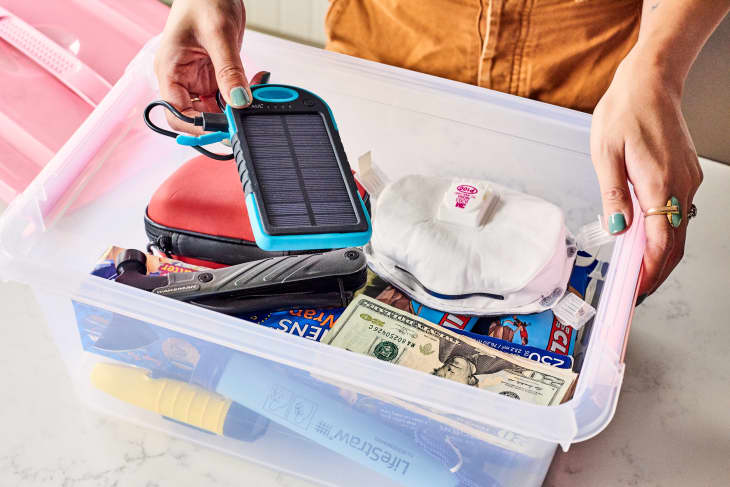
Being prepared for an emergency isn’t always conducive to your living space. For example, the CDC recommends American households store a gallon of water per person per day—which isn’t exactly realistic if you’re living in a studio apartment that barely has enough room for a twin bed.
Thankfully, no matter how roomy your living quarters are, you can build an effective emergency-preparedness kit. All you need is a shoe-box sized bin, a little guidance, and just about $100.
One note: These finds aren’t an equal substitute for a “proper” emergency kit, but having anything on hand is better than having nothing! And while we can’t guarantee effectiveness or duration of use, these items should last you around 72 hours in most scenarios.
Personal Water Filter
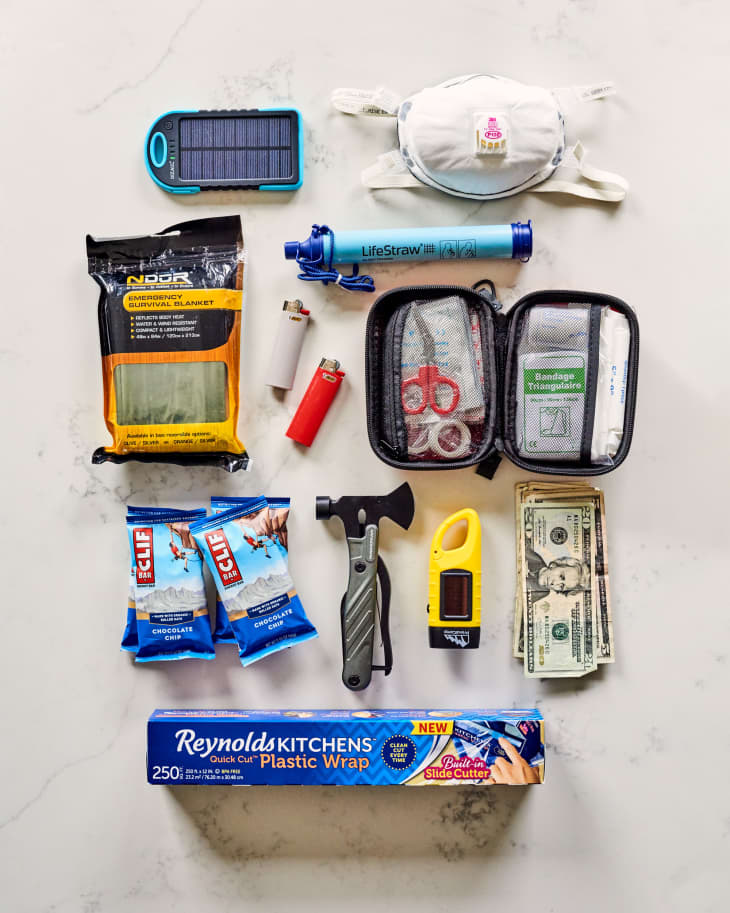
Clean water is a must, but if you don’t have room to store it by the gallon, here’s a smart back up. A personal water straw like this one removes potentially dangerous germs from water sources, making virtually any water drinkable in case your home’s water is cut off or contaminated.
Buy: LifeStraw Personal Water Filter, $17.47
MultiTool Knife
In a small space where you might not have room for an entire toolbox, a multi-tool is a must-have, according to Sam Maizlech, survival expert for Glacial Wellness. In addition to providing a hammer, pliers, a knife, screwdrivers, and a bottle opener, a multitool can also be useful for self-defense.
Buy: MultiTool Knife, $11.99
Lighters
On top of starting fires and lighting candles, a reliable lighter can also serve as a light source in a pinch. This 5-pack should be more than enough to last you at least a few days. Even if you regularly have lighters around for recreational use, it’s a good idea to stash away at least two more, full and fresh out of the pack, in your emergency kit.
Buy: Bic Lighters, $4.79 for 5
Disposable Cup Respirator
Like food and water, you’ll also need clean air. “There’s likely to be all kinds of crap in the air if there’s a fire or collapsed buildings around you, and these masks will filter out a lot of bad stuff,” says Jordan Bishop, founder of Yore Oyster. Just keep in mind they won’t protect you from smoke or chemicals.
Buy: Disposable Cup Respirator, $7.70
Solar-powered flashlight set
Rather than stocking up on batteries or relying on light sources that require electricity, get a solar-powered flashlight instead. Just charge it up in the window or outdoors, and you’ll be set.
Buy: Solar-powered flashlight set, $9.99
Clif Bars
A high-calorie, protein-rich food source that will both boost your energy and keep you full is another important ingredient of any emergency kit. Bishop recommends Clif Bars. “They’re tasty, highly shelf stable, and easy to eat on the move,” he says. “They’re also high in calories and protein, which will keep you strong and focused in the face of danger.”
Buy: Clif Bars, $11.28 for 12
Emergency Survival Blanket
If you’re in a climate that has the potential to get cold, invest in a survival blanket. “These blankets pack extremely small and light, making them an easy, important addition to your kit,” says Bishop.
Buy: Emergency Survival Blanket, $8.95
First-Aid Kit
A basic first-aid kit that includes gauze, antibiotic cream, sterile gloves, tweezers, and bandages is generally sufficient, according to Maizlech, who also recommends keeping sanitary wipes on hand for makeshift bathing.
Buy: First-Aid Kit, $11.99
Solar-powered phone charger
Even in emergencies, most cellular towers have backup generators, which means you should be able to continue using your cell phone (assuming the tower itself isn’t damaged). That’s why it’s so important to invest in a solar-powered phone charger for keeping your phone powered up when the electricity is off, says Andrew Roszak, an EMT-paramedic and executive director at the Institute for Childhood Preparedness. Another thing to keep in mind: When cell phone networks are busy, data and voice calls may not work—which means you may be better off texting in emergency situations.
Buy: Solar-powered phone charger, $19.95
Plastic wrap
Another cheap essential: plastic wrap or plastic baggies. “These can be used in a variety of scenarios, from keeping items clean and dry, to catching rainwater, to covering windows and air gaps to even covering wounds,” says Roszak.
Buy: Plastic wrap, $3.99
Cash
Finally, Roszak encourages stashing a few hundred dollars in cash (preferably small bills) in your kit. Since emergencies often lead to power outages, you likely won’t be able to swipe your credit card or take cash out of an ATM.
Grand total (minus cash): $108.10