
The Previous Homeowners Covered Up the Original Fireplace — My Custom Fix Made It Work
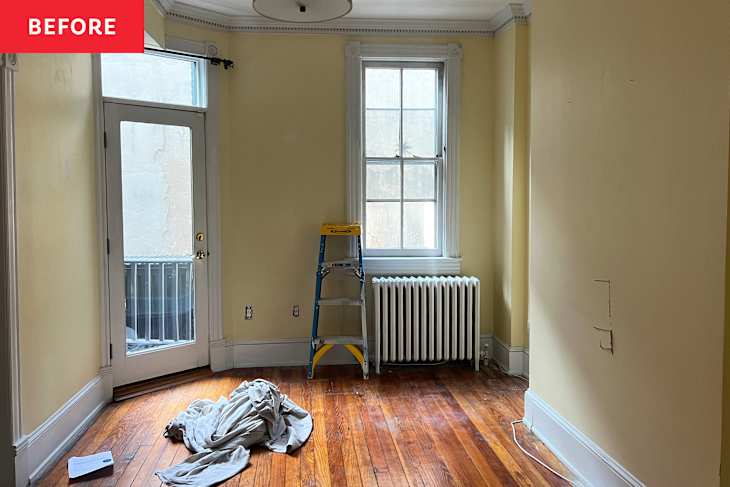
I love fireplaces for their cozy ambience, but there was a time when they were more utilitarian than aesthetic. In my 1895 rowhouse, for example, there were originally fireplaces in every room for functional heat.
Once radiators were installed, those fireplaces became unnecessary, and previous owners decided two fireplaces were plenty. But instead of leaving the other six fireplaces open to admire, they simply covered them up with drywall. Horror of horrors!
While There Was More Wall Space, There Was Also an Awkward Bump
On one hand, I get it. For most people, usable wall space is more valuable than an unused fireplace. But the cheap and quick job the previous owners did to cover up the fireplaces created an annoying problem: awkward bump-outs that have oddly sized nooks on either side.

She Couldn’t Afford to Restore the Fireplace So She Had Custom Bookcases Built Instead
The issue is particularly egregious in our parlor, where the room is already astonishingly narrow. In my ideal world, we would have reopened the wall and restored the fireplace, but our budget wouldn’t allow it. (Ever want to gasp at a price? Look into chimney work.) I knew I needed to find a more realistic solution that would help make this annoying spot blend in with the rest of the room.
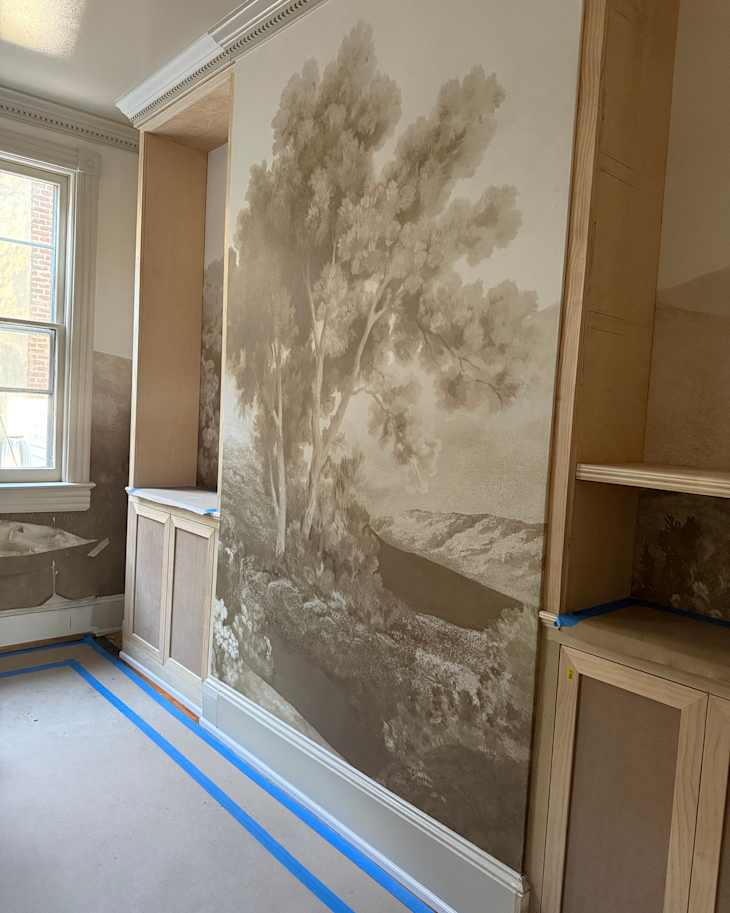
To make this awkward space a little less awkward (and a little more usable), I decided to incorporate built-in bookcases into either side of the fireplace punch-out. Now, this room is one of my favorite spots in the house — but it took a couple of years to get there.
I could have filled the awkward spaces on either side of the former fireplace punch-out with art or interesting pieces of decorative furniture, but what I really needed was storage and somewhere to put my books. If there’s an awkward space present, the best plan forward is to figure out if there is a functional way to use it and let that guide the direction, particularly if you’re short on overall square footage.


Always Get 3 Quotes from Professionals and Choose On-Site Built-Ins to Save Money
In my area, it’s notoriously hard to find contractors for built-ins. I asked everyone, from neighbors to Facebook groups to designer friends, for recommendations. And I brought three companies in to give quotes.
The range was eye-popping. One came in so low that I felt hesitant to move forward. One came in so high — and with the lowest quality materials — that I wondered if he’d accidentally given me a proposal for a full kitchen of cabinetry. But one came in right where I’d imagined the price would be, given my research. That’s the one I went with.
People also always seem to talk about built-ins built off-site as being the ideal scenario. It’s the more expensive option and, yes, I suppose it does cut down on dust and debris (I’m still finding wood dust outside, many months later).
But for me, I liked seeing the progress each day and troubleshooting any odd angles or questions in real time. I’ll take the less expensive built-on-site built-ins any day if it means both a more affordable price and the ability to tweak the plan as things come up.

Integrate the New Design with the Old
The main reason I disliked the punch-out, beyond its intrusive size, was that it felt like an afterthought. There was nothing intentional about it, and it seemed clear that, like many things in the house, they just did the cheapest, fastest option to avoid a bigger project.
I had already wallpapered the room earlier on in the renovation before I committed to the built-ins, so we used that as the foundation to tie it all together. The contractors built around the wallpaper so it shows through the back, brought the footprint of the built-ins exactly flush with the punch-out, and reused the existing molding on the built-ins. The built-ins were painted the same color as the trim and, voilà, it’s as if they were always there. And, yes, my books now have a home.
Inspired? Submit your own project here.