
How to Fix a Patchy Lawn Before Summer — 3 Expert-Backed Tips
Along with spring cleaning and various home improvement tasks to complete before summer, one thing at the top of my list — as a homeowner with a not-so-green thumb — is bringing my lawn back to life. I live in the Catskill Mountains of Upstate New York, and after six incredibly long months of frigid winter weather, my front and backyard are both in dire need of some TLC.
Sure, I can take the expected steps like mowing and watering it. But I also spoke with Gene Caballero, the cofounder of GreenPal, who offered some seriously unexpected (but incredibly helpful) lawn care hacks. With his expertise, I’m confident things will start looking lush again in no time. Here are some of Caballero’s most surprising tips for making your yard look spring- and summer-worthy.
3 Ways to Bring Back Your Grassy Lawn
Here are three essential tips for maintaining a healthy lawn that will definitely make your grass look fuller, sooner.

Don’t mow too much of your grass.
Although it may be tempting to cut your grass shorter your first day back out with the mower, Caballero stresses that there are definitely benefits to keeping it longer. “Having taller blades helps build deeper roots and will crowd out weeds,” Caballero says. “It also shades the soil, helping retain moisture and reduce stress during heat. Follow the one-third rule and avoid cutting too much at once. This leads to a thicker, healthier lawn over time.”
Water less than you might think.
“Water deeper and less frequently,” Caballero says. He clarifies that this means you should be watering your lawn about two to three times per week, or about an inch per week including rainfall.
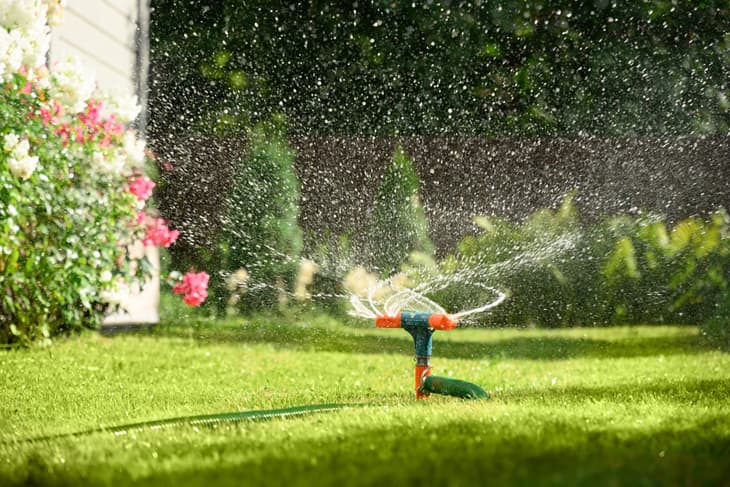
“The most effective option would be to set up an irrigation system that would deliver even coverage,” he says. “A hose can also be a good option — but make sure you use a rotating or oscillating sprinkler to water evenly,” Caballero explains, adding that it can help your turf get stronger and more drought-tolerant.
As for what time of day you should break out the hose or turn on the sprinkler: “Early morning is best to reduce evaporation and prevent disease,” he shares.
Be extra (in some ways).
While you should reign in your mowing and watering, go all out at the start of the season in early spring, by overseeding (which is when you lay seed directly into existing turf), aerating, and even doing a soil test.
“Overseeding fills in bare spots and thickens the lawn,” Caballero says, stressing to make sure the seeds take hold in the soil. “Make sure seeds have good soil contact for best results.” He adds that this process can also help “crowd out weeds.”
Using an aerator might sound intimidating, but it doesn’t have to be — plus, it’ll “improve airflow and nutrient absorption,” Caballero explains, telling us you only need to use it about once a year, or twice if you have heavy clay soil or high traffic. “Timing should line up with your grass’s active growing season for the best recovery,” he adds. “It also allows water to penetrate deeper into the root zone. This is especially important for heavy clay soils.”
Finally, do a soil test. You don’t need a science degree — even a DIY kit is pretty easy to use, and Caballero reminds me it has its benefits. “Don’t guess,” he says. “A soil test tells you exactly what nutrients your lawn needs and helps you avoid overfeeding or wasting money. It’s one of the most cost-effective ways to improve lawn health.”
Check out Yard Therapy for all the outdoor area inspiration you need this spring, with landscaping tips and hacks for making even the smallest spaces shine. This content was presented by a sponsor; it was created independently by our editorial team.