
I Just Discovered a 100-Year-Old Wallpaper Behind My Drywall — And Re-created It (It’s So Gorgeous!)
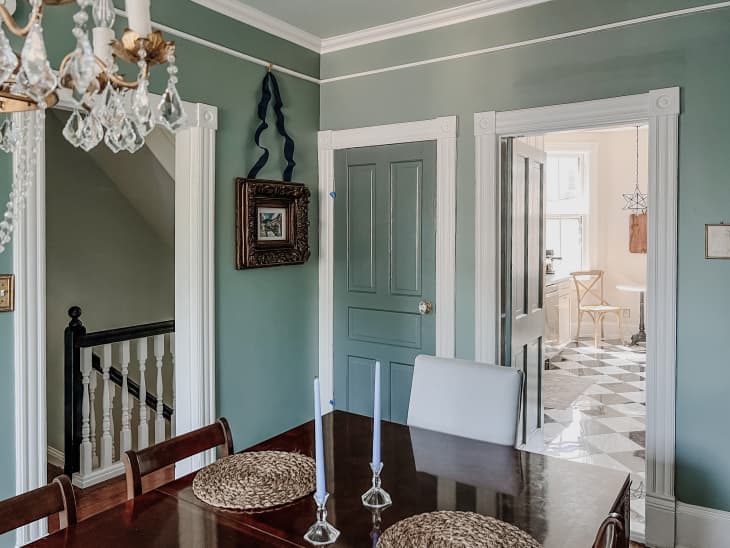
When I bought my 1895 Queen Anne Victorian, I knew it had a basement apartment, but I hadn’t seen it. In theory, 650-square-feet of livable space sat down there, but the agreement for the open house did not include getting to see the apartment.
Luckily, the basement was far less of a dungeon than my imagination had run with, and the tenant was an eager government fellow with a plan to move to another state as soon as his lease was up, which he did. And that meant I immediately started brainstorming all the ways I could renovate the space into a guest bedroom and office.
First on the agenda was swapping the floor plan to create a true one-bedroom rather than the existing layout, which included a large eat-in kitchen separate from the living room and bedroom. Because of the layout changes being made and the structural condition of the floor and walls in the basement, we had to gut the space almost entirely (completely different from our preserve-everything approach upstairs!).
I quickly found the beauty in gutting a 130-year-old space is what you discover hiding inside the walls. Behind the drywall in the basement kitchen was a large brick hearth, a pressed tin ceiling, and the pièce de résistance — sections of intact wallpaper throughout the room that had been trapped for decades, if not longer.
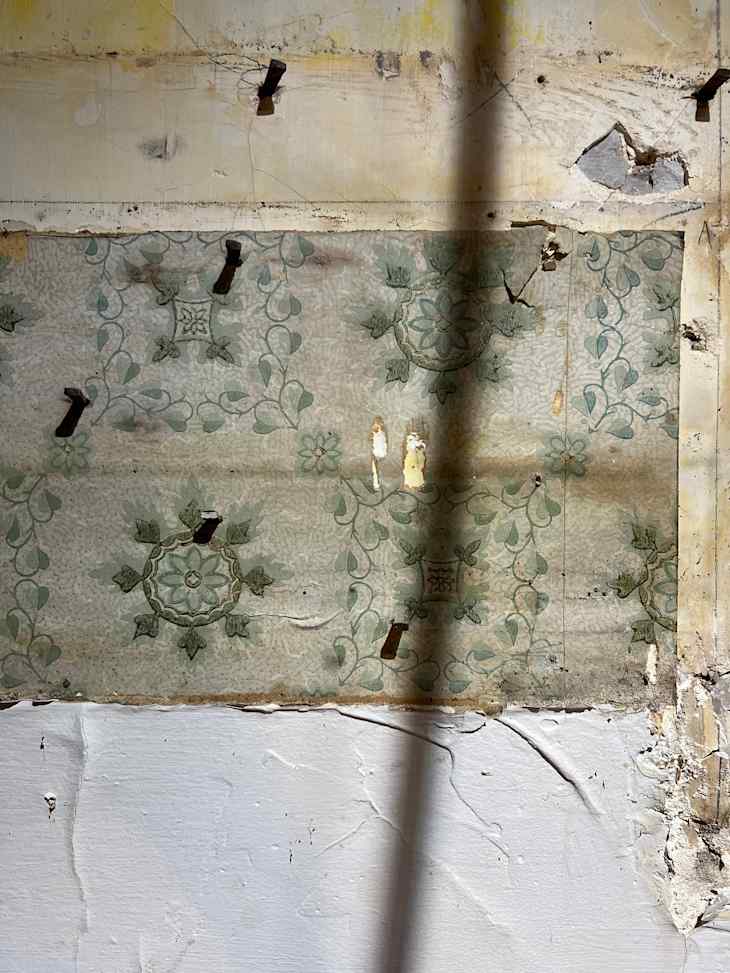
The wallpaper was a blue and green block print, likely not original to the house since I found a more distinctly Victorian wallpaper with roses hiding behind it. But it was certainly old, and, in a serendipitous fashion, the colors in the wallpaper happened to match exactly the color palette I’ve used throughout the house — in my dining room, kitchen, and even the bathrooms.
I had the contractors carefully remove a few pieces, knowing I had to do something with this wallpaper. I considered framing it, but that felt underwhelming. Then I got a wild idea — what if I could re-create it?
I texted my friend Sadie Cornelius, a graphic and web designer, asking if she had any experience working on repeat patterns. The stars aligned. She happened to be at lunch with a watercolor artist, and, together, they agreed to tackle the project with me.
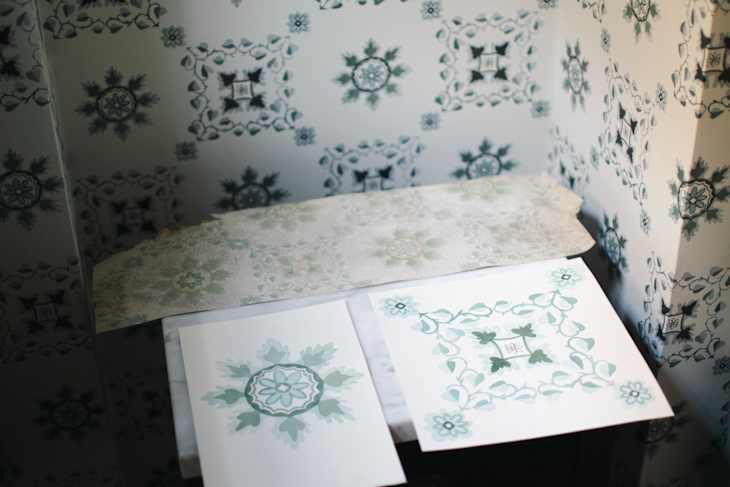
Michelle Schenker, the watercolor artist, was up first, carefully re-creating the pattern from the images I sent her. With a brush and a delicate touch of paint, she was able to perfectly capture the nuances of the block print. Some sections are lighter, others are darker, and it mimics the softness of the original. Because of the way the pattern was structured, Schenker created two separate pieces, which the graphic designer then merged together to make a repeat pattern.
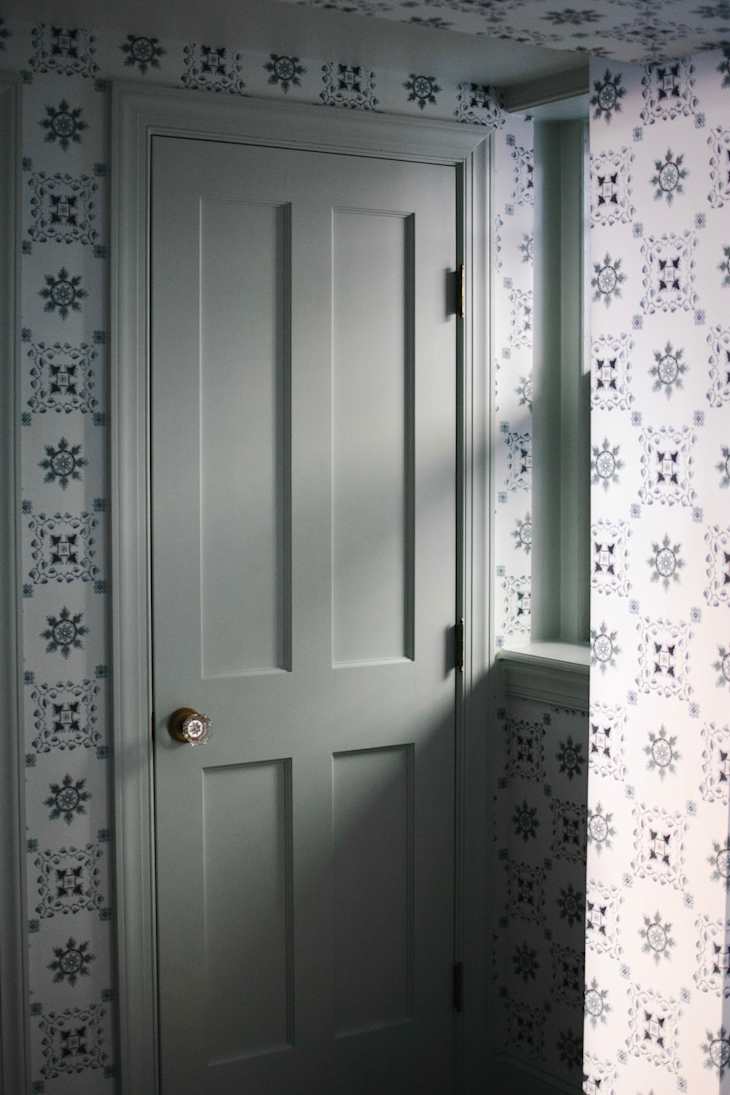
With a little tweaking, we landed on just the right arrangement to mimic how the two pieces of the pattern came together in the original. I found the exact paint color I wanted as the background, then googled the HEX code to upload as the backdrop to my transparent repeat PNG. Then, I held my breath as I uploaded it into an online wallpaper maker, Contrado, which is super easy to use for making bespoke wall coverings and more. I was hoping what I saw in the file would turn out correctly on the screen.
It looked exactly like the original — but fresh.
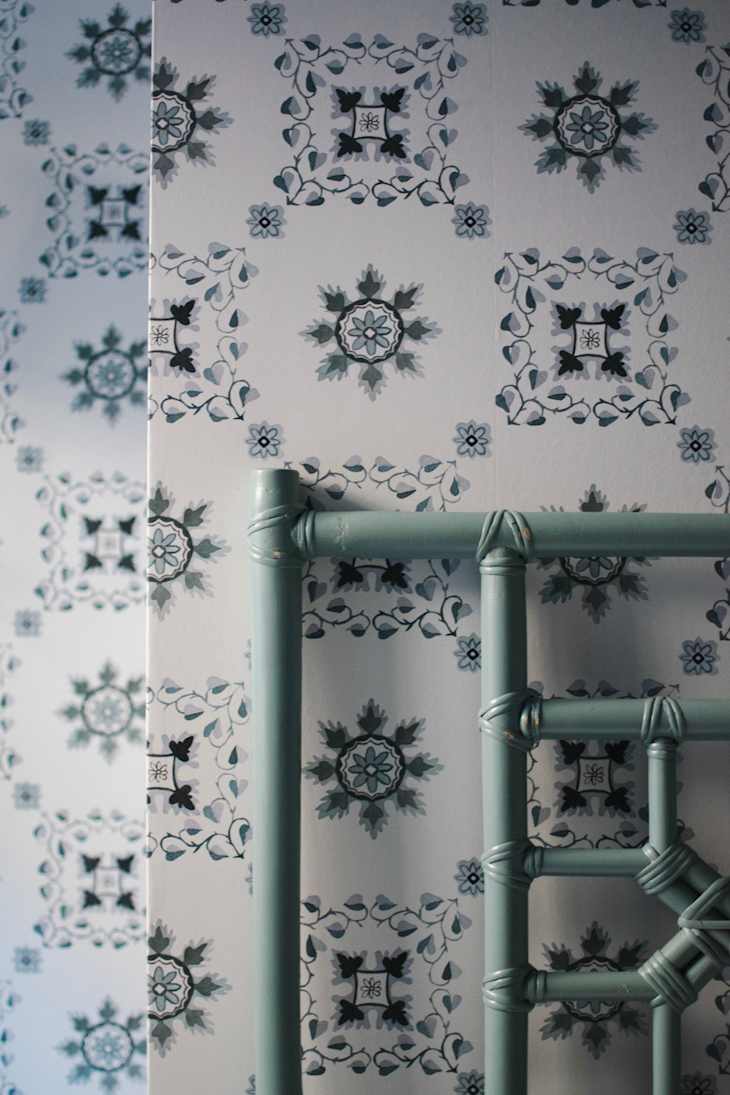
A week later, I had the paper in hand. I chose a trim and door color to pull out the blue tones, leaning into the classic look that I imagine the room once had. As the paper went up, I can almost envision what it might have been like when someone else chose the same paper over a hundred years ago.
The space isn’t exactly how it was in 1895 — the only original remnants at this point are the door and the window, but I love that it’s a nod to the hidden past, which, for decades had been trapped in a tomb of drywall.
Design Defined
Never miss the style inspo and recommendations you crave with Design Defined. Follow along each week as our Home Director Danielle shares the best style advice, latest trends, and popular decor finds you just can't miss.