
I Was Drowning in Paper Clutter — This Decluttering Trick Got It Under Control
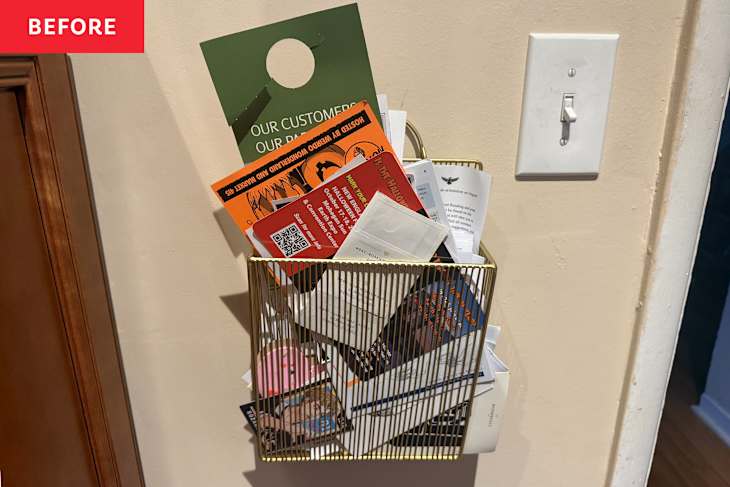
I am, by nature, a saver. Somewhere along the way, my “I might need this” mindset accumulated into two giant piles of paper I deemed important at one point, but ultimately lost track of. This filled a wire basket on my kitchen wall with mail, school flyers, cards, catalogs, takeout menus, coupons, and bills, plus an entryway sorter so overflowing that items were falling behind the console table. Every so often, I’d dig through the stacks in search of an unpaid bill or a time-sensitive school form. More often than not, the piles grew, my patience waned, and I procrastinated dealing with it.
Then I discovered Apartment Therapy’s paper decluttering method, and it was the motivation I needed to finally get my paper clutter under control for good. I was skeptical that it might feel gimmicky or overly complicated, but it turned out to be a simple, practical sorting system that gave me a clear view of what paperwork actually deserved counter space. Here’s how it worked.
How to Organize and Declutter Paper Clutter
Apartment Therapy’s approach skips the “make one giant pile and hope for the best” strategy, guiding you to sort every piece of paper into specific categories like trash and recycling, “action items” (bills to pay, coupons to use, or forms to fill out, for instance), long-term things (that need to be filed away), leisure reading that’s placed around the home, and items of sentimental value.
Trash and recycling are immediately dealt with, while all other items require additional organizing or assessment. As a bonus step, you can assess what papers can be digitized moving forward — whether that means enrolling in e-bills, scanning records, or switching magazine subscriptions to digital formats. The hope is that by the end you’ll have identified what needs to be tossed and kept, and have a better organizational system than before.

What Happened When I Decluttered My Paper Clutter
While the recommendation is to work area by area if the volume feels daunting, the wire basket in the kitchen and the entryway sorter sat less than a foot apart, holding identical mixes of paper with zero rhyme or reason. I emptied both organizers onto the kitchen counter and began sorting. It was eye-opening to see how much actual junk had accumulated, from local political door hangers to takeout menus, which went straight into the recycling bin.
The biggest culprit taking up physical space? My husband’s weekly paystubs. We deposit the check via mobile app right away, hold onto the physical check briefly to ensure it clears, and save the stubs for our tax records; in one fell swoop, two-thirds of that bulk went into recycling, while the stubs moved straight into the long-term pile. I also unearthed several sentimental treasures I’d forgotten about, including a playbill my daughter designed for a theater camp performance and a handmade Valentine’s Day magnet. Inevitably, there were a few forgotten bills (oops!) and school forms I assumed were lost and previously reprinted. I even found sheets of return address labels and postage stamps I had repeatedly searched for, oblivious that they were buried right in front of me.

Why This Decluttering Method for Paper Clutter Worked So Well
By the time I finished, more than half of the paper volume was gone. The kitchen wire basket now holds only immediate action items and frequently referenced sheets, like the school bus schedule. The entryway sorter neatly houses stamps, address labels, and a few active keepsakes. Everything requiring long-term retention moved into our bedroom closet filing cabinet, organized so we can pull it in seconds.
Paper clutter is deceptively difficult to manage because it’s rarely just one category of item. A single pile might contain an urgent bill, sentimental notes that spark guilt at the thought of tossing, and pure junk mail. That emotional and mental mix is precisely why piles get ignored. Sorting papers by the action they require rather than where they happen to land was a complete game-changer. An advertisement and a tax form require fundamentally different responses; once I stopped treating them like parts of the same pile, sorting decisions became intuitive. Giving yourself permission to set sentimental items aside without guilt is equally crucial. It keeps the initial purge moving quickly without emotional decision fatigue. While I’ll still need to keep an eye on the entryway sorter so it doesn’t morph back into a catchall, having an intentional, repeatable framework makes keeping surfaces clear feel totally sustainable.