
Kyoto University Is Researching “Gravity Architecture” To Make Space Living Possible
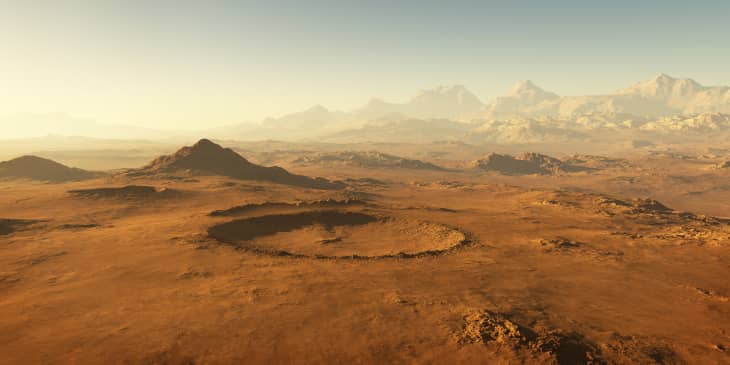
According to researchers at Kyoto University and Kajima Construction Co., Ltd., human life on Mars and the moon may be within reach. The team is working on developing “The Glass,” a cylindrical living structure that employs artificial gravity that would make living in outer space possible.
The proposed architectural structure would be complete with public transportation, green spaces, bodies of water, and even an open sky so that inhabitants would feel as though they are on Earth.
The researchers first decided to employ artificial gravity instead of low gravity, which has already been explored and used in the medical field here on Earth. However, low gravity’s impacts on birthing and raising children and other mammals have yet to be studied, though it is known that any growing done in a low-gravity environment will result in a person not being able to stand on their own on Earth.
“Therefore, we consider an artificial-gravity living facility that can generate gravity equivalent to the global environment by using centrifugal force due to rotation in space, moon surface, and Mars surface, becoming the core technology for human beings to advance into space,” the research team wrote, per DesignBoom. Artificial gravity will not interfere with a person’s ability to return to and exist on Earth.
Other aspects of their design the team will tackle have to do with guaranteeing air, water, food, energy, and a natural environment for those living in The Glass. They also want to explore what society may look like after migration into space is complete. The hope is that the researchers can also provide feedback on environmental conservation and the formation of human society by completing this project.
Public transportation will consist of an interplanetary transportation system dubbed the Hexatrack, which will allow people to travel between the Earth, Moon, and Mars. And the team hopes to establish what kinds of economic resources and businesses could be set up in The Glass.
The researchers have shared videos of what The Glass may look like based on their current goals, but with a project so large ahead of them, no doubt plans will shift and change when new issues arise.