
6 Tacky Things You Should Remove from Your Living Room Right Now, According to Designers
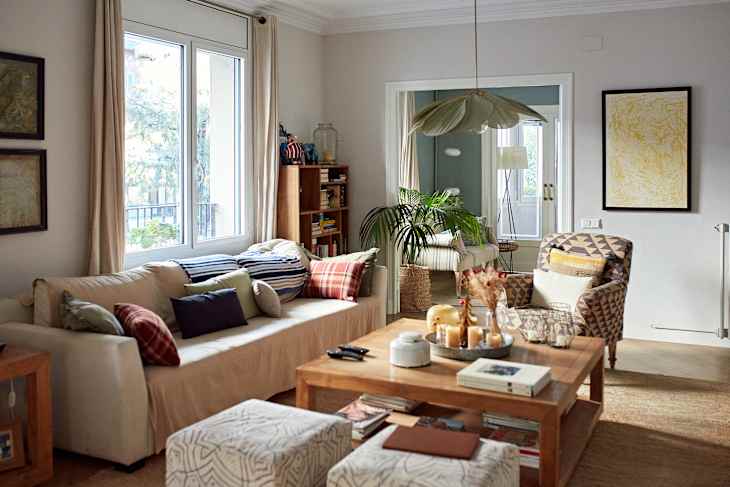
While personal decor style varies, designers agree that a few pieces of home decor are generally seen as no-nos. What’s on that list? I asked two experts to pinpoint the pieces that make them cringe, and you may or may not be surprised by what they zeroed in on. And honestly? They went as far as to recommend removing these items from your living room layout, stat.
Of course, if you truly love something and it brings you joy, you can continue to do you at home. Maybe just don’t weave multiple accessories on the list below into your space, if you can help it. That’s mainly because designers think these pieces don’t feel authentic or personal in living room settings.

Cheap Rugs
If you can save up a bit for a higher-quality rug, it’ll make all the difference in your space. “To me, cheap rugs are a dead giveaway of a lack of taste,” says designer Holly Thompson. “If your budget doesn’t allow you to have a room-sized vintage Persian rug, go with a smaller one with a large natural fiber rug under it.”
Thompson adds that large cotton flatweave rugs are also a great, affordable option. Generally speaking, your rug “doesn’t have to be expensive, but it should be what it claims to be,” she concludes. Look for natural fibers where you can, and don’t be afraid to layer or go the secondhand route. Older wool rugs can clean up really well.

Too Many Perfectly Styled Vignettes
While good styling can take a room from so-so to sophisticated, there’s no need to go overboard, Thompson explains. “When every nook is too perfectly styled with objects, it looks more like a store than a home,” she says.
Lay out and decorate your space so that it feels lived-in and welcoming — not over-stuffed or over-styled. For example, “if you have a bench in your entry, it shouldn’t be piled so high with pillows you can’t sit on it,” Thompson explains.

Fake Books
If you’re going to fill your shelves with books, make sure they’re the real deal. You might want to mix in a faux book box or two, for storage. But try to keep these accents to a minimum.
“Fake books for making a shelf look perfect are so tacky,” says Thompson. “Real ones provide more coziness and give you something fun to flip through on a rainy afternoon.”

Generic, Mass-Produced Artwork
Designer Behin Forghanifar, the founder of Behinteriors, wants you to skip generic art pieces and instead focus on sourcing things that truly speak to you. “Art is one of the best opportunities to bring personality and storytelling into a room,” she says. “A generic work that is bought just to fill a wall has no character or personal connection to the owner.”
Forghanifar recommends getting creative as you shop — go the vintage route, or support a local artist. “Artwork doesn’t need to be expensive to be special,” she says.

Cheap-Looking Mirrors
Not all mirrors are created equal. Forghanifar recommends steering away from “inexpensive-looking and poorly fabricated mirror frames covered with shiny and artificial-looking gold finishes,” which she says “make the room feel less sophisticated.”
Mirrors don’t have to be on every wall, either. “I’d rather invest in one statement mirror with a handcrafted frame — vintage or contemporary — than fill the space with several matching decorative pieces,” she says. “Mixing finishes and materials thoughtfully creates a more layered and meaningful look.”

Fake Luxury Decor
Forghanifar is also opposed to what she describes as “fake luxury decor.” What does she mean, exactly? “Accessories made from plastic or resin that try to copy the look of a marble, crystal, or an expensive wood finish would immediately take away the sophistication and personality that every living space needs,” the designer explains.
She’d rather see people embrace natural materials in their living rooms, even if in very small doses due to budget. “Luxury is not always about size or price but it’s more about authenticity, genuineness, and character of the materials we bring into our spaces,” Forghanifar says.