
Designers Are Sick of Seeing These 5 Major Living Room Styling Mistakes
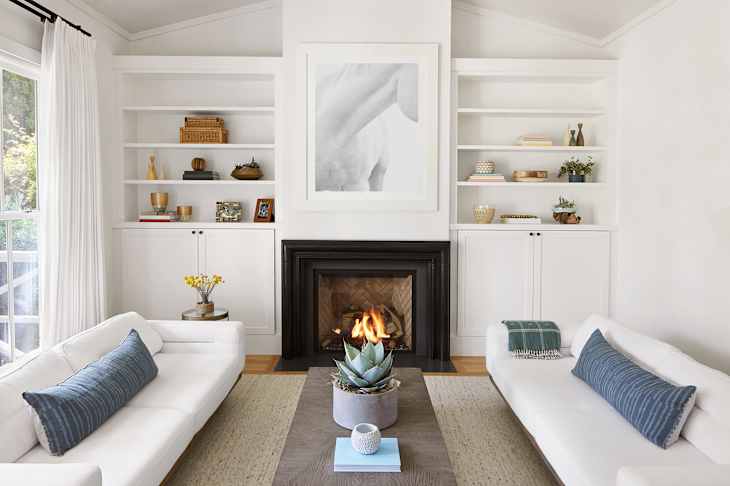
Living rooms are the focal point of your home, especially for guests who usually enter directly into this space — any shelving or tabletop surface draws eyes like moths to a flame. Interior designers work with their clients to make these visual hotspots give off the best first impression possible. It’s why you may see funky accessories and decorative books after makeovers (eclectic style, especially!) on shelving and coffee tables in living rooms.
But there’s an unspoken code among professionals that some details should never be put on proud display, ever. I interviewed a slew of working designers and asked which items should be saved for private eyes only; a majority agreed on five specific categories of belongings that should stay hidden if possible.
Follow along as I highlight their reasoning for keeping these pieces out of sight — and it may just convince you to rethink your own space, too.

Anything Super Precious
When it comes to lower shelves in particular, the pros say it’s best not to display anything too fragile. “Things should add texture, color, and story, and they should be somewhat interactive,” HGTV host and designer Noel Gatts says. “If someone can’t touch or get too close to something, it will make the whole space feel fragile and unapproachable.”
A situation where keeping fragile pieces at a lower display height is feasible? It’s doable when your living room shelves have a glass front (think: a classic hutch with doors, for example). For open shelving, though, breakables are best avoided, especially in the most accessible spots.

Family Photos
Your family photos may be super sentimental, but they don’t necessarily belong on your living room shelves. “I’ve always found it kind of awkward to be looking at a bunch of photos of people that I’m currently in the room with,” Gatts says. “On living room shelves, I prefer visually intriguing items that stay more mysterious or require some investigation encouraging movement and conversation.”
If you’re set on displaying all of those framed memories somewhere in your home, consider hanging a gallery wall in a more private space, like a stairwell or hallway. You could also arrange a few picture frames on your bedroom dresser.
Ultimately, though, it’s up to you. If a snapshot or two makes you happy, just make sure to spread them out a bit. Too many frames on a single shelf can be visually heavy, no matter what or whom they showcase.

Office Supplies
Even if your living room doubles as your home office, letting open shelves turn into storage for supplies like cords, papers, and white boards can lead to a cluttered look. “If you must keep those types of items on the shelves for easy access, opt for nice baskets to store those items, and make sure they are deep enough to hide what is inside of them,” says designer Kelly Neely.
Designer Kate McElhiney agrees that hiding practical items is key in a hybrid living room. “The one thing I would avoid is using your bookshelves as storage,” she says. “If you need a place for mail, random office supplies, or toys, invest in a few nice-looking baskets or boxes that can hide away those loose items.”

Candles
Your shelves may seem like a good place to set out your favorite candles — whether you have luxury ones in pretty jars or just prefer simple pillars. But you should actually think twice before doing this, according to designer Taylor Johnson. This is particularly true, she says, if you want to light that particular candle often without moving it. “You’ll literally never burn a candle that’s on a shelf because of the fire hazard,” Johnson says. “So placing one there looks too staged.”

Anything You Don’t Love
Finally, don’t feel pressured to fill your living room bookshelves with things that don’t really speak to you. “It’s prime real estate since it’s always on display, so you want a little jolt of happiness every time you pass it,” Johnson says.
It’s fine to spend some time searching for the right types of items for your living room shelving; there’s no need to fill up every spot in just one styling session. You could spend months — or even years — collecting pieces you truly love at the flea market or on your travels rather than sourcing everything from a big-box store. And remember: A little bit of breathing room is a shelf stylist’s best friend for a balanced composition.
Design Defined
Never miss the style inspo and recommendations you crave with Design Defined. Follow along each week as our Home Director Danielle shares the best style advice, latest trends, and popular decor finds you just can't miss.