
He Was Inspired by Japanese Sleeping Pods — Now His Studio Feels Like a One-Bedroom
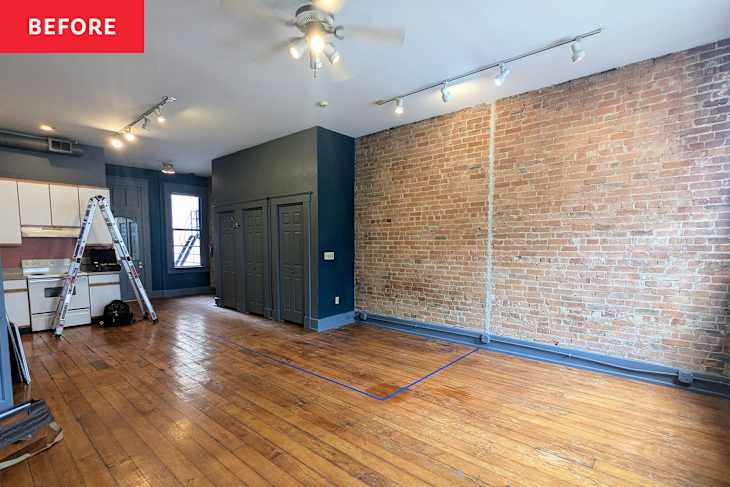
“I know from [roughly 10] years of camping in our 1985 VW Westfalia that the best nights’ sleep we have is when we are all in that confined space,” Scott Faverty shares. “Something about being in a small, dark space provides you with a safety and comfort that sleeping in a voluminous bedroom never could.”
Scott and his wife bought a 650-square-foot Cincinnati studio to use as a “fully furnished long-term rental” now and an empty-nest apartment later, when they wanted less space after their kids left home. But before they could do that, Scott needed to turn the “wide-open” space into a functional apartment.
He’s Always Been Interested in Japanese Sleeping Pods
“I’ve been particularly intrigued by the sleeping pods found in Japan,” Scott explains. “How intentional they are in how an individual lives in the space and how the space can actually give back to them.” And while he’s never experienced the individual sleeping capsules firsthand, he knew from camping that a smaller sleeping space created a sense of safety.

He Experimented with Small-Space Concepts and Designed His Own Pod
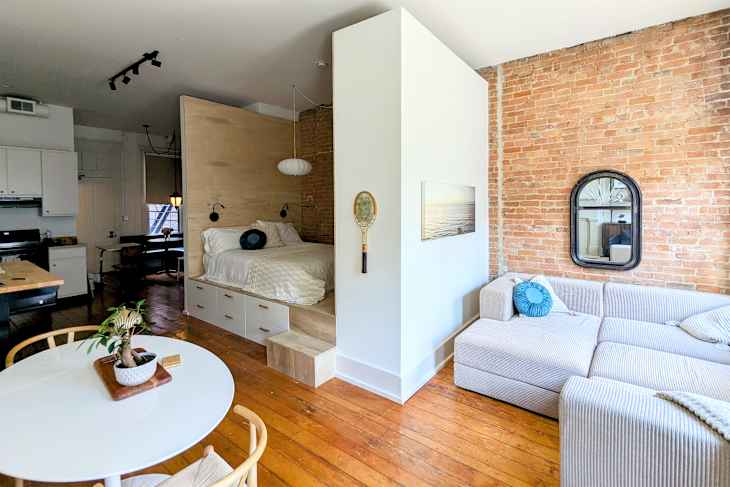
As the interior architect and contractor behind Studio Faverty Homes, Scott had freedom to experiment with small-living concepts and oversee construction to ensure each space served multiple purposes. “With this in mind, I wanted to play with the idea of a sleeping pod with built-in storage,” he says.
There was no “logical way to add a traditional enclosed bedroom,” so Scott instead designed a secluded sleeping area with an everyday closet space and additional “storage of larger or seasonal items that [he doesn’t] need access to all of the time (suitcases, seasonal clothing, decorations, skis, etc.),” he explains.
Because Scott was already renovating the rest of the apartment, he asked the bathroom permit inspector about his sleeping pod design. Originally, Scott wanted to add a drop ceiling with the planned added walls extending all the way to the ceiling. However, after speaking with the inspector, Scott realized that if he eliminated the ceiling and didn’t extend the walls all the way, “the pod would be considered ‘furniture’ and wouldn’t require permitting,” he shares.
This suggestion saved Scott time and money on materials and allowed him to start the sleeping pod right away, rather than wait for another permit.


He Created a Built-in Closet Using an IKEA PAX System
Scott hired a demo crew to remove one of the three closet bays along the main back wall. Then he had the pod structure built, and an electrician rewired and installed new light fixtures. However, the electrical was the hardest part because “there were a lot of unexpected wires” that had to be untangled and eliminated.
But once drywall was installed and painted Benjamin Moore’s “Swiss Coffee,” Scott added baseboards and painted them Benjamin Moore’s “Natural Cream.” Then, he sanded and stained the finished plywood for a clean, minimal look.
For the new pod storage, Scott installed an IKEA PAX wardrobe system across from the bed to store everyday items. Below the pod’s platform, he added sliding drawer units for seasonal storage that span the entire width. “This allows the other two closets to function more,” Scott says.


The Sleeping Pod Also Created a Cozy, Secluded Sitting Area
During the two-month renovation, Scott found the hardest part of the remodel was adjusting to life in Cincinnati after moving from California’s coast. It was very difficult to deliver and remove materials in the busy streets.
“This project wasn’t large enough to set up a garbage slide, so we walked bags of debris out and carried up all of the materials,” Scott says.
However, it was all worth the effort because Scott not only created the sleeping pod, but the pod’s wall also created another “tucked-away area” that Scott calls “the pit” — between the pod and the wall of windows. It added a layer of coziness to the studio by highlighting the separate areas.
“I love how the sleeping pod creates a very separate, secluded space in the studio for a peaceful night’s sleep,” Scott shares.
Inspired? Submit your own project here.
