
Everything Design Pros Want You to Know About Minimalist Interior Design
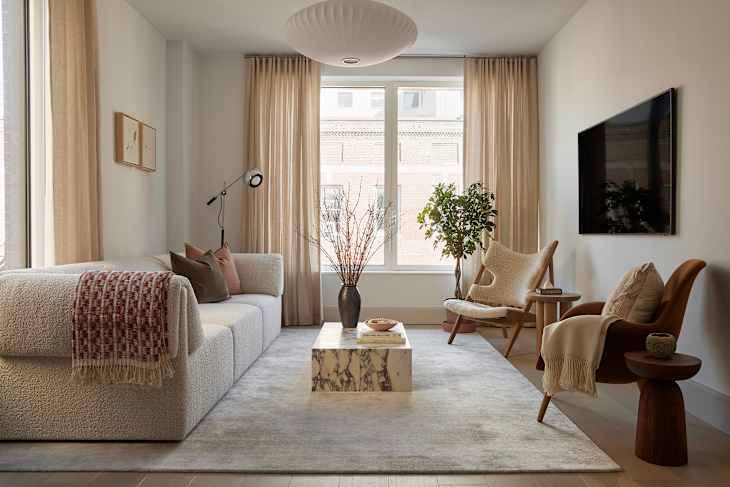
When you hear the words “minimalist interior design,” you might picture stark white walls and maybe a rigid, modern leather sofa — and tons of negative space. Suffice to say minimalism has earned a reputation for being cold, impersonal, and bland. At its core, though, this highly intentional, thoughtful design aesthetic is anything but austere.
Minimalist interiors can still be full of personality, but the overall vibe is all about inviting calmness and tranquility into a space. Minimalist interior design is not a lack of things, per se — it’s a lack of excessive ornamentation and a focus on what’s truly necessary and important. The key to pulling off this sophisticated, subdued style is finding a balance between simplicity and functionality without losing the soul of a space (or veering into maximalist design territory).
Interested in trying out minimalist interior design for yourself? Here’s everything you need to know about this classic foundational style, including some of my favorite examples of minimalist interiors from Apartment Therapy’s House Tours archive.
What is Minimalist Style?
Minimalism emphasizes simplicity, clean lines, and functionality to create spaces that feel sophisticated, clean, and tranquil. The following elements are typical of minimalist interior design:
- Subdued color palettes, often featuring soft neutrals and monochromatic schemes
- Clutter-free, pared-down interiors
- Natural materials to add warmth and texture
- Clean lines and sculptural forms
- A less-is-more mindset toward decoration

What Is Minimalist Interior Design?
Minimalism is often associated with living with the bare minimum — bland color palettes, empty space, and a lack of personality — but that’s not exactly accurate, designers say. Rather, minimalist interior design is about prioritizing what’s essential to create spaces that feel calm, tranquil, and purposefully pared-back.
Minimalist interior design is essentially the antithesis of maximalism, which embraces ornamentation at every turn — and often to excess. As such, minimalist interiors often feature restrained color palettes, a focus on functionality, clean lines, simplicity, and natural materials. Visual clutter is kept to a minimum around obvious focal points. Nothing is competing for attention in minimalism, which allows the eye to travel naturally across the space.
“Ultimately, minimalism doesn’t mean sparse — it means considered,” says Kristen Thomas, founder and principal designer of Studio Thomas. “A space feels relaxed when your eye knows where to land.”

A Brief History of Minimalist Interior Design
Minimalism in interior design can be traced back to the mid-20th century. A rebellion against some of the highly decorative and intricate styles of the time — think Victorian and Art Nouveau interiors, minimalism signified the desire for elevated yet simple spaces. “Less is more” is an iconic quote from the time that’s attributed to German architect Ludwig Mies van der Rohe. This phrase has become synonymous with minimalist interior design.
Many designers believe the origins of minimalism were deeply influenced by the simplicity of Scandinavian style and Japanese design, the minimalist art movement in the 1960s, and the Bauhaus movement in Germany in the early 20th century.
The Bauhaus (German for “building house”) was an influential German art school that operated from 1919 to 1933. It emphasized a utilitarian approach to art and design, rejecting excessive ornamentation and prioritizing functionality, simplicity, and clean lines. These same principles carried over into the minimalist movement and became foundational to this design style.

Minimalist Interior Design in the 21st Century
Today, minimalism is understood as more than just a design style. It’s grown into a full-fledged lifestyle philosophy geared toward simple living, mindfulness, and intentionality across multiple disciplines, including fashion. Lately, though, minimalism has been warming up, likely as a reaction to its reputation for being cold. Minimalist interior design in the 21st century is welcoming and more personal than ever. It seeks to provide a reprieve from the business of everyday living.
“The shift is towards a more intentional minimalism, one that isn’t cold or austere but rather deeply reflective of personal style and well-being,” says interior designer Rachel Blindauer. “It’s about designing spaces that are both calm and purposeful — a delicate balance between simplicity and sophistication.”
What’s changed? Palettes can be warmer in undertone and a little bit more colorful on the whole. Restrained ornamentation has creeped in with key objects and decor, and layering has brought a textural play into the design mix for depth without the distraction.
9 Tips for Nailing Minimalist Interior Design
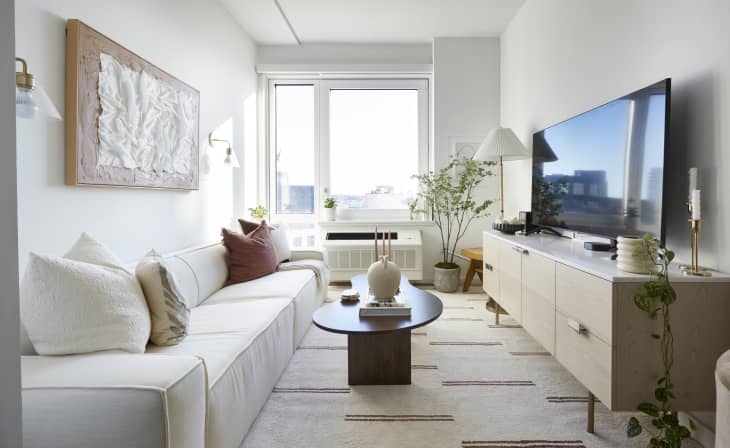
Minimalist interiors look effortlessly elegant — and that’s the point. In reality, though, designing a minimalist space isn’t just about decluttering and painting walls white. Minimalist interior design requires skill, planning, and a profound understanding of a style’s ethos.
If you’re looking to explore minimalism at home, designers have a few simple tips to help get you started:
- Identify the focal point of your room and design around that, ensuring the rest of the space supports and enhances that main feature, says Thomas.
- Stick to a restrained color palette, featuring just a few tones at most, with plenty of soft neutrals.
- Use natural materials to quietly add warmth, texture, and subtle contrast.
- Display only a few pieces of decor per surface (e.g., a lamp and a book, a candle and a photo frame, etc.).
- Play with textures and finishes to create visual contrast, Thomas says.
- Use hidden storage and multifunctional furniture to “hide” clutter in plain sight.
- Choose organic shapes and sculptural forms to add visual interest.
- Every piece should have a purpose.
- Keep the pattern play to a minimum.

5 Examples of Minimalist Interiors
The beauty of minimalist interior design is that this style’s fundamental principles can be melded with a handful of aesthetics, allowing for many different variants. As a result, no two minimalist spaces will look alike. If you’re searching for some minimalist interior design inspiration, these Apartment Therapy House Tour images will start you off in the right direction. Feel free to borrow what you like of them to make your own version of minimalist interior design.
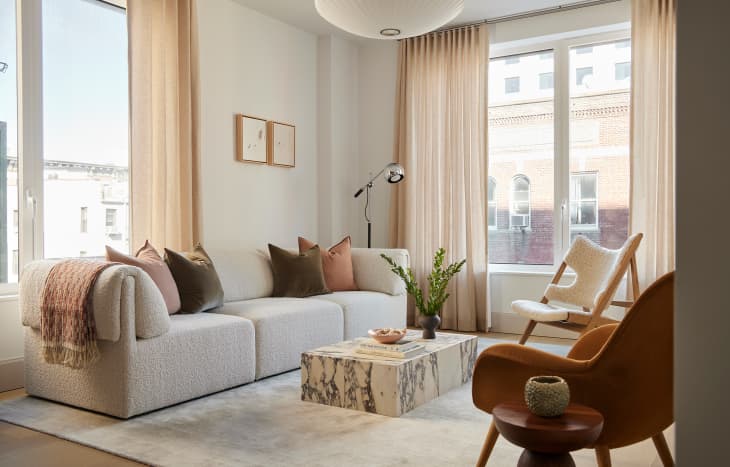
Warm Minimalism
This Williamsburg, Brooklyn, condo is anything but cold and sterile. An earthy yet neutral color palette of terracottas, creams, and olive grounds the space to create an inviting, relaxing atmosphere. Cozy textures like bouclé, velvet, and chunky cotton drive home the cozy feel of the space, while natural materials like marble and wood provide contrast.
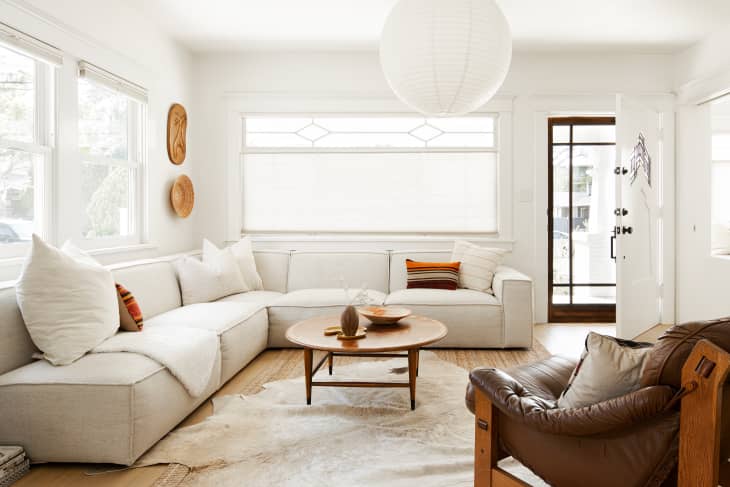
Eclectic Minimalism
Who said minimalism has to be bland and boring? This California bungalow duplex demonstrates that minimalism can look however you think it should. “Eclectic minimalism” is how interior designer Travis Wayne describes the home he shares with his husband and son. The space features minimalist design principles — clean lines, tidy spaces, organic shapes, and a pared-back color palette — with eclectic artwork to bring a touch of color and soul to the spaces.

Soft and Sweet
As a certified KonMari consultant, Jessica Yatrofsky knows a thing or two about creating a minimalist space. Her Brooklyn apartment is a testament to that, with its soft yet sweet color palette. the space with personalized artwork and decor at every turn.
Neutral and Textural
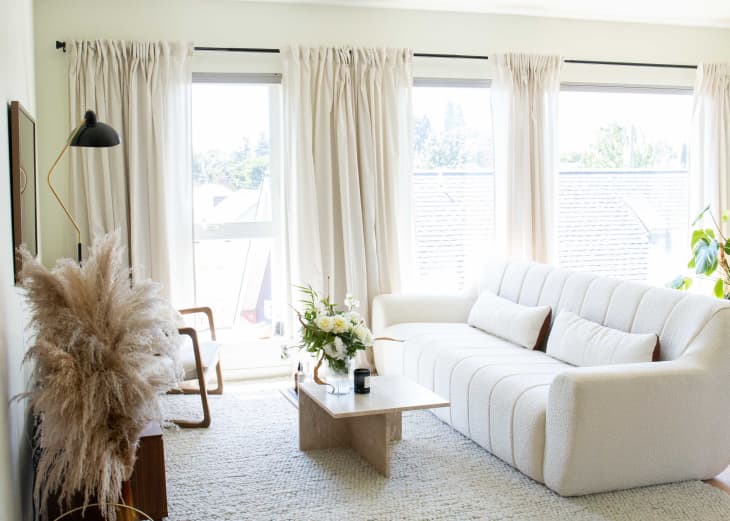
Talk about texture! This dreamy minimalist Portland, Oregon, living room has visual interest in spades, despite the fact that it’s largely monochromatic. From the bouclé couch and the knotted rug to the sleek marble coffee table and the fluffy pampas grass, this space proves that you don’t need a ton of color for a sophisticated, layered look.

Colorful Minimalism
On the flip side, minimalist interior design can coexist with intentional use of color. This Barcelona home is proof! Thoughtful design elements work together to create a visually calming space — the contrast cabinetry and Panton chairs take their sherbet shades straight from the circular artwork on the wall, while pops of patterns underfoot are subdued enough to almost blend right into the wood floors.