
The 30 Best Ways to Organize Your Kitchen Pantry, According to Experts
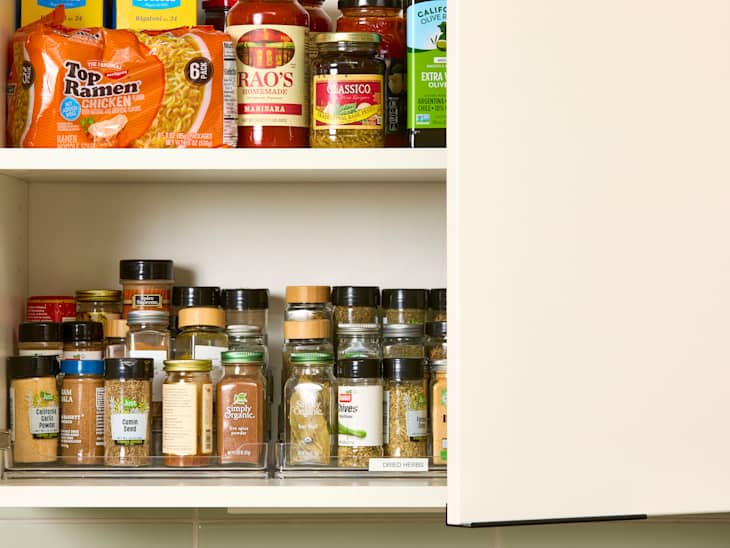
Whether you have a large walk-in pantry or a tiny cabinet situation (or something in between), you may have a hard time keeping it organized and under control. Pantry organization is definitely a challenge — and those perfectly organized pantries all over social media sure set the bar high!
While there’s no reason to compete with that, having a well-organized pantry can save you time and money in the kitchen. And those are always great to have more of! Below, you’ll find 30 of the best hacks, tips, and tricks for making your pantry a space you’re proud of — including ideas for how to store boxes of pasta, the best way to see all your oils and sauces, how to utilize dead wall space, and more.
For expert takes, I reached out to two pro home organizers: Ashley La Fond, founder of home organization company Of Space & Mind, and Mindy Godding, president of the National Association of Productivity and Organizing Professionals. These two pros shared a ton of knowledge. Learn below how they recommend you organize your pantry, step by step.
Step 1: Declutter and Take Inventory
Whether you have an expansive pantry or a single cabinet, the first step to pantry organization is taking inventory of what you already have. Clutter and disorganization breeds more clutter, La Fond reminds us, and only entices you to buy more of what you might already have. Which, of course, means even more clutter!
So before starting your pantry overhaul, first take everything out (yes, everything!) and take inventory of what you have. Discard expired items and, if possible, combine items that are the same.

Step 2: Choose the Right Storage System
With so many storage options out there, it might seem difficult to choose the best pantry organization system for you. But La Fond offers the following advice to make the decision simpler: “The best storage system for a pantry is one that works for you!” she says. “Some people like to keep foods in their original packaging, and others like to decant things into jars. Which system you choose should depend on your space and how you maintain things.”
But remember that beauty (and Instagram-ability) isn’t necessarily the goal. La Fond acknowledges that a system of jars is going to look beautiful, and in some cases save you space, but if you’re unlikely to fill those canisters after every shop, then it’s probably not the best system for you.
Instead, she advises choosing bins that are as deep as your shelves will allow (without overhang) so you maximize your space and see everything you’ve got in your pantry. The Container Store and Amazon both sell tons of amazing clear pantry storage systems — once you’ve got bins on hand, it’s time to organize your pantry items into categories, or zones, for easy access.
Step 3: Organize by Category for Efficiency
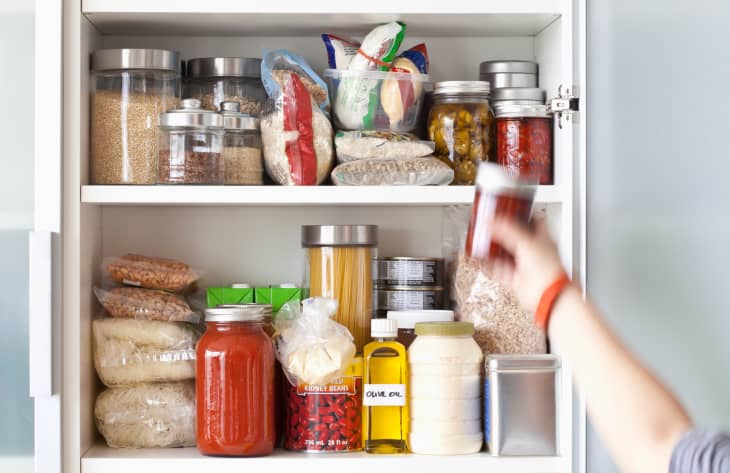
You’ll want to group your pantry items into categories that make sense to you, and there are a number of ways to do this. Godding shares one clever method: “I usually group items by category to mimic what you might find on the same aisle in a grocery store,” she says. “For example, rice and pasta are adjacent, soup and canned goods are on the same shelf, condiments are stored together.”
Or, you can employ a simpler strategy and just label your bins by category. Popular categories for pantry organization include baking, condiments, breakfast, snacks, grains, canned goods, and beverages. But these groups are yours to make your own!
Step 4: Hack Your Storage for a Clutter-Free Pantry
Here, the organizing experts share some of their go-to tips for keeping a clean, well-organized pantry.
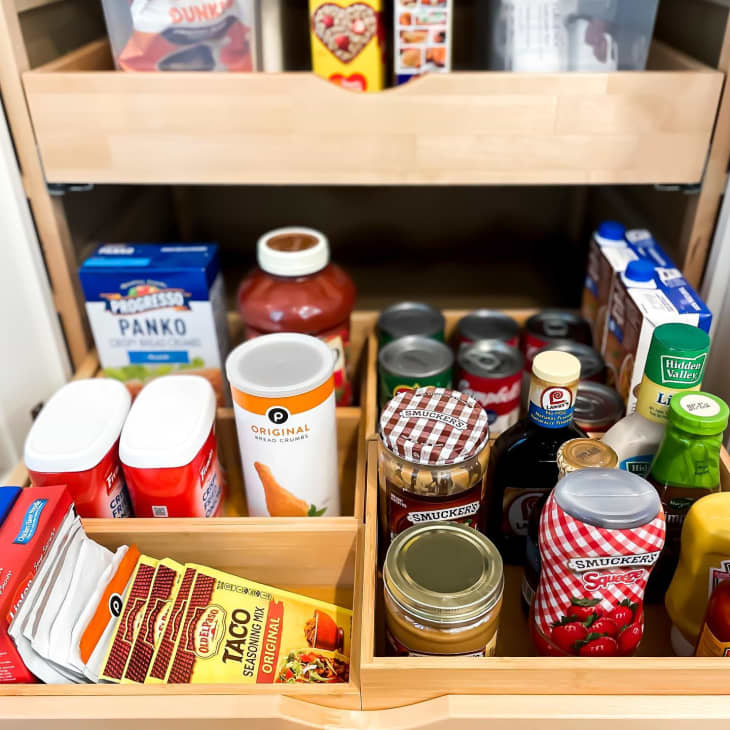
- Use open bins with handles to turn shelves into drawers. When you pull them out, bins give you front-to-back accessibility, Godding says. (Here’s one that editors love from HomeGoods.)
- Group items into zones. Use zones in your pantry so you have an automatic visual of what you have in each category (breakfast, grains, snack foods, etc.), La Fond says.
- Use bins that offer easy visibility. Godding recommends clear bins or Maddox wire grid bins, both of which can be found at The Container Store.
- Use bin clips to label your bins. This helps you easily locate what you need.
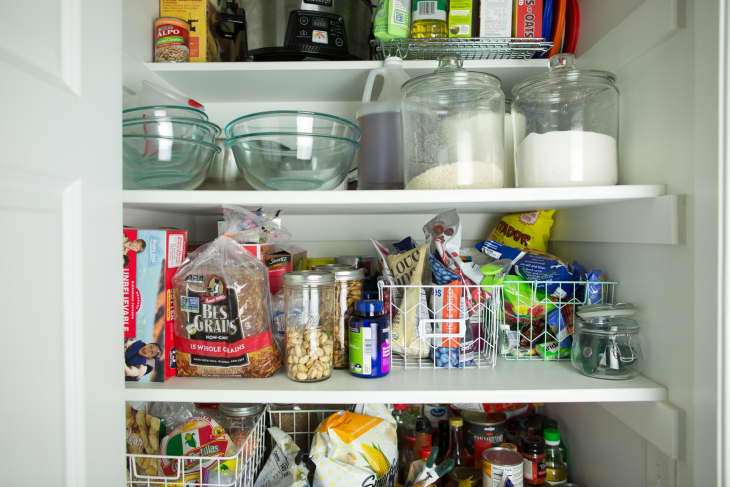
- Be intentional with floor storage. Instead of allowing things to stack up on the floor, Godding recommends using open baskets or wheeled carts to store items under shelves.
How to Maintain an Organized Pantry
Once you’ve got a clean, beautiful, and well-organized pantry, the real work begins: keeping it that way! But it doesn’t have to be a hassle when you follow the tips that Godding and La Fond have shared with us.
- Give your pantry a quarterly refresh. What you eat tends to change by season, La Fond says. “It’s a good idea to use seasonal items so you’re not left with outdated items taking up precious space (or ending up expired).”
- Create a designated “food pantry” box. Collect non-expired food that you won’t use and make a plan to deliver its contents once a quarter, or watch for food drives at local businesses, Godding advises.
- Place items based on frequency of use. Everyday items should be stored in the most visible, easily accessible spot in your pantry, Godding says.
Pantry Organization Mistakes You Might Be Making
The key to keeping a clean and well-maintained pantry all year? Don’t worry — it isn’t a mandatory weekly deep cleaning. In fact, the whole purpose of pantry organization is to have a place for everything so that you can avoid having to clean out or restructure your pantry often. Experts shared some common mistakes to steer clear of in your quest for an organized pantry.
- Not using labels. Whenever you store items in a bin or basket, it’s essential to use labels. You simply won’t remember everything you’ve stored in each bin, and you shouldn’t have to!
- Unused vertical space. A crucial element of storage and organization in any small space, vertical storage opens up a world of possibilities you might not have thought of. Consider wall- or door-mounted spice racks, hanging baskets for small snacks, or a storage bar for holding items like dusters and brooms.
- Hiding things behind other items. Treat your pantry like it’s a store by stacking identical or similar products front-to-back, turning all labels forward, and loading newer items behind ones with upcoming expiration dates, says Godding.
- Overbuying items. It’s not just bad for your budget. Buying too many items for your space is the quickest path to a cluttered, disorganized pantry.
- Wasted space. Not using bins that fit your shelves properly creates tons of wasted space. Instead, Godding says, take careful inventory of your particular pantry, including measurements, before shopping for an organization system.
- Categories outgrowing their designated vessel. Similarly to overbuying, you want to make sure your system works so it doesn’t break down quickly. Does that container really hold an entire bag of flour? If not, what will you do with the extra?
- Choosing an overcomplicated system. Thinking fancy products will solve your organization issues is not the key to effective pantry organization, La Fond insists. Instead, she says, you’ve got to make it work for your needs. Sometimes that means keeping it simple!
30 Space-Saving Pantry Organization Ideas That Really Work
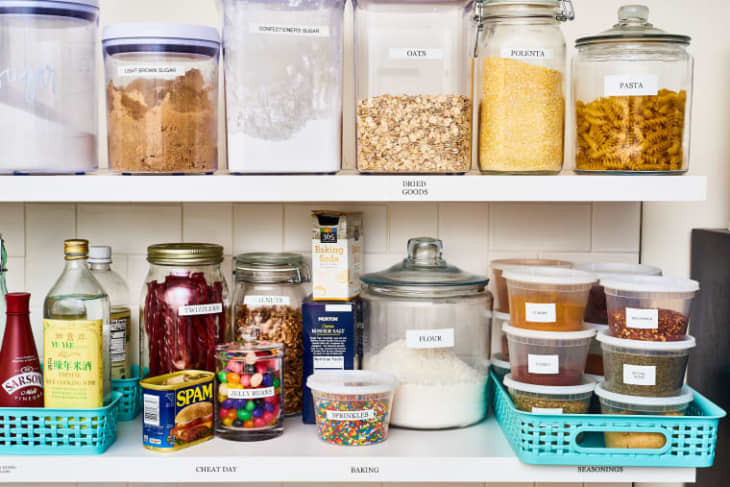
1. Label everything.
Labels are not just for leftovers in the fridge and freezer. By labeling your jars, you’ll be able to spot what you need at a glance. Oh and labels go beyond pretty jars, too — if you have a basket of, say, snacks for the kids, put a label on it. This way, the kids will be able to help themselves and put stuff back where it belongs. You can buy cute sticker labels, pick up some hanging tags, invest in a label maker, or just use a grease pencil on your glass jars.
2. Hit the dollar store for bins and baskets.
I strongly believe that the dollar store should be your first stop once you decide to take pantry organization into your own hands. You’ll find so many baskets there, for such low prices!
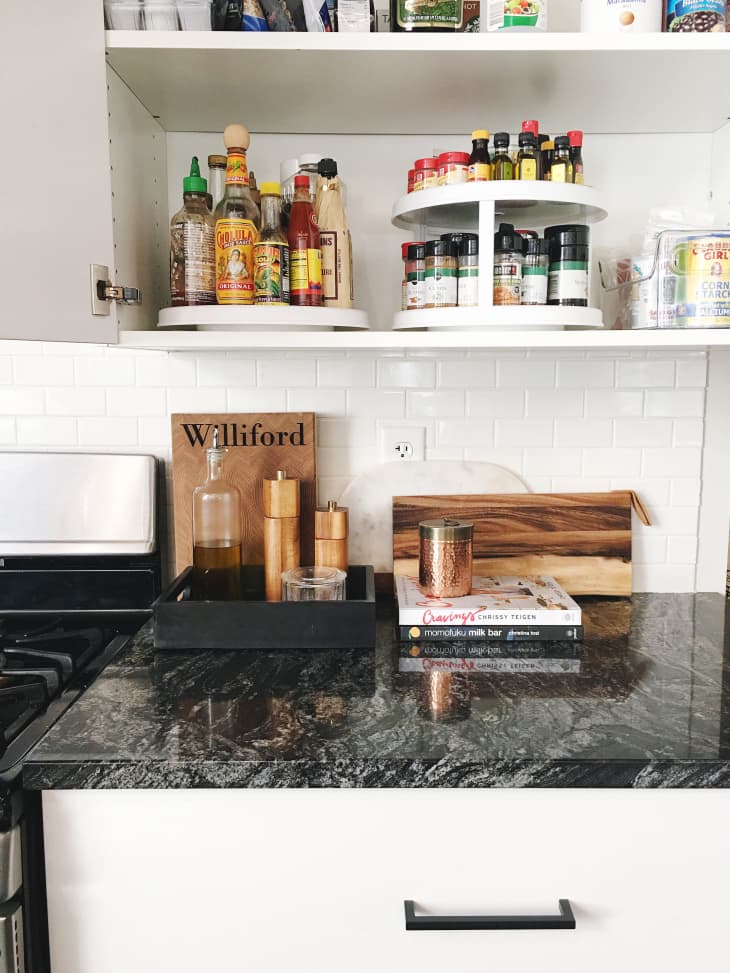
3. Get a lazy Susan.
Lazy Susans should be renamed to hard-working Susans! Because they really do so much to keep your pantry organized. Without one (or three!) it’ll be hard to see the bottles you have stashed toward the back of the shelf. With one, you can simply rotate everything and gain instant access. If you’re going to buy one thing for your panty, it should be a lazy Susan. These are a pro organizer’s favorite picks.

4. Repurpose jars for pantry storage.
From pickle jars to juice containers to takeout tubs, your groceries likely already come with totally free storage vessels. As long as they’re food-safe and can be cleaned and reused, use them!
5. Give the kids their own shelf.
If you have kids, set up one lower shelf (or a basket on a shelf) that’s stocked with pre-approved snacks for the kiddos. This way, they can help themselves when they get hungry and you don’t have to worry about anyone climbing on chairs to get something from a high-up shelf.
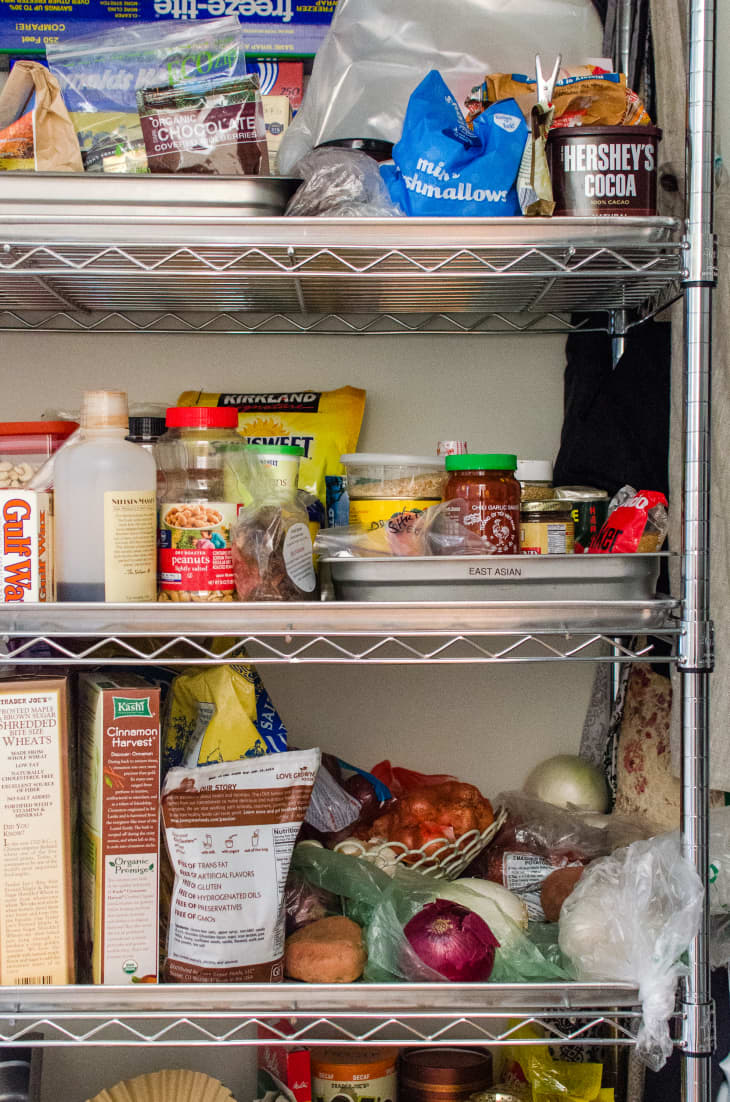
6. Group like with like.
If you have a few ingredients that you almost always use together for certain dishes or styles of cooking, store them together either in a basket or on a sheet pan that you can easily pull out when you need it. (We vote for sheet pans here, actually, because they’re a great way to contain any inadvertent spills or leaks.)
7. Follow the FIFO rule.
That’s “first in, first out.” Use the oldest things in the pantry up first. It helps keep your pantry clean and prevents food safety hazards. That’s all you need to know here.
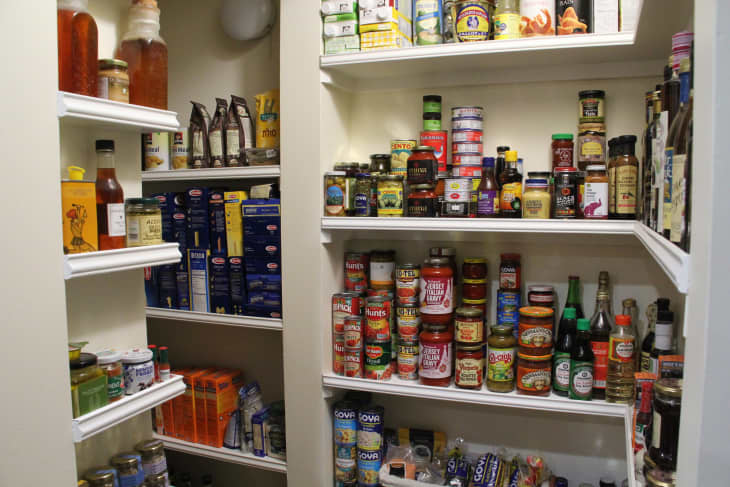
8. Install slim shelves.
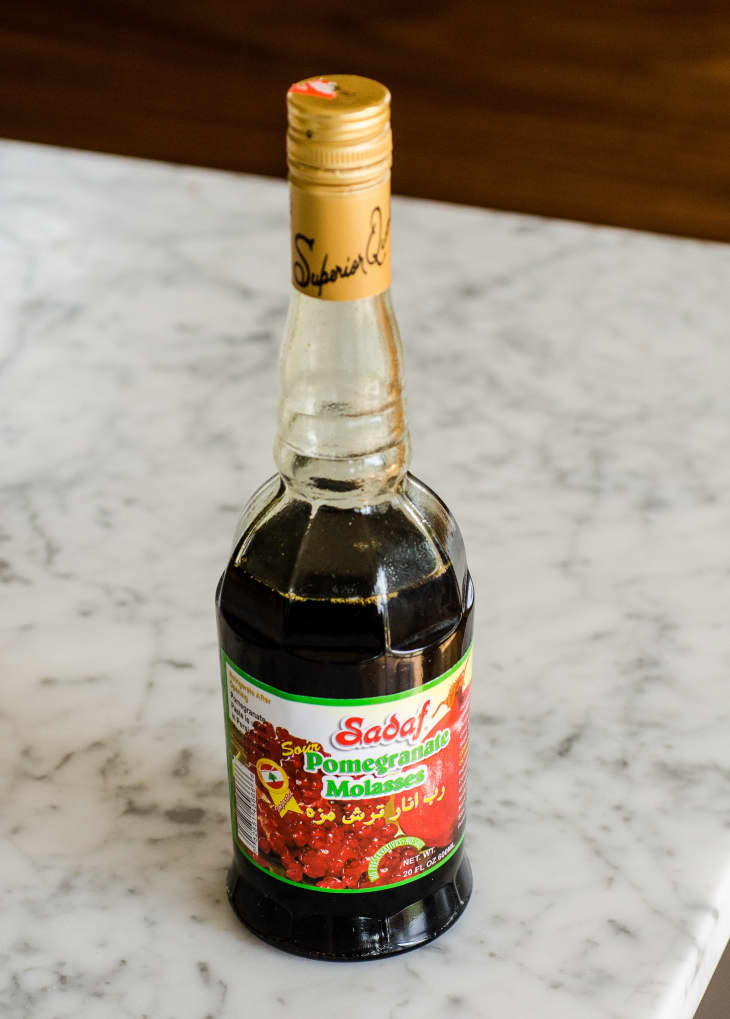
See that little wall all the way to the left in the photo above? It would usually be wasted space, but they added super-narrow floating shelves so it can be used for special little bottles and jars that would otherwise get lost on a deeper shelf.
9. Avoid buying anything you won’t use in more than one recipe.
This encompasses the idea of buying an ingredient for one random recipe and then never having a use for it ever again. If a recipe calls for something that you don’t have or have never used before, make sure you can use it in another dish, too. Otherwise, it’ll just take up valuable space in your pantry. See what you can sub or if you can leave it out, or gather up some other recipes and prepare to expand your horizons.
10. Create a system for your canned goods.
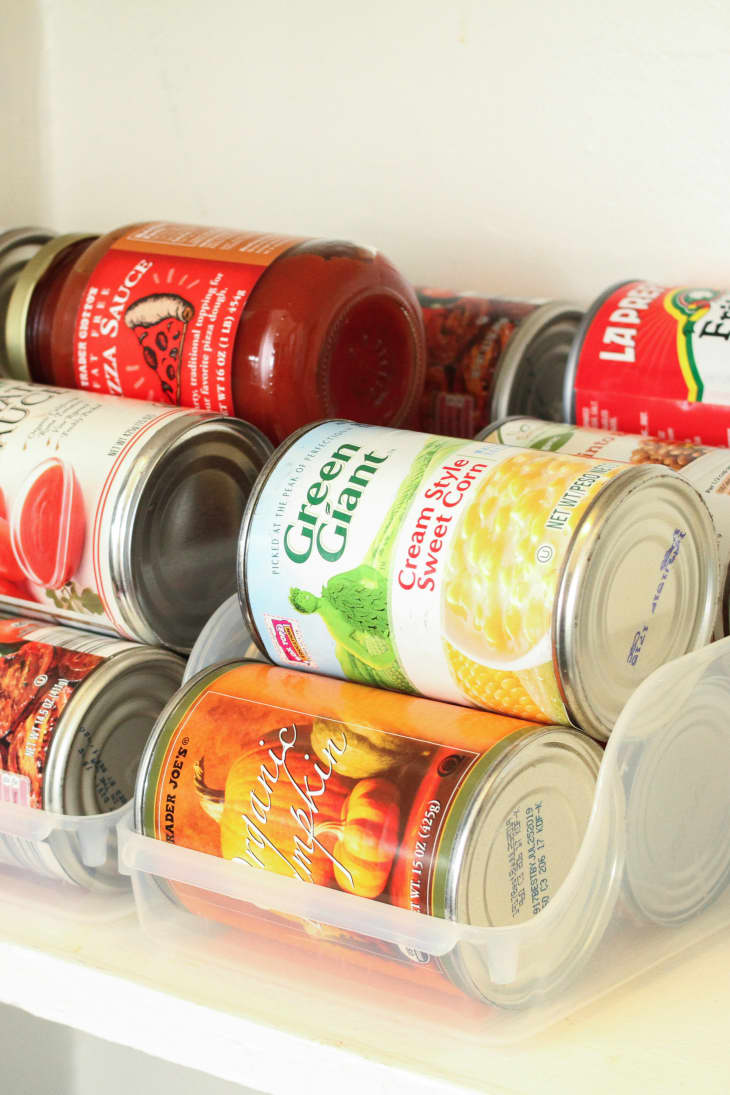
Ever send a stack of canned goods toppling to the ground? It’s not fun! That’s why we suggest getting some sort of system for your canned goods. Amazon sells a few different types that store cans on their sides and make it easy to pull one out without making a mess of the ones left behind.
11. Put small appliances on wheels.
Put small appliances on a rolling plant stand, an appliance roller, or sliders so you can easily pull out what you need. This idea works for any large basket or crate that you want to store on the floor of your closet-style pantry, too. Just add wheels or put the whole thing on a rolling stand!
12. Consider a rolling cart, too.
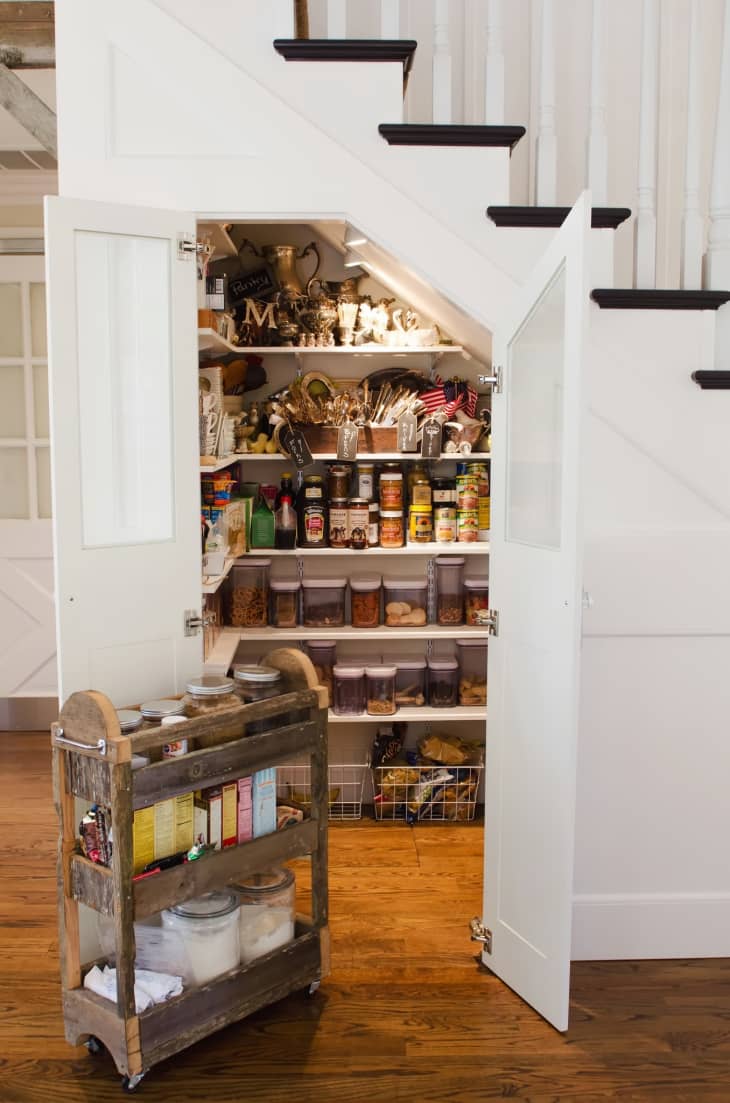
Similarly, if you have the floor space in your pantry to stash a rolling cart (or even if you have room for it in a storage closet), load it up with, say, your baking supplies. Then, whenever you’re making a cake, you can roll it out and park it next to your work station, which eliminates a dozen trips back and forth to the pantry.
13. Store boxes with their narrow sides facing out.
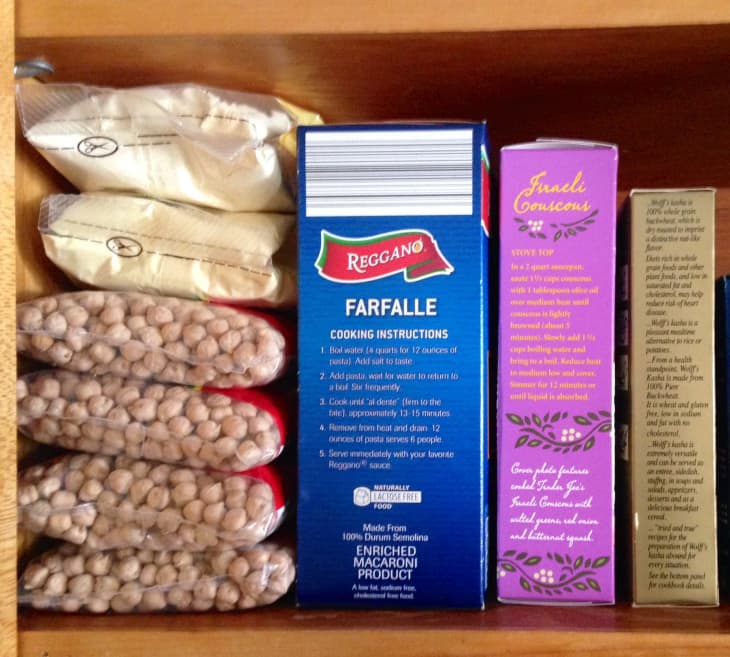
Your pantry is not the grocery store. You don’t need to have the name brand facing you. You just need to be able to tell what’s in a box and, usually, the skinny side is enough. Put boxes on the shelf this way and you’ll be able to fit more.
14. And stack bagged items.
Bags of rice and beans can get floppy (read: messy!). Store them flat and they’re easy to stack neatly, as seen above.
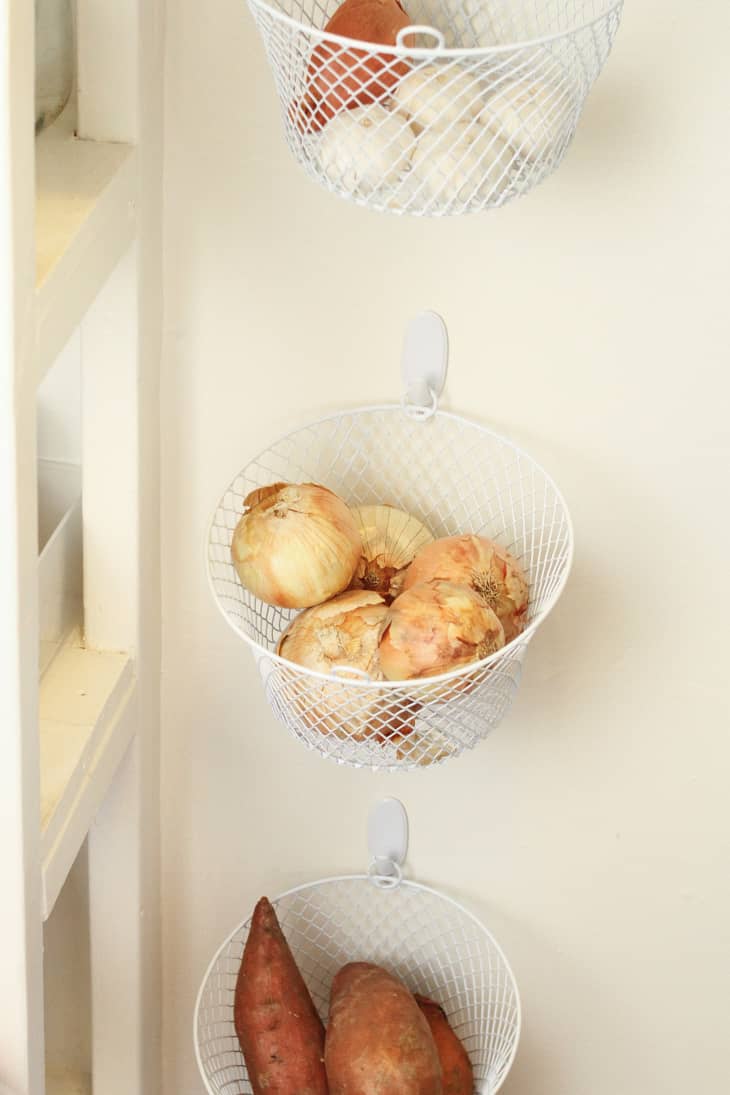
15. Hang baskets from the wall.
More support for shopping at the dollar store: Contributor Ashley Poskin got these baskets and removable hooks for cheap and turned wasted wall space into produce storage. It’s easy to see what’s in each basket, and the wire allows air to circulate around the produce. You could do the same with mesh produce bags, like they do in France!
16. Put things on shelf risers.
Another way to see ingredients in the back (in addition to adding lazy Susans) is to get shelf risers. You can get ones made just for your spices, but you can also get larger shelves that can hold boxes of pasta, jars of sauce, and more.
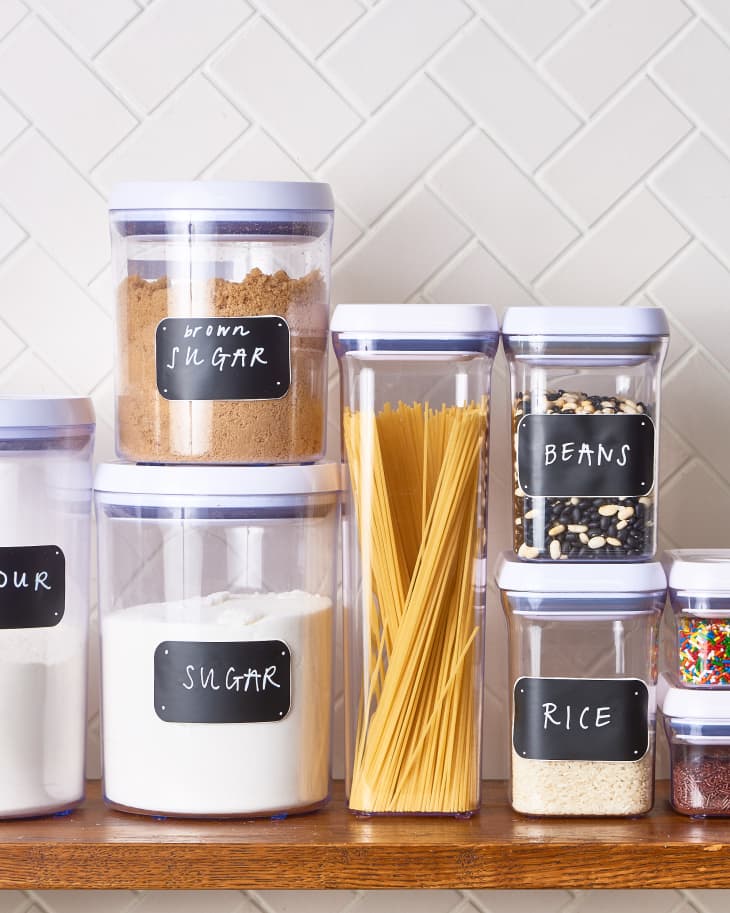
17. Stock up on uniform containers.
Decanting things into uniform containers can help you save space and give you a stunning pantry, while preventing pests. But, of course, your food already comes in containers, so this one’s totally up to you.
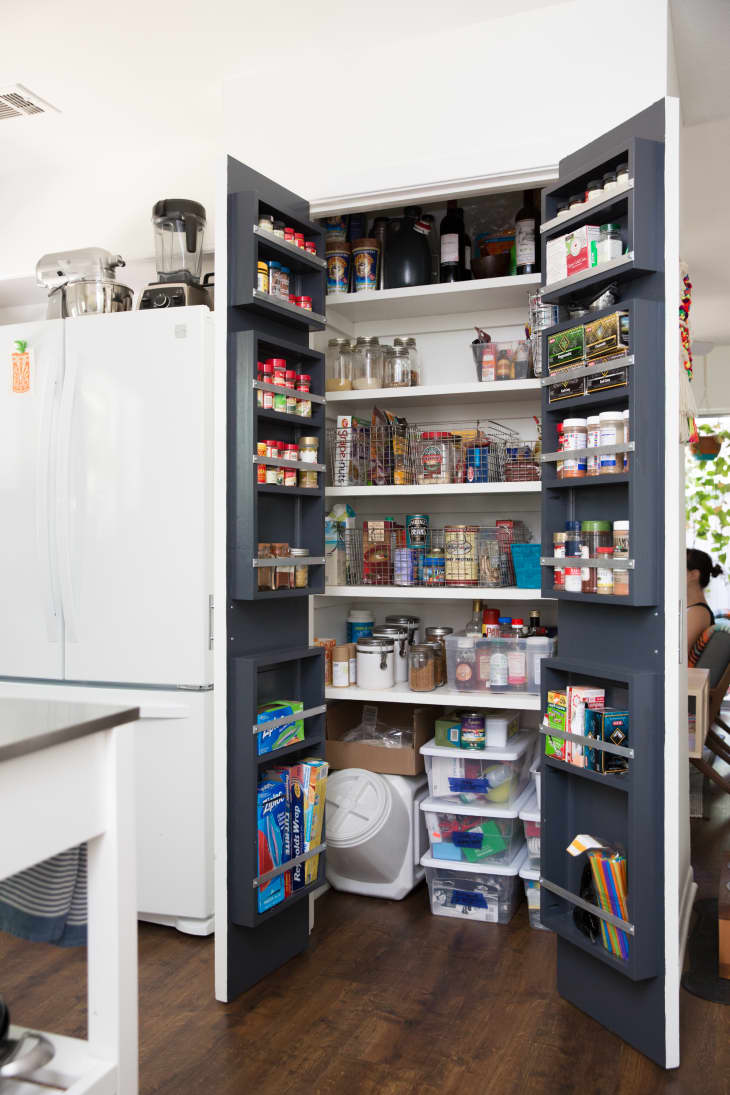
18. Add storage to the pantry door.
How smart is this pantry? Those custom shelves on the door add so much extra storage. If you’re not handy, consider hanging one of those over-the-door shoe racks or even just a few hooks.
19. Shop your pantry before you meal plan.
Before you do your meal plan for the week, take a look to see what’s in your pantry and what you want to use up. Then, you can try to pick out meals that will include those ingredients. At the very least, try to do a pantry challenge (where you make dinner using only things in your pantry) at least once a month or so.
20. Add at least one pretty thing.
A copper basket, wallpaper in the back, a strip of washi tape along the edge of the shelves — add at least one pretty thing to your pantry! Not only will it help you crack a bit of a smile, but it’ll also inspire you to keep the space neat.
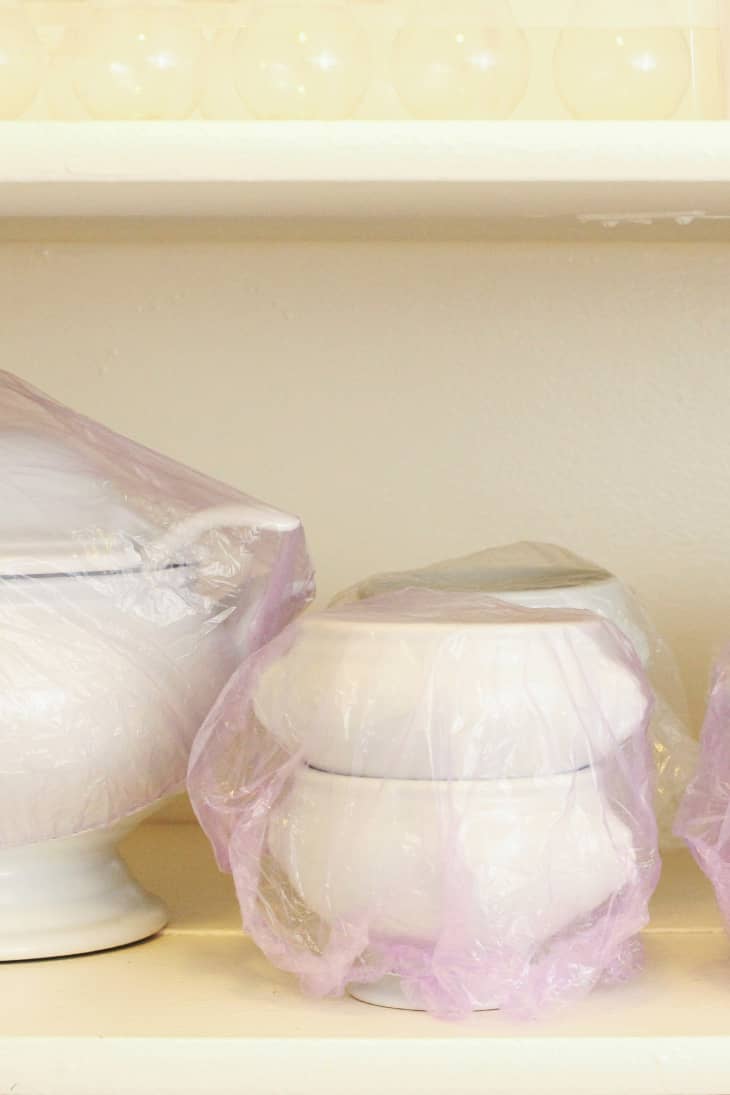
21. Put a shower cap over infrequently used dishes.
If you stash serving pieces in your pantry and don’t use them all that often, pick up a few cheap shower caps from the dollar store (or your next hotel stay) and put them to work as makeshift dust protectors. This way, when you need something, you won’t have to wash it first.
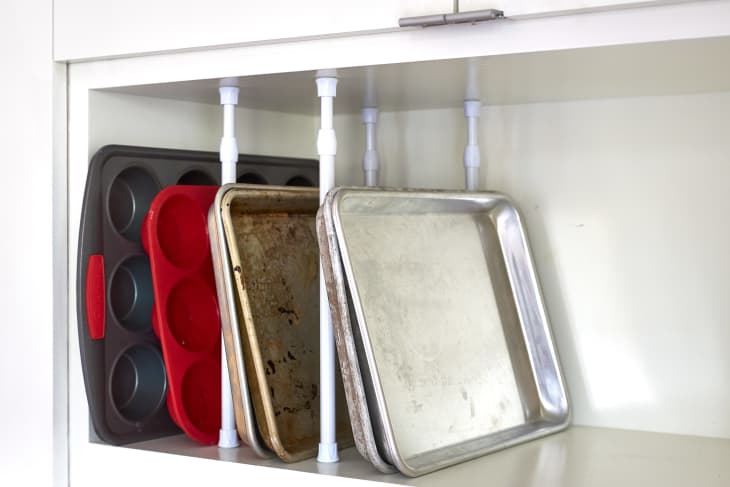
22. Use a tension rod to organize baking sheets and cutting boards.
And if you’re currently storing baking sheets, cutting boards, and muffin tins in a pile on a pantry shelf, know that there’s a better way. Set up some tension rods and store them vertically like books. Then, you can pull out one without causing a mini avalanche.
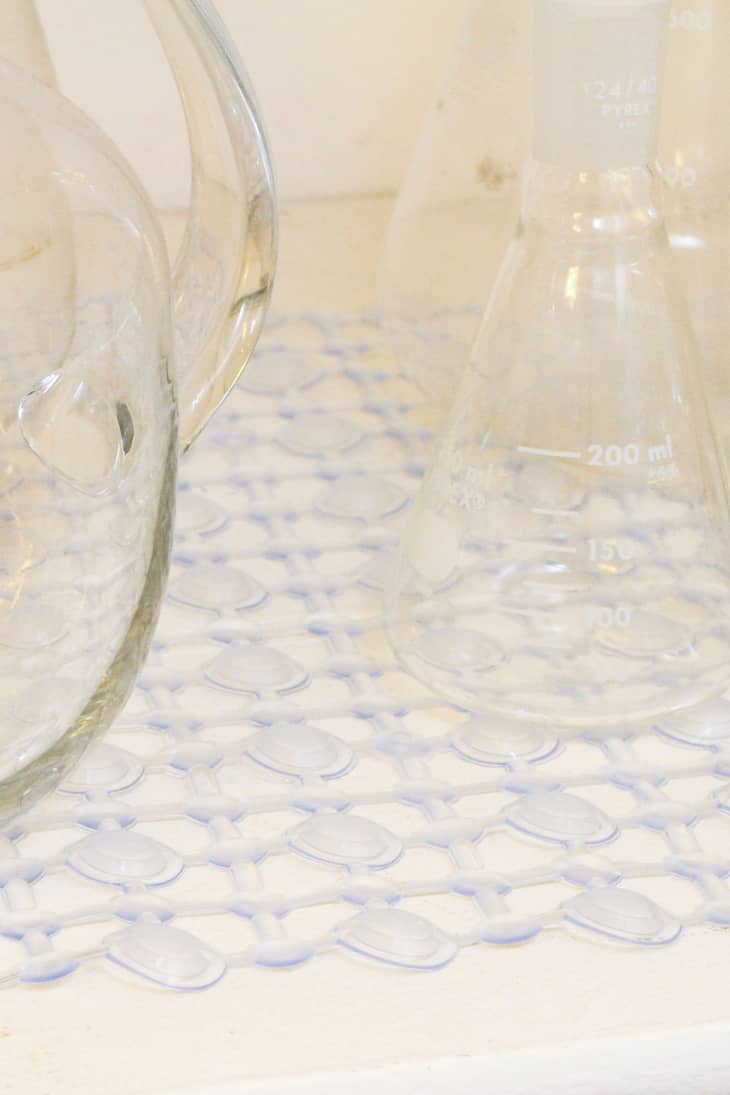
23. Use a shower mat as a shelf liner.
Sure, you can buy a roll of shelf liner, but a non-slip shower mat might be cheaper at, you guessed it, the dollar store. Put it on a deep shelf with vases, serving bowls, and other fragile items.
24. Edit ruthlessly.
While you should aim not to waste food, it’s imperative that you go through your pantry once in a while and clear out things that are past their prime. Keeping expired stuff on hand just clutters things up for you (and invites pests!).
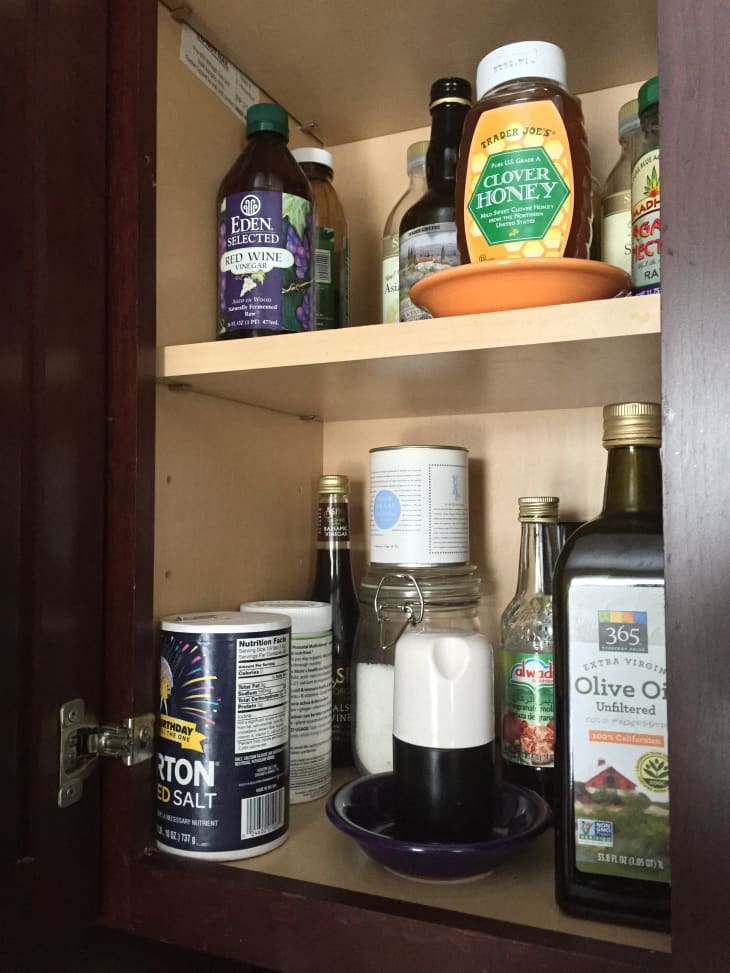
25. Store messy ingredients on a plate.
Your honey container and pepper mill are probably the two messiest things in your pantry. The sticky goo! The little bits of pepper! Start storing those two things on a little plate or bowl in order to contain the mess and keep your shelves clean.
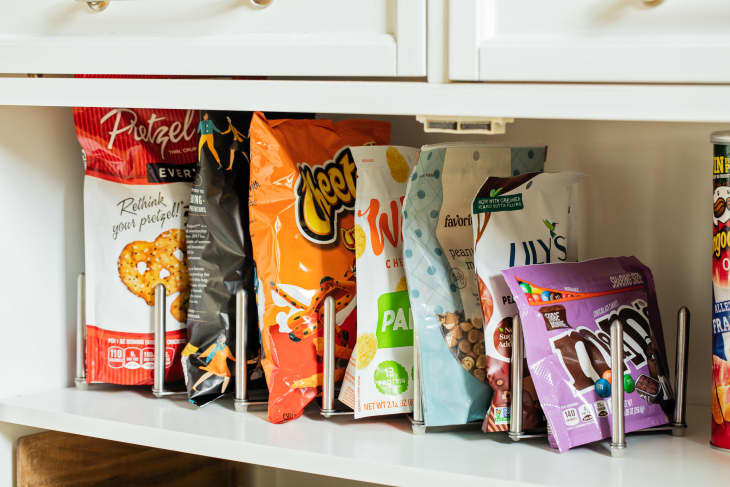
26. Think outside of the (kitchen) box.
Some of the best organizing hacks use items you’d never think to put in your pantry. Try this IKEA dish rack trick, for example! It makes a perfect storage vessel for your snacks and bags.
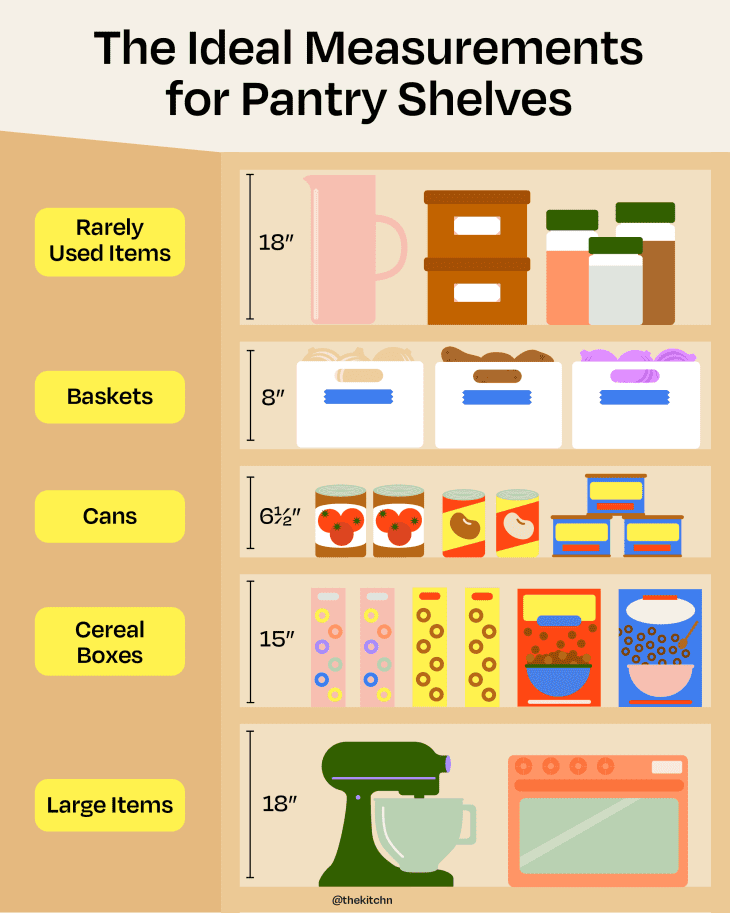
27. Play around with your shelf height.
Turns out, there are ideal measurements for pantry shelves. If you’ve just been using them as-is since you moved in, consider playing around with the heights to make the space work better for you.
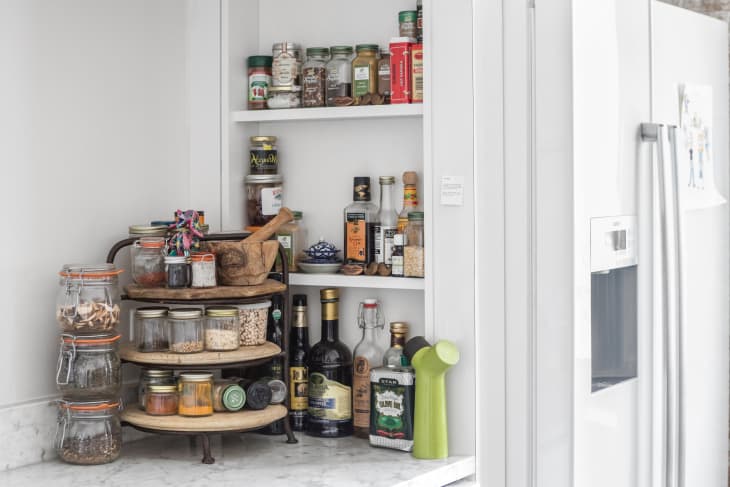
28. Steal some space to fake a pantry.
Don’t have an actual pantry? Out of room in the one you do have? Fake a pantry wherever you can! I love how these clever home cooks used this kitchen’s tiered dessert stand to hold spices.
29. Add a light.
Seeing is believing … and finding what you need. A too-dark pantry can be impossible to navigate. If you can’t rewire the space to add an overhead light, you can always hang a battery-powered option.
30. Take a few minutes every day to reset your pantry.
Less of a hack and more of a habit, this is just a reminder that a little bit of regular maintenance goes a long way. Wipe up spills, turn packages so the labels face outward, put stuff back where it belongs, toss anything that’s expired, etc.! Do a bit each day as it comes up and you won’t need to do any sort of massive overhaul.
This post originally ran on The Kitchn. See it there: The 30 Best Ways to Organize Your Kitchen Pantry, According to Experts