
Pattern Splicing Is the Playful Pattern Mixing Trick Showing Up Everywhere
There’s a certain point in decorating when mixing patterns stops feeling fun and starts feeling like a test you might fail. One wrong move and suddenly your living room looks less “layered and collected” and more “I panic-bought every pillow at the store.” For years, the safest workaround was to keep patterns at a respectful distance from one another — a stripe over here, a floral over there, everything spaced out just enough to avoid any real confrontation. It worked. It was also a little … boring.
Lately, though, designers have been loosening up. Instead of treating patterns like they need personal space, they’re starting to bring them together in more intentional ways. The result feels more relaxed, more personal, and, frankly, more fun to look at. It’s less about getting everything to match and more about creating those little moments that make a room feel like it has a point of view. Some are calling this technique “pattern splicing,” and here’s how to make it work in your home.
What Is Pattern Splicing?
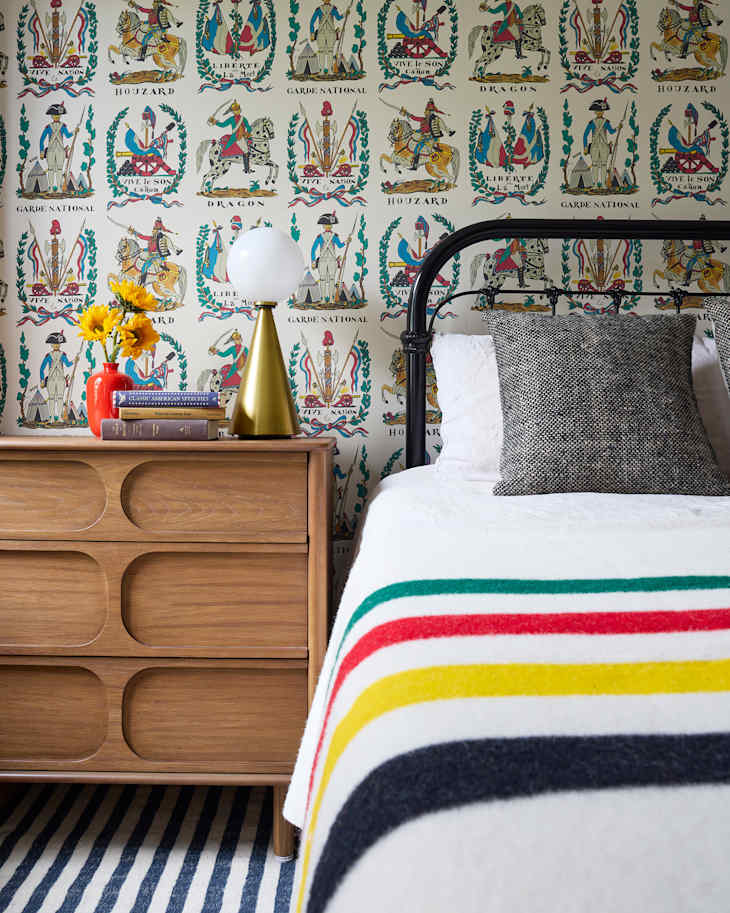
Pattern splicing takes the idea of mixing prints to the next level. Instead of layering patterns throughout a room, this method combines them within the same element or feature so they actually interact (think: patchworked upholstery, curtains made from two different fabrics, or a backsplash that blends contrasting tiles into one cohesive surface).
Right now, you can really see this trend emerging in tile. “I’m so happy to see the return of pattern splicing in tile!” says interior designer Annie Elliott. “The world is on fire, so we’re reaching for things that are comforting and familiar. And I’ve had quite enough sterile 3″ x 6″ white subway tiles!”
One of the easiest ways to try pattern splicing with tile? Consider mixing solid and decorated tiles in a checkerboard layout. This application idea feels fresh, but it’s actually been around forever. Or consider Delft tiles. With their tiny ships and pastoral scenes, some traditional Delft installations did this back in the 17th century by interspersing the patterns with plain white squares.
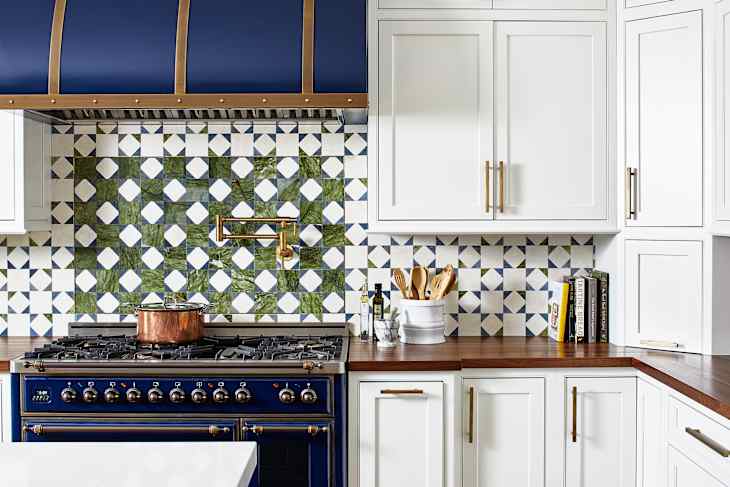
It’s not all checkerboards or Delft, either. In one kitchen (as shown at the top of this page), Elliott used a patterned marble backsplash in soft blues and greens then carved out a geometric inset over the range that leans more heavily into green. It’s a small shift, but it gives your eye somewhere to land and makes the whole wall feel more considered. The same idea shows up in textiles and wallpaper, too (think: sofas upholstered in two fabrics, curtains that splice stripes with florals, and even walls where the pattern changes partway through).
How to Make It Work at Home
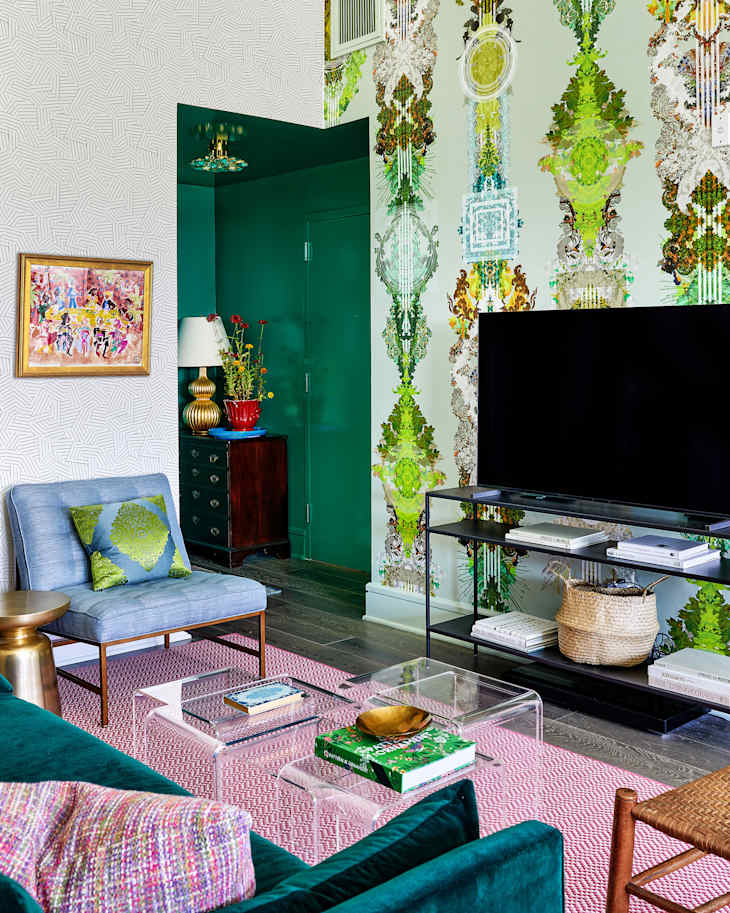
There’s a reason pattern splicing doesn’t spiral into chaos. “I follow two rules when mixing patterns in the same space: Vary the scale, and vary the subject,” Elliot says. A large floral next to a tiny check — or stripes paired with something more organic — keeps things from feeling repetitive or too matchy-matchy.
Color can tie this whole look together as well. When everything shares a similar palette, even combinations that shouldn’t work somehow do. Limiting your shades, though, is less about playing it safe and more about giving everything a common thread. That being said, both patterns don’t have to be the same color. Sometimes power clashing can add the unexpected element your room has been missing; just know that the result will have a more maximalist vibe.
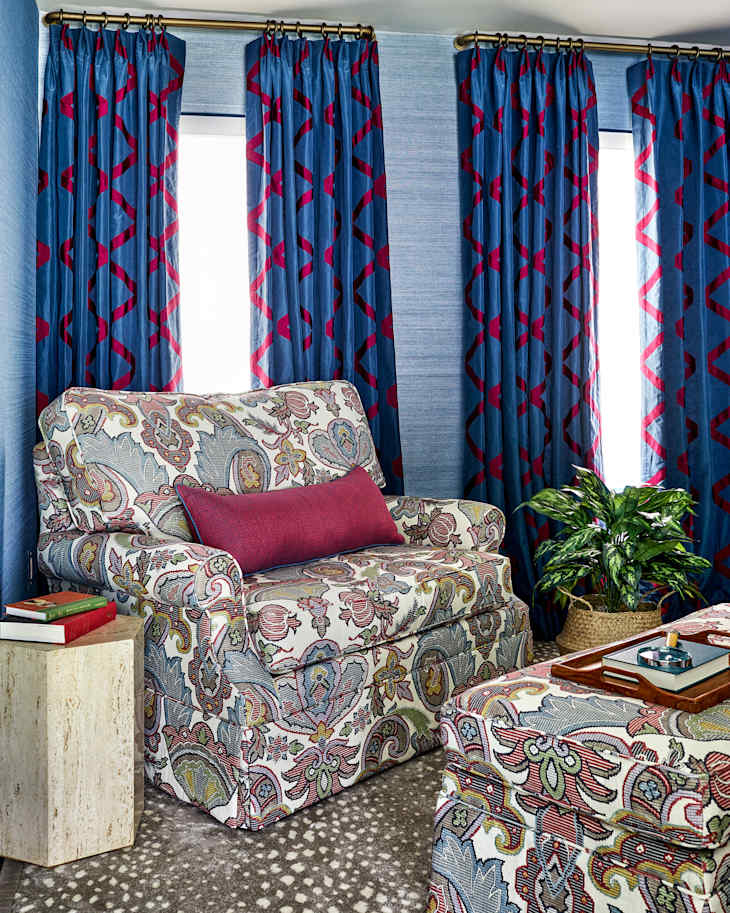
If you’re intrigued but not ready to redo, say, your entire kitchen backsplash, start small. Try pairing two patterned pillows on the same sofa, or swap in curtains that mix fabrics instead of sticking to one. Even something as simple as alternating solid and patterned tiles can make a space feel more layered without a huge commitment. The trick is to think of pattern splicing as one moment in a space — not a whole-room mandate. You don’t need to splice patterns everywhere. Focus on one spot so it can really shine.
Design Defined
Never miss the style inspo and recommendations you crave with Design Defined. Follow along each week as our Home Director Danielle shares the best style advice, latest trends, and popular decor finds you just can't miss.