
The Antique Coastal Detail Designers Are Bringing Back Right Now
For a long time, shell mosaics were easy to dismiss. They were mostly associated with quaint “sailor’s valentines,” intricate 19th-century shell arrangements tucked inside octagonal boxes and sold as sentimental keepsakes. Because of that, shellwork developed a reputation for being crafty. But what often gets overlooked is that shells have a surprisingly rich design history. And it’s that history that helps explain why they’re suddenly popping up in again some very stylish spaces.
The sailor’s valentines that became popular in the 1800s were highly detailed compositions made from hundreds of tiny shells, usually arranged in symmetrical patterns. While folklore suggests that sailors made them at sea, historians believe many were crafted by skilled artisans in Barbados and purchased as souvenirs to bring home.
Shellwork actually goes back much further than those little keepsake boxes, though. During the Renaissance and Baroque periods, shells were used to line elaborate grottos across Europe. Aristocrats decorated garden follies and cave-like interiors with shells, stones, and minerals, turning them into shimmering, slightly magical spaces. The idea was to surprise visitors and create a sense of wonder as light bounced off all those textures and patterns. In other words, shells have always been less about cutesy decoration and more about creating atmosphere. And that’s exactly why they’re relevant today — and why I’m taking you on a mini deep-dive of shell mosaics here (pun very much intended).

Why Designers Are Using Shells Again
Part of the reason shell mosaics feel fresh again has to do with their scale. Instead of small decorative objects, designers are treating shellwork as an architectural element that shapes a space. The individual pieces might be small, but together, shells can create a show-stopping focal feature.
At the Palm House Hotel in Palm Beach (shown above in totality and a detail below), hotel art consultant Minda Dowling wanted the entry to make an immediate impression. “I drew inspiration from Palm Beach itself, and the fact that the destination is surrounded by water,” she says. The proportions of the entrance walls reminded her of tapestries, but fabric didn’t make sense for a warm coastal climate. “I couldn’t do tapestry,” she explains. “So I asked myself, how do we create something that has the same proportion and impact as a tapestry, but isn’t a tapestry? I thought of shells immediately.”

Dowling notes that shell mosaics aren’t tied to a single era. “They have been around for centuries,” she says. “They are especially well-suited to small, enclosed spaces because they naturally lend themselves to pattern. You can create incredible geometric designs with them in a way that feels modern and fresh.”
Decorative artists Mel and Ella Campion of Campion & Daughters take a similar approach. The studio recently completed a shell grotto at Kin House in Wiltshire, and they often collaborate with architects and interior designers to create shell installations that feel embedded in the architecture rather than added as decoration. “We use traditional methods and trial new ones to create our shellwork, thereby creating historical charm,” Mel says. “The shellwork needs to be embedded within its immediate environment. [That’s] very important.”
Because shells vary so widely in color, size, and texture, they offer endless possibilities for pattern. “All shells are a wonder,” Campion adds. “We conjure up atmospheres and textures with repetition of shells. A profusion of the same shell, for example, has a glorious energy.” Iridescent abalone shells are a favorite of Mel’s, especially when used en masse to create surfaces that subtly shimmer in the light.
This immersive quality of viewing a shell mosaic is part of the reason this material feels interesting again. The effect is particularly pronounced when used at a larger scale.
How to Try the Look at Home
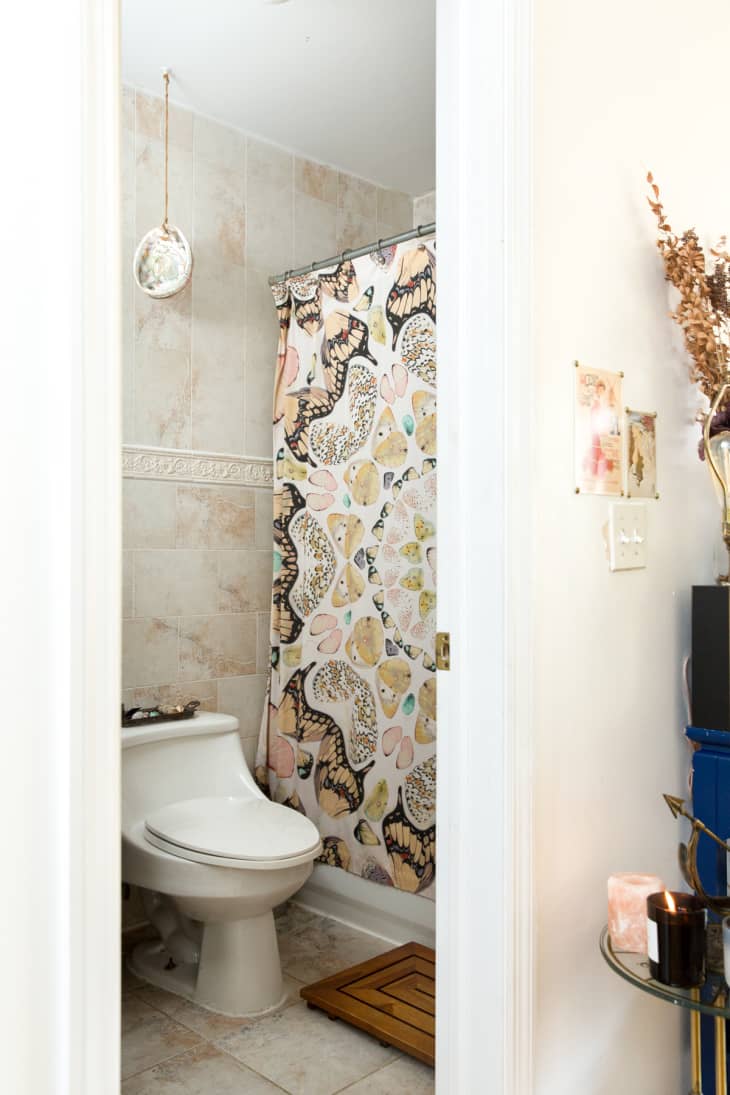
For homeowners intrigued by the trend, Dowling suggests approaching shellwork with confidence. “Be bold,” she says. A powder room is an ideal place to experiment because it’s intimate and enclosed, allowing pattern and texture to really stand out.
Shells can also be used in smaller ways. A mirror frame, a chandelier, or even a sculptural accent can introduce the material without committing to a full wall installation. You could even try a shell mantel, like what content creator Clare Sullivan DIYed in her Connecticut home (and has cleverly introduced as her “shmantel” to her Instagram and TikTok following).
What’s changed most is how many people see shells as a material. As designers and homeowners look for more texture, craftsmanship, and natural materials, shell mosaics feel less like a nostalgic craft and more like a design tool. When handled thoughtfully, these installations read as graphic, immersive, and unexpectedly modern — anything but cheesy or generic.
Design Defined
Never miss the style inspo and recommendations you crave with Design Defined. Follow along each week as our Home Director Danielle shares the best style advice, latest trends, and popular decor finds you just can't miss.