
4 Outdoor Furniture Mistakes That Make Your Patio Look “Tacky”
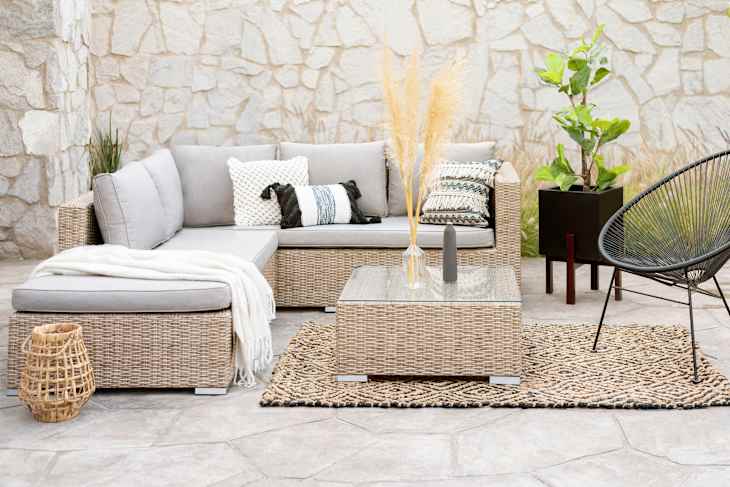
With warmer days finally here, you’re probably looking to get your patio, yard, or sliver of outdoor space into tip-top shape, if you haven’t given it a seasonal refresh already. While it might be tempting to order the first promising outdoor furniture set you see, you’re going to want to be thoughtful with your outdoor decorating approach. That way, you can avoid making any choices that may result in a tacky-looking space.
I asked two interior designers to share four commonly made outdoor furniture mistakes that they’d rather not see people fall victim to ever again. If something you’ve done is on this list, that’s totally fine. A few small tweaks can totally save your space. And if you’re starting fresh, you’ll definitely want to keep these things in mind as you decorate.

Using a Matching Furniture Set
Interior designers certainly won’t encourage you to utilize a matching furniture set in your living room, and it turns out that they’re also somewhat hesitant about people going this route outdoors. “Don’t buy a full matching outdoor set that comes with a cookie cutter couch, accent chair(s), and a coffee table,” says Galey Alix, the founder of Galey Alix Design. “Approach your outdoor living space as if it was your indoor living room, where you’d curate cohesive pieces that tie together but aren’t a turn-key set.”
While it may take a bit longer to find the right furnishings, the end result is sure to look much more elevated if you mix and match pieces over time. Another quick trick for avoiding that matchy-matchy look? Introducing a vintage item or two. Maybe you want your outdoor furniture to be made more recently so it’ll hold up to the elements better than antiques, but you could always add a vintage planter into your setup.

Opting for Too Small of a Coffee Table
Outdoor living becomes so much more enjoyable when you actually have space to set out food, drinks, board games, and the like on your coffee table. So don’t go too small in size when selecting one, Alix cautions. “The diminutive outdoor coffee table epidemic has been alive and well for decades now — it’s the single most repeated offense I’ve personally witnessed in outdoor spaces,” she says.
Alix attributes the undersized coffee table issue to people purchasing matching furniture sets (again, this is a no-go, in her view!); sometimes the coffee table that’s included isn’t fully up to par. “Manufacturers are trying to keep costs low, so they make small, four-legged lightweight tables that are supremely out of proportion to their deep-seated lounge sets,” Alix says. The moral of the story: Source a more substantial, functional coffee table on your own — no matter what!

Relying on Plastic Furniture
Speaking of furniture choices, the pros say to steer clear of plastic patio furniture. Designer Kathy Kuo, who is also the founder of Kathy Kuo Home, says plastic pieces can make an outdoor space “look lackluster and unfinished.” Plus, this material just isn’t all that practical, either. “There’s little depth or warmth to plastic furniture, and most pieces are lightweight, which makes them less than ideal on windy days,” she says.
Instead of plastic, Kuo recommends purchasing outdoor furniture made from durable materials including powder-coated aluminum, durable concrete, or solid teak. Yes, you’re going to pay more for these picks, but they’ll be built to last and may be cheaper in the long run.

Not Paying Attention to Scale
Finally, a patio can also appear tacky if you haven’t given any consideration to furniture scale, Kuo shares, noting that many people struggle with this, just as they do when designing an indoor space. “A petite bistro set floating in the center of a large patio is too small to anchor the area and will always look out of place,” Kuo states. “On the other hand, squeezing an entire lounge set onto a small apartment balcony just feels cramped and disproportionate.”
Looking for a quick rule on scale to keep in your back pocket? Kuo explains that, generally speaking, outdoor furniture should fill about 50 percent of an outdoor space. “Design with the flow of movement in mind, and try to allow at least three feet of space between furniture in walkways that tend to get a lot of foot traffic,” she offers.
Design Defined
Never miss the style inspo and recommendations you crave with Design Defined. Follow along each week as our Home Director Danielle shares the best style advice, latest trends, and popular decor finds you just can't miss.